The European graphic novel scene has unparalleled range. From indie science fiction to historical fiction, from France to Slovenia, there's a sheer diversity of styles, palettes, and stories on display. Fulbright-winning and Eisner-nominated translator Edward Gauvin recommends five European graphic novels that show off the continent's best writers, artists, and writer-artists.
To start with, I’d love to get your take on what makes graphic novels in Europe distinctive.
Well… I’m tempted to say government arts funding, so… I will! While also noting that it still doesn’t always mean a living wage. But really, the Franco-Belgian scene, central to Europe, is usually considered one of the world’s three major comics cultures, along with American floppies and funnies, and Japanese manga (central to Asia).
In broadening my remit to ‘European,’ I’ve tried to get out from under this 800-pound gorilla, picking works that attest to simultaneous or subsequent traditions: partly because I’ve translated a sizable share of the comics from France in the last fifteen years, partly because a lot of my favorites remain untranslated, and this feature focuses on works available in English. So I’ve chosen two works from France, one fiction, one non-, and one apiece from Germany, Italy, and Slovenia.
As we’ll see, many roads and career paths, if not lead, at least take a detour to France; the cultural and economic dominance of its publishers enables them to cherry-pick artists worldwide. America drafts foreign talent to draw licensed characters; France pairs it with writers for works that run the gamut from commercial to alternative. Some even get to tell their own stories as all-around creators, for as with manga, there’s not really one dominant genre in the European market, the way superheroes dominate ours.
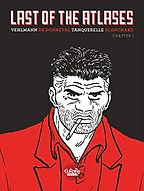
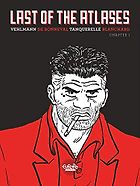
Let’s turn to the first European graphic novel you’re recommending, Last of the Atlases, written by Fabien Vehlmann and Gwen de Bonneval with art by Hervé Tanquerelle and Frédéric Blanchard. You described it to me as a ‘French alternate history science fiction book.’
This was a book that took the creators almost a decade to bring to life. It’s set in a world much like our own, except that right after World War II, the French under De Gaulle’s government are able to greatly modernize Algeria using giant robots. That massive modernization delays insurrectionary desires, such that the Algerian War breaks out fifteen years later than it does in our world. But then there’s a disastrous accident involving one of the nuclear-powered robots, and the entire Atlas program is scrapped.
All this setup is subtly meted out over the course of the story—as it should be, being common knowledge to all the characters. The novel starts with a small-time gangster trying to rescue the last remaining Atlas, the Georges Sand, from a shipbreaking yard in India because he wants to fend off what he’s convinced will be an alien invasion. So it kicks off as a street-level crime thriller, only to encompass geopolitical intrigue and also an eco-disaster spreading from the alien’s crash site in Algeria’s Tassili N’Ajjer National Park. I love that this book has so many handles, so many entry points for readers.
Could you tell me a little bit more about the collaborative process by which the book was created?
So you have Fabien Vehlmann, one of France’s premier comics writers, once called the ‘René Goscinny of the third millennium’ (Goscinny being the writer of Asterix) and a winner of the prize of the same name at the Angoulême International Comics Festival. I mean writer-qua-writer, a rarer breed among the many writer-artists, cartoonists, and all-around creators in the medium. Vehlmann has something of a footprint out in English, books with various artists from various publishers: NBM, Cinebooks, Drawn & Quarterly.
In 2013, over lunch near Studio City, Vehlmann floated an idea for what he called an ‘Iron Giant-type story’ (also another for a ‘communist Batman’), but then he and Gwen de Bonneval pivoted for a few years to found the all-digital comics magazine Professeur Cyclope. One of the magazine’s contributors, Hervé Tanquerelle, wound up shouldering the character art for it while Frédéric Blanchard oversaw the robots and page layouts, making the result a rare eight-hander.
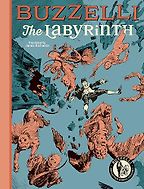
Readers, take note! Next, let’s talk about another European graphic novel you’re recommending: The Labyrinth, by Guido Buzzelli, which you mentioned is a lost Italian classic.
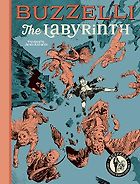
Buzzelli has been called ‘the patron saint of all Italian cartoonists.’ A painter’s son, classically trained, he debuted at nineteen with newspaper caricatures. He moved into comics and cover illustrations—Zorro, Flash Gordon, The Phantom, Alex l’eroe dello spazio—even a regular strip, Angélique, in the Daily Mirror during a spell in London. His first graphic novel, a fantastical black-and-white satire of class revolt, hit a post-war, 1966 Italy where comics were very much for kids and there was no creator-driven graphic novel work. Buzzelli’s book was critically lauded in Italy—even by Umberto Eco!—but with a 200-copy print run, dead in the water. Then cartoonist Georges Wolinski, a Charlie Hebdo mainstay (and victim of the 2015 shootings), spotted it at a Neapolitan newsstand and was blown away. His decision to serialize it led to classic status. Buzzelli had a career in France: prizes, collaborations, more magazines.
“The Franco-Belgian scene, central to Europe, is usually considered one of the world’s three major comics cultures…in broadening my remit to ‘European,’ I’ve tried to get out from under this 800-pound gorilla”
The Labyrinth is paired with Zil Zelub in this first volume of his collected works. The first concerns a literal everyman (‘uomo medio’) right after an unspecified apocalypse—talk about in medias res! I defy anyone to look at the largely wordless first five pages and not think, ‘This is a comics master.’ The action ranges from mad scientists experimenting with new human-animal hybrids to an ethereal upper world ruled by rationality, whose inhabitants’ perfect bodies are assembled with parts taken from those left outside its walls. In Zil Zelub (an anagram of the artist’s own surname), the eponymous protagonist’s limbs have come off and taken on lives of their own. Dubbed ‘the Michelangelo of monsters’ and ‘the Goya of comics’ for his deft grotesquerie, Buzzelli purées influences high and low into an appealingly contemporary brew of politics, absurdism, and body horror.
There’s a line from Buzzelli that his translator Jamie Richards includes in the afterword: “Comics is theater in paper and ink made for pockets and libraries, where the actors stand motionless, waiting for someone to turn the pages and bring them to life.” This is lovely. Posture must convey so much in the static panel; media scholar Henry Jenkins has traced comics’ use of them to vaudeville’s exaggerated poses. Buzzelli, with his alarming command of anatomy, greatly expands our vocabulary of gestural expression, and his words speak as well to the kind of participatory, imaginative readership that comics ask of us.
I see this is a new book—it was just released in December.
That’s right. From Floating World, a store that’s a staple of the Portland comics scene. They’ve got a bright space in an older mall slowly reinventing itself; they believe in comics as art, and their offerings reflect that: zines, indies, an extensive international section. And this very handpicked curation is what they’re carrying over to the press they’ve started.
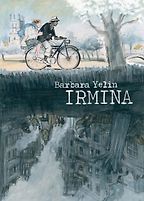
Moving on to the next European graphic novel on your list, let’s talk about Irmina, by Barbara Yelin and translated by Michael Waaler.
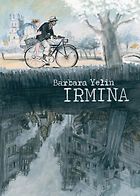
Irmina spans 1934 through to the 1980s. Yelin found a box of her grandmother’s memorabilia—photos, letters, diaries—and based the book on that woman’s life story. And it belongs to that evergreen German subgenre of ‘What did you do in the war?’ As Yelin writes in her sensitive preface, “What I really discovered in that box was a question — a disturbing question about how a woman could change so radically. Why would she turn into a person who did not ask questions, who looked the other way, one of the countless passive accomplices of her time?”
It starts out with Irmina at Oxford, falling in love with a fellow student, a Barbadian, in blithe youthful ignorance of world events. They’re drawn together as outsiders, so it’s illuminating to see the difference in the freedoms denied them by race or gender. Then Hitler’s laws make it impossible for Irmina’s family, poor already, to continue wiring money for support. Increasingly demoralized, she is forced to return to Germany, where she lives out the war, eventually if ambivalently marrying an ambitious SS officer. The book’s second and longest part ends when the war does; the third then leaps forward to the 1980s and a reunion for the would-have-been lovers in a different world.
This is also a work that affords readers many ways in: the first part lulls you into thinking it’s a love story, an idyll history rudely interrupts. And while it certainly has its place among family memoirs, or postwar ruminations on willful blindness and complicity from Böll to Ishiguro, Irmina’s story powerfully illustrates a woman’s limited options for achieving any semblance of autonomy in those dark and complex times. Whereas the coda moves, with the character’s age, into more universal territory of regret.
What do you find most interesting or unusual about Irmina?
Yelin insightfully pairs the external restrictions of a dictatorial regime with the increasing mental censorship that Irmina performs upon herself. Much of what Irmina sees during the war is filtered: through parted curtains and doors ajar, in narrow panels—a visual staging of how much she’s willfully or desperately shutting out. These are punctuated with cannily deployed double-page spreads in which we see history at work: cityscapes, massive rallies, marches, burnings.
And while Yelin had, prior to this book, worked largely in shades of gray, here the different eras and locations each have their own overriding color schemes: blue for London, red for the war, and turquoise for the rueful, hopeful coda.
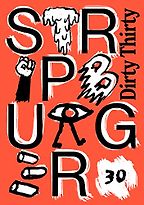
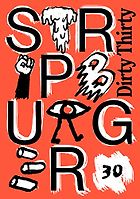
That brings us to Stripburger’s Dirty Thirty: Thirty Years of Making a Scene. What will Anglophone readers enjoy or find different about this collection from Slovenia?
Stripburger styled its 2009 double issue as a travel guide to the ‘transnational entity’ of Cartoonia, inviting artists to select objects from each other’s homelands as inspiration. Foreign artists had to depict Slovenia, and vice versa; the result was emblematic as anything of their cosmopolitan mission and position.
I picked Dirty Thirty instead because it’s newer, bigger, retrospective, and all in English: 400 pages celebrating 30 years, 20 countries—a great gateway drug to a true comics institution. The few familiar names Americans will find there have, apart from Peter Kuper and Julie Doucet, all come to us in translation: Jason, Rutu Modan, Anke Feuchtenberger, Danijel Žeželj. The rest is… discovery! Anthologies are a riot for the eyes. The sheer diversity of styles, palettes, stories, minds on display is staggering. You find things there in a raw state that may go on to become parts of larger pieces, or just gems that go on to become legends, never to be seen anywhere else.
Could you say a little more about the indie ‘scene’ depicted in the book?
We’re often said, what with the various franchise universes ruling screens silver and small, to be living in the ‘Geekdom Come.’ What was once a subculture has gone mainstream. Comics as a medium is still less understood, even as there’s more factional policing than ever about what gets to be called a comic and who gets to be a fan. What, then, would it mean to have a comics culture, not just a culture of the bottom line?
It would, I think, look a lot like the Strip Core collective. It would be local AND global, in Slovenian and English: fostering talent and interest with gallery shows, workshops, contests, lectures, a publishing house, while also facing outward to open and sustain international conversations of mutual influence. Stripburger blurs the line between book and periodical—the former’s heft and density, the latter’s ephemerality.
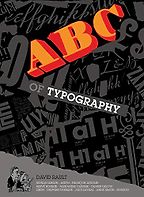
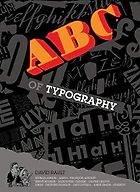
And now, last but not least, an anthology of another sort—ABC of Typography, written by David Rault.
Right, so, Rault, a typographer who’d previously written about his trade, thought it a no-brainer that two such visual media should be paired, and was gobsmacked it’d never been done. With help from his publisher, Gallimard BD, he mustered up a nice roster, a real cross-section of today’s Francophone talent, from those who tend alternative to those leaning more mainstream.
Eleven artists, eleven chapters from cuneiform to Comic Sans, the whole thing is lent a gorgeous graphic identity by none other than the cantankerous, radical underground cartoonist and diehard indie Jean-Christophe Menu. As a founding member of L’Association, he masterminded their selection and design of forgotten classics brought back into print. Together, they’ve created a bristling yet unified history of a ubiquitous yet somehow still niche subject. Serifs, frakturs, Gutenberg, Garamond, Gill Sans, Bauhaus, newspapers and Letraset.
Could you say a little more about the artwork?
A consistent pleasure was seeing individual artists’ hand-renditions of famous typefaces juxtaposed with their own hand-lettering: for instance, the evolution of Humanist typefaces, their intimate relation to hand and body, as narrated by Delphine Panique’s flirtatious cursive. Some artists picked panel arrangements traditionally associated with fictional storytelling, while others went with more infographical layouts.
The book covers lots of fonts that will be well known to readers—was there a particular story that was especially surprising to you?
My two takeaways from this book are actually somewhat meta: the first being that nonfiction is where it’s at in comics. I’ve been saying this for years now, but you know it’s true when the Gray Lady agrees. Some of the most exciting work out of France in the last decade has been nonfiction, whether from superstar pop science explainer Marion Montaigne (the Mary Roach of French cartoonists) or award-winning quarterlies like La revue dessinée and Revue XXI, home to long-form comics journalism.
The other is that typography and translation, long overlooked, are becoming more visible. The internet gives individuals a venue to geek out about them—the beginning of community. They’ve both been dismissed for affecting only form, not content—a reskinning of invariant meaning. But as our culture shifts to recognize how porous the border between the two really is, more attention has been paid to how changes once considered merely skin-deep affect our perception, and hence our experience—that changes to perception are changes to experience. Or to put in therapy-speak, you can’t change other people’s behavior, but you can change how you feel about it. And the first step is awareness. Typography, translation—awareness of these and other disciplines that, negotiating interstices, inflect perception enables a fuller experience of being human.
Five Books aims to keep its book recommendations and interviews up to date. If you are the interviewee and would like to update your choice of books (or even just what you say about them) please email us at [email protected]
The translator of more than 400 graphic novels, Edward Gauvin has received fellowships and residencies from the National Endowment for the Arts, the Guggenheim and Lannan foundations, PEN America, and the French and Belgian governments. His award-winning work has featured in the New York Times, Harper’s, and the Guardian. Comics he has translated have received over twenty Eisner nominations and two Batchelder Honors from the American Library Association. Among his recent publications are an intellectual autobiography of his pen name in McSweeney’s Quarterly, and Doctor Moebius and Mister Gir, Numa Sadoul’s collection of career-spanning interviews with the late comics master, part of Dark Horse comics’ Moebius library.
The translator of more than 400 graphic novels, Edward Gauvin has received fellowships and residencies from the National Endowment for the Arts, the Guggenheim and Lannan foundations, PEN America, and the French and Belgian governments. His award-winning work has featured in the New York Times, Harper’s, and the Guardian. Comics he has translated have received over twenty Eisner nominations and two Batchelder Honors from the American Library Association. Among his recent publications are an intellectual autobiography of his pen name in McSweeney’s Quarterly, and Doctor Moebius and Mister Gir, Numa Sadoul’s collection of career-spanning interviews with the late comics master, part of Dark Horse comics’ Moebius library.