Before we get to the books you’ve chosen on global challenges, tell us about How To Spend A Trillion Dollars.
It’s the ultimate thought experiment, the daydream of ‘what would I do if I won the lottery?’ but taken to a massive scale—you have 1% of world GDP, one trillion dollars, and have to spend it on improving human welfare, restoring the environment and advancing science. I’ve come up with ten megaprojects, all things people are currently working on or struggling with, and looked at what we could do if we threw a bit of money at the problem. We start by trying to eliminate world poverty by giving all the money away, then we try to cure all disease. Other chapters tackle the climate and biodiversity crises in various ways, and even explore creating new lifeforms, discovering a new physical reality, and establishing a lasting human presence off planet.
Were there any other megaprojects you would like to have included?
I did look at a few things, like building a space elevator—a literal elevator from the equator to low-earth orbit—as well looking at work to put people into long-term hibernation. But space elevators are still science fiction, and human hibernation is not yet possible, so there’s no point spending on these projects quite yet. Other megaprojects, such as building a Dyson sphere around the Sun or melting the core of Mars to restart its magnetic field, would be nice but are a bit far-fetched at the moment. All the projects are things that are possible and are being pursued by scientists around the world.
In the end you choose to allocate half your trillion dollars to fighting climate change, and half to tackling the loss of biodiversity. Why do those come out on top for you? What are some of the ways you think the money could best be spent in these two areas, and why?
I’ve chosen those two because climate change and the collapse of biodiversity are the two greatest threats to the decent future of life on the planet. Although the other chapters make very strong cases for spending—in particular on global health and on eliminating poverty—these two threats are so pressing that they insist on spending. The bonus is that you can sort of cheat and tackle many of the problems at once: certainly spending on ecosystem restoration helps with carbon drawdown and with slowing the biodiversity crash. I would put half the trillion into speeding the transition to a carbon zero economy globally. That means spending in China and the US, which are the biggest polluters, but also in India, where we could stop the terrible pollution caused by coal. The other half trillion goes on ecosystem restoration, protection and regeneration projects. This involves everything from paying farmers and local people in the Amazon not to chop the rainforest down, to planting billions of trees, allowing land to regenerate, and restoring marine ecosystems with kelp and seagrass. With these two broad projects we have a chance of getting to carbon zero by 2050 and so keeping global warming to 2 degrees, and we start to allow biodiversity to return. We can relieve some of the pressure from the Earth system and we draw down billions of tonnes of carbon dioxide from the atmosphere.
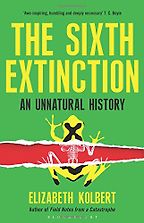
How does the first of the books you’ve chosen, Elizabeth Kolbert’s The Sixth Extinction, help us think about global challenges?
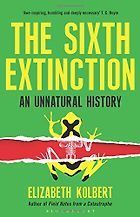
Well… even if we’re not technically in a mass extinction event like the one that did in the dinosaurs, it’s clear we are in the midst of a crash in species diversity and population size that is so devastating as to influence the operation of the Earth system as we know it. We’ve heard this quite a lot over the years, but Kolbert’s book brought it home in a more intimate, and a more damning way. There’s a calmness, and a detachedness in her writing that makes it that much more powerful and affecting (the same is true in her most recent book too, Under a White Sky). She paints a picture of the global catastrophe but focuses on the stories of a handful of individual species, such as the golden frog and the Sumatran rhino, and this really drives home the message: we are on the brink here. I could also have chosen EO Wilson’s Half Earth, or the epic and compelling Adventures in the Anthropocene by Gaia Vince.
One of the other options you explore in How To Spend A Trillion Dollars is ‘turning the world vegan.’ What is the overlap between slowing the loss of diversity and the crash in wild populations on the one hand, and widespread changes in human diet on the other?
Huge. A monstrous amount of the planet is now given over to making food for us, and most damagingly, making meat for us. A quarter of the ice-free land on the planet is used to rear animals for us to eat. But the process of making beef is so inefficient that raising cattle takes up 83 per cent of global farmland. The Climate Focus think tank found that 26,700 square kilometres of forest are cleared each year to graze cattle and grow crops to feed livestock. This means that in terms of land-clearance, cattle are the single biggest destroyer of the planet’s ecosystems. It’s all down to the insatiable demand for beef. In the US, people on average eat 120 kg of beef per year. That figure is 4kg in India and 17kg in Kenya, but is growing and is predicted to rise by 70 per cent in the next 30 years. It’s crazy numbers. Meat production is already completely unsustainable, it can’t possibly grow more.
Get the weekly Five Books newsletter
Plus food wastage. If ‘food waste’ was a country, it would be in third place in the list of worst contributors to greenhouse gases. It’s shocking, disturbing and under-appreciated, I think. The whole problem is very complex and tricky—not least because no one likes being told what they can and can’t eat. It’s why we need to invest in plant-based meat substitutes and lab-grown animal products. People can then happily—and sustainably—sate their desires for meat, fish and cheese.
Jeanette Winterson’s Frankissstein has been described as “a book about artificial intelligence and gender fluidity, love and desire, transformation and the unwritten meanings of the body.” And that’s just for starters! How does this book help us think about global challenges?
Yes, it does cover a lot! I’ve picked this book because it covers two of the most important areas of innovation: artificial intelligence and synthetic biology. These are going to be responsible for gigantic changes in our society in the future, and I’m spending a lot of money on them in my book. Winterson’s book helps me think about the dangers of corporate monopolisation of the technology of artificial intelligence, and about the ethical responsibilities of creating and tinkering with life. But it also prompts questions about what it means to be human, about the creation of life, about what life is, about the future of humanity, about transhumanism, about the people now who freeze bodies and heads in liquid nitrogen to try and preserve them for future resurrection. Other books might more comprehensively cover some of these subjects, and Toby Ord’s The Precipice and Nick Bostrom’s Superintelligence spring to mind, but Frankissstein has more, and is frankly a lot more fun, too.
Toby Ord argues that ‘unaligned artificial intelligence’ may present the single greatest risk of existential catastrophe for humanity in the next hundred years. What do you make of that?
He may be right – which is why I want to spend money on trying to make research into AI more transparent and open and subject to interrogation. That said, I would spend a lot more of my trillion dollars on mitigating climate change, if I could.
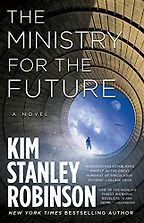
Your next choice, The Ministry for the Future, is another work of speculative fiction, or science fiction. What do you find particularly strong here?
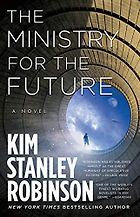
Kim Stanley Robinson always writes with great insight about his subjects, and it is clear he does a mass of research. He’s looked at climate change before, particularly in another piece of speculative fiction, New York 2140 (about a flooded New York in that year), and what I like about his work is the plausibility—the plausible optimism—of it. Having said that, The Ministry for the Future starts with a truly shocking set piece about the horrors that may await us as global temperatures continue to creep up. The book then goes on to detail the work of the titular ministry in galvanising action on climate change. As with all his work, his future seems very possible—certainly it has many things to aim for. So what I find strong is his solution-based approach to telling stories about the future: we need some of those solutions in our own future.
I agree. That first chapter is terrific. It’s a big book. Are there particular scenarios, episodes and/or thought experiments in it that strike you as particularly insightful, helpful?
Yes—the adoption of a new global currency tied to carbon emissions. From speaking with various people in the writing of my book, such as the economist Dieter Helm at the University of Oxford, I understand that we have to put a price on carbon if we are ever going to tame it. I’m not an economist by any means but it does seem that economists have failed us so far in shying away from the problem of climate change. And economic approaches to reining in emissions, be it a carbon tax or a price on carbon or a carbon currency have been under-researched, and their importance underappreciated. This feeds into another of my five books…
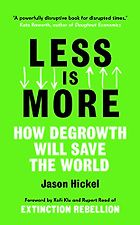
OK, next on your list of books on global challenges is Less is More. Tell us more.
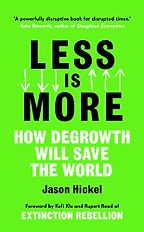
As a scientist, the whole subject of economics is mysterious to me, and I really had my eyes opened by Less is More. Certainly I was educated about the history of capitalism and the meaning of GDP. Jason Hickel charts how humans have historically prospered by destroying ecosystems, and how using GDP, which doesn’t ‘care’ that resources are destroyed as it increases, is such a dangerously flawed way of assessing our civilisation. What we need instead of a focus on relentless growth, Hickel says, is degrowth. Fortunately, the idea of spending a trillion dollars to fix the world’s problems is compatible with degrowth because of the concept of something called depense. Basically this means we take some of the money created by our capitalist economy and instead of allowing it to just pile up in assets, we spend it on projects for the public good. Spending it, of course, is easy—it’s getting hold of that money that’s the difficult thing.
Ha ha! Can you expand a bit on what Hickel means by degrowth, and what it means for the billions of people in the world who have few resources and a poor quality of life?
Hickel says degrowth is the downscaling of the amount of resources we use, in order to get to a sustainable state. It sounds very reasonable when you put it like that but God knows how we go about getting to that place. Perhaps one way is by somehow galvanising those billions of people in the world who suffer from inequality, and recognising that the inequality in the world is by far the worst it has ever been, and that is not a happy place to be. Degrowth is also about smoothing out this inequality. I examined this in chapter one of my book, when I looked at whether you can eliminate extreme global poverty by giving away the trillion dollars. From what we know from studies on cash transfers to the poorest people in the world, giving money away in one-off handouts really can lift them sustainably out of extreme poverty. This actually blows my mind.
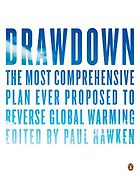
Your final choice is Drawdown: The Most Comprehensive Plan Ever Proposed to Reverse Global Warming, edited by Paul Hawken. Tell us about the book and what, if anything, you think we’ve learned since it was published in 2018 that adds to it.
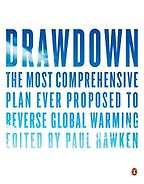
I’ve talked about how much I respect and admire the solutions-based approach in some of the books in my list, and it’s something that very much infuses the whole spirit of my book How to Spend a Trillion Dollars, but definitely one of the greatest examples of this is Project Drawdown, which lays out in detail dozens of different strategies for getting to zero carbon emissions and meeting the goals of the Paris Agreement of 2015. It’s an incredible piece of work, with the input of hundreds of scientists, and an incredible inspiration. Every politician around the world should read this, and every policy maker and CEO and teacher. It shows how not only is it possible to get to net zero, but that it saves us money. This is the surprising thing I found in my book too – in many cases, spending hundreds of billions of dollars, even when you give that money away, pays for itself a few years down the line. Nowhere is that more striking that in paying now for climate solutions. Since Drawdown was published it has been updated and there is a detailed resource at drawdown.org.
Five Books aims to keep its book recommendations and interviews up to date. If you are the interviewee and would like to update your choice of books (or even just what you say about them) please email us at [email protected]
Five Books interviews are expensive to produce. If you've enjoyed this interview, please support us by donating a small amount.