The best cookbooks according to food editor of The Week. Raves especially about the Chez Panisse cookbooks. Says she’d like "it was my pleasure" carved on her gravestone
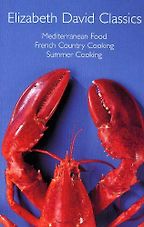
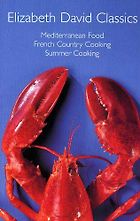
Jojo, you’ve chosen French Country Cooking to head your list. Why?
Well, Elizabeth David is the first proper cookery writer I ever came across, as opposed to someone who just writes recipes. My granny gave me her copy of French Country Cooking, which she had for 40 years. The book is full of sensible advice and also makes you feel you could enjoy reading it as much as cooking from it – it’s very well written. It’s got lots of interesting passages, including a lovely bit about Gertrude Stein coming back to Paris after the war and seeing an etching of a chicken done by Raoul Dufy in the window of a butcher’s shop. And how wonderful it was, when there was no chicken in the shops, that somebody had the generosity and imagination to draw a chicken and cheer everybody up like that.
You think it worked or did it just make everyone more hungry and frustrated?
Well, it worked for Gertrude anyway. What worked for Gertrude Stein didn’t always work for everybody else.
True. But David seems to work for everybody.
Yes. French Country Cooking has got briefly written recipes that are encouraging but also kind of improving, if you know what I mean. It makes you feel like you need to try harder, which is a good thing, but then Elizabeth David says something like, ‘The merit of food, all different kinds of food, is less important than the spirit with which cooking is approached.’ As opposed to being determined to do it in a spirit of martyrdom, you see? She’s just such a sensible person. Cooking is part of her life. She’s the opposite of someone who’s obsessed with food. It’s part of her life and it’s completely woven into her life: cooking and eating well. But it’s not the sole purpose of her life.
The opposite of an eating disorder?
The exact opposite of an eating disorder, in the sense that food is part and parcel of enjoying every bit of your life, every day.
Elizabeth David is setting the bar for a cookery book. She establishes a tradition for many of us for reading about cooking, which is not just going to a book for recipes, but going to a book for a complete experience.
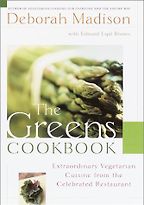
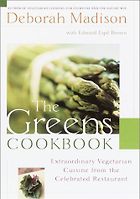
…When everything is that much tougher all round. So Elizabeth David is the original cookery book writer. She establishes a kind of template. But let’s move on to the second book on your list, which is by Deborah Madison. I noticed that you’ve included two Californians on your list. This one is from someone who runs a restaurant in San Francisco called The Greens Restaurant and there’s another one, Alice Waters, who runs a restaurant in Berkeley. Let’s start with Madison’s The Greens Cookbook.
Or just about Greens in general. Madison has been running this wonderful Zen Buddhist restaurant since the 1970s, and the book is named after it. And the amazing thing is that it’s the first book that was entirely vegetarian and didn’t make you feel like you were missing out on anything by only choosing vegetables. It sounds like heaven on earth.
So vegetables as something more than just a side order to your steak.
Something much more. Some of the recipes are very complex – and very liberating. I was only 23 when I got the book and hadn’t really heard of butternut squash, all the different kinds of squash. It was like a whole new world of vegetables.
Obviously you’re someone who’s very interested in vegetables. Your own cookbook sprang from your allotment.
But I’m not a vegetarian. I love, you know, pork products. So I’m totally not a vegetarian but I think I could probably live off vegetables and beans knowing I could go to this book because it’s got Japanese food in it and all kinds of chilli butters and herb butters that make eating vegetables a delight. It’s the opposite of eating your greens because you should.
Did you come to these cookbooks through cooking or travelling or what?
I think just reading mostly. My tastes sort of align from childhood, but my mum and dad were definitely not foodies. Outdoor, practical types, but not foodies. We went out mushroom picking. My dad is a biologist and granny is a botanist so there was a kind of a wild food aspect to our diet but we didn’t go in for anything exotic.
I sort of taught myself to cook because I became interested in food and didn’t have the traditional background or training. I find that lots of people that I like actually have done that as well, like Richard Olney. He came from Iowa and is the authority on Chateau d’Yquem.
Iowa kind of epitomising the redneck Midwest…
So there he was, a young gay man who went to New York and then he went to Paris and then he ended up in this kind of magical place in Provence in the hills.
Yeah – a lot of interesting people in the States seem to have come from the flat bits in the middle.
He started out as a painter and I think he carried on trying to be a painter in Paris for quite a long time and then sort of realised… As a chef he was self-taught but then rapidly became somebody whom even the French treated as an authority. What’s really annoying is that he wrote a biography and then died before he could properly edit it. So he never really tells us how he came from being a student in Paris to enjoying this extraordinary reputation as a chef and general foodie. He probably just read Larousse from cover to cover. Some of his food is very complicated, but I do wish – though I’m sure he would have been terrifying – that I’d lived with him in Provence on his lovely hillside and eaten the food he cooked for his friends.
He probably would have been horrified by my cooking. He writes so lucidly, but you always feel like he’s not taking himself – the idea of himself – too seriously. Instead, he’s part of a tradition. All really good chefs are like that. Elizabeth David said, ‘No cookbook could exist without all the other cookbooks’.
Yes, that’s interesting. And in a really good cookbook, as you’ve already said, there are two components, aren’t there? The recipe, which is practical, and then the literary component, which is the imaginative space that we inhabit when we read that book.
They had a meeting, you know, Elizabeth David and Richard Olney. And she teased him and said he was all about garlic and that he wouldn’t like her food. But in fact they were as waspish as each other and became bosom pals as soon as they met.
When do you think the tradition of cookbooks as we’ve been talking about them emerge? I mean the cookbook as something more than just a collection of recipes.
The 60s do you think? Elizabeth David was writing in the 60s.
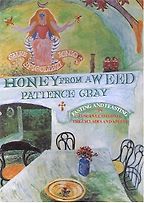
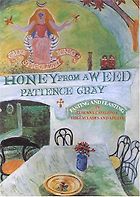
Let’s have a look at your third book: Patience Gray’s Honey From a Weed, which I think is set in Tuscany?
Well, it’s all over Italy actually. Patience Gray was kind of a Hampstead-living freelance journalist mother-of-two until her 40s and then escaped everything and ran off to Europe with a Dutch sculptor and they followed marble all over the place. They went first to Italy, then they lived on Paxos in Greece. They were following stone.
I presume you’re talking about seams of marble? Marble quarries?
And other stone from which he carved his sculptures. But the point is that wherever Gray was, she soaked up the local culture, to such an extent that she became the local witch. She was extremely learned in the classical sense but also she wanted to find out about the authentic ways of cooking wherever she was, and then she recorded it all in this wonderfully eccentric but fantastically enjoyable book.
There are some fascinating recipes in it. Some of which, I assume, are not seriously intended for general consumption. Fox, for example. It’s not just about what you’d eat at home.
It’s about foraging too. Ways of living with the land which we’ve lost and which we’ll gradually have to go back to. She’s really way ahead of all of us in the sense that we have to go back to older ways of learning to live with what we’ve got. When you read Patience Gray, it’s a lot to do with cooking outside: ‘Light your fire and then jump in the sea and swim across the bay, and when you come out it will be ready.’
That’s brilliant, but what are you going to do if you live in East London?
If you’re living in the East End, there are lots of wonderful recipes for chickpeas and lentils, paellas, all kinds of rustic foods. Get an allotment! And while she’s telling you about those, she’ll quote Herodotus.
Apparently, there’s a passage on the virtues of anarchy.
Yes, the anarchist mentality of the Carrera quarry workers, which sprang from the danger of moving huge blocks of stone around all day. They had this kind of ethos where there was one man in charge, but if there was sudden danger the man who spotted the danger was immediately in charge of the situation. It gave them a real, communal, anarchic sort of individuality. If they didn’t feel like working that day, they didn’t have to. They always did what they wanted. Then the big machines came and they couldn’t keep up.
It’s the opposite culture in restaurant kitchens isn’t it? Where everyone has to call the chef ‘Chef’ and he’s kind of a dictator.
Well, there’s no softness in Patience Gray either. She’s not macho, but she’s certainly not soft. She moved to the heel of Italy, where she lived a very Spartan sort of existence. Her editor came to stay for a bit and came back horribly shaken because there was no running water and it was all about cooking on the fire.
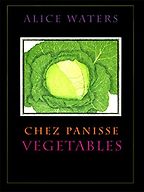
Let’s move on to Alice Waters, who, like Deborah Madison, owns a restaurant in California – in Berkley to be precise. Her book is called Chez Panisse Vegetables.
All the Chez Panisse books are great: it’s hard to choose one. But Chez Panisse Vegetables is great because Alice Waters is the woman who globalised the whole fresh groceries thing. She started the farmer’s market movement with her emphasis on organically produced food that tastes wonderful, and her recipes are very simple but inspiring, because you think if you do cook seasonally your food is going to taste good. She was very much inspired by Richard Olney.
Did they know each other?
They did. He was quite reclusive but he had some friends.
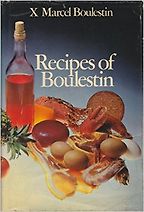
Now for your last book: Marcel Boulestin’s Recipes of Boulestin. He’s the only Frenchman on the list – the only non-Wasp.
But he was always an anglophile. He used to be the secretary and ghostwriter for Monsieur Willy, you know, the husband of Colette. Monsieur Willy put Colette to work writing the Claudine novels and I think the whole business – the coercive nature of it and so on – was too much for poor old Marcel and he ran off to Britain. In Edwardian London he had a small interior design shop. But then the First World War came and he went off to fight and when he came back he had no money and tried to get a novel off the ground. The publishers weren’t having it and so he suggested, ‘What about a cookbook?’ and they said, ‘Yeah’.
He writes wonderfully about his French childhood and his garden. His vegetable garden as a child has become my ideal because its totally unruly – you can wander round sniffing a rose and plucking a pea. But his recipes now read as very modern. He writes very simply and there’s usually a maximum of four ingredients. He’s very encouraging and I think would have been wonderful to be around. He had an enormous nose as well, they say. There’s a caricature of him by Max Beerbohm where he has the biggest nose you’ve ever seen – like a parrot or even a toucan.
Something very disarming about a large-nosed foodie.
He was the first ever cooking columnist. He wrote a column in the Evening Standard and then he was the first ever TV chef: he appeared on something called What Shall We Have for Dinner?, a weekly programme in the 50s. There’s still a restaurant called Boulestin in Covent Garden. He was a real giant of the London food scene. Gordon Ramsey’s got nothing on him. And he loved England, but he never forgot France. He had this to say about France: ‘I must give France its due. The French, I’m told, have many failings, but they can make wine, coffee and salad – it is a great deal.’
When you die, Jojo, would you like something like that on your gravestone? That Jojo has many failings etc, but that she can toss a good salad?
I’d like them to carve ‘Cooking was my pleasure’. Because people are always worried that cooking is a bother. But it’s not. Not if you approach it, like Elizabeth David says, in the right spirit. It’s never a bother. It’s always a pleasure.
June 18, 2009. Updated: November 15, 2022
Five Books aims to keep its book recommendations and interviews up to date. If you are the interviewee and would like to update your choice of books (or even just what you say about them) please email us at [email protected]
Five Books interviews are expensive to produce. If you've enjoyed this interview, please support us by donating a small amount.
Jojo Tulloh
Jojo Tulloh is food editor of The Week, and author of Freshly Picked: Kitchen Garden Cooking in the City, which brings together stories and recipes inspired by Jojo’s eight-year tenure of an allotment in Leyton, East London. She talks to FiveBooks about her favourite recipe books, and their writers.
Jojo Tulloh is food editor of The Week, and author of Freshly Picked: Kitchen Garden Cooking in the City, which brings together stories and recipes inspired by Jojo’s eight-year tenure of an allotment in Leyton, East London. She talks to FiveBooks about her favourite recipe books, and their writers.