It's widely assumed that in the ideal Muslim society there is no separation between religion and the state, but even in some of the earliest caliphates, the secular and the religious were rarely as closely aligned as religious conservatives would have us believe. Here Ahmet T. Kuru, Professor of Political Science at San Diego State University, recommends books that help trace the historical relationship between Islam and the state—and points to strands of secularism that may hold the key to a happier relationship between Islam and liberal democracy.
We’re going to be talking about books that shed light on the relationship between Islam and the state. Before we get to the historical context, could you say a bit about the contemporary world and the perhaps slightly troubled relationship between Islam and the state, and why that’s led you to work in this area?
I’m a political scientist and, unfortunately, in political science there has been a culture war, methodologically and theoretically, and people like me are on the losing side. Colleagues who focus on mathematical and formal theories, game theory and other sorts of rational choice, plus statistics, have won the battle. But I think their approach is really reductionist and has deprived scholars of the capacity to ask big questions. I’m not against their methods, but I am against their domination.
Political scientists and sociologists dealing with big questions have traditionally done comparative historical analysis, looking at the history and the deep roots of the problems they’re dealing with. I’ve been studying Middle Eastern politics and, more broadly, Muslim politics for over 20 years. In my first book, I focus on Turkey, comparing it with France and the United States, trying to understand the headscarf ban and other restrictions over Muslims’ religious freedoms. During and after that time, I also studied Islam and democracy. Later on, I dropped the term democracy. Instead, I use authoritarianism, because you cannot analyse something that doesn’t exist. In the Muslim world, out of 50 countries, only seven are electoral democracies—not liberal—and even these seven are trembling. We have almost lost Tunisia now, it’s turning into a dictatorship, and we have already lost Turkey. Hopefully, they will be properly democratized again.
I used to think that the problem was constitutional. If Turkey, for example, changed its dominant constitution and legal system, it might end up with a liberal democracy. But my experience in Turkey, and then my disappointment in the Arab Spring, taught me that we were dealing with a bigger problem and that I needed to look at its historical roots. I had to engage with two alternative explanations. One is to find the roots of the problem in Islam. That meant I had to study the history and theology of Islam. The second argument is that the failure of democracy in Islamic societies is all about Western imperialism and colonization. That also requires a historical analysis—what are the roots of colonization and its impact?
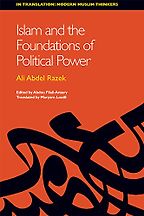
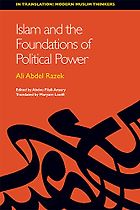
That makes a lot of sense. Let’s turn to the first book you’ve chosen, which is Islam and the Foundations of Political Power by the Egyptian scholar Ali Abdel Razek. What does this book say about Islam and the state?
When you look at the perception of Islam today, there is a very strong emphasis on the cliché that there is no separation between religion and the state in Islam, and Islam is essentially different from Christianity in this respect. This perception has been embraced not only by certain conservative Muslims, but also by many Western policymakers and even academics. The concept of the Caliphate, a religio-political leadership that is supposed to unify all Muslim-majority countries, is a core belief for radical terrorist groups like ISIS—who set themselves up to restore it—but there is also a broader acceptance that the Caliphate is crucial in Islam. When ISIS emerged, certain well-known, mainstream Muslim scholars wrote a letter to warn the ISIS leader, Al-Baghdadi, that the Caliphate is obligatory for Muslims, but the way ISIS chose and declared it was wrong. Apparently, there was nothing wrong with ISIS’s basic idea.
As a Muslim myself, studying secularism, I really think the secular state is important for democracy so I’m critical of the notion of the Caliphate. I tried to find a major book or analysis of its origins. Interestingly, there are very few writings critical of the idea of the Caliphate. But there are two, one published in 1924, the other in 1925. The 1924 booklet was written by the Minister of Justice of Mustafa Kemal Ataturk in Turkey, Seyyid Bey. He was himself from the ulema class, so a scholar of Islamic law, tradition and theology. This piece was actually a long speech he gave in the Turkish parliament to convince parliamentarians of the need to abolish the Caliphate. A year later, an Al-Azhar graduate and judge in an Islamic court, Ali Abdel Razek, wrote a book with similar arguments in Arabic. It’s much more academic than Seyyid Bey’s book. I chose Abdul Razek’s treatise as the first book because it’s probably the most interesting engagement with and critical analysis of the idea of the caliphate.
Abdel Razek starts by saying that Islam is a religion, not a political ideology. The Prophet Muhammad left a religious message and legacy, not a political one. If he had had political intentions, he would have left a political successor, but he did not. He knew he was dying—he spent over a week on his deathbed during his final illness—but he didn’t nominate one. That’s why Sunnis and Shias kept debating his legacy for centuries. For Abdul Razek, that’s another proof that the Prophet Muhammad didn’t have a political project. Then Abdel Razek looks at the Quran and hadiths and shows that there is nothing politically determined there, no political system. Last but not least, he examines the Ummayad and Abbasid Caliphates. He denies that these showed any religious leadership. He argues that they were political and that their politics was very pragmatic and very violent. For them, raison d’état was paramount. They didn’t primarily care about religious principles as political leaders. Therefore, he argues, the idea of the caliphate is really a secular, man-made thing, a human construction. He says that if you look at the analysis of Ibn Khaldun and others, you’ll see how Muslims, in fact, tended to understand politics as a mundane thing rather than a sacred religious duty. Abdel Razek paid the price for arguing this. The Al-Azhar committee of ulema cancelled his degree and sacked him, leaving him unemployed.
If this was in 1925, has there been any attempt subsequently to discredit the idea of a Caliphate? Or was it just that it didn’t exist after Turkey abolished it and so the whole issue was less important in Islamic politics in the middle and later years of the 20th century?
On the one hand, there was a very strong secular trend in the Muslim world, starting with the 1923 foundation of the secular Turkish Republic. That more secular form of government was largely embraced by Iran’s Reza Shah around the same time. Then you saw many examples, including General Abdel Nasser’s Egypt, Bourguiba in Tunisia, the Ba’ath regimes in Syria and Iraq, all the way to Sukarno in Indonesia. In all these countries, to different degrees, secular political systems emerged. Yet later, since the Iranian Revolution in 1979, over the past 40 years, we have observed an Islamization process in many Muslim countries, legal and political. Still, if you look at the 50 Muslim-majority countries, only 20 have sharia-based constitutional systems, about 10 have mixed systems, and 20 others have secular constitutions. So, at a practical level, there are constitutions, legal systems, political parties, and activists that build secular systems in the Muslim world.
“Islam is a religion, not a political ideology”
On the other hand, we don’t have a theory that tries to bring Islam and the secular experience together. For example, John Locke and many other British Enlightenment thinkers tried to breach Christian perspectives with liberal notions. We don’t have that breach in the Muslim world. You either are an Islamic and conservative person, who tries to explain the world through the Quran, the hadiths and in other religious terms. Or you’re a secular person, and secular activists almost totally ignore religion and say that Islam is outdated and there’s no need to waste time on it. So, Abdel Razek, being critical of the Islamic caliphate from a religious point of view, is exceptional. There are few people like him.
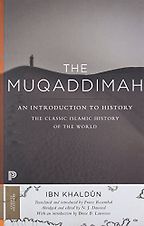
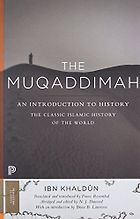
Let’s move on to the next book, The Muqaddimah:An Introduction to History by Ibn Khaldun, translated by Franz Rosenthal. What light does it shed on this relationship between Islam and the state?
The Muqaddimah is the ‘Introduction’ of Ibn Khaldun’s multivolume world history. It is very important because once we say that Muslims engage in politics under certain conditions that aren’t religious principles, then the question is, what are these conditions? That’s what Ibn Khaldun focuses on. In this book, he says he’s doing neither theology nor philosophy, but something new. He is very conscious that he is building a new social science, which he calls the science of ‘human civilization and social organization’.
Ibn Khaldun explicitly differentiates his position from philosophers and their Aristotelian methods and Muslim philosophical syllogisms, making analogies and then drawing large generalizations without empirical observation. He insists he’s not doing that. But he is also clear that he is not doing Islamic science, or working on Islamic law. He says, ‘if you are interested in Islamic law perspectives on Islam and the state, go and read the book of Mawardi’, the 11th-century Muslim jurist. Mawardi wrote the first and possibly the only major book on the legal theory of the Caliphate in the 11th century, based on a certain understanding of Islamic law.
Ibn Khaldun says he’s not interested in this theological, Islamic legal perspective. Rather, he says that he’s doing an empirical analysis based on historical observation. If I can summarize his approach: he looks at the dialectical relationship between two human groups. One group is the sedentary, urban people. And there are, of course, degrees here, from small towns to big cosmopolitan metropoles—in his time, Cairo, for example, or previously Baghdad, which had a population of over half a million. The other group is the nomadic people. Again, it’s a matter of degree: starting with desert nomadic tribes, all the way to the inhabitants of mountains and outlying villages.
Ibn Khaldun looks at these two groups’ characteristics and for him, neither of the two is good or evil. Both have good and bad characteristics. The urban people are open to civilization, meaning the arts, science and philosophy. But they are prone to indulge in luxuries, to be egoistic, lazy people, who militarily rely on the army. When the army is defeated, they are powerless, defenceless. For the nomad, the problem is that they are not open to the idea of civilization. They don’t have a refined understanding of arts and sciences, but they are brave people. They have neither gates nor doors. And they are ready to fight any time and they rely on their own group’s power. They are not egotistical. Instead, they have ‘asabiyya’ which basically means group feeling or esprit de corps. With this, the nomads rely on each other and constitute a strong body.
“In the Muslim world, out of 50 countries, only seven are electoral democracies”
He says that, historically, we see a circular pattern. The nomads attack cities, conquer them, then they settle down and they turn into urban people and they transform. That’s the dynamic of history. He didn’t use the term ‘state’ that we use. He talked about the ‘royal authority’, a kind of state at the time. He argues that the inherent goal of asabiyya is to establish a royal authority. Therefore, it’s inevitable that the nomadic people would establish a state, but then they would lose asabiyya and become a sedentary people—that’s almost a deterministic understanding. But in addition to this determinism, he also provides certain economic and political solutions. For example, he asks rulers to avoid dominating the economy, because such domination leads to corruption and the failure of the state.
Certain modern thinkers and politicians have been inspired by Ibn Khaldun. Ronald Reagan, for example, repeatedly cited him because Ibn Khaldun says, at the beginning of an empire, the tax rate is low, but the revenue is high, while at the end of an empire, the tax rate is high, but the revenue is low. Some critics say it’s a misunderstanding because what Ibn Khaldun refers to is not a limited tax rate, but corruption and his concern that the more corrupt the government becomes the more money it extracts from the people, making the economy inefficient.
Some modern analyses give credit to Ibn Khaldun, but say that he’s a bit outdated because today we have nationalism, which is a modern development. With nationalism, the urban people now have a source of asabiyya, or group feeling; nationalism brings them together and prevents them becoming egotistical individuals. They can act and fight as a group. Nonetheless, I think Ibn Khaldun is still relevant today; his theory may help us understand several modern issues from global migration to the Taliban’s recent takeover in Afghanistan.
Another debate that is related to Ibn Khaldun is whether Muslim societies experienced a rise and fall of scientific creativity. Some modern scholars, both in the West and in the Muslim world, deny that Muslim societies historically experienced a scientific decline. They label those who analyse ‘the decline’ as Orientalists. In reality, however, Ibn Khaldun (who wrote in the late fourteenth century), Katip Celebi (who wrote in the mid-seventeenth century), and several other Muslim scholars acknowledged the scientific decline of their societies. A major reason for certain modern scholars’ denial of ‘the decline’ is their lack of comparative analysis. If we compare Muslims’ scientific creativity between the ninth and twelfth centuries with that in later centuries, particularly between the sixteenth and nineteenth centuries, the decline is obvious.
And is the story he tells highly contested in the contemporary Muslim world? Is he read widely?
He is read today. Historically, he was mostly neglected because, after the 11th century, there emerged what I call an “ulema-state alliance” in Central Asia, Iran and Iraq, which marginalised intellectuals and merchants. Later on, in the 12th, 13th and 14th centuries, this ulema-state alliance spread to Syria, Egypt and other parts of the Muslim world. When Ibn Khaldun wrote his book, the Mamluks were in Egypt. The Mamluk military oligarchy represents the deepest institutionalization of the ulema-state alliance, together with the Ottomans. At that time, because this intellectual stagnation had already begun, two major Muslim thinkers in the western part of the Muslim world, Ibn Rushd in what is Spain today, and Ibn Khaldun in Egypt, were not really studied deeply. Ibn Rushd was attacked and certain of his books were burned, for example, his exegesis on Plato’s Republic. We don’t have it in Arabic form, it was destroyed. We only have it today from the Hebrew translation. Ibn Khaldun was luckier because he didn’t deal with certain philosophical issues that Ibn Rushd was studying. He didn’t write a rebuttal to Ghazali, as Ibn Rushd did, which was one of the reasons why he was attacked. Ibn Khaldun wasn’t attacked, but he was neglected.
The Ottomans studied Ibn Khaldun but only for their interest in the rise and fall of empires. Later on, in the 19th century, his Muqaddimah was rediscovered by Western European scholars, and then Muslim interest in him was revived in the 20th century. Today, he is a source of pride for Muslims. Muslims, unfortunately, do not have many Nobel Prize winners or major social scientists, but the existence of a leading Muslim social scientist in history makes Muslims proud today. But his formulas about the separation of political authority and economic power and his warnings about corruption are not followed in most Muslim-majority countries. State control of the economy is widespread. We don’t see such separation of powers as suggested by Ibn Khaldun.
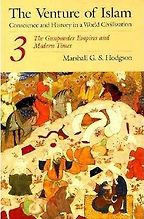
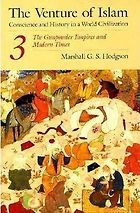
Let’s move on to book number three: The Venture of Islam: Conscience and History in a World Civilization. Vol. 3: The Gunpowder Empires and Modern Times by Marshall G.S. Hodgson. Tell us a bit about this book and why you think it’s important to understanding Islam and the state.
So, after Ibn Khaldun, the Ottomans emerged as a big empire together with two others, the Safavids and Mongols. These three really dominated a major geographical area from the Balkans to Bengal for the 16th and 17th centuries. After the Mongol and Crusader invasions, Muslim states recovered politically and militarily and even expanded their geopolitical influence, but they never recovered scientifically and intellectually. The Ottomans didn’t produce a philosopher of the calibre of Farabi or Ibn Sina. These three empires were even late in embracing European developments like the printing press. The ulema-state alliance was responsible for the delay in adopting printing technology and the scientific stagnation.
Marshall Hodgson’s The Venture of Islam is a seminal analysis of Islamic history, and the third and last volume is dedicated to analyzing these three empires. Hodgson called them the ‘gunpowder empires,’ which is the subtitle of the third volume. Some Muslims think that it’s a source of pride for them that they established three powerful empires with gunpowder technology, but I disagree. I think there is a criticism inherent in the term. Why? Because when we compare the Ottomans and other Muslim-run empires with Europeans at the time, the Europeans produced the achievements of the Renaissance, the printing revolution, and the Scientific Revolution, similar to the earlier Muslim Golden Age between the eighth and twelfth centuries.
“There’s too much emphasis on the Middle East in academic and policy debates”
During their Golden Age, Muslims had diversity, dynamism, production of paper and other technologies and taught them to Europeans. Later on, Europeans became the leader in certain technologies and they used three instruments very effectively: the printing press, the nautical compass, and gunpowder. Out of the three, Muslims only picked up gunpowder—hence the emphasis of Hodgson. They didn’t use the nautical compass effectively, no major expedition on the oceans was undertaken. An Ottoman ship finally arrived in the Americas in the mid-19th century. It was even worse for printing presses. For about 300 years there were no Muslim-run printing presses. The ulema, the dominant clerical class, opposed it. Finally, at the insistence of the Ottoman bureaucracy, the shaykh al-Islam, the chief cleric in the Ottoman Empire, issued a fatwa in the mid-18th century that books could be printed as long as they were non-religious, allowing the printing of dictionaries, history books, etc. Hodgson explains this problematic role of the clergy, in partnership with the military, in the gunpowder empires very well.
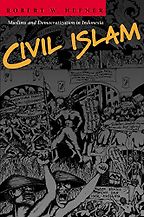
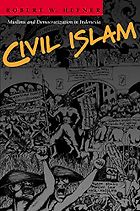
Next up is Robert W. Hefner, Civil Islam: Muslims and Democratization in Indonesia, which is a more recent book, published in 2000. What part of the story does this tell?
After these three empires, the Muslim world had the colonization period. In some cases, colonization began very early. In Indonesia, Dutch colonization was much earlier than the British and French colonization of the Middle East. Then, in the 20th century, Muslim societies started to exist as independent states. But they inherited certain problems we have already discussed, like a low literacy rate due to the delayed adoption of the printing press. Only seven Muslim-majority countries are electoral democracies. One of those seven is Indonesia, the largest Muslim country, with a population of over 225 million, about 90% Muslim. This is an interesting case, because, first of all, there’s too much emphasis on the Middle East in academic and policy debates. We need to understand other aspects of the Muslim world, including Southeast Asia, and how this largest Muslim society with a 10% non-Muslim minority achieved democratization.
Support Five Books
Five Books interviews are expensive to produce. If you're enjoying this interview, please support us by donating a small amount.
Robert Hefner is a leading authority on Indonesia, and especially Islam and democracy in Indonesia. In this particular book, he analyses the transformation from the military rule of Suharto to a democratic process where two leading Islamic groups played a very positive role. One is Nahdlatul Ulama, the ‘Awakening of Ulema,’ which claims to have 90 million members and is, therefore, the biggest Islamic organization on Earth. The other is Muhammadiyah, which means ‘followers of Muhammad’, which claims to have 30 million members. These two have certain differences: Nahdlatul Ulama is more open to traditional local practices and Sufism, while Muhammadiyah seems to be more rationalist and less open to Sufism. But they agree on keeping Indonesia as a non-sharia, non-Islamist state and making it democratic. Hefner explains how, in the late 1990s, they contributed to the country’s democratization, and the leader of Nahdlatul Ulama, Abdurrahman Wahid, became the president of Indonesia and the leader of Muhammadiyah, Amien Rais, became the speaker of parliament. Hefner’s book really helps us understand the historical background of Indonesian democracy. Currently, these two groups are still struggling to eliminate certain radical views in Indonesia and are even trying to reform Islamic thought. They may have an impact on the Middle East eventually.
To what extent is there any kind of veto in the parliamentary process in Indonesia to ensure that laws passed have an Islamic character or is it completely independent of any kind of Islamic legal authority?
That’s a complex question. When we look at the different regions of Indonesia, only one, Aceh, has sharia in both family law and criminal law. Others don’t have sharia formally. Islamic law has some influence on their legal systems in varying degrees. But the short answer is no: there is no Islamic veto power over laws in Indonesia’s federal system. There is no constitutional article making Islamic law a source of reference legally.
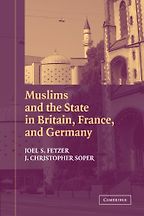
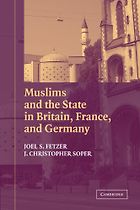
Let’s move on to your last book, which is Joel S. Fetzer and J. Christopher Soper’s Muslims and the State in Britain, France, and Germany. This is covering another whole dimension of Islam in the modern world, which is its role in historically non-Islamic countries, specifically in Europe.
The reason why I chose this book is that Muslims now are not limited to Muslim-majority societies. There exist increasing numbers of Muslims in North America and Western Europe. This is intellectually very important because since many Muslim societies are dominated by authoritarian regimes, intellectual life has limited opportunities there. In the West, Muslims have more opportunities to have freedom of speech and new Muslim ideas may emerge, but most Western states also consider the rising Muslim population as a security issue.
If we want to understand how Western European states regard the issue of the minority Muslim populations, Soper and Fetzer’s book is a classic. It is a very good example of comparative methodology, analysing three major Western European states and asking, ‘Why is the French state more restrictive against Muslim minorities’ religious symbols, while the British state is more tolerant and Germany is in between?’ Their argument is, again, historically informed. They say that these states mostly repeat their historical institutions of church-state relations. Since the secularism that emerged in France is what I call ‘assertive secularism,’ the French state is restrictive against Muslims as well. In the British case, there was a much closer relationship between the Anglican church and the British state. In Germany, there was the Kulturkampf against the Catholic Church under Bismarck, but there were also periods of toleration. Germany was in between France and the United Kingdom in terms of the level of state accommodation of church, and that’s reflected in its in-between position toward Muslims today.
Since the publication of Fetzer and Soper’s book about two decades ago, we still see the same trends. France is aggressive in passing laws. Just a few months ago, the French Parliament passed a law called the anti-separatism bill, which banned home-schooling and required even bus drivers not to wear headscarves or other Muslim symbols if they have any engagement with public schools. Emmanuel Macron, the French president, gave a speech saying that Islam is a religion that is in crisis worldwide.
Get the weekly Five Books newsletter
There are certain differences between France and other Western democracies. Because of the Black Lives Matter movement in the United States, there is now more emphasis on race, colonial history, economic exploitation and other problems. In France, despite the fact that the Muslim minority comes mainly from African immigrants and their descendants, French politicians generally ignore racism, discrimination, unemployment and other problems related to race. They only focus on Islam and secularism. But even with secularism, there are multiple models in Europe and elsewhere. I think we will have to keep discussing how democratic states deal with the issue of religious diversity. This is a global challenge beyond Muslim minorities in the West.
Given everything you’ve just touched on and what you said about Indonesia and some of the historical parallels you’ve drawn, do you look at the future with some hope in terms of the integration of Muslim minorities and the democratization of Muslim societies? Or do you think there are huge intractable problems that make progress very difficult?
I am optimistic about the future because I look at things from a broad historical perspective. If you focus on certain political controversies today, you will see Islamophobia promoted by right-wing populists in the West, and anti-Westernism promoted by right-wing populists in the Muslim world. This may make you pessimistic. Many people assume that Islam and Christianity or Muslim societies and Western societies are mutually exclusive because the values they espouse have inherently contradictory characteristics. I disagree because I know what Muslims achieved between the eighth and twelfth centuries in terms of religious coexistence, scientific and philosophical dynamism, and economic productivity. That was repeated in Europe after the Renaissance. Unfortunately, Muslim societies lost their dynamism. Just blaming Western imperialism now for the problems of Muslim societies is not the solution. If Muslims reach a level of self-criticism, as well as getting lessons from the diversity of their early history, they can once again reproduce their creativity and dynamism. This does not mean embracing the Western model, but it implies being inspired by their own history. I am also optimistic that Western societies will increasingly recognise the positive contributions of Muslims and recognize how Muslims expand the religious and cultural diversity of the West.
Five Books aims to keep its book recommendations and interviews up to date. If you are the interviewee and would like to update your choice of books (or even just what you say about them) please email us at [email protected]
Ahmet T. Kuru is professor of political science at San Diego State University. He is the author of Islam, Authoritarianism, and Underdevelopment: A Global and Historical Comparison and Secularism and State Policies toward Religion: The United States, France, and Turkey.
Ahmet T. Kuru is professor of political science at San Diego State University. He is the author of Islam, Authoritarianism, and Underdevelopment: A Global and Historical Comparison and Secularism and State Policies toward Religion: The United States, France, and Turkey.