If you dream of reading Russian literature in the original, how do you get from the language of the textbook to the language of Tolstoy and Dostoevsky? Tom Besinger, who spent a year building a glossed reading room for the Russian classics, recommends five books for learning Russian, focusing on the difficult middle ground between finishing a textbook and being able to read confidently in the language. He also explains why the advice normally given—to start with something short—is wrong.
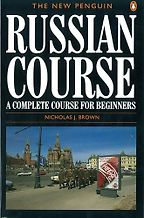
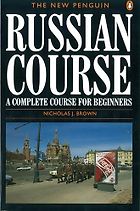
Let’s start at the beginning with The New Penguin Russian Course by Nicholas J. Brown. Why this one?
Because it is the best beginner’s book I have come across, and because — unlike most of them — it finishes. A great many Russian courses are a first act — the alphabet, some greetings, a warm feeling — and then stop somewhere around the accusative. Brown takes a complete beginner through the entire grammar in one volume, with a vocabulary of about 1,500 words. Work through it and you have the six cases, verbal aspect, and enough words to order dinner and follow a simple conversation.
I came to Russian as a reader rather than a speaker, so what I needed was the whole grammar as quickly as anyone could honestly deliver it — not a syllabus built around conversations I was never going to have. Brown is the book that does that, and it is honest about being that.
I put it first because a list like this should not leave a beginner standing outside, and because there is no way around this stage. You cannot read Russian literature without the grammar, and the grammar is a genuine obstacle — aspect alone takes most people a year to stop actively thinking about.
What is aspect?
Russian verbs come in pairs, and you have to choose between them before you can say anything at all. One member of the pair presents an action as a finished whole — he read the letter, and there it is, read. The other presents it as ongoing, habitual or merely attempted — he was reading, he used to read, he tried to read. English does this with tense and context; Russian makes it a different verb, and there is no rule that covers every case. That is why it is the last thing to become automatic.
So if you’ve worked your way through this book, can you then manage a Chekhov short story?
No. And that is the gap where I spent a year.
Finish Brown and you hold roughly 1,500 words. Chekhov’s «Ванька» — three pages, a child writing a letter to a grandfather who will never receive it, one of the first stories anybody recommends — contains 557 distinct dictionary words, and you need about 500 of them to read it without drowning. The overlap between the 1,500 words a textbook teaches and the 500 a particular story needs is far smaller than anyone expects, because textbooks teach the vocabulary of daily life and Chekhov is not writing about daily life in 1996.
So the honest sentence after Brown is not “now read literature”. It is: now you have somewhere to stand, and the ground between here and the books is longer than you were told.
So, at this stage, are you on top of the grammar and it’s the vocabulary that’s the problem, or is it a bit of both?
A bit of both, but not equally. After Brown you have met all the grammar — there is no seventh case waiting for you, no tense nobody mentioned. What you do not yet have is the grammar running underneath you without your attention on it, and that comes back mostly through reading rather than through more study.
The vocabulary is the harder wall, and the one people underestimate, because it is the only part where the arithmetic is genuinely against you rather than merely slow.
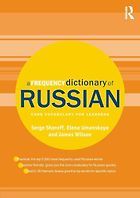
OK, so how do you choose which words to learn? Presumably this is where your next choice, A Frequency Dictionary of Russian by Serge Sharoff, Elena Umanskaya and James Wilson, comes in.
Yes — in frequency order, and this is the book for it. It gives you the five thousand commonest words in Russian, each with its part of speech, an example sentence and — this matters more than it sounds — the stress marked. Russian does not print stress. A word you have only ever read is a word you cannot say, and very often a word you will not recognise when somebody says it to you.
Frequency order is not a preference, it is arithmetic. Words are distributed so unevenly that the first thousand do an enormous amount of work and the ten-thousandth almost none. In the sixteen texts I measured, half of all the dictionary words in the entire corpus appear exactly once — 3,880 of 7,943 — while a few hundred carry most of every page. Learning vocabulary in whatever order a book happens to present it is like paying off debts in the order the envelopes arrived.
How far does a thousand words get you?
For the books I measured, I can answer that exactly, and it is the most useful thing I know about learning to read.
At 1,000 words you cover 77.0% of the running text. That sounds like most of it. But the number that decides whether you can read is not how many words you know — it is how many sentences you can finish without stopping. At 1,000 words that is 34.7%. Two sentences in three still break.
At 2,000 words: 81.9% of the words, 53.7% of the sentences. At 5,000: 95.7% and 82.4%. At 7,000 you reach 98.7% coverage and 94.5% of sentences.
The band that matters — where reading research puts comfortable unassisted reading — is 95–98% of running words. That figure is Paul Nation’s. What the sentence figures add is why the middle feels so bad. Coverage flatters. Sentences tell the truth. A learner at a thousand words has been told they understand three-quarters of the text, cannot finish two sentences in three, and concludes they are stupid. They are not. They are at thirty-five per cent.
Who is Paul Nation?
Emeritus professor of applied linguistics at Victoria University of Wellington, and the person whose work established how much of a text you have to understand before you can read it without help. The 95–98% band is his, and it is the number the whole reading room is built on. I wrote to him with a methodological question while building it — whether glossing every word moves that threshold — and he answered, generously and more than once. He has given me permission to name him as the source of the figure.
Just tell me a little about your own Russian journey. Did you set about it purely to read the literature, or do you need Russian for other reasons too?
Only reading. I have never tried to speak Russian and I do not intend to, which is an unusual thing to want, and it shaped everything that followed.
I started two years ago, and Dostoevsky is the whole reason. Crime and Punishment came first, and it left me with a question you cannot answer from outside the language: how much of what had just happened to me was Dostoevsky, and how much was his translator.
Then Chekhov happened, which I had not planned. I came for the novels and fell in love with the short stories instead — which is why eleven of the sixteen texts I ended up measuring are his, and why I now know more about «Толстый и тонкий» than is entirely reasonable.
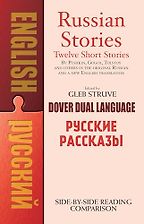
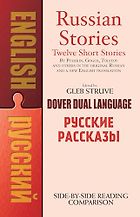
Tell me about Russian Stories: A Dual-Language Book, edited by Gleb Struve. This is from 1961 and still in print. Why?
Russian Stories is the best bridge to the classics that exists on paper. It does one thing almost nothing else does: it prints the stress.
In it are twelve stories — Pushkin, Gogol, Turgenev, Dostoevsky, Tolstoy, Chekhov, Leskov, Bunin — with Russian on the left, a deliberately literal English translation on the right, notes, a vocabulary and biographical introductions. Gogol’s «Нос» is in it, which is one of the texts I measured.
The stress marks are the part I would press. Dover’s own description notes that stress accents are “a feature usually found only in primers”, and that is exactly the problem: they vanish from real books at precisely the moment a learner starts reading real books. You are asked to leave behind the one piece of information you still need.
Could you explain what the ‘stress’ is?
Which syllable of a word you lean on. English has it too — we say PHOtograph but phoTOGraphy. In Russian it does more damage, because the unstressed vowels change their sound outright: an unstressed о is pronounced closer to an a. So a word whose stress you do not know is a word you will say wrongly and, worse, fail to recognise when a Russian says it correctly.
And Russian print does not mark it. Primers and textbooks do; real books stop, at exactly the moment you begin reading real books.
It sounds great.
Yes, but the drawback is that as a learner you ideally only want a translation when you ask for it. A printed dual-language book must have the English on the page permanently, and the eye takes it whether you meant to look or not — so you read the translation and tell yourself you read the Russian.
The alternative in print is a glossary at the back, which means twenty interruptions a page, and interruption is what actually kills reading in a foreign language. Not difficulty: interruption. Lose the thread often enough and the thread is gone, and the thread was the only reason anyone read a story.
That constraint is a property of paper, not of the reader. It is the reason I ended up building something on a screen instead.
But a Kindle already does that, doesn’t it? You highlight a word and it gives you a translation.
It gives you a dictionary entry, which is a different thing, and there are four places where the difference decides whether you keep reading.
The first is sense. A dictionary offers you every meaning a word has and leaves you to choose. In «Ванька» the dog’s body is long «как у ласки» — like a weasel’s. But ласка is also the word for a caress, and my own reader had it wrong: it offered caresses. A Russianist read one paragraph and caught it in an afternoon. That is the actual work — not looking a word up, but deciding which of its senses is on this page — and a pop-up dictionary hands that work straight back to you.
The second is stress, which the dictionary pop-up does not put on the word in front of you, and which the printed page does not carry either.
The third is the sentence. Some sentences defeat you when you know every word in them — nineteenth-century syntax, a clause turned inside out, a negative arriving three words later than you expected. A word-level dictionary has nothing to say about those, so here every sentence carries a translation you can pull up and put away again.
And the fourth is that the Kindle forgets. It will look the same word up for you forty times and never notice. This keeps count: it knows which words you have actually held, so it can tell you that a given story stands at 71% for you today, and 95% once you have learned two hundred more — and then tell you which two hundred. A dictionary answers questions. I wanted something that knows where you are.
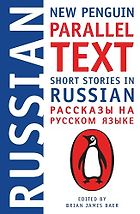
Let’s go on to your next choice, another dual-language book, Short Stories in Russian: New Penguin Parallel Text, edited by Brian James Baer
Struve is the classics. This one is contemporary — Ulitskaya, Petrushevskaya, Sorokin and others, drawn from the last decades of the Soviet Union and the first decades after it. If you want to read the Russian people are actually writing, rather than the Russian of the nineteenth century, this is where to go, and the language is a good deal closer to the language you would speak.
What is interesting is that this is a current Penguin, and the best classic equivalent is a Dover paperback assembled in 1961. That is not a complaint about either book. It is a fact about where the effort has gone. Enormous care now goes into helping people read modern language, and comparatively little into helping them read the nineteenth-century books that are the reason most people learn Russian in the first place. Nearly everyone I know who studied Russian did it because of Dostoevsky or Chekhov, and then spent years on material chosen for other reasons.
That gap is not a market observation. It is just a gap, which is a better reason to fill it.
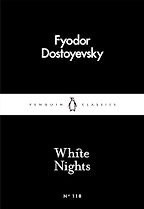
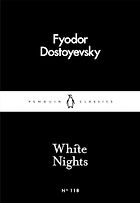
Your last book is a novella, in Russian, with no apparatus at all. Tell me about White Nights by Fyodor Dostoevsky.
It is early Dostoevsky — 1848, before the arrest, before Siberia, before any of the great novels. A lonely young man walks the Petersburg embankments through four of the white nights of summer, when it never properly gets dark. On a canal bank he meets a girl who is waiting for someone else. They talk, for four nights and a morning. Almost nothing happens, and what does happen happens to him. It is the most tender thing Dostoevsky wrote, and readers who arrive expecting axes and fever are usually surprised by it.
I recommend it here for a reason I would not have predicted and did not believe until I had run the numbers three times. The advice everyone is given is: start with something short. It is given by teachers, by textbooks, by every forum thread on the subject. Measured against my corpus it is close to exactly wrong.
Here is the measurement. For each text I asked one question: how many of that text’s own dictionary words must you know to reach 95% coverage of its pages?
«Толстый и тонкий» — Chekhov, 511 words long, two pages, the classic first story — has 269 distinct dictionary words, and you need 90.7% of them.
«Белые ночи» is 16,861 words. Thirty-three times longer. It has 2,521 distinct words, and you need 66.6% of them.
Why would the short one be harder?
Because length is not really length. Length is repetition.
A long book says the same words over and over. Its vocabulary grows far more slowly than its page count, so a word learned in the first chapter keeps paying you back for another fifteen thousand. A two-page story cannot repeat anything. Almost every word appears once, does its work and never returns. There is no slack in it — every word is load-bearing, and one you do not know takes the sentence with it.
The whole shelf tilts the same way: sixteen texts running from 90.7% at the shortest down to 66.6% at the longest, a spread of 24.1 points, and almost monotonic with length.
Two pages is still less work than a novella, isn’t it?
In absolute terms, far less — roughly twenty-six unknown words to get through «Толстый и тонкий» against several hundred for «Белые ночи». If you have one evening, read the short one.
But that is not the question a learner is actually asking. They are asking which book will let them read without drowning, and what decides that is the share of each page that comes back unknown. On that measure the short story is the least forgiving thing on the shelf. The usual advice answers the easier question and hands you the harder book.
And is it just that White Nights is long?
No, and there is a clean control in the same corpus. Turgenev’s «Первая любовь» is 15,781 words — almost exactly the same length. But it has 3,216 distinct dictionary words against Dostoevsky’s 2,521, and asks for 75.5% of them rather than 66.6%. Two novellas of the same size; a very different proposition to read.
So it is not length. It is how much a writer repeats himself, and Dostoevsky in this mood repeats himself a great deal. A young man walks around Petersburg for four nights talking to a woman he will not end up with, circling the same handful of ideas. There is a literary judgement you could reach by reading him, and it is also a number.
So your reading room is aimed at people studying Russian who’ve done the basics and got stuck in the middle. What would you most want them to know?
That the middle is real, that it is not their fault, and that the arithmetic explains the feeling precisely: at a thousand words you have most of the words and a third of the sentences.
And that the way through is not to wait until you are ready. It is to choose a text with enough repetition in it to carry you, get whatever apparatus keeps you from stopping twenty times a page, and read something a person actually wrote — a whole thing, to the last line. The first time you finish a story in Russian, something changes that no vocabulary count measures.
And for those who love Russian literature and want to read it in the original but haven’t started yet: how many years of learning are we talking about, would you say, before we reach the middle?
Less than people fear, and longer than any course will admit. The middle — Brown finished, fifteen hundred words held — is something like a year at a few hours a week.
For scale at the other end: the US Foreign Service Institute budgets around 1,100 classroom hours to bring a diplomat to professional working proficiency in Russian. But that is a far higher bar than the one we are talking about. You do not need to negotiate a treaty. You need to finish a page.
What takes the years is not arriving at the middle. It is crossing it — and the crossing is much shorter for someone who reads every day with the help beside them than for someone who waits until they are ready, because nobody is ever ready.
September 6, 2026
Five Books aims to keep its book recommendations and interviews up to date. If you are the interviewee and would like to update your choice of books (or even just what you say about them) please email us at [email protected]
Five Books interviews are expensive to produce. If you've enjoyed this interview, please support us by donating a small amount.
Tom Besinger
Tom Besinger is an engineer in Vienna. He spent a year building Language through Literature, a glossed reading room for the Russian classics, including Chekhov, Gogol, Turgenev, Dostoevsky and Tolstoy. He used a language model and extensive dictionary checking to mark the dictionary form, meaning, and stress of every word, before measuring what he had created and discovering that some of his findings contradict the advice Russian language learners are usually given.
Tom Besinger is an engineer in Vienna. He spent a year building Language through Literature, a glossed reading room for the Russian classics, including Chekhov, Gogol, Turgenev, Dostoevsky and Tolstoy. He used a language model and extensive dictionary checking to mark the dictionary form, meaning, and stress of every word, before measuring what he had created and discovering that some of his findings contradict the advice Russian language learners are usually given.