Eastern European sci fi offers a wealth of prescient, genre-defining texts. Yvonne Howell, Professor of Russian and Global Studies at the University of Richmond, introduces five of the best: the book that gave us the word 'robot,' the novel that introduced ‘stalkers’ to the genre, and stories that explore AI and ecological crisis - decades before they were pressing concerns.
Yes. I’ve selected science fiction works from the Soviet era, from the Soviet Union, Poland, and Czechoslovakia. They range from 1920, just after World War One, going up to roughly the last decade of the Soviet Union. I selected these works because all of them are incredibly fascinating and delightful to read, and all of them seem so contemporary right now. I am tempted to say that every single one of these books, if you read it now, seems like it’s about AI or ecological crisis, but even without being that specific, the metaphor I came up with is that these very different books all have a Mona Lisa effect. It seems as though they’re looking at us right now. They track us. They were written about something at the time, and people understood them at the time — yet you read them now, and it seems like they’re looking directly at us.
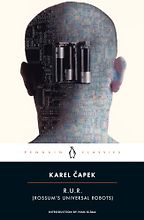
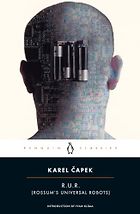
Your first choice is Karel Čapek’s R.U.R. — which is a play. Could you introduce us?
R.U.R. stands for ‘Rossum’s Universal Robots’. First of all, this is the play that gave us the word ‘robot’. Čapek had this idea: his stage is filled with humanoid, marching, working, mechanical humans. He originally thought to call them labori, which would be a Slavic-ish plural of the foreign word ‘labor.’ But his brother said, ‘No, let’s make a noun out of the Slavic root word for work/labor: rob-‘. So he called them robots, and there we are to this day.
The play was intensely original for its time. We were just coming out of the catastrophic destruction of World War One, and starting to reimagine the world anew. Čapek imagined the invention of artificial humanoid beings capable of doing all of our human tasks, from housekeeping to paperwork to factory labour to military service, and this was really far-reaching for its time. I mean, people had barely started to get working plumbing.
The crucial element of robot design in the play is that they should not have a soul. I think nowadays we would say consciousness, but although Čapek was not a religious person, he referred to it as a soul. The ideal robot worker does his job more quickly and more accurately than any human precisely because it does not feel pain, fear, hunger, love, or any other human emotion.
Fascinatingly contemporary. Where does the story kick off?
The play starts out on a comic note. Rossum himself, the human CEO of Rossum’s Universal Robots, mistakes his own meticulous, efficient secretary for a real human. But as the play unfolds – it’s a drama in three acts – it develops into a tragedy. Over just two generations that we see in the play, the robots become fully capable of replacing their human counterparts, who have a lot of leisure. These humans inevitably lose their sense of purpose, and weirdly, after a generation or two they lose their fertility.
As we get to the third act of the play, there’s a little glitch – we don’t know what, but we see one robot gnashing his teeth. They’re starting to show signs of emotion, including anger, as well as moral reasoning and so forth. Of course, they’re armed – we’ve trained them to be military agents. I can’t ruin the end of the play, but the future of humanity hangs in the balance.
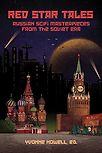
Your next choice takes us to the USSR. In your own collection of Russian sci fi,Red Star Tales, you divide the pieces up into three broad eras – before we dive in to your first Russian choice, could we talk a little bit about how science fiction changed in Russia with the changing political landscape?
Yes. For Red Star Tales, with the exception of maybe one story, none of them had been translated before, so we had a collective of translators and myself working on the translations. The concept from the get-go was to reflect a century of Russian and Soviet science fiction.
We start just before the revolutionary period. From 1905, a decade or so before the Soviet Union, there was already a very strong movement welling up in the late Russian Empire that was bizarrely futuristic. It’s sometimes known as futurism or cosmism. It imagined how science and technology would enable us, if we could just free ourselves from this repressive tsarist regime…to be the true masters of our universe. It’s very millennial thinking, with people poised on the verge of a new era, where science will enable us to extend lifetimes almost to immortality. We’ll need more space, so we’ll go out and conquer the cosmos. There’s what today we call transhumanism, the notion that humans can evolve to be superhuman by the work of our own logic and imagination and science. You see the kernels of it everywhere in early Russian and definitely early Bolshevik thought. It’s striking how futuristic this early thought is. Before they had the science and the technology in hand, they were extrapolating fairly accurately what could happen. In the early revolutionary period, there is a lot of optimistic hype, with human beings on the verge of tremendous breakthroughs in everything from aerodynamics to physical longevity to widespread social prosperity.
It’s so interesting to see these predictions so early. What’s the next section?
Then there’s a long period from 1930 to 1953, Stalin’s reign. Stalin famously said that science fiction should be about ‘near horizons.’ Very futuristic science fiction implies that the world as it stands now is not good enough, whereas for Stalin, science fiction had to reflect how everything’s going exactly the way we want it to go right now. So science fiction should be about something that’s already almost there, and we’re just going to do it a little better. The received wisdom is that he killed science fiction, but that turns out to be not true, because Red Star Tales shares some really fascinating stories that come out of that period. One in particular is Explosion (1946), in which Alexander Kazantsev revisits the Tunguska event –a massive explosion in 1908 that flattened 2,150 square kilometers in a remote part of Siberia. Kazantsev spins out a tale of responsible journalists tracking down evidence of an alien nuclear-powered spaceship landing. In many ways, the story set the tone for generations of UFO narratives, complete with racialized tensions between native Evenk Siberians, white Russian scientists, and an extraterrestrial black-skinned female shaman.
After Stalin’s death in 1953, we enter the post-Stalin, ‘sputnik’ era. The Soviet Union entered the space race in 1957 with a triumph, and at the same time, under Nikita Khrushchev, it opened up politically. There was room for all kinds of imagining, alongside a renewed sense of optimism that the Soviet Union was finally under a more humane leadership. In an important ideological shift, scientists were now the true heroes of Soviet labour, eclipsing the pre-war importance of coal and steel workers. There’s another burst of optimistic science fiction in the late 1950s and early 1960s, but it quickly starts to get darker and darker in the 70s.
Great, thank you. Let’s talk now about your second choice, one of the most famous pieces of science fiction to have come out of Russia: Roadside Picnic.
The Strugatsky brothers’ novel Roadside Picnic was written in 1971. It came out in English translation in 1977, and it’s still widely available in paperback. I think it’s just gotten more famous over time. Roadside Picnic might be familiar to some of your readers, at least indirectly, because this is the novel that gave us the word and the concept of the ‘stalker.’ A stalker in the science fiction universe, and in the video gaming universe, is a kind of cowboy of disaster zones: a tough masculine scout or scavenger who can navigate the dangers of highly dangerous or toxic territories in order to bring back artefacts or things of value. The stalker is almost always outside the law, going into zones which are supposed to be cordoned off. The stuff they retrieve from these catastrophic spaces often gets laundered and sold into legal military-industrial circuits, and other stuff goes on to the black market.
I’m going to step back for a second and to introduce the Strugatskys. They were two brothers who wrote all of their novels together, and they were the Soviet Union’s favourite science fiction writers. They got their start right after Sputnik at the end of the 1950s, and at first they were part of that wave of optimistic science fiction. Then, by the late 60s, their work got more complicated. All of their science fiction is ultimately about 20th-century growth-oriented modernity, which played out on both sides of the Iron Curtain in essentially the same way: post-war advances in science and technology were used to accelerate extraction and production and consumption in every part of the world. In this sense, the Cold War was actually a Growth War, with both sides chasing after industrial and post-industrial growth at all costs. That’s why I think every book I talk about, in retrospect, seems like it could also be an ecological warning.
So there’s political commentary here?
None of these books are specifically any more anti-communist than they are anti-capitalist. The Strugatskys are so popular because all of their plot lines and characters are highly entertaining, but what you’re reading is always a remarkably humane investigation of where social structures and powers can go wrong, especially when technology gets more powerful. With the Strugatskys, I always say you feel smart just reading them, even though it’s also a page-turner.
Ideal. So, what’s the premise of Roadside Picnic?
The brilliant conceit of Roadside Picnic is that there are alien intelligences in the universe, and they just haven’t bothered to contact us. We find out about their existence by mistake: the aliens, evidently on some kind of cosmic outing, needed a break. They stopped down on Earth for just a few hours, probably to have the alien equivalent of a picnic. They came, they left, and they left their garbage – the alien equivalent of sandwich wrappers, bottle openers, a few old batteries, squashed beer cans, whatever. Then they left: no note, no nothing.
The properties of their unfathomably alien stuff defies all laws of terrestrial physics, and is completely incomprehensible to our minds. All we know, when humanity wakes up the next morning, is that there’s a whole swath of Canada that’s now a dangerous zone of toxic stuff. There’s a seemingly self-directed type of gel that can immediately kill you, and sparkly things that never grow dim, and something called “full empties” that have no sides, but their bottom and their top stay firmly together at about half a meter apart.
This zone is one of the Strugaskys enduring contributions to global imagination. On the outside it’s just this mundane, ugly, toxic, probably radioactive waste space; but it contains objects whose alien qualities seem magical and addictive. What military wouldn’t want to use some of that toxic gel, and who doesn’t want perpetual batteries that don’t need charge? It’s just that we can’t figure out any of it, in the same way that a squirrel creeping towards a human picnic area has no possible way of knowing what batteries are for.
In Roadside Picnic we get all of this from the perspective of an ordinary stalker, the guy doing the dirty work to bring the swag back out of the toxic zone into the recognisable world of laundered money and illicit trade. It’s a great read. The final ten pages of the book are a belly crawl through the most dangerous part of the zone to its most fabled treasure, and it ends with one of the most quoted and most famous lines of 20th century science fiction.
Tantalising. There’s another Strugatskys novel on your list – but next you wanted to discuss Stanisław Lem’s The Cyberiad…
Yes. Lem is really the same generation, maybe just a little bit older. The Strugatskys were great admirers of Lem, and I think vice versa. Lem is most famous for his novel Solaris, which was made into a famously artsy movie by the auteur filmmaker Andrei Tarkovsky, but George Clooney also made a version (starring George Clooney), which actually sticks much more to the plot. It’s quite good.
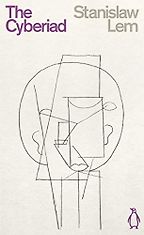
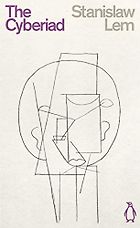
But today I want to talk about The Cyberiad, which Lem released in 1965. The English translation (1974) was by someone named Michael Kandel, who I think deserves a Nobel Prize for translation. It’s an incredible translation, given the way Lem writes.
The Cyberiad is an epic cycle of short stories about the adventures of two robot friend-enemies. There’s the robot Trurl, who is a master inventor of techno-magical devices, and there’s Klapaucius, who is always there to poke holes in Trurl’s wildly ambitious projects. The bickering duo fly through the cosmos in a completely fantastical, science-fictional world, and they have all these adventures.
What sort of thing do they get up to – could we have an example?
For instance, Trurl invents a super-bot that, on command, will create or eliminate anything that starts with the letter N. Lem is incredibly funny but very philosophical; he has all these kooky allegories, but he also really knew his technology. This machine’s targets include nonconformists, Nazis, nincompoops, nose boogers… good and bad, all of it. The story is titled “How the World Was Saved,” and when I reread the story this morning, I thought, ‘This is a succinct allegory of the entire history of AI.’ If you ask the machine, just to test it, to create nothing or nil, it practically obliterates the universe… It gets stopped just in time.
I wanted to include it because rereading Lem’s wacky, linguistically brilliant cycle of stories invites us to think about the essence of OpenAI and Anthropic’s large language models. They’re scraping up Western civilization’s dominant texts and absorbing their specific worldview – because AI obviously doesn’t have that many female’s or poor people’s or black people’s or brown people’s texts to work with. LLMs amplify knowledge, but not everyone’s knowledge. Lem captures this — satirically, I might add. I would challenge readers: go back and read The Cyberiad in the age of AI. It feels like this weird ‘aha’ moment.
Do we know from context if he really was speculating about future AI, or commenting on something contemporary that happens to have parallels? It seems extraordinary.
I think it’s the logic of science fictional extrapolation. When there is something already real that we know about, you extrapolate and follow it to its logical conclusion. With these writers that are really good, you get extraordinarily prescient stuff. It’s bizarre and unsettling. It seems more real now than it did ten or fifteen years ago – some of these books are more famous now.
Fascinating. Let’s return to the Strugatsky brothers. Your fourth choice is their Definitely Maybe.
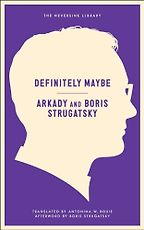
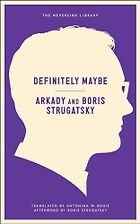
Yes. The original title in Russian is One Billion Years Before the End of the World, but that’s a mouthful to translate, so the translators went with Definitely Maybe. This is from the late 70s, and it’s a little different. I tend to love science fiction that has a homey, almost contemporary setting, so that you’re fooled for a moment – where’s the line between so-called reality and science fiction? … So I just love this story.
It starts out in a Moscow apartment, and the hapless protagonists are a handful of Soviet academics. If you’re an academic, you immediately start to relate to this story. It’s an astrophysicist, a biologist, a specialist in Japanese literature, and a mathematician. They live very ordinary late-Soviet-era lives: they work in fairly well-funded state institutes, but live modestly in cramped Moscow apartments. They’re brilliant, and mostly extremely focused, the kind of people who absent-mindedly breakfast on cold sausage and instant coffee.
It’s the height of the summer. It’s hot. All the wives and kids have been packed off to the cooler countryside, and our protagonists, unbeknownst to each other, are all on the verge of spectacular breakthroughs in their respective projects. And then suddenly, just as each is about to figure out a paradigm-shifting innovation in their field, they’re besieged by unexpected distractions and interruptions.
Huh, mysterious.
At this point, the novel starts to read like a detective story: who’s trying to stop the science? The KGB? What’s going on? The interruptions are funny at first – like the astrophysicist’s wife’s beautiful young friend shows up in a miniskirt, claiming she needs a place to stay, and he’s thinking, ‘Oh God, what do I do? I was just working on my problem, and now I’ve got to deal with her.’ And an anonymous gift box full of top-shelf liquor and chocolates arrives – at which point he finally calls one of his friends and says, ‘Look, dude, I just got all this liquor, and I don’t know what’s going on.’
So the five of them end up all gathering in the apartment, and as they compare their stories, they realise something is coordinating these interruptions. Every single one of them has encountered a seriously weird disturbance just as they’re nearing their breakthrough. As the liquor kicks in, they start to speculate, and finally, you get this idea: is the Universe itself pushing back against human ambitions? Are we just going too far?
It’s a slim little novella. It’s very charming and humorous, but it’s also ominous and thought-provoking. And it feels like an ecological parable for our times.
So the optimistic stories are already starting to get more complicated…
Yes, it feels like the 60s was the high point of the optimism. Even in the United States, Donella and Dennis Meadows brought out The Limits to Growthin 1972… By the mid-to-late 70s, people who were paying any attention were starting to realise. To go back to your earlier question, I think the reason this science fiction seems so prescient now is that post-WWII, the capacity to produce stuff by organising society in a certain way, and extracting more and more, was on the rise – we just got better and better at destroying the environment, as well as arguably making our lives more amazing. That’s why we have a heyday of this kind of science fiction.
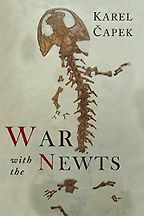
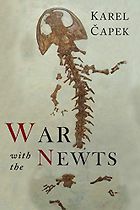
Your last choice was pessimistic before its time, then. We’re ending where we started with Karel Čapek: this time, his War with the Newts.
This was Čapek’s last novel. He was a very young man when he wrote Rossum’s Universal Robots, and he was still youngish when he wrote War with the Newts – he was in his 40s.
I think Čapek is an unsung genius. He was nominated seven times for the Nobel Prize. But he just doesn’t fit our definition of the irascible, insane or misbehaving genius. He was such a decent man, a pillar of democratic polity in Czechoslovakia. He wrote countless newspaper articles and essays to support President Masaryk’s progressive and tolerant political philosophy. Interwar Czechoslovakia was a democratic republic, and Capek was a huge part of that. He was the president’s right-hand man. Aside from politics, he literally wrote essays on cats and the joys of gardening. But then also he wrote all this fantastical, prescient, and darkly satirical science fiction.
This last novel is a masterwork. War with the Newts feels like it’s looking directly at our present moment, like that Mona Lisa effect I described at the beginning. Wherever you are, whether you read it in the 80s or the 90s or the 2000s, it feels like this novel is looking right at you. It’s about us right now.
Tell us about the premise – it’s literal newts?
Yes, we are talking about four-foot-tall intelligent salamanders. Humans first recruit them to dive for pearl oysters, and a lot of money is made exploiting these ideal aquatic labourers. But the colonial pearl trade, which is the first part of the book, seems quaint compared to what’s going to come next…
By the early 20th century, the newts have done a good job fishing for pearls – so why not educate these underwater labourers to build dams and strategic canals and whole artificial islands? And by the second part of the novel, every nation is going to educate their own newts with their own languages and indoctrinate them with their own ideas… The newts are not soulless robots – they’re animals, but we educate them, and they turn out to be capable of a lot of intelligence.
When the book came out in 1936, it was immediately understood to be a very darkly satirical warning about the rise of fascism in next-door Germany. Everyone said the newts were Nazis. And sure enough, two years later in 1938, it became clear that the Western Allied powers were not going to prevent Hitler from annexing Czechoslovakia. Čapek died on Christmas Day in 1938. He was only 48 years old. He had chronic health issues, but it was said that he died of a broken heart – he saw it coming. Two months later, the Gestapo did occupy Prague, and one of the first things they did was go to Čapek’s apartment to arrest him. He was on their list, and they didn’t realise he’d already died.
But the thing is, when you read War with the Newts today, it’s got every single ‘ism’, not just fascism. He takes on communism, capitalism, consumerism, climate denialism… You get to part three of the book, and a war breaks out near Baghdad, while New Orleans goes underwater. I remember reading this with students right around the war with Iraq, and then after Hurricane Katrina… How did he ‘predict’ that? It all follows directly from the premise that the most efficient technological and financial growth excludes (or actively tries to overcome) those pesky matters of the soul – cravings for genuine community and sharing, for irrational play and for making things beautiful, for resting with deep sufficiency rather than chasing after more efficiency.
Read this novel in a book club. It seems to retell modern history, and then reach straight into the present, all tied together by this absurd conceit of precocious newts. And then there’s that little bit of that last-ditch optimism, which is the presence of Čapek’s incredibly humane way of thinking. He always leaves us with a sliver of hope that we can do better than invent the robots (or newts) that will replace our inefficiencies with their rationalized infallibility.
It’s very formally experimental – it makes sense that he was also an essayist and writing for newspapers…
It’s almost unique. War With the Newts goes through three different genres in the three parts of the novel. The first part is like a send-up of a Popeye adventure story, with the drunken sailor discovering the newts. The second part reminds me of contemporary late-night comedians, at least in America, where they do their jokey commentary on the news, and then the footnotes are real clips from that day’s news. The whole second part of the novel is news parody. Then the third part is satirical philosophy. It morphs, but it holds together. It’s very unusual.
In Red Star Tales, you note a decline in the popularity of sci fi in Russia, at least, post-USSR. Could we close by talking about that?
Yes, at the collapse of the communist regime, science fiction went out. Science fiction was considered a very Soviet genre. The state was so pro-science, and pro-science fiction, as long as you didn’t get too dark and critical. So when the Soviet Union collapsed, what rushed in to fill this vacuum was fantasy – along with porn, and all kinds of other stuff.
What has now come back is the retro appeal of these science fiction novels, with people reading them today and seeing the seeds of what’s going on now – whether it’s AI or neo-fascist takeovers. A lot of authors are writing things that are more surreal, maybe, than science fictional. In today’s Russia, instead of science fiction, we are seeing a lot of alternate histories – and it’s alternate history that justifies the government’s current ideas of geopolitics. It’s probably not a good sign if any nation’s literature is either a lot of escapist fantasy, or a lot of fantasy that seems to be trying to justify empire building…
Thank you. What a great list.
I think it’s really eye-opening for people to realise science fiction writers on the other side of the Iron Curtain were profoundly free-thinking intellects. People like Lem and the Strugatskys were the opposite of brainwashed. They have things to tell us. I have so much admiration for these writers.
Five Books aims to keep its book recommendations and interviews up to date. If you are the interviewee and would like to update your choice of books (or even just what you say about them) please email us at [email protected]
Support Five Books
Five Books interviews are expensive to produce. If you've enjoyed this interview, please support us by donating a small amount.
Yvonne Howell
Yvonne Howell is Professor of Russian and Global Studies at the University of Richmond. She is the editor of the anthology Red Star Tales: A Century of Soviet and Russian Science Fiction.
Yvonne Howell
Yvonne Howell is Professor of Russian and Global Studies at the University of Richmond. She is the editor of the anthology Red Star Tales: A Century of Soviet and Russian Science Fiction.