Before we talk about the books, can you say a bit about how you got down to these six? Was it an easy process? Were they the standout candidates, or was there a lot of head scratching?
There was quite a lot of debate and discussion, but I think that all the judges are really happy and excited with the final six. We all come with our different interests and areas of expertise, and all bring our own particular preferences to the table. But then we’re able to really share our thinking and what excited us about the books that we’ve chosen. It was a really stimulating conversation. It was just so interesting and illuminating to hear what my colleagues thought about the books that I’d read, and how, in many cases, we responded quite differently to them.
How many books did you have to get through on the long list?
The way it works is that publishers can nominate titles, and then the judges can call in any books that we are interested in. So I think the final full tally was something like 140.
Wow!
So, yes, that’s quite a lot of books. But then we whittled those down fairly dramatically to about 30, and there was a much more intense debate and process of reflection on those.
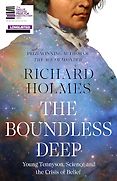
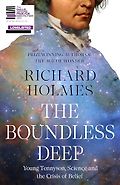
Let’s start with The Boundless Deep: Young Tennyson, Science and the Crisis of Belief by Richard Holmes. This is a biography of Alfred, Lord Tennyson and focuses on his interest in the scientific world of the early-to-mid 19th century, doesn’t it?
Yes. This is literary biography, and written by Richard Holmes, who’s an absolute master of the genre. As you would expect, it’s an incredibly well-written book. It really keeps you hooked and engaged, and one of the things that we’re always looking for is books that are just great writing—writing that really excites, engages, and holds the attention of the reader. There’s absolutely no question that Holmes does that. But it’s also a biography which sets Tennyson in time and place, and tells us something about this particular moment in the early-to-mid 19th century, when artistic expression and literary creation were absolutely fundamentally entangled with scientific discovery and new ideas about the universe, about archaeology, about the origins of the planet. All of these new discoveries were really exciting for Tennyson, but also discombobulating.
They caused him to question his religious faith and provoked extraordinary levels of anxiety about the future of the planet and about the extinction of the human race. All of this is really important for understanding his poetry and his life. Holmes weaves this all together really brilliantly.
For me, the key takeaway was just how, for early Victorians, it really would have made no sense to think about the arts and the sciences separately. The two were absolutely part of the same world of knowledge and discovery. And it really reminds us, when we are so siloed in the way we think about academic disciplines and fields of knowledge, to remember that this wouldn’t have made sense even 150 years ago.
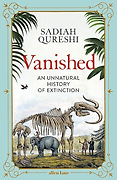
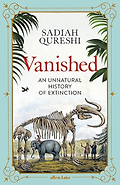
Next up is Vanished: The Unnatural History of Extinction by Sadiah Qureshi.
I really loved this book. I thought it was just so original in its subject matter and how it frames its theme. It’s a book about extinction, and actually, there are interesting connections here with some of the ideas that Tennyson was engaging with in the early 19th century.
It’s about how the idea of extinction develops not just into a scientific understanding of the natural world, but also a political ideology or an idea that has very important consequences for the way that European empires conducted themselves. It brings together histories of the natural world—histories of knowledge about nature and of fossils, dinosaurs and animal species—with understandings of how human societies are classified and belong to this story of progress, but also how they are touched by ideas about vulnerability and future extinction.
It’s a very clever book in the way it brings together histories of science, empire, race, and the environment, and it’s also really engaged in ethical questions about the preservation and display of human remains, for example, and questions of repair and redress, where indigenous peoples have been dispossessed of their land. It’s all done with a real authority, but also an emotional and moral engagement. It’s a book that really challenges you to think about what we owe the past and what we owe the natural world.
There’s a wonderful bit at the end where Qureshi asks: which species would you mourn the loss of? Maybe your favourite animal? Well, actually, that animal may not be here forever because so many of these—what she calls lifeways—have disappeared from the planet. It’s a very thoughtful but also thought-provoking book, which is also brilliantly researched and wonderfully wide-ranging. She takes us to Australia, North America, Paris, South Kensington. We go everywhere in this wonderful book.
Does it cover a particular period? It obviously has a contemporary side to it, but how wide-ranging is it over time?
It’s mostly 18th century onwards because the story begins with the Enlightenment moment and new ways of thinking about science and the natural world, and new systems of knowledge formation. She’s particularly interested in museums of natural history, and how these are growing up at the same time as European empires are conquering and plundering other parts of the world.
And are there particular important protagonists in the book? Does it have its heroes or anti-heroes?
No one is entirely heroic. There are lots of interesting individuals who are part of the story. One of the really powerful stories is that of Shanawdithit, who was an indigenous woman, a member of the Beothuk people of Newfoundland, and Qureshi tells the story of how the Beothuk were essentially destroyed and rendered extinct by European colonialists. Shanawdithit was an extraordinary woman in the early 19th century whose sketches and drawings are pretty much the only source that we have that was produced by an indigenous woman from this period. So it’s a moment where we can actually see the hand of an indigenous woman in the archive. Most of the archive—and Qureshi is very clear about this and tries to read against the grain—is produced by ethnographers, scientists, European colonialists, the archives of government.
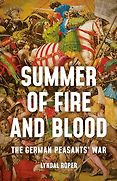
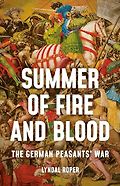
Let’s move on to Summer of Fire and Blood: The German Peasants’ War by Lyndal Roper. She’s a biographer of Martin Luther as well, isn’t she?
She is, and this is a companion volume in a way to her biography of Luther, insofar as she’s still looking at Reformation-era Germany. But Summer of Fire and Blood de-centres Luther and tells a different story about the Reformation, its origins and what gave it its particular character. The Peasants’ War took place in 1524-26, and the peasants who fought were inspired by the ideas of Luther. Luther talked about spiritual freedom, but the peasants reinterpreted or adapted this idea to mean freedom from lordship and freedom to enjoy the resources of the land and to be equal in the eyes of God and in God’s natural creation. It’s a book that really places the thoughts, the motivations, the feelings, and the dreams of the peasants themselves at the centre, even though it’s quite tricky to reconstruct all of that from the sources, which have been mostly produced by the lords, who ultimately won out.
I knew very little about the German Peasants’ War before I read this book. It’s one of those big, chunky, essay topics—what caused the German peasants’ uprising of 1524-6? There have been lots of Marxist-inflected explanations, which have looked at the systems of economic production and ownership of the land. That was very much a legacy of the 19th-century scholarship.
But what Roper is saying is that we have to recreate the peasants’ world. We have to understand their relationship with the land, with the landscape, with the weather, with animals, with the natural resources that shaped their everyday lives and on which they rely to live. We also need to understand the forms of community and brotherhood that were facilitated by this uprising. Roper is very good on gender, showing how this is an uprising that is led by men and is driven by a very powerful ideology of brotherhood, but in which you can still recover the roles that women are playing.
What about the relationship to the Reformation? Luther famously wrote a tract, didn’t he, against the peasant uprising. He was appalled by it. But was he the cause of it as well?
Yes, I think that’s what Roper’s saying. Some of Luther’s ideas about freedom and his critique of the monasteries and so on absolutely inspired this uprising. But he ultimately says, ‘Oh, I didn’t actually mean it that way. Freedom, yes, but not like that!’ And Luther essentially sides with the lords, which for Roper helps to explain why the Reformation ends up becoming quite a conservative Reformation rather than a socially radical one. So there’s a sense of this being a moment of possibility, of contingency, when the Reformation could have looked rather different if the outcome of the peasants’ revolt had been different. She’s trying to recreate that sense of things being on a knife edge. This is a moment when the vision of what the Reformation is going to be is up for grabs.
Were there trials or some kind of great reckoning afterwards where the peasants had their say because they were in court, or is there nothing left like that?
They’re mostly slaughtered by the armies of the lords. The huge violence and bloodshed with which the war ends is something that is conveyed very vividly. Roper, as you may know from some of her previous books, sometimes uses psychoanalytic ideas in a very skilful way to try and capture that sense of trauma and how there’s a kind of lingering effect over decades, perhaps even centuries.
There’s an interesting coincidence where some of the areas that witnessed a witch craze in the early 17th century were areas where there had been a lot of death and slaughter at the end of the Peasants’ War. And Roper just lightly suggests that maybe there’s some kind of lingering trauma. Maybe there’s a relationship between these two things.
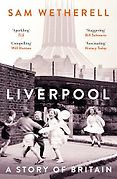
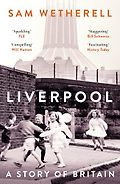
Let’s move on to Liverpool: A Story of Britain by Sam Wetherell.
This book is just terrific. This book is more in my field as a modern British historian, and you look at it and you think, ‘Oh, it’s a book about Liverpool. Well, that’s one city, and it only covers 1945 onwards. Isn’t that a little bit narrow?’ But it really isn’t because what Wetherell is doing is using Liverpool as a case study, as a lens through which to think more broadly about the processes that are remaking British society and Britain’s place in the world in the later 20th century and into the present. It’s a very politically engaged book. He has quite a fierce authorial voice. It’s very sharp and bracing in the way it’s written. Wetherell is a really wonderful writer, and he develops a very clear argument about obsolescence. He talks about Liverpool being a kind of prophecy for what happens when the forces of global capitalism buffer a place and render it obsolete, along with the people who live there and the factories and wharves and shipyards that once served as the centre of a maritime empire and a thriving manufacturing industry. Suddenly, all of this looks no longer fit for purpose. What do you do with a place like that? And what do you do with the people in it when they no longer seem to be part of history’s forward march? They seem to be left behind.
It is a book about the specificities of Liverpool, but there are all sorts of things in it that speak to larger histories of deindustrialisation and the transition to a post-industrial economy, mass immigration and multiculturalism, racial violence and resistance, changing gender roles, the family, childhood, domestic life and the fabric of people’s homes and streets. There’s a huge amount in there. If you’re interested in Britain, you’re going to be interested in this book.
When does it kick off? Does it start in the 1980s when all these problems really crystallised, or does he start before then?
He starts in 1945, although there is a chapter where he gives you a quick potted history of Liverpool because, obviously, the legacy of the slave trade and its place in the maritime empire is really important. He fills that in quite quickly. Then we move on to the period from 1945. It’s a rise and fall narrative in so far as there is a period in the 1950s and 1960s where there’s some optimism. It looks as though industry is booming. New suburban housing estates are being built for these quite well-paid white working-class manual workers. The Beatles appear and storm the world, and it seems as though Liverpool is on the up, but that changes very quickly. It’s a story of this moment. It’s almost as though there are particular political choices that are holding at bay some of the forces that, in the 1970s and 1980s, decimate industry.
There’s a wonderful section about the containerization of shipping and how the creation of this new transportation technology just destroys, pretty much at a stroke, the whole purpose of the docklands in Liverpool, which then fall into disuse and dilapidation. Then they are rejuvenated by a kind of heritage and cultural industry in the 1990s, and gentrified.
He’s really interesting on how what he calls the ruins of that previous era, of a political economy rooted in manufacturing industry and social democratic politics, fades away, but leaves these physical ruins, these remains that you have to do something with—you turn them into a museum or converted luxury flats.
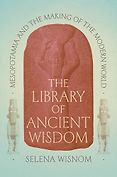
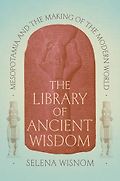
Let’s move on to The Library of Ancient Wisdom, Mesopotamia and the Making of History by Selina Wisnom.
I came to this book essentially with zero knowledge of Assyriology and of cuneiform tablets. I’d walk past them in the British Museum without any understanding of just how wonderful they are. This book was just utterly compelling and it made me think: what have I been missing all of this time?
This is about the first writing system, when human beings began to write things down, and it’s a very clever book because it focuses on a particular collection of cuneiform tablets, 30,000 of them, that were collected by King Ashurbanipal in his library in Nineveh in the seventh century BC. He was a kind of philosopher-king who was really interested in knowledge and collecting, and also in the past. He wanted to bring all of this knowledge together and preserve it in his library. And the reason that we still have access to this is because the library burned down in 612 BC and the fire baked the clay tablets, hardening them, which meant that they survived and could then be discovered thousands of years later by archaeologists.
Mesopotamian civilization goes on for about 2,000 years, but Wisnom is looking at a particular phase of it in the sixth and seventh centuries BC, and really wants us to look at it from as many different angles as possible. There are chapters on religion and belief, chapters on medicine and healing, on trade and farming. There is a chapter on family and marriage and children and education. So you get a real sense of what Assyrians believed, how they saw the world, how they lived their lives. She’s astonishingly accomplished to be able to read these tablets. I’m in awe of her abilities! And she’s also a wonderful writer. Each chapter opens with a little scene written in the present tense which takes the reader into the world of the Assyrians, helping to make it live vividly before the text moves on to develop the particular theme of the chapter in a more analytical way. It’s a really wonderful book to read.
Do the tablets cover all those different areas, or is she drawing on broader archaeological work?
It’s primarily based on the tablets.
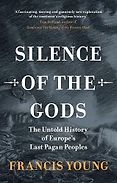
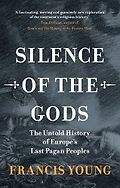
Next up is The Silence of the Gods: the Untold History of Europe’s Last Pagans by Francis Young. Is this a story of Eastern Europe?
Yes. The main areas that it focuses on are the Baltics and this geographically very remote strip, which was quite difficult for Christian missionaries to get to. But they do get there, and this is a story really about what happens when they do. There are several things that are very thought-provoking about this book. First of all, you think Christianity had swept Europe by the medieval period, and Europe was essentially Christendom by that point. From then on, all religious battles were going to be carried out within Christianity rather than between Christianity and pre-Christian religions. Obviously, encounters with Islam and encounters with Judaism are an important part of the history of European religion, but encounters with pre-Christian religions have not really been part of that story. Young is trying to bring these pre-Christian religions together and write them back into that story of European Christianity. Again, these are things I knew nothing about. I’d never heard of the Mordvins, the Chuvashes, the Udmurts. I really just didn’t know that these pre-Christian communities were still very much part of Europe’s religious life well into the 19th century.
This goes right into the 19th century, does it?
Yes. It’s a very scholarly book. Of all these books, it’s the most scholarly one. They’re all based on brilliant research, but this is the one where that research is most to the fore, because Young’s really trying to show how the encounter with Christianity is transforming these pre-Christian religions. One of the big ideas of the book is to do with how we routinely talk about ‘pagan religion’ and ‘pagans,’ suggesting something very ancient, static, primitive and unchanging, when actually there’s a really dynamic story in play about how these pre-Christian religions are changed and evolve and adapt to some kind of coexistence with Christianity.
Young offers some interesting thoughts at the end of the book, where he talks about what we might take from this history for our own religiously pluralistic societies. Do they offer any clues as to how different belief systems can coexist? There was quite a lot of violence, coercion and oppression of these pre-Christian religions, so there are lessons to be learned from that as well.
Did these pre-Christian religions share particular characteristics or beliefs, or are they very diverse in their creeds and practices?
They are very diverse. Young does talk about animism as being a shared characteristic—the idea that objects have supernatural qualities. This is something that a lot of these pre-Christian religions hold in common, and which Christian missionaries don’t quite know what to do with because it’s so far outside their understanding of the spiritual aspects of the world.
He also talks about magic and sorcery as something that Christian observers often read into these pre-Christian religions. They interpret their rites as forms of sorcery or magic. But they do seem to be very diverse.
And when or how did they finally get eliminated? It sounds like that’s the story of the book. What happened to these last pagan religions?
Again, it’s quite a complex picture. In all of these places, you still find people who identify with these religions or systems of belief and may continue to practice some aspects of their rituals and traditions, but often coexisting with Christianity. So it’s a story of adaptation and coexistence as much as it is of elimination and suppression.
Five Books aims to keep its book recommendations and interviews up to date. If you are the interviewee and would like to update your choice of books (or even just what you say about them) please email us at [email protected]
Five Books interviews are expensive to produce. If you've enjoyed this interview, please support us by donating a small amount.