The Panama Canal was an engineering feat but also a social feat, coordinating tens of thousands of workers, uprooting their families, and displacing a former world in the heart of Panama. Historian Julie Greene picks five books to tell the story of Panama from every angle - from the early attempts to the economic outcomes, via the extraordinary lives of the men and women who made it possible.
Let’s begin at the beginning: why was the Panama Canal built?
The idea of building a canal across the Isthmus of Panama had been a dream for centuries. Traffic otherwise had to go around the southern tip of South America, which made the trip thousands of miles longer.
The first step was a railroad built in the 1850s, the first transcontinental railroad in the Western Hemisphere. Then the French tried and failed, tragically and infamously. Then the US tried. The US, in addition to wanting to avoid that long trip, saw it as useful for a range of economic and military reasons. It was sparked by the so-called Spanish-American War, during which it took a long time for the US Navy to travel around that southern tip.
It was also a time when Theodore Roosevelt, as president, had great ambitions for the US. He wanted the US to become a global power commensurate with Europe, and saw military and naval power in particular as key to that.
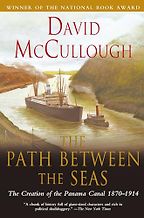
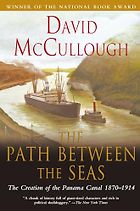
High stakes. On to your first choice: tell us about The Path Between the Seas, by David McCullough.
This is still by far the most widely read book about the Canal’s history, and it has a lot of strengths. It won several prizes for good reason. McCullough is a wonderful writer, and he brings forward a sweeping pageant of life. It has a broad chronology: it covers both the French and the US construction efforts. So, there’s good reason why it’s still so widely read today.
It is, by the standards of the other books I’ll talk about, rather triumphalist in the way it sees US power in the Canal Zone, and the importance of the Canal. Theodore Roosevelt would read the book and think it beautifully expressed his view: that this was not about imperialism, but was a gift to global civilization based on American strength in medicine, engineering, technology, etc.
It’s definitely a great book to read. Many people who are taking a cruise through the Canal think of it first, and it’s a great contrast to the other books that we’ll talk about.
As I understand it from your own book, a triumphalist narrative was not unanimously shared at the time it was being built…
Yes – and McCullough covers that. He has a wonderful eye for the ironies of history. So when I say it’s triumphalist, I don’t mean that he completely erases the downsides. He certainly discusses the ways in which it was a pretty naked grab by the United States, for example…
Tell us more.
The United States wanted the Canal and tried to negotiate with Colombia – Panama at that time was a part of Colombia. Colombia refused, so the United States let it be known among Panamanians that the US would support a revolt, and sent warships. Then when the revolt happened, the US immediately negotiated a treaty that gave it permanent and complete control, “as if it were sovereign”, over the Panama Canal Zone. So this young country, at its birth, had the entire heart of its country taken away from it.
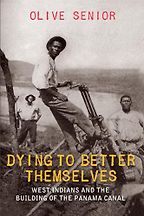
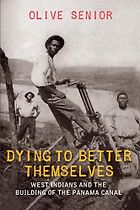
Let’s start digging into these contrasting stories. Your second choice is Dying to Better Themselves, by Olive Senior. Could you introduce us?
Olive Senior is Jamaican, best known for her poetry and novels, so she came to this task—a nonfiction book focused on Caribbean workers—with these incredible writing skills. So first of all, it’s just a really beautiful narrative. She integrates cultural sources like songs and fictional writings into how she understands the Caribbean people.
She centres the Caribbean itself in this story: she shows how the building of the Canal, and the vast migrations across the Caribbean that made it possible, reshaped not only Panama but the Caribbean too. In addition, like McCullough, she covers a broader chronology. She begins with Caribbean migration during the construction of the railroad in the 1850s, goes through the French Canal project, and then through the US project; so it gives us a longer context for understanding the relationship between the Caribbean and the Canal. And finally, she moves the chronology forward as well, following what happened when the Canal was finished: migration back home or permanent settlement in Panama.
Throughout all of that, she takes this group – the Caribbean, mostly male labour force that we think we know – and she shows us the complexity of it: the ways they accommodated themselves to the power of the United States and to life in Panama or the Zone, and the ways they resisted. It’s a beautiful book that marked new approaches to thinking about the history of the Canal.
It’s maybe worth underscoring here what a huge part of the workforce we’re referring to – I believe you wrote that over 30,000 out of the 62,000-strong population of the Zone were from the Caribbean. Could we talk about this link? The US was actively recruiting there, right?
Right. They went to the Caribbean because people there were English speaking, and they were thought to be more easily disciplined. They tended not to use the local workers, so there were relatively few Panamanians, only a few thousand.
The workforce was very hierarchical. There was the so-called ‘unskilled labour’, which was Caribbean workers; and then ‘skilled labour’ was predominantly white US workers, and a few thousand Europeans as well. For a while, they brought in Spaniards and Italians and Greeks, thinking they might help push the Caribbean workers to work harder.
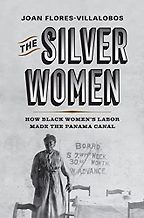
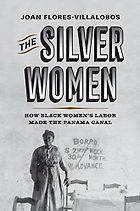
Your next choice takes us to a more hidden world of labour: tell us about Joan Flores-Villalobos’s The Silver Women: How Black Women’s Labour Made The Panama Canal.
Yes, as you say, this takes us to the work and the world of Caribbean women. Much of the work that’s been done by McCullough, and even by Senior, has tended to give less attention to women. The sources are harder to find on the Caribbean women; it’s much more of a hidden world. Joanne Flores Villalobos had to tease out the information from creative use of sources.
She also came to it wanting to understand different things. She framed the book as focused on social reproduction, the work that women did to make it possible for the work on the Canal to happen: the work of feeding, caring for the sick, housing… All of that work becomes important in her story.
Along the way, she shows that understanding women more fully changes our entire understanding of the project. They shaped the economy, and like the male labourers, they had to choose between accommodating themselves to the power of the US or resisting – typically, of course, doing some of both. They negotiated wages; they fought for more respect; they went to court over insults issued against them. They fought to get money from husbands or domestic partners who abandoned them. One of the most common jobs they had was in the home of a white US housewife, so she also shows us how empire shapes intimate relations by zooming in on how these women interacted with their bosses.
Official policy did not at first encourage women joining, right?
Yes, that is a really interesting part of it. The US thought it would be too messy and complicated to have women there, whether from the US or from the Caribbean. There’s a story that I’ve never been able to find the actual evidence for, that the reason the US relented and started allowing women to come was that the Caribbean workers had a sit-down strike and said, “No women, no work” – and then the white workers did the same thing.
The Canal project started in 1904, and by 1908-9 there were thousands of women there – both white housewives from the US, and Caribbean women who came for much the same reasons as their menfolk did. They came sometimes to support their men and make sure they had someone who would cook for them, but also to escape the hardships of their home islands, Jamaica or Barbados. And sometimes because they wanted some adventure, and thought they could make more money building the Yankees’ Canal.
Could we quickly explain the title, ‘The Silver Women’ – I assume a reference to the silver and gold system?
Yes. Really crucial to the whole Canal project was the silver and gold system, which was a biracial system in which white workers were paid in gold and other workers, mostly Caribbean, in silver. It’s in many ways comparable to Jim Crow in the United States. It was not just different kinds of currency: the gold workers were treated much better. They had six weeks’ vacation, and they made more money than they would in the US. The silver workers lived in shacks that lacked screens, were much more susceptible to disease and accidents, and were paid much less. In talking about the ‘silver women’, Flores is broadening out from just the currency system, since the majority of these women weren’t actually part of the silver-gold system. She’s looking at the broader significance of the segregation system, and how women responded to it.
All of this circles something fascinating about the Canal: that it didn’t just require engineering feats, but also the creation of a whole autonomous district with tens of thousands of people, which had to be built up in ten years, governed, and then dismantled again. That world is presented in amazing detail in your own book The Canal Builders: could you introduce your project there?
I came to the topic as a labour historian, interested also in issues of race and gender and migration. All of these were things that McCullough dealt with relatively little. I wanted to show that the labour problem in the Canal was really at the heart of the project. We often think of it as a triumph of engineering and medicine, and certainly, that’s how McCullough saw it. But, from the beginning, I took some wisdom from the chief engineer of the project, George Washington Goethals. He said that those aspects really weren’t that innovative. What was innovative was figuring out how to discipline and manage this vast workforce of people – so that’s what The Canal Builders took on.
The book is incredibly rich in personal stories. Could we talk a little about the archives you used?
Yes – the sources are phenomenal, especially from the perspective of it being a United States project. The best place for information about it is the records of the US government held at the National Archives. The government obsessively recorded every single detail. Beyond that, there are records in Panama that helped me understand the project from a Panamanian perspective, and there are records in the United Kingdom, because the Caribbean labourers were colonial subjects of the British Empire, and the British were keeping an eye on them. They would often write to their diplomatic representatives in the UK, and those letters were some of the very best sources I found in terms of the Caribbean experience and perspective.
When I began the project, I thought I was just going to focus on the white skilled workers who went to the canal, and I figured McCullough’s book had probably done it all. But the minute I got into the sources, I saw that the things that interested me were such a small part of his book: how people lived, how people worked, what forms of exploitation they experienced, and how they responded to or reacted against them. There were voluminous sources that brought that part of the story to life. In my very first visit to the National Archives, I realised that there was a book here, the sort of book that I would want to write.
Then I knew I had to go to Panama and see what was there. And a friend of mine who had done work at Kew, at the UK’s National Archives, said, ‘I think no historian working on the Canal has ever visited that archive, but I think you’ll find a lot there…’ So towards the end of my research, I took the plunge and went, and it was a final gold mine.
I loved the details from the letters to consuls. The court records were astonishing too…
Yes. No one had ever looked at those, and I remember searching and searching for where they might be, and it turned out they were here in D.C. at the National Archives. They were incredible – the criminal suits and the prison labour issues, but also the civil records. For example, one of the best ways I traced women’s experiences was looking at the divorce records. The white US men would ask their wives to come join them in Panama – some working-class carpenter’s wife in Detroit, or something – and a lot of wives would say, ‘Hell no, I’m not going to the wilderness that is Panama.’ And then the men would divorce them on grounds of abandonment, because at that time the law said that if you don’t go where your husband wants you to go, you’ve abandoned him. So they divorced their wives, and married some young Panamanian woman, and both the wife and husband would enter letters between them as evidence, going back sometimes years and years. That let me document these marriages, and the lives of working-class men and women. It was really fascinating – a whole world I had no idea about.
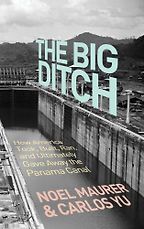
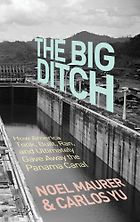
Really interesting. Ok, your fourth choice is going to carry the story on beyond the building years: this is Noel Maurer and Carlos Yu’s The Big Ditch: How America Took, Built, Ran, and Ultimately Gave Away the Panama Canal.
I include this book partly because it’s just so different from the others. It’s a little more dry – it’s an economic history of the canal, where the other books we’re talking about lean more towards social history. Maurer and Yu quantitatively and qualitatively examine the economic impact of an imperial project like the Panama Canal. Did it make money? Who did it make money for? How did that change over time?
What they found was really interesting. At first, the Canal’s advantages could be seen pretty clearly. It obviously made traffic cheaper; it saved thousands of miles, etc. But they found that while those improvements helped the global economy, they didn’t really benefit the United States government itself. Furthermore, what they found is that the economic benefits of the Canal had really diminished by the 1960s. So the decision by the US to transfer the Canal to Panama wasn’t some benevolent generosity. It was more that the United States, at this point, really wasn’t finding it that useful. And in that post-colonial period of history, it was unseemly that the US owned the heart of another country. So there were a lot of straightforward reasons.
Was aviation the big factor in the decline, or a change in key trade routes, or…?
Aviation, the interstate highway, and the fact that rail freight became cheaper as diesel was available… Also, the West Coast of the US developed more, and there were more markets there. So the Canal became a little less important.
One of the things Americans usually don’t realise about the Canal is that when the Panamanians took it over, they ran it better. It makes more money, it’s safer, it’s more efficient. They do a better job in every way, which is hard for Americans to believe because we think we’re the best.
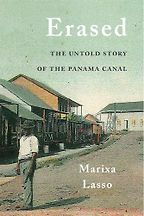
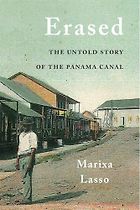
Well, that brings us to your last choice. Let’s talk about the Panamanian view on the Panama Canal. Please introduce us to Erased: The Untold Story Of The Panama Canal.
This is a great book to end with because it has a very different approach. It’s by a Panamanian scholar, Marixa Lasso, and she centres Panama in her story. She emphasises that the Canal wasn’t built on empty land, that it was a thriving society, crucial to the Republic of Panama, which had been densely inhabited, urbanised, very active commercially, and shaped by long histories of transportation and exchange. She looks at the impact of the Canal, and in particular, she focuses on the decision of the United States to depopulate most of the zone.
About 40,000 residents of what became the Canal Zone were expelled. For some of them, this was because the building of Gatun Lake and the dam meant that some areas were flooded and people had to leave, but most of it was not necessary. Most of it was just because the United States wanted to have much more control over the landscape. So it’s about how the imperial power, the United States, produced a whole new landscape. They had to create replacement settlements, and they had segregated communities reorganised along the corridor.
Then, on top of all of that, she’s really interesting for thinking about Panama’s place in the world. For example, she talks about the ways in which the US saw itself as modern and bringing modernity to Panama, and she looks at the ways in which Panama was already modern, and the ways that the United States messed with its sense of itself and its own modernity.
Ultimately – this is perhaps the most important thing – she connects the depopulation and the erasure of communities to erasures of memory, and the ways in which Panama itself is written out of the story of the Panama Canal.
Five Books aims to keep its book recommendations and interviews up to date. If you are the interviewee and would like to update your choice of books (or even just what you say about them) please email us at [email protected]
Five Books interviews are expensive to produce. If you've enjoyed this interview, please support us by donating a small amount.
Julie Greene
Julie Greene is a historian of United States, transnational, and global labor and immigration. She is the author of Box 25: Archival Secrets, Caribbean Workers, and the Panama Canal, which explores a set of remarkable memoirs written by canal workers (and held in Box 25 at the Library of Congress) as the starting point for considering migration, power, and silences in history. Previously, Greene authored The Canal Builders: Making America's Empire at the Panama Canal, which received the Organization of American Historians’ James A. Rawley Prize for the best book on the history of race relations.
Julie Greene is a historian of United States, transnational, and global labor and immigration. She is the author of Box 25: Archival Secrets, Caribbean Workers, and the Panama Canal, which explores a set of remarkable memoirs written by canal workers (and held in Box 25 at the Library of Congress) as the starting point for considering migration, power, and silences in history. Previously, Greene authored The Canal Builders: Making America's Empire at the Panama Canal, which received the Organization of American Historians’ James A. Rawley Prize for the best book on the history of race relations.