Thanks for agreeing to talk to us about the 2026 Booker Prize shortlist. It’s an exciting shortlist—all books I’ve either already read and admired or am excited to read. What were you looking for, when you were looking for the best novels of the year?
It’s my pleasure. I didn’t go into the process with specific criteria in mind, though, over time, I found myself drawn to novels with rich and interesting sentences, which made surprising and risky choices and opened a hidden window on the world. In her memoir Priestdaddy, Patricia Lockwood – also a judge this year – has a lovely line about what good books can do: to give you a feeling that “life can be holdable in the hand, examined down to the dog hairs, eaten with the eyes and understood.” That rang true for me.
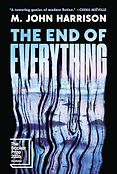
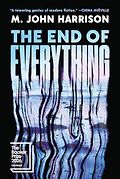
The first book on the 2026 Booker Prize shortlist is M. John Harrison’s The End of Everything, which features a beachcomber who discovers a very strange object. Perhaps you’d tell us more – and why the judges admire it.
This mysterious, haunting novel is set in post-apocalyptic Britain after an alien invasion, where no-one knows what’s going on. It’s full of intriguing, counter-intuitive turns of phrase that upend our usual understanding of language – the sea is described as turning “into speech”; dawn is an “exotic form of sunset, some vast, gorgeous, fragile glitch in the real” – and captures a general sense of confusion and loss, a deep melancholia and uncertainty about a viable future, that feels very true to contemporary England.
M. John Harrison is often described as “genre-defying” – would you expand on that, why you think that is?
This is a beautifully weird novel with markers of science fiction – there’s an alien invasion, a strange species that washes up from the sea, and a dystopian future replete with mad scientists – but isn’t too concerned with the exposition or world-building as we might expect. It drops the reader right into the world, and makes them feel that same sense of existential loss as its characters; you too are in that strange haze, trying to work out where you are and why you are here. Violent acts happen and we don’t know why; people make decisions based on inarticulable reasoning – much like they do life. At times the novel almost feels, with its interest in the evocative and atmospheric and associational language, like poetry.
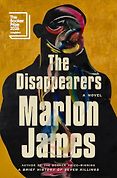
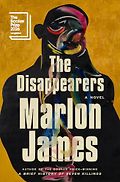
Next on the 2026 Booker Prize shortlist is Marlon James’s The Disappearers. Would you introduce it to our readers?
This bold and challenging novel confronts homophobia in 1980s Jamaica by following a group of gay men who decide to stage a play about queer life in Kingston. It’s formally wide-ranging, with sections composed of letters, reported speech, and diary entries, and the story itself contains so much heart and so much violence. There are sentences in that book that made me belly-laugh; other times a scene would be so confronting in its brutality that I had to put the book down, go into a dark room and stare into the void for twenty minutes. At 640 pages, it’s the longest book on the shortlist, and that kind of maximalist attitude seeps into everything about the book: from its language, its experimentalism, its prose, its swagger and fury.
Marlon James won the 2015 Booker Prize with A Brief History of Seven Killings. Do you take into account an author’s previous work or achievements while judging? In some cases, it must be difficult not to at least bear it in mind.
We’re not supposed to consider any of that, and just focus on the novel itself. Book world chatter does happen around you, of course, though I found ways to artificially isolate myself from it. When I was reading, my commitment to the purity of the text extended so far as to avoid reading blurbs, supportive quotes, biographies and author photos – I covered some with post-it notes.
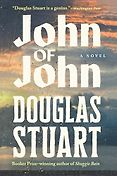
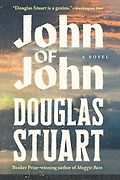
Maybe that brings me to our next book, John of John, also by a previous Booker Prize winner; Douglas Stuart won it in 2020. It centres on a strict island community on Harris, in Scotland’s Outer Hebrides. Would you talk us through the book and why it is notable?
A difficult relationship between a father and son forms the heart of this book: Cal is a graduate who has returned home after fashion school, and his father John is a repressed, lonely man with secrets of his own. Set in the nineties, this lovely novel evokes a rich sense of time and place, drawing out the social world of the island of Harris.
Two phrases come to mind when I think about this book. First, ‘texture’: the novel deftly weaves in many beautiful details and builds such a vivid, granular sense of its world and its characters. It’s as though you could reach your hand right into the pages and feel the grit of Harris. Second, ‘slow burn’: the novel has a way of building these little details into something wonderful.
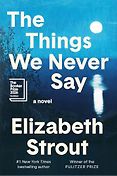
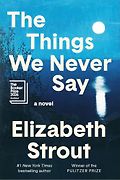
Next we have The Things We Never Say by Elizabeth Strout, a previous shortlistee, which follows a history teacher who wrestles with a deep sense of loneliness. Would you tell us more?
How do you write about contemporary American politics without reproducing the mania and fear that makes things feel so violently hopeless and deranged? This is a wise and poignant novel that explores what happens to the individual psyche during times of visible cruelty and mistrust. Artie Dam is a history teacher living in Massachusetts who has lived thus far with an innate and uncomplicated sense of goodness, but as the world shifts around him, he grows more used to cynicism and dishonesty. Strout writes about this slow corruption with such precision and grace; it’s both heartfelt and deeply sad.
Speaking more generally, there are sometimes, understandable, questions about the relevance of the novel in unstable and violent times – is it just a navel-gazing toothless art form, etc. I often think about what the author Elif Batuman once wrote in response: that great writers have always illustrated compelling interiority in times of social upheaval, and when these stories succeed, show the importance of people having a right to their own private dramas.
I think this is very much a novel that speaks to that point, and also links the two spheres of the public and private: it shows what is happening out there in politics not only affects our social and economic worlds, but also in the – allow me to be very uncool and sentimental here – matters of the soul.
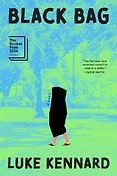
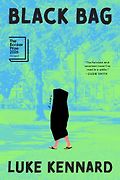
I think that brings us to Luke Kennard’s Black Bag, which portrays a social experiment in which an actor is hired to sit through a term of lectures inside a leather sack. It’s inspired by real events at Oregon University, I believe. Quite different in tone to the Strout – but the judges admired it?
Reading 163 books in seven months really makes you appreciate the wide range of novels being published at the moment. It showed us that there are many ways to write a great novel, and we wanted our longlist and shortlist to reflect that. We also found that writing good comedy is very difficult. Black Bag is a funny and clever book about a struggling actor in modern-day Britain, who in his desperation takes up this strange job, which takes him to even stranger places. The novel touches on several zeitgeisty themes – the difficulty of being an artist today without inherited wealth, why men are having a weird time – with a warm intelligence and lightness of touch.
Kennard is an award-winning poet. Does that come through in his prose?
The novel has so many sharp, memorable sentences that capture our moment of collective derangement and debasement. Here are some I underlined:
He closes his laptop: the contemporary moment’s gesture of generosity nonpareil.
Stockbrokers are described as:
a priestly caste in the later days of a once great civilisation, guardians of arcane spell books, fat on their banquets and delirious on their own perfumes, bereft of any sense of duty or responsibility. No love.
And:
We lay claim to a form of sexual liberation, says Claudio, but the attendant humiliation literally kills people.
to which our narrator responds
Sex is really weird, that’s for sure.
I’m not a poet myself, though judges Raymond Antrobus and Patricia Lockwood taught me so much about reading with a poet’s eye and ear. There is so much personality, humour and wisdom in these sentences; they also contain a nice rhythm and an understanding of human life that makes you want to both laugh and throw the book across the room in cringing, despairing recognition. So, to answer your original question: possibly, yes!
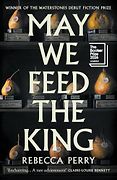
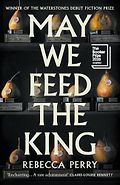
The same might also apply to poet-turned-novelist Rebecca Perry, who is our final shortlistee with May We Feed the King. Tell us more.
We admired the beauty of its prose, its artful and wonderfully strange story, and how it thoughtfully engages with questions of power, legacy and history. A historical curator in modern-day Britain is commissioned by a former palace to recreate past scenes of glory; we then jump back in time to life at a medieval court, in which a reluctant king ascends the throne. There’s so much here about the nature of power and ambition, and how the historical narratives we often receive without question today are shaped. With this book, I think about that quality of ‘aliveness’: much like how the curator herself prizes staging historical scenes infused with a sense of life, as though her subjects had just moments before left the room, we were impressed by just how immersive and vivid and richly observed the story in the medieval court felt. You can really feel the claustrophobia, the judgment and the swirling ambitions of the court as you read.
How did you find the judging process—and has it changed how you read and understand fiction, would you say?
It’s been hugely pleasurable and so much fun, and has brought me back to the best parts of university, when life was just about reading rich, interesting texts and discussing them with clever and passionate people. I’m already trying to start new book clubs to pre-emptively fill the sad gaping hole in my life that will open up once this is over. It has made me appreciate good writing and good editing, and perhaps – speaking as a sometimes critic – even slightly broken criticism for me.
Reading all these books shows how difficult it is to write a well-executed novel, to the point where I’ve sometimes wondered about the point of further contestations about things like pose and theme and affect about what are basically and fundamentally well-written books. But we must plough on, because it is worth thinking through, albeit with more generosity in my own heart.
What will you be thinking about when you decide on the winning novel?
I went to a talk by Ben Okri recently, who said there were two types of novels: first, the ‘private garden’ books, ie the kinds of texts that derive from the particular imagination and interiority of the author, and are often perhaps more weird, jagged and mysterious as a result; and second, the ‘in the world’ books that pick up on and respond to things in our external world – politics, social movements, etc etera.
It got me thinking about how, on occasion, you’ll encounter a book that through some mysterious and gorgeous alchemy is about to do both in its own idiosyncratic way. Perhaps that is what makes a future classic. Bring on November!
The winner of the 2026 Booker Prize will be announced on Monday, 9 November.
Interview by Cal Flyn, Deputy Editor
October 13, 2026
Five Books aims to keep its book recommendations and interviews up to date. If you are the interviewee and would like to update your choice of books (or even just what you say about them) please email us at [email protected]
Five Books interviews are expensive to produce. If you've enjoyed this interview, please support us by donating a small amount.