Henry David Thoreau insisted that "in wildness is the preservation of the world." His words have inspired conservationists to bring many of the planet's more ruggedly beautiful places under environmental protection. But 'wilderness' as a concept has become increasingly contested in recent years, explains Five Books deputy editor Cal Flyn, whose new book The Savage Landscape unravels the history of an electrifying idea.
NEW RELEASE
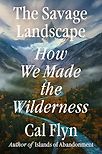
The Savage Landscape: How We Made the Wilderness by Cal Flyn
Thank you for recommending these five books on wilderness. Perhaps you could start us off by talking about what defines a wilderness.
Well, it’s a surprisingly fraught question. I think it’s best for me to say that there are a couple of different ways of defining what a wilderness is, one based primarily on subjective qualities—perceived wildness, fearfulness, remoteness—and the policymaker’s or cartographer’s definition, which is derived according to more objective measures, like distance from roads and the built environment, and which is used to plot maps or define protected areas.
I have always loved and sought out the feeling of entering a wilderness—which to me is tied up with physical challenge, adventure, a sense of exploration and self-sufficiency, as well as a broader sense of coming into direct contact with nature.
To many people, the wilderness is somewhere they seek solitude and the sublime, and where they might strip life back to its essentials. To conservationists, wilderness might be specifically primary or unfelled forest, unploughed ground, an unaltered landscape. But it’s a contested term, because it is not widely agreed what ‘altered’ means, exactly, and it is one that many environmental groups have moved away from using in recent years, because indigenous residents of the wildernesses often argue that the label erases the long human occupation of their homelands.
When I think of wilderness, I think of wild woods, thorny deserts, vast open plains. Is that not right?
It is and it isn’t. These are all landscapes commonly claimed to be wildernesses. The controversy tends to arise around the acceptable level of human impact. In the 1960s, the United States introduced the Wilderness Act, which defined wilderness land as
an area where the earth and its community of life are untrammeled by man, where man himself is a visitor who does not remain.
It’s rather lyrical for a legal definition, and this framing of wilderness has been extremely influential—not only in America but throughout the global conservation movement. But of course it does conveniently gloss over the long Native American habitation of and management of lands officially designated as wilderness.
The idea that man should be “a visitor who does not remain” has underpinned many inhumane environmental policies, laws that have demanded indigenous groups be forcibly removed from protected areas around the world. This is a big issue in the Congo Basin today, for example; in Uganda, I met dozens of Batwa people who have lived in refugee camps for decades, following their forced eviction from the Virunga national parks. Previously they had lived alongside the Virunga’s famous mountain gorillas for an estimated ten thousand years. More recently, the Baka forest people of Cameroon, the Republic of Congo and the Central African Republic have also been extremely badly treated.
Depending on how you define it, there are an estimated ten million ‘conservation refugees’ like them in the world today—people who have been displaced by the creation of environmentally protected areas, based on this sense that wildernesses should not be populated.
It is a really thorny question. Because if you accept the presence of humans and all environments being human impacted—if you accept that there is no pristine ‘before’ to return to—then one must ask: what exactly is it that we are trying to save? The hard problem of wilderness forces us to interrogate many of conservation’s basic assumptions and overarching objectives.
While researching my book The Savage Landscape: How We Made the Wilderness, I travelled all around the world following threads of the story of wilderness, starting from its ancient spiritual roots as a site of epiphany or revelation, and moving through various interpretations of the idea by way of aesthetics, landscape ethics and conservation. The book told through a series of ten journeys to some of the world’s most isolated locations—from the Sinai Desert to the high Himalaya, from the Amazon rainforest to the Antarctic peninsula.
Right. I began my own investigation into the history of wilderness in the deserts of Egypt, examining the desert as a site of revelation in the Abrahamic religions and the later development of Christian asceticism.
Actually, the wilderness appears in many other world religions too: as a place where one might find enlightenment or epiphany through trial. It doesn’t have to be desert—Gautama Buddha abandoned the royal court, including his wife and child, for “remote jungle thickets” and the Hindu prince Rama also journeyed through a “jungle of punishment” dense with shapeshifting demons. Other religions or spiritual movements use wilderness trials as a form of purification: a washing-clean of the mind of daily concerns, preparing it for grander concerns.
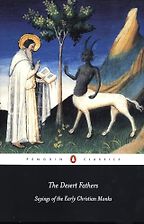
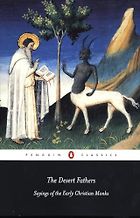
The ‘Desert Fathers’ of this book were a loose conglomeration of early Christian ascetics living in the Egyptian deserts, from the third century onwards. Their pared-back approach to worship—abandoning theological texts in favour of direct revelation—and extreme living conditions would trickle down to influence the monastic traditions of both the eastern and western arms of the Church. You can see their direct influence on forest hermits of mainland Europe and Russia, for example, and the cave and mountain hermits of the Levant, and m0re indirectly the Irish missionaries who flung themselves into the ocean in coracles.
Some of the wisdom of those earliest desert ascetics was collected together over many years as the Apophthegmata Patrum, or the ‘sayings’ of the Fathers. The sayings—which often take the form of weird, fable-like stories set in eerie, dusty expanses haunted by demons—are cryptic, sometimes comic, and always intriguing. It’s a book for dipping into, a bit like certain poetry collections. I need to be in the right frame of mind to appreciate them, but sometimes their effect is profound and destabilising.
If you want to know more, I also recommend the writing of John Wortley, especially his Introduction to the Desert Fathers published by Cambridge University Press. There’s also a great book by Peter France called Hermits: The Insights of Solitude that offers a broader sweep through time.
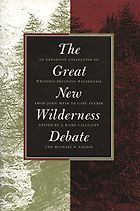
Next you’ve chosen a 1998 collection called The Great New Wilderness Debate, edited by J. Baird Callicott and Michael P. Nelson.
I found this book completely invaluable during my research. Basically it’s a kind of wilderness ‘reader’: a collection of key texts that will help you get your head around the evolution of wilderness into its modern-day iteration as a legal designation and form of environmentally protected area.
There’s lots and lots to read in this book. My copy is almost 700 pages long, and there’s a follow-up collection with the same editors called The Wilderness Debate Rages On if you want more of the same. These also aren’t the kind of books to sit down and read from cover to cover, but rather to pick out the sections that are of special interest to you.
It has extracts of writing by Ralph Waldo Emerson, John Muir and Theodore Roosevelt, for example, that give a sense of developing American thought on wilderness preservation around the end of the 19th century and beginning of the 20th century. Then it devotes a lot of space to the later deconstruction of the wilderness concept by key thinkers like William Cronon, whose landmark essay ‘The Trouble With Wilderness‘ is reprinted in full. Cronon famously argued that
Far from being the one place on earth that stands apart from humanity, it is quite profoundly a human creation
What he’s arguing, essentially, that wilderness is a construct, an ideal that we project upon the world, “a reflection of our own unexamined longings and desires.” Many of the locations most celebrated for their wilderness qualities, in the US and elsewhere, have actually been purposefully depopulated:
The removal of Indians to create an “uninhabited wilderness”—uninhabited as never before in the human history of the place—reminds us just how invented, just how constructed, the American wilderness really is.
I remember reading this essay for the first time and having a kind of dropping sensation, a sense of my entire conception of nature and landscape shifting. It helped me understand that the way I view nature is highly shaped and coloured by my cultural background.
But then there’s a very rousing defence of wilderness as something precious to protect by the activist Dave Foreman, and international input from Ramachandra Guha and Arne Naess. Plus some early discussion of how the wilderness preservation and indigenous rights movements might work together, or not—something that is coming more to the fore in the present.
Those with an academic interest in the subject should definitely also read Mapping Wilderness, edited by Stephen J. Carver and Steffan Fritz, which is more recent. I think it was published in 2016. They are less focused on philosophy and ethics and more focused on generating maps that can be of use to policymakers seeking to designate new nature reserves. It’s a different take and a very practical one. Plus it has global scope.
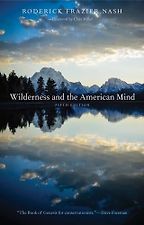
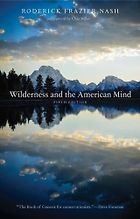
Right. Because many of the thinkers you’ve mentioned are American, and your third book recommendation looks specifically at the United States wilderness tradition. This is Wilderness and the American Mind by Roderick Nash.
Wilderness was a great preoccupation of American thought all through the 20th century, and Roderick Nash’s book—a pioneering work of environmental history first published in the 1960s, but reprinted and updated several times since then—is a useful key to understanding why. It analyses how ‘wild’ landscapes came to be prized by a colonial society seeking its own monuments in the absence of Roman ruins or established art museums. European settler society either defined itself against Native American culture or simply ignored it, and the westward-sweeping frontier became an important element in the story colonial America told itself about itself—as did the frighteningly alien landscapes the colonists encountered, explored and mapped over the decades.
Anyway, the Nash book is a highly readable work of cultural and environmental history, and the latest edition includes extra content by Nash responding to critiques of his work and new research. It’s a must-read on the topic, especially for Americans but really for everyone with an interest in wilderness preservation and its origins as a movement.
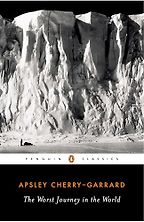
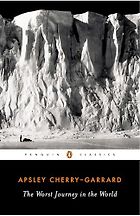
Next you’ve selected Apsley Cherry-Garrard’s The Worst Journey in the World, a first-hand account of Captain Scott’s 1911-1912 expedition to Antarctica. The writers Sara Wheeler and Paul Theroux have both previously recommended it to us; Wheeler described it as “possibly the best book ever written.”
I love that. Academic discussion of wilderness is all very well—and necessary, truly—but I also wanted this list to reflect the savage, unconstrained beauty of the world’s wildest places, especially Antarctica.
If anywhere on Earth really can make a claim to being a true wilderness, it is Antarctica, which was not confirmed to exist until well into the 19th century (although, as qualifier, there is some suggestion from oral history it may have been encountered by Māori navigators centuries earlier, although this is difficult to substantiate). Though already impacted by climate change, large swathes of Antarctica have literally never been set foot upon, unlike almost everywhere else on Earth. It and the deep sea are the closest things we have to truly ‘pristine’ environments.
Cherry-Garrard’s account of his time in Antarctica capture the beauty and the horror of the polar south. He was not among the party that made the infamous and ill-fated expedition to the South Pole, but he did take part in an extremely gruelling journey through the polar winter to gather emperor penguin eggs for scientific purposes, during which the men lost their tent to a snowstorm and only barely survived. Cherry-Garrard’s teeth broke apart in his gums due to the violence with which they were chattering.
Horrible.
The conditions these men faced were truly extreme, and they were working out how to do it as they went. It’s a classic wilderness narrative. I love to read diaries of explorers—they are invariably pushed to their physical and psychological limits. Often they, like Cherry-Garrard, are beautiful writers, or, at the very least, recording strange and beautiful natural phenomena, which can be utterly bewitching to encounter through prose.
Sara Wheeler herself wrote a great biography of Cherry-Garrard. That’s worth mentioning too. As is Francis Spufford’s cultural history I May Be Some Time, a sort of Anglo-Antarctic equivalent to what Roderick Nash did for American wilderness. Spufford digs into what it was, exactly, about Antarctica that so caught the English imagination, and what the ice and the pursuit of the South Pole came to symbolise to the society of the day.
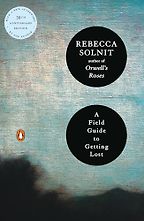
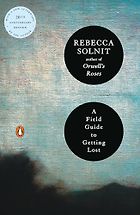
I think that brings us to your final book recommendation, which is Rebecca Solnit’s A Field Guide to Getting Lost. Why do you recommend it in this context?
I love this book. Actually, I love all the books by Solnit that I’ve read, but I have a special soft spot for A Field Guide to Getting Lost. It is a slim, essayistic book about losing objects, losing one’s way, losing oneself, and the art—as she puts it—“of being at home in the unknown.” Early on, she quotes the frontiersman Daniel Boone:
I never was lost in the woods in my whole life, though I was once confused for three days.
I think that gets to the heart of it very well.
I’ve spent years now trying to get my head around the pull of the wilderness and how to find it. I’ve realised that the harder I pursue it, the harder I try to pin it to the map, the further it seems to slip from my grip. Wherever I went, no matter how far I travelled, the wilderness was always reported to me to be just over the next rise, around the next bend.
What I’m really looking for when I’m looking for wilderness is that sense of being in uncharted territory, off the map. Lost, or, at the very least, confused in the way Daniel Boone relates. Of course one can experience that on an Antarctic expedition, or on a ship on the open sea, or after many days or weeks on the trail. But the demands of that kind of adventure travel can be intense, and may keep you trapped in a highly logistical, rational, practical mindset—constantly calculating mileage or pack weight or altitude gain. Carrying a mobile phone or a satellite emergency beacon is useful and necessary, but it also eats into that mental freedom, the sense of being cast-adrift, which is the reason you have gone there in the first place.
Getting lost or surrendering oneself in the way Solnit is talking about can be achieved much closer to home. The poet Gary Snyder once wrote:
A person with a clear heart and open mind can experience the wilderness anywhere on earth. It is a quality of one’s own consciousness.
I’ve come to see that the argument about wilderness legislation and land designation is an attempt to answer a different kind of question. An important one—one tied up in the future health of our planet—but one bound up in physical realities. The wilderness may yet be confirmed to be a physical place, but it has certainly always been a metaphysical one. And, as such, it has been an object of fascination for millennia.
July 22, 2026. Updated: August 24, 2026
Five Books aims to keep its book recommendations and interviews up to date. If you are the interviewee and would like to update your choice of books (or even just what you say about them) please email us at [email protected]
Five Books interviews are expensive to produce. If you've enjoyed this interview, please support us by donating a small amount.
Cal Flyn
Cal Flyn is a writer, journalist, and the deputy editor of Five Books. Her 2021 book Islands of Abandonment: Life in the Post-Human Landscape, won the John Burroughs Medal for natural history writing and the E.M. Forster Award from the American Academy of Arts & Letters. She was declared the Sunday Times Young Writer of the Year in 2022. Her latest book, The Savage Landscape: How We Made the Wilderness has just been released.
Cal Flyn is a writer, journalist, and the deputy editor of Five Books. Her 2021 book Islands of Abandonment: Life in the Post-Human Landscape, won the John Burroughs Medal for natural history writing and the E.M. Forster Award from the American Academy of Arts & Letters. She was declared the Sunday Times Young Writer of the Year in 2022. Her latest book, The Savage Landscape: How We Made the Wilderness has just been released.