Suspense is a powerful narrative engine that drives the plots of many novels, whether or not they are shelved under 'mystery books' in a shop. We asked Nicholas Russell – longtime bookseller and debut novelist – to recommend five of the best literary mystery novels, all notable for the quality of the writing and the creativity of approach.
Thank you for agreeing to recommend five literary mystery novels. As with romance books, I think there are novels that fall within the commercial ‘mystery’ genre but also a much wider ecosystem of books that use mystery as a device to drive a plot forward.
Yes, it’s interesting. Applying the ‘literary’ tag to genre – whether that is mystery, horror, whatever – adds a slight layer of condescension. Like: these are mystery novels for adults.
As opposed to all the other mystery novels, which must then be, by implication, childish.
Right. But I think it can go one of two ways. It can either mean there is a greater attention to the prose – that the prose is considered of equal importance to the plot – or that it is a very light-handed version of the genre. So, it might be a literary novel but with mystery elements.
As a bookseller, I know that readers have certain expectations when they go to a certain section of the bookstore. The function of genre is one of expectation. At least in part.
So when you say ‘literary [blank]’, there’s a sense that it will be more intellectual, or there will be less emphasis on the page-turning quality of your standard genre novel.
That being said, the books I’ve picked are all over the place. Some are literary because they have great prose, or approach the mystery from an interesting angle. But I do think they are very much of the genre and do not shy away from it.
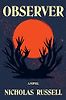
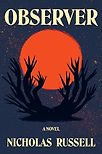
Your own recent novel, Observer, makes an interesting genre Venn diagram. There are mystery elements, horror elements, and it is literary in style or in terms of writing quality. Do you think of it this way?
The only thing I was adamant about when we were selling the novel was that I wanted it shelved in the horror section. That it should be very much a horror novel, but within that it could contain any number of things.
I do consider myself more of a short story writer, and I read widely. I think my fiction tends towards the literary-speculative. It’s only since the book came out that people told me it is also, in part, a mystery novel. That came organically from the plot, which is about a young woman looking for her mother and finding out all these things that have been kept secret.
I didn’t want to shy away from the genre elements, it mattered a lot to me that it shouldn’t be shelved in ‘general fiction’.
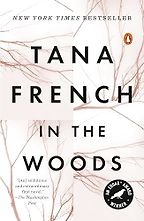
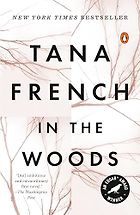
Can we look at your book recommendations? Let’s start with Tana French’s In the Woods, which was her debut novel back in 2007.
It’s an incredible book. A friend of mine, who is not at all a genre person, could not stop talking about it. I found that interesting. I immediately thought: There must be something going on here beyond the plot to make it interesting to him.
Tana French’s novels are remarkable. First, the prose is really great – she cares about her sentences and the way things sound. But also, the mystery genre is a very fruitful genre for psychology and exploring the inner lives of characters – and she has a really great unreliable narrator in In the Woods. There’s a sense that the narrator is lying to themselves about something, and that’s essential to their job, which is that they are a detective. The lying plays out in a very interesting way at the end of the novel.
Tana French also writes my favourite kind of series, which is one that you don’t need to read in order. There are recurring characters, but it might be that a character is much older in the next book, or is in the background of another. Something like that.
Yes, I really love that about the writing of Emily St. John Mandel – fans talk about the ‘Mandelverse’ – or even Jennifer Egan’s A Visit from the Goon Squad and The Candy House. The stories don’t link, exactly, but you have this sense that the recurring characters continue to exist and have lives outside of the books themselves.
Exactly. It’s a very generous way of crafting a series, which is to say: Come at it at any point that you want. You don’t need to start here. Although I do think you should start with In the Woods.
It’s a very spooky book too. That’s another reason why I really like it – there’s a feeling that it could, at any moment, turn into an outright horror novel. She has a wonderfully strange and unsettling way of writing about the forest and nature, and the attempt to wrangle nature. The environment has a will of its own, almost.
These are seeds that were planted for my own novel, and it’s very much the same mindset I had while writing Observer. The landscape is alive and even aware of you in some way that can’t be ascribed to human consciousness. It’s bigger and more diffuse than that.
In In the Woods, there are incredible moments when someone is out by themselves, an almost psychedelic thing happens where they lose themselves or their grip on reality.
I love that novel, and the whole ‘Dublin Murder Squad’ series. They are all very good books, and all very different. Each novel in the series seems to emphasise different elements of the genre. Like, in the next one, one of the detectives discovers a dead body that is her exact doppelganger. She infiltrates a group that this person was in, because they don’t realise that this person is dead.
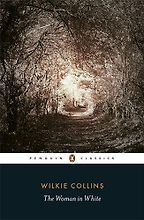
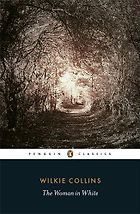
Perfect, thanks. Let’s talk next about The Woman in White, the Victorian sensation novel by Wilkie Collins.
I think Wilkie Collins is an incredible writer. He was an contemporary of Charles Dickens, but – like Dickens – you will be surprised by how contemporary he sounds. I was really torn between this and his book The Moonstone which is also really incredible, but more of a detective novel.
The Woman in White has been adapted in a game of Telephone – Sarah Waters wrote Fingersmith, which is almost a retelling of The Woman in White, then the South Korean filmmaker Park Chan-Wook adapted Sarah Waters novel as The Handmaiden. I saw The Handmaiden first, then read the novel, then went all the way back to the source material, which is so complex and rich.
Essentially, it’s about the involuntary institutionalisation of women, and the inconvenience of women in certain parts of society and how they have been hidden away. Out of that comes a kind of mystery, in which people are trying to figure out what has happened to other people, and they come up against a very well-funded bureaucracy that is the legal system, and also the social mores of England at the time.
Collins’ writing is deeply suspenseful. There are elements of the Gothic that come through, and – like In the Woods – there are times when it feels like a ghost will appear.
Wilkie Collins has a genuine curiosity and empathy for people in desperate circumstances. Dickens was obviously given a lot of credit for writing about child labour and the social ills of England. They were buddies. Collins is very interesting about the psyche of British aristocrats and those who come into contact with them.
He’s also a very funny writer. You can pick up The Woman in White today and find a very fun page-turner.
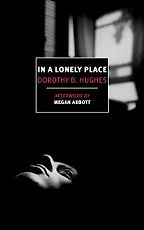
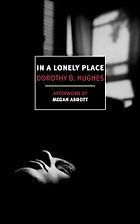
Next you’ve chosen to recommend Dorothy B. Hughes’s In A Lonely Place, which was first published in 1947.
This is very much a noir and has a kind of pulpy feel to it. But what elevates it – although I hesitate to call it that, as that suggests the mystery genre is somehow lower – is that we view the novel through the mindset of the antagonist. That is not a spoiler at all, you are very much in his head, seeing his very broken view of the world.
He’s a veteran, adrift in Los Angeles, and he has a very intense misogyny that plays out in an interesting way. He, at once, cannot be alone, but he also hates the company of women. It’s women that he is killing.
So, it’s a novel where you already know who the killer is. So the mystery is in how and whether he is going to be caught. One of his good friends is a police officer, but – without spoiling the novel – it won’t be the police who figure it out. If anything, the police are too preoccupied with their idea of what a criminal should look like that they can’t see what’s in front of them.
It’s a very short novel, but still the right size, because it’s a very visceral experience to be inside this person’s head. To sustain it for longer would be too much, I think. Dorothy B. Hughes’s writing is incredible. I can hear the voice in my head; it’s moody and fully-formed.
They made a film adaptation with Humphrey Bogart. It’s fine, but they changed a lot and to the detriment of the film, frankly. But the novel is really good. You feel… not empathy for the guy, but you do come to understand him. He becomes legible to you in a way that I think is rare in mystery novels, which can be more interested in pathologizing criminality or aberrant behaviour. In this, you come to understand very deeply why he feels that way, although it does not lead you to necessarily want to save him.
What is it about Los Angeles that makes it so suitable for noir?
That’s a good question. So many standout noirs take place in Los Angeles.
I think there’s a duality to L.A., right? It’s so temperate, so idyllic, and then the entertainment industry functions as its crown jewel. I almost included Connie Willis’s Remake, but it didn’t feel quite right. It’s a kind of sci-fi mystery – and, spoiler alert, the next two books on this list are also both sci-fi mystery novels.
Remake takes place in a future Hollywood, in which all the studios are conglomerated, and instead of making new movies they basically generate them with AI. We’re heading there now. All of this really shady stuff is happening in the background, or being allowed to happen while everyone is distracted. I think L.A. is a great proving ground for that kind of narrative; there’s always something you’re not really paying attention to. There are the people in the front, but also the people in the back, right? The people being made to deal with the consequences of the actions of the people you are paying attention to.
I think that’s so much more exaggerated in L.A., and it makes for a very fun setting for bad things to happen.
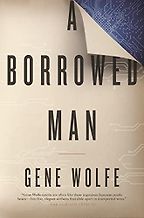
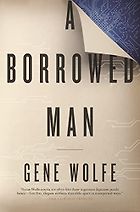
Brilliant. Can we talk next about A Borrowed Man by Gene Wolfe? It’s a book I was not familiar with at all.
Yes, so Gene Wolfe was a sci-fi fantasy writer from the 1970s right up into the 2010s. He’s one of my favourite writers. He uses a lot of literary references in his prose. He’s often compared to Melville – not because it’s obscure, but because it can be challenging at times, on the level of plot. Sometimes there’s a feeling that you don’t know what’s going on. But his sentences are beautiful.
A Borrowed Man has an interesting premise. It takes place in a future where you can rent out, at the library, cloned reproductions of authors. These clones are downloaded with all the essential memories of these authors. There’s a sequel, Interlibrary Loan, in which a woman is trying to solve a murder by checking out a mystery writer instead of going to the police.
Very good.
It’s very meta. But A Borrowed Man is very fun, very twisty, and very cerebral in places. His references can be quite philosophical. Obviously this clone is wrestling with the idea that he is not technically a person, because he was created, and because his memories are not exactly his.
Gene Wolfe is most well-known for his four-novel series ‘The Book of the New Sun.’ In comparison, this is very different. It has stripped-back language. It’s kind of sparse in places. And both A Borrowed Man and Interlibrary Loan are not very long at all. But worth seeking out. They are really weird.
That’s what I love to hear. I love a mash-up. One of my favourite books is China Mieville’s The City & the City, which is a hardboiled noir set within a very weird, speculative, political situation.
Yes, I just finished his new novel The Rouse, which is, like, 1200 pages long. It’s incredible. I also had the honour of interviewing him a few weeks ago for Defector. The Rouse is a horror novel, but a large part of it is about British counterinsurgency. It’s wild. He does such a great job of mashing things up together and seeing what comes out.
The City & the City is a really great example of a noir that is also sort of metaphysical. Vaguely fantasy. I don’t know exactly what it is, and that is to its credit. That’s what makes it so good.
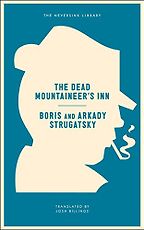
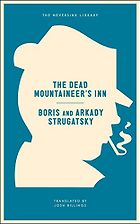
I should guide us back to your list of recommendations, which concludes with The Dead Mountaineer’s Inn by Arkady and Boris Strugatsky.
Yes, the Strugatsky brothers. They are probably most famous for this novel called Roadside Picnic, which was adapted by Andrei Tarkovsky into his film Stalker. They are Russian satirists who wrote a lot of genre novels. Their stuff was very political and was censored by the Soviet government.
In The Dead Mountaineer’s Inn, they are playing with the genre and breaking its rules. It’s a locked-room mystery with a large cast of characters who become trapped at a ski lodge in winter. Everyone is acting very strange. And this guy, a detective character, is trying to figure out what is going on.
This novel plays with the absurdity of mystery novels. Because there is an inherent ridiculousness to the typical Agatha Christie novel, which is to say: all of these details are clues, and they are supposed to add up to something.
Yes. It’s a kind of literary game.
The book is very convoluted at times. There’s a totally opaque process of meeting all these people, seeing them act suspiciously, then it will be a red herring and you realise you’ve been focusing on all the wrong people.
What’s so fun here is that they play with that expectation that it is all going to make sense at the end. They frustrate that at every turn. What is actually going on is not anything close to what the book initially leads you to believe, and it doesn’t cohere in the way that a mystery novel is supposed to cohere – wrapping it all up in a bow at the end, when you come to understand exactly what was going on the whole time. They don’t lay it out for you. The chaos keeps unfolding and, if anything, accrues momentum.
As we go through the novel, which is not very long, so many things are in disarray, and by the end it’s like: Jesus, how did we even get from A to B? Lest it be lost in my description of this novel, I should also say that it is very funny. It’s so ridiculous and people are acting so strangely.
The main guy is kind of a tool. There’s a kind of latent misogyny baked into mystery novels, especially earlier noir novels, and they play with that expectation. It informs how the detective functions in a revealing way: he has biases and blind spots and an inability to pay attention to or even consider certain characters.
It’s been adapted a few times, although I’ve never seen any of the adaptations. I think it might be impossible – you have to be on such a specific wavelength to get what this novel is doing, and to follow its convictions, which are confusing. But it’s a good one, really fun, and it invites you to read it all over again at the end to see what details you weren’t paying attention to that were there the whole time.
Yes and this neatly brings us back to the discussion we had at the beginning of the two different ways to think about ‘literary mystery novels’: that you can have high-quality examples of the genre, like Tana French’s In the Woods, and then the other kind, which is all about exploding conventions, like The Dead Mountaineer’s Inn.
Also, I was talking to the writer Stephen Graham Jones recently. He’s a horror writer and he was talking about how there’s a very big horror moment going on right now, at least in the States. He speculated that this is because horror, as a genre – as terrifying as it can be – has an ending. At the moment, everything is so horrible already. It feels unending, but horror novels, no matter what, give you an ending.
And that’s true of mystery novels too. In the main.
Although what interests me about most of the novels I was talking about today, and was the project of my novel Observer, is that they have a conclusion but they don’t necessarily leave you with that feeling of catharsis or true resolution. There’s a sense of something not quite finished, or that this is only part of a larger narrative that you don’t get to see. To me, that’s more interesting than the novel that is neatly tied up with a bow.
Five Books aims to keep its book recommendations and interviews up to date. If you are the interviewee and would like to update your choice of books (or even just what you say about them) please email us at [email protected]
Nicholas Russell is a writer from Las Vegas. His work has been featured in McSweeney's, The Guardian, The Baffler, and Film Comment, among other publications. His debut novel Observer is published by Ecco.
Nicholas Russell is a writer from Las Vegas. His work has been featured in McSweeney's, The Guardian, The Baffler, and Film Comment, among other publications. His debut novel Observer is published by Ecco.