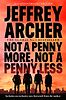
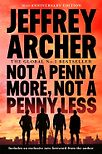
In 1974, British politician Jeffrey Archer lost all his money in a con. As he tried to dig himself out of the financial hole, he wrote his first novel, Not a Penny More, Not a Penny Less, about four men who fall victim to a stock market scam and take revenge on the con man behind it. The novel has never been out of print since its publication. As it celebrates its 50th anniversary, the bestselling author chooses his favourite books about heists and con artists, both fictional and all too real.
50th Anniversary Edition out August 27
Not a Penny More, Not a Penny Less by Jeffrey Archer
In 1974, I invested in what I was assured was a wonderful opportunity, an exciting Canadian venture called Aquablast, presented to me by a vice president at the Bank of Boston. It turned out to be a catastrophe for all of us who invested in it. I lost my home, I stood down from Parliament, and my wife Mary took a teaching post in Cambridge so we could keep a roof over our heads.
There are few sensations quite like realising you have been taken in. Your first reaction is disbelief. Then, if you are honest with yourself, embarrassment. And finally the anger, white-hot and sleepless, because you begin to understand that the swindler is not merely taking your money. He is taking your dignity.
Out of that anger came Harvey Metcalfe, the villain of my first novel, Not a Penny More, Not a Penny Less, and the four men who decided to take back what was stolen from them. Not a penny more, and not a penny less. That line has always sounded to me like both a promise and a threat.
Fifty years on, I find the con artist has never gone out of fashion. If anything, the breed has evolved. The swindler in a sharp suit has been joined by the tech founder with a blood-testing machine that doesn’t work, and the financier whose Ponzi scheme swallowed the savings of his own friends.
I have chosen five books here, and I should tell you at once that the hard part was stopping at five. Some are about con artists. Some are about heists. The difference matters. The con artist lives by deception; he talks his way into your wallet and your trust. The heist man lives by craft, by preparation and timing and nerve. What the five have in common is that every one of them found a new way in, and every one of them taught me something I later used.
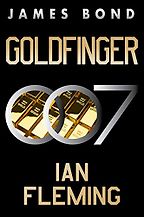
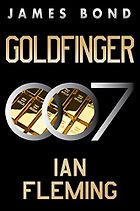
Goldfinger (1959) by Ian Fleming
When I was a young man, just before I went up to Oxford, I was in a store in Lymington in Hampshire, and I saw this book for sixpence, second-hand, called Goldfinger. That was my first introduction to Ian Fleming. Wow, did I love it.
I loved his hero. I loved his villains. Auric Goldfinger was absolutely wonderful, and Oddjob was the worst, wasn’t he? You were just fascinated by him. Ian Fleming was a great storyteller and genuinely original.
The plot turns on robbing the gold reserve at Fort Knox. It’s so big, so impossible, so American, that for years afterwards every thriller writer tried to copy the scale and not one quite managed. The film made the rest of the world fall in love with it. The book got there first.
I was seventeen at the time. Bond has survived. Here we are nearly seventy years later, and they are still discussing who will be the new Bond. That’s what I call surviving.
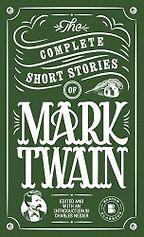
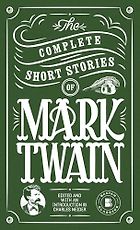
“The Million Pound Bank-Note” (1893) by Mark Twain
“The Million Pound Bank-Note” is a wonderful story. Two wicked old men have a bet that they produce a million-pound note with the approval of the Bank of England, and they find a very bright man who’s out of work. They give him the million-pound note. Sounds wonderful, until he tries to spend it. But of course he can’t. And he gets himself into a lot of trouble, a lot of debt, and falls in love before the two men return. It’s great fun from beginning to end.
Mark Twain is, of course, a genius. His short stories are probably better than his novels, and his quips are probably even better than his short stories. His wonderful comment about how “when I was a boy of 14, my father was so ignorant I could hardly stand to have the old man around. But when I got to be 21, I was astonished by how much he’d learned in seven years” is just brilliant.
Another reason for choosing this short story is personal. The premise, that the appearance of wealth functions exactly as wealth itself, is a lesson I had occasion to learn the hard way in 1974, when a vice-president at the Bank of Boston walked into my life with a confident manner and a story about a company called Aquablast. I believed him. I performed almost no due diligence. He took me for everything I had. The Twain short story turned out to be, in a sense, my own story. The only difference is that out of the wreckage Twain wrote a charming entertainment, and out of mine I wrote Not a Penny More, Not a Penny Less.
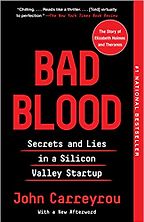
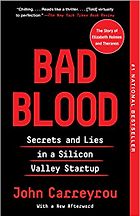
Bad Blood (2018) by John Carreyrou
Bad Blood is the book you hand to anyone who tells you ‘Surely someone would have spotted it?’ Elizabeth Holmes convinced some of the most powerful people in America that she had invented a machine that could run hundreds of medical tests from a single drop of blood. She hadn’t. The machine didn’t work. And by the time the truth emerged, she had raised nearly a billion dollars.
The people Holmes conned were clever financiers with brilliant careers behind them, who nine times out of ten would have spotted a con man a hundred yards away. They were titans of the American establishment. They still did not see it. The figures involved, hundreds of millions raised on a machine that did not work, are, as I said in 1974 when the Aquablast scale hit me, staggering. Absolutely staggering.
Theranos’s board, at the peak of the deception, included Henry Kissinger and George Shultz. I met Kissinger once. I found him formal, cautious, clearly brilliant. He made a statement that has stayed with me ever since, and that I now find has taken on a peculiar relevance to the Theranos story. ‘If I go to my grave having been fifty-one per cent right, I’ll be very pleased with myself.’ Holmes, of course, was not fifty-one per cent right. She was almost entirely wrong. Kissinger’s modesty about his own judgment is a useful corrective, especially when the room is full of people who are sure.
Carreyrou’s reporting is meticulous and devastating. Read it for the mechanics of the con. Read it for the warning. Read it, most of all, because the scale of belief a charismatic founder can generate is a pattern that did not die with Theranos. And if it feels at all familiar to a Canadian investment a young Member of Parliament made in 1974, the fault is not entirely mine.
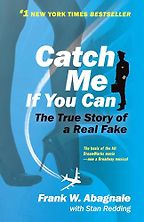
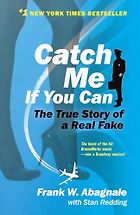
Catch Me If You Can (1980) by Frank Abagnale
This book, the true story of a teenager who impersonated a pilot, a doctor, and a lawyer, and cashed millions in fraudulent cheques before the FBI caught up with him, is so outrageous that it reads like fiction.
What fascinates me about Abagnale himself is the sheer nerve. He had no team. He had no technology. What he had was charm and confidence and the understanding, which every great con artist shares, that people see what they expect to see. If you dress like a pilot and walk like a pilot, nobody asks for your licence.
I love the idea, though I confess a cold fear. Pretty bloody frightening, becoming a pilot and taking me to wherever. Read the book for the audacity. Then read the list of jobs the FBI hired Abagnale for afterwards. It is a surprisingly redemptive end to a con artist’s story, and a reminder that the best con artists and the best detectives often have more in common than either of them will admit.
What we have reached, with modern books and modern films, is a stage where the public wants the bad guy to win. It becomes almost farcical. Catch Me If You Can is the perfect example. Leonardo DiCaprio plays Frank Abagnale, and you want him to win, despite the fact that Tom Hanks, who plays the FBI agent chasing him, is one of the nicest people on earth. That is his problem. He is one of the nicest people on earth. So you want the wicked DiCaprio to win. And actually that is what makes the film. If you wanted him to lose, and didn’t like him, it wouldn’t work. You have to go for it.
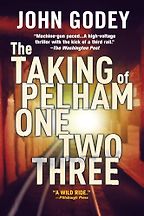
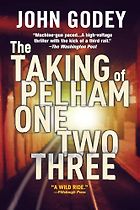
The Taking of Pelham 123 (1973) by John Godey
John Godey published the novel in 1973 and Joseph Sargent filmed it the following year with Walter Matthau. What I like about Pelham 123 is that the train is always moving. You feel the tension of movement and action. You realise that Transit Police Lieutenant Zachary Garber—played brilliantly by Walter Matthau in the movie—is the good guy, and he is trying to solve the problem.
What fascinated me was how many angles it was written from. You read it from someone on the platform. You read it from someone in the train. But most of all, in the movie, I enjoyed seeing it from the headquarters, where the work is being done on different television screens. And while they are impotent at one level, because all they can do is press buttons and watch, it didn’t take away from the tension. It added to it. And that is crossed with the obvious puzzle – how are the hijackers, led by Mr Blue, going to escape when they are on a public train in a tunnel? It makes for a very, very exciting denouement, where you discover the bad guy isn’t quite as bad as you thought.
Look at the five books I’ve chosen together and you will notice something. In four of them you find yourself on the side of the criminal. You want Bond’s adversary to be interesting. You want DiCaprio to get away with it. You want the man with the million-pound note to spend it. You want the bad guys—Mr Blue and friends—on that train to turn out better than you feared.
When it comes to bad guys, the truth is the public likes them more than the good guys. They love reading about them. Harvey Metcalfe, who has robbed those four nice young men of their money, is the one everybody wants to follow. Of course they want to see him beaten in the end. But he is who they are following.
Some years after Not a Penny More came out, Pierce Brosnan rang me. He said, ‘I want to play Metcalfe.’ He didn’t want to play the hero. He wanted to play the villain. I think villains are often much more fun to play, to perform, than nice, sweet, delightful, good human beings.
Then there is Bad Blood, and nobody wants Elizabeth Holmes to win. That is the difference between a con on the page and a con in the world, and it is the reason I have never quite been able to enjoy the genre without remembering 1974. The contrast between the elegance of these five books and the ugliness of the reality I encountered is, in the end, why I wrote Not a Penny More, Not a Penny Less. When you have been on the wrong end of a con, you don’t want style. You want justice.
Not a Penny More, Not a Penny Less, the 50th Anniversary Edition, is published on 27 August 2026 by Pan Macmillan and St. Martin’s Press.
July 25, 2026
Five Books aims to keep its book recommendations and interviews up to date. If you are the interviewee and would like to update your choice of books (or even just what you say about them) please email us at [email protected]
Five Books interviews are expensive to produce. If you've enjoyed this interview, please support us by donating a small amount.
Jeffrey Archer
Jeffrey Archer is a bestselling author and former Conservative politician. His books have been published in 97 countries and more than 33 languages with international sales passing 275 million copies. In addition to his many novels, he has also written short stories and plays, as well as a nonfiction trilogy, A Prison Diary.
Jeffrey Archer is a bestselling author and former Conservative politician. His books have been published in 97 countries and more than 33 languages with international sales passing 275 million copies. In addition to his many novels, he has also written short stories and plays, as well as a nonfiction trilogy, A Prison Diary.