Machu Picchu has become the symbol of Peru, but this symbol has never been straightforward. Mark Rice recommends five books that give the full picture of the iconic site: from the record by its 'discoverer,' to the views of Pablo Neruda and Che Guevara, right through to the latest archaeological and historical works.
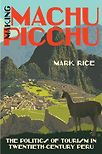
Making Machu Picchu: The Politics of Tourism in Twentieth-Century Peru by Mark Rice
To begin at the beginning: where and what is Machu Picchu?
Machu Picchu is an archaeological site constructed by the Inca Empire. Most historians believe it was constructed in the 1430s to 1450s. When we think of Machu Picchu, we often think of an ancient site, there since time immemorial – but if you think about those dates, it’s actually newer than many European cathedrals. It was constructed at the height of the Inca Empire, only about a hundred years before the empire collapsed very quickly due to civil war and external invasion from the Spanish led by Francisco Pizarro.
Most archaeologists believe that Machu Picchu was an administrative centre. As with many pre-modern societies, there was no separation between religion and political power, so it was simultaneously a place where the Inca administered an area of their empire, and it was a ceremonial centre. From most archaeological understandings, it was important but not critical to the empire – that’s why it became a ‘forgotten city’ in some ways. When the Inca Empire collapsed, it was largely abandoned.
The Inca relocated to a new capital, a hidden city called Vilcabamba, but this city is actually beyond Machu Picchu. You can visit it today, but it is not – as was once thought – Machu Picchu.
Machu Picchu remains a very authentic site, which represents the height of the Andean cultures’ engineering capabilities at the time. And it’s in a beautiful setting, sitting on a plateau between two large mountains – one of them is Machu Picchu, which is where the name comes from – 450 meters above the Urubamba River, which goes around the site in a horseshoe. It’s a really stunning setting, and a wonderful archaeological place nestled in tropical highland forests of the Andes.
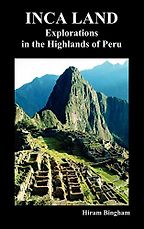
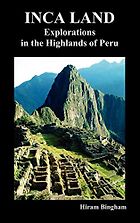
Your first choice is by the ‘discoverer’ of Machu Picchu himself, Hiram Bingham. Tell us about his Inca Land: Explorations in the Highlands of Peru.
This book, I have to confess, might be a bit difficult to find, because of what happened to Machu Picchu in the 20th century. Inca Land was published in 1922 by an explorer-academic named Hiram Bingham, who was working for Yale University as a part-time professor. Like many people in that era, as the US was expanding its economic and political interests into Latin America, he took an interest in studying this region. He arrived in Cusco, Peru, in 1911, and during that expedition, while he was looking for the lost Inca archaeological site of Vilcabamba, the fabled lost capital, he learned about and encountered Machu Picchu.
Machu Picchu was never completely lost. It’s true that it fell from public recognition, but people who lived in and around the site knew that there was an archaeological site in that area. That was not that unusual. The Inca left lots of archaeological sites in and around Cusco and the Andes. So while it had fallen into disuse, it was not a mystery to people and, in fact, Bingham arrived at the site precisely because he was going down the river valley anyway, and locals informed him that there was an Inca site up on the plateau – ‘Maybe you want to go check it out.’ When Bingham arrived, he discovered there were two families living there – according to his own accounts, they were herding sheep – and a little kid named Pablito Richarte showed him around the site. Young Pablito is Machu Picchu’s first tour guide.
Bingham published his findings in National Geographic, and this is really where the globe became knowledgeable about Machu Picchu. Hiram Bingham is not the discoverer of Machu Picchu, but he is often called the scientific discoverer, or the man who brought Machu Picchu to global fame.
Fascinating to read his original account, a century on.
One reason it is worth tracking down is that it’s shocking how it depicts Peru and Machu Picchu – not necessarily in a negative way, but it shows how the 20th century has changed how we look at it.
In my book, I note that we sometimes think that Hiram Bingham showed up in 1911, Machu Picchu went up on National Geographic magazine, and boom, it was instantly famous and destined to become a tourist site. One thing I discovered through my research is that that was not the case. Machu Picchu could have easily just fallen back to being an interesting curiosity – perhaps a trivia question on some pub quiz, but not this global icon of the Andes. And you can very much see this if you read Inca Land. With all respect to Bingham, it’s a remarkably dry book. He spends most of his time talking about flora and fauna, and the geography of the area, and the mineral capacities. It reflects what brought Bingham there in the first place: this soft (and sometimes not-so-soft) imperial reach in the United States, which was looking at science and archaeology for practical reasons, not as a romantic approach to Andean culture. It’s an interesting book to read, because for someone who’s often thought of as a prototype for Indiana Jones, he comes across as pretty nerdy and technical.
It’s worth noting that Bingham returned to Machu Picchu and the Cusco region in 1912, and then for a third time between 1914 and 1915. In the third expedition, he was unceremoniously kicked out. He was accused of mismanaging the site and of artifact theft, which turned out to be correct. He did not return until 1948, when he and his relationship to people living in Cusco and Peru’s academic community had repaired and changed.
When he writes his next book, right?
Yes. I’ll slip in a sixth book. He wrote a book that more people read, which is Lost City of the Incas. That was written in 1948. It’s a very different book: far more adventurous, far more romantic. Bingham was now at the end of his career and realised that buying into the touristic narrative of Machu Picchu was now selling books, not noting the ecological zones of the Urubamba River Valley. If you read Bingham on Machu Picchu in 1922 and how that changes within thirty years, it shows you how the symbolism of Machu Picchu changed – not just to people like Bingham, but to Peruvians themselves.
Could we talk a bit about the story of Bingham’s return to Cusco, after being kicked out?
Machu Picchu would not be famous if it wasn’t for Bingham’s expeditions, but if it was only Bingham’s expeditions, Machu Picchu would not be as famous as it is. It’s in many ways about what happens after Bingham leaves.
Cusco was once the capital of the Inca Empire, but by the start of the 20th century it had seen itself bypassed, and political and economic control shifted to the coast of Peru – cities like Lima, but also Trujillo and Arequipa. These were seen at the start of the 20th century as where Peru’s future was: a modernising, internationally facing, increasingly Hispanicised culture. This was a threat to Cusco, which based its validity and its culture on its connection to a pre-Hispanic past. So at the start of the 20th century there was a movement in Peru and certainly in Cusco called Indigenismo, which pledged to rehabilitate or revalue the role of indigenous culture in Peru. It was led largely by non-indigenous people, but who did have sympathies with indigenous culture, and who began to argue that indigenous culture, language, art, and music had a place in Peru’s future. This was not anti-modern: the idea was that you could be simultaneously a modern nation state, and also indigenous.
In many ways, tourism plays into this narrative very well. Tourism is a very modern phenomenon. It’s consumerist; it’s 20th century. Tourists don’t go through jungles with machetes – they’re modern, they’re creatures of comfort. Cusco indigenistas began to realize that if they promoted Machu Picchu as a tourist site, it fit into their narrative that indigeneity in Peru is completely compatible with a modern world.
Then, building on the Good Neighbour policy, the United States started promoting a very sanitized version of Machu Picchu. Hiram himself was reinvented – from a representation of imperialism, to a very helpful American archaeologist who’s helping Peruvians find their past. In 1948, Peru opened up the road to Machu Picchu – it’s the road you still zigzag up if you visit today on a bus, and sometimes it’s a bit of a white-knuckle ride. Bingham came back and was welcomed like a hero — because in many ways Bingham’s interests of self-promotion and Peruvians’ interests of promoting Machu Picchu as a hemispheric site of goodwill and tourism were now in cooperation.
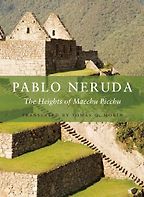
Let’s dive a bit more into cultural uses of Machu Picchu with your next choice. This is Pablo Neruda’s The Heights of Macchu [sic] Picchu – you’ve recommended the translation by Tomas Q. Morin, 2014. Tell us about this one.
It’s important to note that while there was certainly an official narrative that’s being promoted by Cusco’s cultural leaders and later Peru’s cultural leaders, there’s always been a counter-narrative, and this is represented by Pablo Neruda.
Pablo Neruda was a Chilean poet and communist – not just ideologically; he actually represented the party as a senator in Chile. He visited Peru and Machu Picchu in 1943, almost the exact moment this kind of good-neighbour-vision of Machu Picchu was consolidating, and he was inspired to write a series of poems. These are collected together and called Las Alturas de Machu Picchu, first published in 1945. There are many great translated works – I cited one of them that I recommend.
This is very different from the touristic narrative that was being fashioned. That narrative is very celebratory, but it’s also almost utopian. The Inca are wonderful and great, but they’re remembered for their culture and their architecture, not so much for their politics or social legacies. In Neruda’s visit to Machu Picchu, he looked at the site as a sign of revolutionary indigenous power, and this was something that would be revisited from the Latin American left.
Neruda’s a wonderful poet, and it’s a wonderful poem. In many ways it is similar to a lot of the other touristic narratives, in that it celebrates Machu Picchu’s beauty, accomplishments, and romantic appeal – but from a very revolutionary standpoint. So it shows that the narrative around the meaning of Machu Picchu has never been fixed and it is never uniform, even at one point in time, and Neruda’s poems illustrate that very well. He’s just a really great poet – he won the Nobel Prize for his contributions to literature. So it’s a great thing to read.
In your book, you describe this one as a “call for class unity of Latin America’s repressed.” Has Machu Picchu, in fact, benefited the repressed of Cusco?
A little bit, in complex ways. When I was writing my book, the easy conclusion could have been, ‘Machu Picchu is a travesty, it misrepresents indigenous culture, it’s just the worst.’ I resisted that temptation, perhaps foolishly, but I still stand by it… Counterfactuals are tough, but I always say: if you step back into the counterfactual, what would Cusco look like today if there was no Machu Picchu? And basically, Cusco would probably have the same social and economic problems that it does today, without the benefits that Machu Picchu brings.
Now, when I say benefits, I want to emphasise those can be read in many different ways. I don’t think many cusqueños are being exploited disproportionately in tourism, more than if you worked in any other industry in Peru. But the notion that the region of Cusco and the locals are making money hand over fist from Machu Picchu really doesn’t play out. If you look at the demands of international tourism – which usually requires things like hot water, comfort, and bilingual tour guides – the average cusqueño is locked out from that economy. The average cusqueño businessperson doesn’t have the capital to set up a luxury hotel – that requires investments from Lima or abroad. Many cusqueños do find work in tourism, but not the type of work that’s going to earn lots of money.
And the region sees protests sometimes, right?
When cusqueños want to bring the attention of the government, they often respond by protesting pressure points: access to Machu Picchu. This is often dismissed, even in Lima, as, ‘Oh, those cusqueños don’t know what’s good for them’ – which is really quite unfair. They’re being rational. They’re shutting off travel to resources that they don’t control, to get a response from the government.
It’s benefited Cusco in complex ways culturally. Look at what cusqueños and Cusco’s leaders wanted in the 1920s: they wanted Machu Picchu to become a symbol of their region and of Peru. I think by all historical accounts you can say they succeeded.
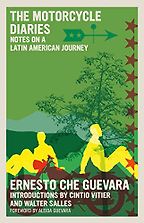
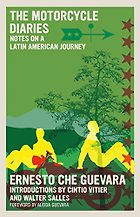
Your third choice is perhaps the best-known book on your list, and it’s fun to see it included here: tell us about Ernesto Che Guevara’s The Motorcycle Diaries: Notes on a Latin American Journey. You recommend the 2021 edition, with introductions from Cintio Vitier, Walter Salles, and a foreword by Aledia Guevara.
Che Guevara was a medical student in 1952. He took what’s now a pretty famous trip out of his native Buenos Aires, Argentina, up across to Chile, and then up through the Andes. In 1952, he visited all of southern Peru, including Machu Picchu. It’s a great memoir, and strangely for someone who is probably more famous as a revolutionary than Neruda is, his Motorcycle Diaries are actually really interesting for their descriptiveness of a very quotidian type of life. He’s a very good travel writer, and he describes what he sees. Certainly he describes the inequalities that he sees, but it’s also just a great travel document, and if you are going to visit Cusco or Puno or really any parts of Latin America, it’s really interesting.
In 1952, Cusco and Machu Picchu were still a place that had not been globalised to the extent that you would see if you visited today as a tourist. So reading Che Guevara’s account is great if you’re visiting, because the sites are there – he describes the Cathedral of Cusco, Sacsayhuamán, Machu Picchu, the towns in the sacred valley… It’s a wonderful time capsule of what Cusco and Machu Picchu look like in the 1950s – a moment in which Peruvian and Latin American politics was becoming a bit more populist and opened up to more people, but still very much pre-revolutionary, pre-globalisation. A tourist can read and identify the itinerary, but also see how things have changed over seventy-or-so years.
Your own book, Making Machu Picchu, covers that change, from Bingham to the present day. It shows regional, national, international and technological factors all pulling in different directions… Was the rise of Machu Picchu’s popularity steady, or are there major inflection points?
There are several inflection points. From Bingham’s expedition up until the 1960s, tourism was largely appealing to Cusco, and it was largely run by cusqueños as a cultural project.
My training as a graduate student was as an economic historian, and I was shocked that for most of its history, Machu Picchu had little to no economic impact on Cusco. Actually, this is great advice to researchers out there: sometimes if you don’t find what you’re expecting, it doesn’t necessarily mean it’s a bad question. After my initial shock and disappointment, it raised a much more interesting question: if it was economically not that important, why are there reams written about it? It goes back to this notion of Machu Picchu as a cultural tool, and tourism as a cultural tool, with which Cusco’s elite were able to use the appeal of Machu Picchu to assert their regional identity more and more as a stand-in for Peruvian national identity.
Then things changed?
Then the 1960s hit, and Cusco faced this challenge of modernisation – all the things that cultural tourism wasn’t addressing, like social grievances, inequality, and a lack of development, started to come home to roost. Cusco’s economy had really not changed since the colonial era, and it was now facing a series of very violent agrarian revolts, which suddenly threatened tourism. People didn’t want to go on vacation in areas that were facing uprisings. So in the 1960s tourism became more about development. Before then, tourism was largely seen as a cultural tool for Cusco’s local elite. Increasingly, as that local elite lost power, it was the national state that came in to use tourism as development in the 1960s and 70s. This was aided by technology, particularly the arrival of jet aircraft, which allowed for easier transport to Cusco.
Interestingly, a lot of the biggest developmental progress was achieved by a rather strange alliance of a military government run by generals, but who were leftists. Peru bucked the trend in the 60s and 70s, and had a military government, but one that was leftist in many ways, although not radical. In fact, the whole reason the military took over is that they said, ‘if we don’t implement changes in development from the top down, we’re going to have a much broader revolution from the bottom up.’ Some people have described the Peruvian governments as Nasser-ite. They were using government money and funds to modernise tourism.
One of the more funny results is that the military dumped all this money in, hoping to attract very cultured big-spending tourists and much to their horror, they basically got a lot of hippies, who were suddenly reading Neruda and drawn by the romantic appeal of the Andes. So Machu Picchu became a countercultural image of the 1960s, much to the shock of the military government, and of cusqueños. The city fathers – and they really were fathers – were pretty shocked with the arrival of hippies and counter-cultural travellers to Machu Picchu. So, that’s the second period.
What’s the third period?
Finally, the third period is Machu Picchu as globalisation. At the end of the 1970s, this vision for state-led development and counter-culturalism fell apart very rapidly. It fell apart in oil shocks and inflation and debt crises. By the 1980s Peru was in an economic crisis, and as a result it descended into a very violent internal war. Also, the hippies that once were visiting Machu Picchu had grown up, and they voted for Reagan and Thatcher, and now they were yuppies… So in the 1980s Peruvian tourism struggled along under a lot of crises, and the state support evaporated.
In the early 1990s the internal war was settled, and a government formed under Alberto Fujimori, who was an authoritarian neoliberal reformer. He privatised a lot of state resources and welcomed in lots of international investment. In many ways this was successful, in the sense that the Peruvian state had been bankrupt, and a lot of these state projects were left moribund. Welcoming in international capital did allow Cusco tourism to recover very quickly. But this time it happened mainly due to spending from Lima and abroad, so hotels and resources that were once owned by the state were privatised. This allowed for the growth of much more luxury tourism, which in many ways is still the type of tourism that makes big bucks in Peru today, but it also set up the stage for a very unequal tourism industry, which is a source of a lot of conflicts.
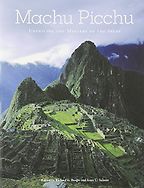
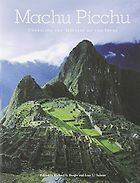
Thank you – An admirably condensed history! Let’s turn back to the historic roots of the site now. Your fourth choice is Machu Picchu: Unveiling the Mystery of the Incas, edited by Richard Burger and Lucy C. Salazar.
This is a good catch-all book, and it looks pretty good on your coffee table. Richard Burger and Lucy Salazar are an archaeological team that work out of Yale University, and they assembled this very nice collected book of seven chapters, all by different authors. It’s a good balance of archaeologists and anthropologists, who go through the basics: what was Machu Picchu, what is its meaning. It has wonderful images, really great sketches and photographs to give you a sense of the site, and a great bibliography. If you want to dive into the archaeology of the site, it’s a great place to start. And it’s a really well-produced book, with great images and schematics about how people do archaeological work at Machu Picchu.
It does have an interesting story, because Richard Burger and Lucy Salazar themselves – Burger in particular – also became actors in a debate after this anthology came out, over what to do with the artifacts at Yale. Hiram Bingham, as I said, exported lots of artifacts from Peru, often without disclosing it to the Peruvian government. These artifacts then remained largely unknown and uncategorized in the bowels of Yale’s archaeological collections, and at the end of the 20th century this became a question for a lot of Peruvians, who began to assert that these artifacts needed to be returned to Machu Picchu. It was the start of a rather long court case and litigious back and forth, which ultimately saw most of these remains returned to Peru.
It’s a World Heritage site now, and I know there is sometimes a tourism versus preservation trade-off, and a lot of interested parties weighing in… Who’s gatekeeping or leading archaeological work these days?
Archaeological access to the site is protected by the Ministry of Culture, although there’s been some back and forth for the past few decades. The Cusco local Ministry of Culture has been very powerful, mainly because they get their budget from tickets to Machu Picchu. In many ways it has reflected the age-old tensions between Lima and Cusco: a lot of access in archaeology was controlled by the departmental regional level, the Department of Cusco, but in recent years this has been controversial because Cusco has been the centre of a lot of protests against the government in Lima. One response is the Lima central government increasingly trying to assert more control over the departmental Ministry of Culture, and I would not be surprised if these same tensions are seen in archaeology at Machu Picchu.
I don’t want to ruin your vacation, but there’s another reason why there’s not too much archaeology at Machu Picchu: the site was pretty seriously altered in the 1950s, partly at the hands of cusqueños. I want to emphasise that at the time, this was not seen as controversial… To bring more tourists to Machu Picchu, people looked around and said, ‘Well, this is really nice, but it’s a little rundown. Can we fix it up?’ The government built a hydroelectric facility under Machu Picchu – if you go there, you’re actually standing on top of a hydro facility. Which is great – it’s a very efficient hydroelectric power facility, perfectly clean and good. But when they were constructing this, they said, ‘Well, we’ve got all this cement… Can we just spiff it up a bit?’ So they reinforced a lot of structures at Machu Picchu, which nowadays would be frowned upon by most preservation groups, but at the time Cusco archaeologists didn’t really see a problem with it. A lot of Machu Picchu has been refitted. I don’t want to say it’s a fake place, because it’s not. They didn’t put buildings where there weren’t any before. But they did stabilise terraces and things like that. There’s a great commentary by one of the chief archaeologists, who says in one of his reports, ‘Archaeologists of the future are going to really wonder why Machu Picchu was the only place where the Inca used cement and steel rebar.’
I don’t say that to discredit the site, which is still a very authentic place, and a great place to visit. But the type of work archaeologists do, which is often really fine-grained analysis of the depth of a site to look at change over time – if you start excavating stuff like they did at Machu Picchu, it upsets their ability to do that. So unfortunately, Machu Picchu doesn’t have a ton of archaeological work.
Ah, that’s a shame.
That doesn’t mean that there isn’t really great archaeological work going on. The Peruvian government has been doing a great job of opening up the last capital of the Inca, Vilcabamba, which you can also visit – a little bit beyond Machu Picchu. This site doesn’t look as nice, because it’s preserved as they found it, and was a city built in an emergency. But that place has been seeing a lot of archaeological work. So fear not, there’s a lot of great archaeological work on Andean culture going on.
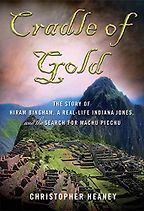
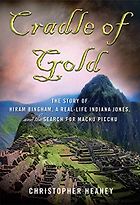
Let’s talk about your last choice: Cradle of Gold: The Story of Hiram Bingham, a Real-Life Indiana Jones, and the Search for Machu Picchu, by Christopher Heaney.
This is a great book, which gives a very readable but very serious narrative of the last years of the Inca Empire, and the story of what happened to Machu Picchu as the Inca collapsed and fought on and survived for many years. It’s also a great narrative of who Hiram Bingham was, what his expeditions were like, and how Peruvians – particularly cusqueños – reacted to them. It ends with the fight over the archaeological remains of Machu Picchu that were at Yale.
If you’re going to Machu Picchu and you want a great overview of the Inca story of the site, the story of Bingham and his controversy, and then a present-day story of the legacies, Cradle of Gold is a really great and readable book. I recommend it to lots of people. Then, if you like all that stuff and you want to find out what happened in between, you can read my book, which is basically what happens between Bingham and the present day.
Is this a popular book, or more academic?
It’s a great book because it does the rare thing of achieving both. It’s very readable, but it’s footnoted and stands up to any academic peer review. I really have to sing the praises of Heaney’s book. It manages something that a lot of people can’t do, which is to be very accessible and readable, but very academically thorough. I can’t recommend it enough.
Wonderful. A great list for anyone interested in Machu Picchu – and some titles to take on a trip, maybe.
Yes. There are a lot of questions about the effects of over-tourism, and these things also occur in Peru and at the site, but I would also say there are lots of good things happening. The Cusco government, with help from Peru, has invested in a lot of sustainable tourism initiatives, which I have been happy to see are working pretty well. There are lots of things that are wrong, like the rail line is still privatised and run by a pretty bad company but there are lots of good things happening.
My research is all about how Machu Picchu took over the national imagery of Peru. That’s a great success, and in many ways it’s a great achievement. But it shouldn’t dim the fact that Peru is a really complex society with a complex archaeological history. Go to places like Chavín in Ancash; in the north of Peru, there’s the Moche culture; go to the region of Puno with Aymara language and folklore… It’s really great, if you have the time, to explore other parts of Peru which have very distinct cultures. Indigenous cultures, but also Afro-Peruvian culture, Asian Peruvian culture… Even within Cusco, there are new Inca sites like Choquequirao, which is to the south of Machu Picchu, and which the government has worked to open up so that you can visit in a very sustainable way. And Vilcabamba La Vieja, which is the old capital city…
So, visit other parts of Peru. Machu Picchu is a great entry point, which of course it should be – it’s a beautiful site. But if you have the time and the ability, use that to inspire visits to lots of other parts of Andean culture, which are just as fascinating but don’t get the same amount of Instagram.
July 19, 2026. Updated: August 24, 2026
Five Books aims to keep its book recommendations and interviews up to date. If you are the interviewee and would like to update your choice of books (or even just what you say about them) please email us at [email protected]
Five Books interviews are expensive to produce. If you've enjoyed this interview, please support us by donating a small amount.
Mark Rice
Mark Rice studies the history of modern Latin America with a focus on Peru. His first book, Making Machu Picchu: The Politics of Tourism in Twentieth-Century Peru, examined the transformation of Machu Picchu into a global tourist destination and national symbol. His current research examines the politics of and social consequences of the construction of Peru’s modern road network. He is a Fulbright fellow who has published and presented his work extensively in the United States and Latin America.
Mark Rice studies the history of modern Latin America with a focus on Peru. His first book, Making Machu Picchu: The Politics of Tourism in Twentieth-Century Peru, examined the transformation of Machu Picchu into a global tourist destination and national symbol. His current research examines the politics of and social consequences of the construction of Peru’s modern road network. He is a Fulbright fellow who has published and presented his work extensively in the United States and Latin America.