For those who haven’t come across it, could you introduce the Baillie Gifford Prize and explain what kind of books you’re looking for as judges?
The Baillie Gifford Prize is one of the most important nonfiction book prizes in the English language. It was formerly known as the Samuel Johnson Prize, and has been going since 1999.
What the judges are looking for is good narrative nonfiction. It must be nonfiction with a literary quality, rather than, say, a very academic book. It should have evidence of original research, and a copy-and-paste job will not do.
So it’s got to be original, readable, and have wide appeal. But by wide appeal, I don’t mean dumbing down. We have some very smart books on the list.
The prize rewards quality narrative nonfiction. It should read like a good novel, but be true.
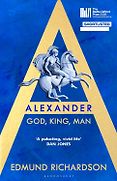
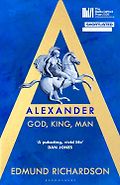
Let’s go through the books that have been shortlisted for the 2026 prize. Can we start with the one that goes furthest back in time? This is Alexander: God, King, and Man by Edmund Richardson. This is a biography of Alexander the Great, but written a bit like fiction. Tell me more.
Everybody who’s rushing to read Homer’s Odyssey after the Christopher Nolan film will love this book. Although Edmund Richardson is a professor of classics at Durham University, he’s written it so it’s very immersive—like a cinematic page turner. It reminded me of those old-fashioned sword-and-sandal films. You feel that you’re there watching these people.
At the same time, it’s packed with new research. He drew on source material from about a dozen ancient languages. He then uses modern technology to cross-reference and do data analysis. This allows him to go into amazing details like, ‘Given the supply chains, would they have been hungry?’ ‘How hot would it have been? Landscapes have changed – would they be marching through desert or would it have been savanna?’ You get a real sense of of the landscape.
It’s also a fascinating lesson in leadership. Alexander was really young, and he persuaded thousands of men to march into unknown lands across thousands of miles—from ancient Macedon, through ancient Greece, Egypt. He pursued the Persian king, Darius, right across Persia into India.
They didn’t have maps; they didn’t know where they were going—they believed they were going to fall off the existing world. How did Alexander persuade people to follow him? Edward Richardson says he was a great storyteller and had a good story to tell about why they should keep following him, and conquering lands. He also doesn’t flinch from Alexander’s brutality.
Yes, I was going to ask, what picture of Alexander emerges from the book?
You spend quite a lot of time wondering what motivates him. In the beginning he’s broke. He inherits a country where the coffers are empty. Initially, it’s a moneymaking expedition. You conquer and you plunder and everybody gets rich. But there’s a certain point in his travels where he could have said, ‘We’re all rich enough now, we can go home.’ But he doesn’t. He carries on. I came to the conclusion that Alexander was good at battles and less good at ruling because ruling is boring—people moaning about paying taxes or not having water etc. He liked a good battle.
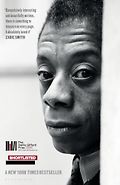
Let’s turn to another book on the 2026 shortlist. What can you tell me about Baldwin: A Love Story by Nicholas Boggs?
This is the first biography of James Baldwin in 30 years. He was a very important figure in the civil rights movement and a very good writer of both fiction and nonfiction. Baldwin is having another moment because he was a very good public speaker. A lot of his speeches and debates with right wing racists are now emerging again on YouTube, so a new generation is discovering him.
It’s the first biography to look at Baldwin through the prism of his love life. It’s divided into four sections, and each one is one of the four most important loves of Baldwin’s life. I was a little bit sceptical about this at first because I thought, ‘Are you therefore reducing him? Are you just focusing on him as a gay man?’ But, actually, what Boggs explains is that a lot of Baldwin’s ideas about race, about masculinity, about gender, were all intertwined. He argued that America’s racial problems were tied up with this myth of white American masculinity—your John Waynes and your Charlton Hestons.
I mention Charlton Heston because one of the stories in the book that I was most surprised by is that at a certain point, Columbia Pictures hired Baldwin to write a script about the life of Malcolm X. They suggested to him that Charlton Heston might be a good candidate to play the role, blacked up.
The book is relevant now, post-Black Lives Matter. A lot of people are disappointed with the rise of white supremacy and racism in the United States, the continuing violence against African American men, and are rediscovering James Baldwin.
Boggs also writes really well. Again, it doesn’t sanctify Baldwin. It shows his blemishes. Like a lot of artists and writers, he was brilliant, but he was also quite selfish and self-obsessed. When it comes to gender, he’s not perfect around feminism by any means. He had strong female friendships and there’s quite a shocking passage where a female friend shares the fact that she has been sexually molested by somebody. The response in his letter almost brushes over it.
But, towards the end of his life, you can see that his views around gender are shifting. He writes a lot about androgyny and how all of us contain some male and female. He also writes about how we all contain black and white, as we are all descended from Africans.
Then there is Baldwin’s message of love—that the only way you can really combat racism and all forms of prejudice is to learn to love each other. This is a very important message, which I think is very relevant to now.
Nicholas Boggs has spent 20 or so years writing this biography. It’s an extraordinary labour of love: with lots of new original research, letters that hadn’t been seen before, and so on. It’s a super interesting life.
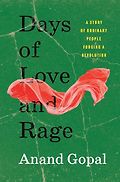
Let’s go on to Days of Love and Rage: A Story of Revolution by Anand Gopal. This is about the Syrian uprising of 2011, although it starts a bit before.
There are so many stories in this book. It’s so moving and tragic and sad, but it’s very readable. Anand Gopal takes us through a very complicated historical event. He starts in the years just before the Arab Spring and takes us through the civil war, by telling the stories of this diverse group of ordinary Syrians living in a town called Manbij.
You get to know the characters—about their childhood, who they fall in love with, who their parents are. Then they come together at a certain point and carry out an experiment in democracy. They’re trying to figure out how to run their town: who is going to collect the rubbish, who is going to police it. They fall out and have arguments and the war carries on. Then ISIS comes into town as well. You experience all this through these characters.
I’m a very big fan of the great American reporter Martha Gellhorn, who reported from the Spanish Civil War. She always argued that her form of reporting was a view from the ground, not from the elites or the great men. It was about how ordinary people went through conflict, and this is a really good example.
In their review, the New York Times compared this book to Orwell’s Homage to Catalonia. You have the euphoria of revolution, and then you have the collapse, the sense of betrayal when it fails.
You really feel for the people, the individual stories. I’m reading this book again now, and thinking about the lack of empathy we have for people escaping from conflict zones. When you read a book like this, you really understand people’s lives in minute detail and what they’ve had to go through and why they might be compelled to flee their country.
On a wider scale, I think the book makes some interesting points about revolution: you see parallels with the French Revolution and the Russian Revolution. It’s this desire for people living under autocracy to rule themselves, to have some say, some control over their lives, but, sadly, this experiment ends in terrible violence.
It’s an extraordinary piece of reporting. Anand Gopal writes for the New Yorker. He heard about this town, Manbij, and went there in 2017 to report on it. By then, they’re very suspicious. They don’t really want to talk to an American of all people. America’s let them down. There are lots of places in the book where they really hope the Americans will come and save them, and of course they never come—despite Obama’s red lines.
So what Gopal does is he recruits some of the participants in the story, and he says, ‘Okay, you record your friends.’ There are something like 2000 interviews and hours and hours of tape, which he weaves together into this extraordinary piece of narrative writing. It’s like a jigsaw puzzle, or some beautifully woven tapestry.
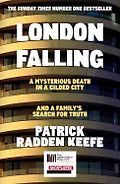
Now we’ve got a book which is set closer to home. This is London Falling by Patrick Radden Keefe. He’s another very good writer who has won the Baillie Gifford Prize before for his book about the opioid crisis, Empire of Pain. What’s the story he’s telling in this book?
This is a compelling narrative about the tragic death of a London teenager, Zac Brettler. After his death, his parents found out he had been leading a double life, posing as a Russian oligarch’s son. Possibly he’d been inspired by the wealthy children around him at a very expensive North London private school, or it could have been things he saw online, but he wanted that lifestyle.
A lot of young people are reading this book, and it is quite a publishing phenomenon in terms of the demographics it’s reaching. I asked my 25-year-old goddaughter why she liked it, and she said it’s because she comes from a generation where they’re used to people leading double or alternative lives online. The fact that he wanted that life with a fancy car, pretending that he lived in a really expensive apartment building, is all part of the influencer culture.
As a parent, anybody who’s ever had teenagers will relate to this book. How much do you know your teenager? How much do you know about what they’re doing? Then there is the guilt when you find out you had no idea.
What I also really liked about the book is that Radden Keefe then zooms out and produces a portrait of London, a city which has been completely transformed in the course of my lifetime. Starting with the Big Bang and deregulation of the money markets in the 1980s, huge wealth came into London. Some of it was legitimate, some of it illegitimate. It became a magnet for foreign money. That lifted the city, and in many ways, it is a richer and more attractive city than it was. But it also brought in some pretty unpleasant people.
As well as being this tragic, personal story, the book is almost like a thriller involving Russian money and international crime. It’s also a book about personal secrets. There are quite a lot of secrets being held, not least by Zac’s grandfather, who also had a secret life.
It’s a page-turner, a jolly good read. Patrick Radden Keefe brought his outsider’s eye to the troubles in Northern Ireland with his book Say Nothing, and I think he’s done it again with London in London Falling.
Is it the story of a corrupt London?
Yes. It’s an almost Dickensian portrait of modern London because you’ve got all these extraordinary characters in it. It’s about the dark underbelly of the city, which this kid gets drawn into through his lies.
You also have this interweaving between respectable London society, people who have got wealthy in legitimate ways, and people who haven’t. Unfortunately Zac, by pretending to be a Russian oligarch’s son, was targeted by some criminals who thought he was a rich boy, and then got very angry when they found out he wasn’t.
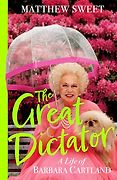
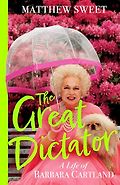
Okay, we’re now at the fifth book on the shortlist. It’s called The Great Dictator: A Life of Barbara Cartland by Matthew Sweet. Could you maybe start by telling us who Barbara Cartland was?
Barbara Cartland was probably the most prolific romantic novelist ever. She wrote 723 books, and the reason this biography is called The Great Dictator is that she dictated most of them.
Most people in Britain of a certain age know who Barbara Cartland was because she was a larger-than-life character. She was this extraordinary figure who always dressed in pink, usually pink taffeta. She had these unbelievably long black false eyelashes, which she coated with boot polish because she thought that was more effective than mascara. She was always pictured on a chaise longue, surrounded by small white fluffy Pekinese dogs, and that’s how she dictated her books.
What attracted us to the book was that it’s also a compelling piece of social history. Barbara Cartland lived from 1901 to 2000, so her life maps onto the 20th century. It’s a very British story, and it tells you a lot about the British class system. She was born into a quite upper-class Edwardian family, but they lost their money. You could say that Barbara was driven, for the rest of her life, by wanting to recoup that wealth.
She comes of age in the Roaring Twenties and is one of the bright young things immortalised by Evelyn Waugh. That’s when she’s coming out and trying to find a husband but the men of her generation have fought in the trenches and are traumatised by the First World War.
She has two younger brothers, who she loses in the Second World War. One of them was a Conservative MP. Barbara Cartland was very anti-Nazi in the 1930s, at a time when a lot of her class were not. That was partly the influence of her younger brother, who was a friend of Churchill, who was arguing at the time of appeasement that we needed to be more wary of Hitler.
The other thing that really impressed us was that it would be really easy for Matthew Sweet, as a writer, to make fun of her, but he doesn’t. It’s funny—don’t get me wrong—because she’s an inherently comical figure in some ways. But he treats her with respect. She’s an outrageous snob, but he doesn’t need to tell you that. He’s showing, not telling, and I think that’s important in nonfiction: I hate to be told what to think about somebody.
He paints this very vivid portrait of her. She was a very paradoxical person. Every single book she wrote followed pretty much the same template: a woman falls in love with a man, and then immediately becomes a good wife and gives up working. Barbara Cartland didn’t really believe that women should work, so whenever she was interviewed and asked about her work, she said, ‘I’m not a working woman. I’m just writing stories.’ But she was the main breadwinner and very active in the war. After the war, she became a local councillor. She was a busy lady, and not one who was happy to sit at home raising the kids. She wanted to get out there, but that contradicted her romantic ideas.
You feel slightly sorry for her oldest daughter, Raine. Most British people will know that Raine married not just one member of the aristocracy, but three—the final husband being Princess Diana’s father. So she was Lady Spencer, immortalised in the papers as ‘Acid Raine’ by her stepchildren. Reading this book, you feel Raine is almost like an experiment for her mother. She tells her off for being too clever at school. She’s always telling her she needs to be attractive to men. She’s almost creating one of these characters in the book. She’s expected to marry well, and that means money and a title.
And is Barbara Cartland a dictator in both senses of the word—was she incredibly bossy?
She was incredibly bossy, but I think ‘the great dictator’ refers to the fact that she dictated her books and she was unbelievably prolific. She had 723 books published, and then Matthew Sweet is given access to her house, and she’s written about another 100 unpublished books.
It’s impressive, even if the plots and characters are formulaic.
They sold in the millions. Women bought these books. They provided escapism. I’ve got a South African brother-in-law who grew up in a township where there were very few books. His mother was a cleaner, and she used to bring back books from other people’s houses, so he read Barbara Cartland when he was young in South Africa.
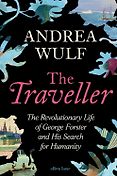
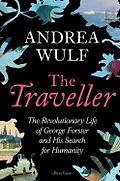
Finally, we have another biography: The Traveller: The Revolutionary Life of George Forster and his Search for Humanity by Andrea Wulf.
I love this book. It’s about a forgotten figure from history, George Forster (1754-1794). He was an explorer and an anthropologist. As a 17-year-old, he went on Captain Cook’s second voyage, and Wulf explains in the book that she actually goes to these places—the southern tip of New Zealand, the South Pacific. She travels in Forster’s footsteps, and it’s this really vivid, immersive piece of writing.
Then there is her research. Wulf has access to the German archives—his letters and his diaries. Forster was himself a very good writer. In fact, he wrote up the Captain Cook voyage, and it was a bestselling travel book in the 18th century. He was quite famous, travelling round Europe, and being invited to courts to tell his stories.
What made him quite special was that unlike most Europeans at that time, he did not see the indigenous peoples that he encountered on the Cook voyage as inferior in any way. He saw them as equals. At that time, most Europeans assumed that they were superior and were bringing civilization to these places, but he was a humanist. He saw them as members of society that had evolved differently from Europeans, and made a real effort to learn their languages and their customs.
He went on to have a really interesting life. He became an academic in various European universities. He was also a feminist. He married a woman who treated him appallingly. They had an open marriage and she had all these affairs. He didn’t have affairs, but felt she needed the freedom to express herself.
He also has this awful father who is a botanist and takes him across Catherine the Great’s Russia as a child. I think that’s where the empathy comes from. If, at age ten, you’re dragged across Russia for several years, then you go to London in your teens and have to learn English—and are completely self-taught—then, at age 17, you go on Captain Cook’s voyage, you learn to see different perspectives. At a time when most people grow up in their village and never leave it, his knowledge of the world was extraordinary at a very young age.
Finally, at the end of the century, he becomes a revolutionary and moves to Paris. He takes part in the French Revolution, which, inevitably, he sees descend into terror, and he dies a very disappointed man.
So it’s an incredible life. She’s a beautiful writer.
It sounds like an extraordinary window into the 18th century.
Absolutely. It’s a story of the Enlightenment as well. Wulf has written a lot about the 18th century—she has a book about Alexander von Humboldt, The Invention of Nature. Her last book, Magnificent Rebels, was about the German Romantics. It was a really interesting period.
Thank you so much for introducing these books. It’s a great range of books on the shortlist this year. Was it hard getting it down to just six?
This year was a very strong year for non-fiction, so it was very tough coming up with the shortlist. I’m proud of it because it is very varied. To have a list that includes Barbara Cartland and the Syrian Revolution, as well as Alexander the Great, is quite an achievement.
They’re very rich books. I’ve really enjoyed reading all of them.
Five Books aims to keep its book recommendations and interviews up to date. If you are the interviewee and would like to update your choice of books (or even just what you say about them) please email us at [email protected]
Five Books interviews are expensive to produce. If you've enjoyed this interview, please support us by donating a small amount.