What does ‘body horror’ mean to you, and what makes for a good body horror book?
For me, body horror is fiction about the violation of, or transformation of, the human body – at the hands of ourselves, another, or an entity, such as the state or technology. It tends towards dense descriptions of bodily violations, which is why it’s so often thought of as ‘gory’, but it doesn’t necessarily have to, because even the suggestion of the transformation or violation is enough to shock and affect us, as readers.
For me the visceral element is less important than the social commentary, which I think is inherent in the genre. If it isn’t in some way critical or political, then it really is just gore, in my mind. I don’t even think works of body horror have to be strictly within the genre of horror, but I do think there has to be a level of social critique within it; for instance, I think there’s a case to be made that James Kelman’s Booker Prize-winning How Late It Was, How Late could be categorised as body horror, as it follows a man who has been made blind through police violence, and then is trapped in a Kafkaesque world of bureaucracy because of not only his blindness but his class position. It is about the multiple violences visited on a person by the neglectful or oppressive state, and the body is used as a metaphor within this.
But I think, for most people, the genre has to sit within horror more clearly, and has to contain some sort of extreme physicality. A really good body horror book, for me, manages to make salient political or social points whilst using visceral description that evokes both sympathy and disgust; that is where the really great work is.
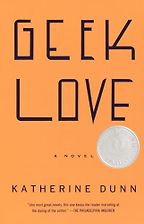
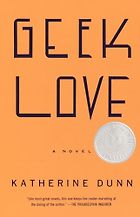
That’s an interesting way to frame it. Your first book recommendation is Geek Love by Katharine Dunn, which was published in 1989. It’s about purposeful mutation during pregnancy, and the premise is pretty horrifying. Could you introduce us to it?
It’s a truly mad, brilliant novel. Al Binewski, the owner of a travelling carnival, marries a Boston aristocrat who has run away from privilege to become an aerialist, but suffers a catastrophic injury that curtails her planned career. Needing to drum up interest in the carnival, they decide to have children and to expose Lil to prescription drugs, insecticides and ‘radioisotopes’ in order to intentionally mutate their children, so they can perform in the carnival and always have something unique that they can monetise; an ‘inherited security’ of the type Lil’s privileged background gave her.
The children who result from this experiment are Arturo, who has flippers instead of arms or legs; the beautiful conjoined twins Electra and Iphigenia; our narrator Olympia, who has albinism, dwarfism and a hunchback; and Fortunato, who is telekinetic. From this wild premise Katharine Dunn spins a book that is about many different things – bodies and capitalism, cultism, how love becomes bad, chosen family, incest, faulty feminism, and the curse of being ‘normal’.
But the violation of the physical is the key to all of this; the cult that rises up around Arturo involves followers increasingly cutting off parts of their bodies in order to move closer towards what they call ‘PIP’: peace, isolation and purity. I don’t think it’s a coincidence that Katharine Dunn, who managed to draw all this out of a book about body horror, also wrote extensively on boxing.
Despite its dark concept, the book continues to sell and is credited as inspiring work by anyone from Kurt Cobain and Courtney Love to Terry Gilliam. Why do you think it has such a hold on people?
I can’t speak for everyone but for me, it totally blew open what I thought a novel could be, which is perhaps why it has inspired so many creative people. It is simply rammed with ideas and refuses to tell you what to think about any of it. It is absolutely unconcerned with the idea that its central conceit might offend or disgust; you can sort of imagine the eviscerating social media reviews it would get now for its portrayal of two parents willingly subjecting their own pregnancies to toxic materials in order to make their kids ‘special’.
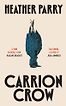
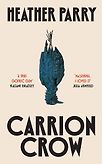
The idea of a parent – especially a mother – making actively malign choices on behalf of her children is still taboo, but because it is so taboo it is very effective in getting us to think about structural violence, absolute power, and physical vulnerability to those who are supposed to care for us, which is an enduring and inescapable horror; it is for all these reasons that I was drawn to this topic in my second novel Carrion Crow as well.
If this, supposedly the purest love that exists, can be soured, used against us and made violent, then there is nothing on which we can truly rely. It forces us to question everything. In the age of social media and ‘mommy bloggers’ who destroy their children’s lives by forcing them to be unpaid performers the minute they are born, this book takes on an entirely contemporary meaning too: how does money and fame corrupt family relationships in the age of the constant camera? It could be notorious ‘mommy blogger’ Ruby Franke rather than Lil Binewski who says: ‘What greater gift could you offer your children than an inherent ability to earn a living just by being themselves?’
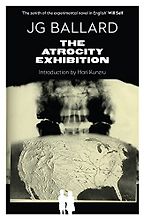
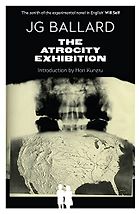
Next you’ve selected J.G. Ballard’s The Atrocity Exhibition, an experimental 1970 book of what the author called “condensed fictions.” Can you tell us more, and why you recommend it?
The Atrocity Exhibition was Ballard’s first book after he lost his wife Mary; they went on holiday with their three young children, and she caught pneumonia and was dead within days. He returned to England a widower at 33 and a single parent to three kids under ten, who he was advised to give away to other family members, as it wasn’t seen as ‘correct’ for a man to be raising children alone.
The Atrocity Exhibition was essentially his response to this completely brutal series of events, and marked a huge shift away from his previous sci-fi novels and towards a much more avant-garde approach to the technological age that was unfolding around him. In it he manages to connect his own grief to very public displays of violence, such as the Kennedy assassination and the bombings of Hiroshima and Nagasaki, as well as the landscape created by the media, the automobile, television, and celebrity culture within the 1960s.
The result is a borderline unreadable and completely fragmented collection of stories connected mostly by theme, structure and the fact that all contain a self-insert character who goes by different versions of the same name – Travers, Talbert, Travis, et cetera – with names like ‘Notes Towards a Mental Breakdown’ and ‘Why I Want to Fuck Ronald Reagan.’
My next book, which will be out in February 2027, is hugely inspired by The Atrocity Exhibition, but Ballard’s is a book so of its time that it is impossible to write a version of it today; the things he writes about – celebrity culture, politics and the media – have now combined so successfully as to be completely unmappable onto his model of society. It’s a book that is unique in every way, and unrepeatable, and hugely inspiring because of that. It reminds me to be weirder, be bolder, and to break apart everything that’s deemed acceptable in fiction.
I find J. G. Ballard’s writing so haunting, so unnerving. I hadn’t really thought of him as writing body horror, specifically, but yes, of course it is. What parts of this book do you respond to most?
For me The Atrocity Exhibition is indisputably body horror because it is about the intersection of the technological and the human, and it maps in its own unhinged style how the technological age violates both the mind and the body. The loose ‘plot’ of the book is that of a psychiatrist in charge of a psychiatric facility, who himself undergoes a breakdown and loses himself to psychosis; in trying to make sense of all these real-world events he plays them over and over, and within these fragmented imaginings the human body is brutalised. Marilyn Monroe becomes the victim of a nuclear bomb. Ronald Reagan’s is transposed onto the bodies of collision victims for sexual purposes. Mae west undergoes a breast reduction.
Ballard himself studied for a medical degree before he dropped out to become a writer, and he used to have a doctor friend send him the contents of his waste paper bin so he could go through medical reports and studies, so the body is totally abject here. The car crash is a recurring theme, as his next novel Crash is present here as a short story, and we see the ways that he seeds the sexualisation of violence throughout the book; the mechanically-degraded physique is hugely fetishised by other humans. In so many ways this is a book about violence and what it does to the human body, but also our collective psyche and our social structures. It is this that I am so interested in.
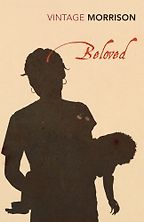
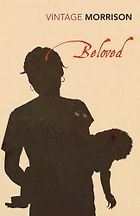
Next you’ve selected Beloved by Toni Morrison. Earlier you said this would be “a controversial choice” but you had solid logic to back it up. Tell me more!
Beloved is the story of a formerly enslaved woman, Sethe, who lives a cloistered existence with her 18 year old daughter Denver in a house haunted by the ghost of her first child. With the arrival of Paul D, who was enslaved on the same plantation as Sethe, mother and daughter are brought once again into society, but the ghost is driven out of the home; when they return one day they find a girl, Beloved, on the front porch of the house. Both Denver and eventually Sethe come to believe that Beloved is Sethe’s first child returned to them, and her presence in the home reveals brutal family secrets and the long effects of absolute trauma.
When I studied Beloved at university it was on an American fiction course and we were introduced to it as a type of Southern Gothic, but I think it is more than this. I think many people would balk at the idea of this being a body horror book, but it is, for me, about the ultimate physical violation: slavery, the turning of a person into a commodity. It is the inescapable fact from which all the individual stories in the novel are wrought.
From this central violation it touches on many others: the rape of both male and female enslaved people, maternal filicide, the uneven landscape of suffering, pregnancy as an instrument of female oppression even outside of the plantation. It is horror of the most physical type. Like all the most affecting, enduring horror it takes its inspiration from a real case, that of Margaret Garner, that exposes the greatest crimes of humanity and what they do to a person.
As the Guardian noted in a review of your own Carrion Crow, “you don’t tend to encounter much body horror in historical fiction.” Would you talk a little about your decision to bring these two elements together—transgression or taboo with the mannerliness we tend to project upon the past?
There definitely have been other novels that bring the two together – I’m thinking of Ottessa Moshfegh’s Lapvona, and Eat Him If You Like by Jean Teulé – but in Carrion Crow I was very much inspired by Mrs Beeton’s Book of Household Management, a real Victorian domestic guide that basically hasn’t been out of print since it was published in 1861.
My mother had a copy of this very archaic looking book when I was growing up but never referred to it; when I got my own kitchen in my thirties I bought an old copy and really got lost in its descriptions of foods, of how to butcher and prepare things, but also in its advice around motherhood and child-rearing.
At one point, Isabella Beeton refers to a nursing child as a ‘baby vampire’, and it was this strikingly modern, strikingly horror-inflected phrase that got me thinking about the physical horrors of the Victorian era – not just in terms of the oppression of women but with regards to the machinations of the British Empire, which was bringing all this blossoming wealth to the country as a result of colonisation-induced famines and the forced labour in service of industry.
In the novel the latter is kept peripheral, explored through the growing influence of a soap magnate based on Lord Leverhulme (whose soap empire became Unilever, and whose wealth was inextricably linked to the horrifying treatment of workers in Belgian-controlled Congo, which reduced the Congolese population by half) but the former is made manifest in the physical degradation of Marguerite, the protagonist, at the hands of her mother, Cécile.
For me, body horror seemed the most natural and most effective way to make readers consider these things, and in doing so, to consider the foundations of the society we live in today.
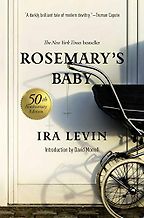
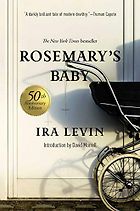
That brings us to Rosemary’s Baby, the 1967 novel by Ira Levin. I think a lot of our readers will be familiar with the Roman Polanski movie that was released the following year, with Mia Farrow in the lead role. But the original book is worth revisiting?
Absolutely it is; Levin’s books do not waste any time. This and The Stepford Wives make for a great weekend double bill. I’m sure everyone knows the story here, and the sort of hysterical premise, but when you strip away the fantastical and religious elements it is really a book about being betrayed, in the worst, most physical and psychological way, by the person you are supposed to be able to trust – and by the entire community around you. It is about the whole world falling away from you: not only your partner, but the doctors and neighbours who are supposed to be your saviours. This is handled in such a way to make you really question Rosemary throughout, to not know what is real, and in that way you, the reader, become a function of this systemic violence against this woman. It could be called Gaslighting: The Novel.
Levin really makes pregnancy seem completely alien, a desecrating process, and then if you read the story as an allegory he even touches on postpartum psychosis. There truly are women who have believed their newborns to be the devil, with catastrophic consequences. It is just a book you can come back to again and again and get something new from it. There is something I absolutely adore about 1960s and 1970s horror novels too, and it’s that they remember they are supposed to be mass market entertainment, eventually becoming paperbacks that would be shoved into someone’s jeans pocket: they move like steam trains, totally impossible to put down. Levin really does not waste a word. But having said that, the film is also one of my all-time favourites, so do both.
It’s interesting that you have two books on the list exploring horrifying pregnancies. Is gestation the ur-body horror?
I think it is, because it is in many ways completely unknowable as a personal process – until you’re in the midst of it, then the only way out is through – and yet it is one we largely, now, throw ourselves into. I think it’s a layered body horror in that way: it’s a violation of your body as your own, as a thing you know intimately, as a thing you have total control over, but it’s also a violation that you invite, if you are lucky enough not to have been impregnated against your will.
In pregnancy you’re made vulnerable not only to the outside world and all its many and various threats, but to the medical system, and even to the man who you’re having this child with, if you’re in a heterosexual relationship; it carries with it an inescapable critique of all these systems of power. This is quite the combination of things to reckon with, and then you’ve got the corporeal reality of it: the daily transformation, the medical risks, the fact that you spontaneously grow a brand new organ which you’ll then birth out. All new, all beautiful, all potentially dangerous, all completely outwith your control. And under all that is the parental terror, of course: the ultimate responsibility to this new, vulnerable person inside you, the constant tension between their needs and yours, the abject and all consuming fear that you can do all the ‘right’ things, do your unequivocal best for them, and something still might happen to take them away.
Then of course, even if all goes well, and by some divine luck both parent and child are well, you are irreversibly changed, physically and mentally, forever. It is a miracle that we go through it so casually, really.
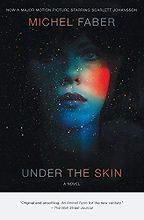
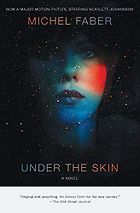
Finally, we’ve come to Under the Skin by Michel Faber, which was a huge discovery for me as a teenager. It’s such a strange and invigorating book. Would you introduce it to our readers?
Invigorating is the right word – and it’s wild to think this was his debut. It follows Isserley, an alien living in human form, as she drives up and down the A9 road in Scotland picking up male hitchhikers. Eventually we learn that she is actually harvesting these men so that they can be fattened up and slaughtered by her colleagues, and sent back to her home planet as a highly-prized meat, primarily eaten by the elite who live above ground. Everyone else is forced to labour underground.
It is such a brilliant concept as the very case of being a human being is othered; Isserley has been subjected to deforming surgeries to make her look human, leaving her in pain and alienated from her own body. And then the actual humans are othered; Isserley is sexually assaulted by one of them and consents to watching him be processed, which means he is castrated and has his tongue cut out before he is slaughtered; she is both horrified and disappointed by this process. But she intensely identifies with the sheep, and increasingly with her prey; it is a book that uses body horror to explore what it actually means to be an animal amongst other animals. And then, of course, there’s the critique of the meat industry too; Under the Skin walked so Tender is the Flesh could run.
This book has been adapted for the screen too, with Scarlett Johansson in the lead role. It is quite different to the book. Do you have a preference?
I think they’re entirely complementary. Jonathan Glazer’s film is not really telling the narrative of the novel; I really think of it as an artistic response to the book rather than a straight adaptation of it – a really bold and interesting choice which I wish we had more of! It’s one of those rare versions of a book that really leans into the possibilities of cinema, and putting Scarlett Johansson, the Hollywood film star, into direct interaction with regular Scottish people to evoke the idea of alienness is just inspired. It really deals with the body horror of the novel gorgeously too; the dropping of the men into the sort of black liquid instantly others the body, and the scene where Isserley strips off her human skin reminds me so much of the controversial Anatomy for Beginners series that Gunter von Hagens did for Channel 4 in 2005. There was one episode where he ‘degloved’ a cadaver (it means exactly what you think) which imprinted itself on my 19 year old brain, and the way she strips her arms is identical, in my mind, to the way the fat and sinew was revealed beneath human flesh. Then when she looks at her own blinking face: that is the definition of the uncanny, the unheimlich. Brilliant. I think you can approach the combination in either direction – read the book then watch the movie, or vice versa – but you should definitely do both.
Finally: what is it, do you think, that so attracts you to this mode of writing – body horror?
I think it is how successful it is in making the political personal, and how broad the scope of it really is. I recently ran a body horror workshop at the Alasdair Gray Archive and the Agnes Owens Archive, where I’ve been doing a part time residency for the last six months, and it is amazing to see how quickly people take to the genre even when they think they have no interest in it. We looked at Gray’s Poor Things and the Owens short story Arabella and talked about how they used body horror to explore social themes and power structures, then I invited them to bring in their own experiences of violation or transformation, and all of a sudden there opens up a huge landscape on which to write. The stories they created even within a short class were varied, impactful, funny, grim, gross, politically astute and totally unique. For me, the very best literature challenges power even in a small way, forces readers to think about the ways in which society has grown rotten, and in doing both inspires us towards creative change, resistance and empathy. I think body horror is such a strong tool for achieving this—while giving us books that are entertaining, impactful and unforgettable.
Interview by Cal Flyn, Deputy Editor
August 4, 2026. Updated: August 5, 2026
Five Books aims to keep its book recommendations and interviews up to date. If you are the interviewee and would like to update your choice of books (or even just what you say about them) please email us at [email protected]
Five Books interviews are expensive to produce. If you've enjoyed this interview, please support us by donating a small amount.