We’ve been covering the FT Business Book of the Year Award for a number of years, but for anybody who is new to it, could you explain what the prize is and what kind of business books you’re looking for?
The Financial Times has been running a business book award since 2005. The criteria remain roughly as they were then, which is that we’re looking for the most compelling and enjoyable insight into today’s business issues. Today’s business issues have certainly changed since 2005, but that is the prime criterion for picking a business book. Over the years, we’ve added a secondary criterion, which is that the winning book should stand the test of time, which is a very hard thing to predict, particularly in a world of fast-moving technology.
It’s worth saying that the breadth of the book award, right from the beginning, has been wider than what you might find on the business book shelves in a bookstore. We’ve tended to range from biography and history through to the traditional management books that you might find on that shelf, as well as embracing economics, technology, climate change, and so on.
With a team of Financial Times journalists that I help to coordinate, we pick 15 or 16 longlisted books, and then our expert judges pick a shortlist of six, which is where we are now. Then, in December, they will pick and award a winner. So that’s how it works.
In terms of business books in general, what trends have you seen over the past year?
The obvious trend of the last four or five years has been technology, specifically AI. Of the last six winners, five of them have been technology-related, so that’s clearly fed through into the award. It’s led to some really interesting conversations among the judges about what stands the test of time. If you’ve got a snapshot of AI today—which clearly is not going to be AI in five years’ time—to what degree does that snapshot still seem relevant later? That’s one of the running conversations we’ve been having.
There’s also been a subtheme which has run through everything of geopolitics, particularly in the last two or three years. As it happens, this has been a rare year when there were no books on the longlist that, for example, tackled China directly—or even indirectly, unless you count some of the AI books. But the growing global geopolitical and geoeconomic tension has been one of the themes that’s been prevalent in the last few years.
So those are probably the main trends.
The other thing worth mentioning is the tension that there always is between a really great narrative and a book that is heavy-duty economic or business analysis. That’s something that always plays out between the judges. Some of them prefer the journalistic narrative, and some of them prefer the ‘What have I got to really chew on here if I’m a chief executive?’
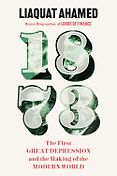
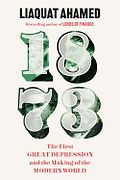
Let’s go through the books—I’ll take them in the order they are on the Financial Times website. So the first one is a work of economic history. This is 1873: The First Great Depression, and the Making of the Modern World. Will you tell me a bit about this one?
It’s worth mentioning first of all that the longlist this year had three former winners on it. One of them is the author of 1873, Liaquat Ahamed, whose book Lords of Finance won back in 2009. Both Lords of Finance, which was about the Depression era central bankers, and this book have echoes in current world affairs.
It’s a book about the first great global financial crisis of 1873. And, although Liaquat Ahamed does not make a huge deal out of this, clearly there are parallels between the 1873 crisis and the state of the geoeconomic world today: There was a big euphoric build-up. The financial system had recently modernised and globalised so that there was more debt being issued systematically. There were new technologies—in 1873’s case, railways, but also, subsea cables, which led to a big investment surge in infrastructure—which is paralleled by data centres and AI today. And it all came crashing down in 1873.
The book is full of little insights into the characters and the catastrophes. For example, I didn’t know that it was the Viennese stock market that collapsed, down by 45% in one day in May 1873. Better known is Jay Cooke’s investment bank in the U.S., which collapsed and started a domino effect.
There are lots of characters in there, both financial—the Rothschilds loom very large as the banking family that was organising a lot of the debt issuance—but there’s also Mark Twain, Karl Marx, and various exotic speculators around the world.
It has that sense of, ‘Here’s a cautionary tale from the past, one that you might not know, even if you know about the 1929 crash or Black Monday in 1987 or the global financial crisis of 2008.’ 1873 is not a date that we have previously thought of unless we’ve been financial historians.
And are there any tips in there that we can learn from—about what to do or what not to do?
I’m reluctant to sound fatalistic about it, but we are where we are. It’s hard to show how we would come out of where we are, other than through some kind of correction. There were issues with the speed with which railways and cables were built out, and clearly that has its parallels in the madcap rush to invest in AI infrastructure. So the attempts by some of the AI companies now to say, ‘Look, maybe we should slow down a little’—partly because they are themselves running up massive debts to build out the promised land—that does have a parallel with exaggerated investment in railway infrastructure, for example.
But you, as the reader, draw those lessons. The book doesn’t explicitly point to those lessons saying, ‘This is how one might do it today.’ I’m sure that Liaquat Ahamed will be asked all about that, or is being asked all about that. But like his previous book, it’s a rather beautiful, and beautifully written, history from which we are to draw our own cautionary tale.
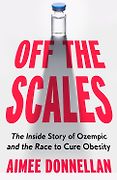
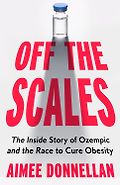
Brilliant. Let’s go on to the next book, which is Off the Scales, billed in the subtitle as ‘the inside story of Ozempic and the race to cure obesity.’ This sounds interesting. What can you tell me about this book?
This is by Aimee Donnellan. It is about Ozempic—the product which was Novo Nordisk’s patented weight loss drug—but it’s not just about that; it’s also about the entire cultural and pharmaceutical revolution that that set off. Ozempic was the initial discovery that got people looking into it, but it’s led to Wegovy, Mounjaro and others.
It’s about the chemistry and the discovery of GLP-1 drugs, which is the generic name for them, and the scientists behind that. It also tells us about the ways in which Novo Nordisk’s own fortunes were affected by the discovery. Some of the reviews have pointed out that by focusing on Novo Nordisk, the book tends to leave out the more successful drugs that compete in that market, like Mounjaro, which is an Eli Lilly drug.
The discovery has clearly made a huge cultural difference. It’s very hard to have a conversation these days without somebody pointing to the benefits, either for themselves or for unnamed others, of being able to use the weight loss drugs, and indeed some of the downsides, which have spilled over into everything from restaurant bookings to portion sizes. There is a sort of cultural history built into the book.
It is a classic business cultural commentary book, and it’s got a broad brief to talk about everything related to obesity: What caused the crisis? Why are we so hung up about it? What are the ways in which advertising has contributed? There is the shame of obesity, but also the pride in beating obesity, and how that feeds into this story.
It’s a very broad take on what, at root, is an extraordinary pharmaceutical discovery.
The book starts very nicely, with a story of someone at work who’s suddenly getting promoted and lots of attention, and the only thing that’s changed is that she’s lost lots of weight after taking it, right?
Exactly. Immediately, a value judgement is being applied to somebody’s personal choices, which not everyone might be able to make. That feeds through to the whole story. What the dinner party discussion might focus on—though dinner parties might possibly also be a victim of appetite inhibition drugs—is: are you obese through your own choices, or is it something that you can avoid? The existence of a magic pill that you can take puts all those things into sharp relief.
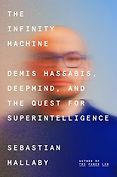
Up next we have one of the AI books. What can you tell me about The Infinity Machine: Demis Hassabis, DeepMind and the Quest for Superintelligence?
This is the other book on the shortlist by a previous winner, Sebastian Mallaby. He seems to have an ability to hit the target for the FT Business Book Award — he’s had a number of shortlisted books and won back in 2016 for The Man Who Knew, his big biography of Alan Greenspan, the former Federal Reserve chair.
This is again a book centred on a single personality with a huge influence: Demis Hassabis, co-founder of DeepMind, which now belongs to Google, and winner of the 2024 Nobel Prize in Chemistry for the protein folding work that he did using AI. Hassabis is one of the seven or eight great visionaries about artificial intelligence.
The book traces the life of Hassabis and the evolution of DeepMind and there are some fascinating biographical details in there. Hassabis was an extraordinary chess prodigy, but decided, eventually, ‘What are we doing using our brains to play chess all the time when we could be solving the problems of humanity?’
Hassabis comes across very much as a good visionary. He thinks AI will be good for the world, but I must admit I came away from the book a little depressed. Towards the end, Hassabis essentially says, ‘We are in a race. It’s a race to see who wins this, and DeepMind is part of the race.’ We’ve heard a lot about the dangers of AI in recent months, and DeepMind is contributing to that arms race that some warn might end in catastrophe.
Mallaby has taken a similar approach to his previous books, which is that he’s done a lot of interviews with Hassabis and woven his book around what Hassabis himself says about artificial intelligence. Presciently, it’s called ‘superintelligence’ in the subtitle, having second-guessed Trump’s attempt to make us all refer to it as that.
Mallaby presumably finished interviewing Hassabis last year. He has since moved to a different job at DeepMind, slightly out of the line of fire. And of course we have had the extraordinary story about Jensen Huang – the subject of last year’s winner The Thinking Machine – resigning from Nvidia after an affair with a Chinese woman suspected of spying for China’s state intelligence agency. So The Infinity Machine poses an interesting question for the judges. They’ll have to consider not only whether they will pick another AI book, but also whether what Hassabis said will stand the test of time.
Hassabis wants to be optimistic about the options. I came away deeply pessimistic about the potential outcomes, but it is a brilliantly written portrait of a brilliant man at a time of extraordinary technological change.
I was reading John Thornhill’s review of the book, and he mentioned that it is not only a biography of Hassabis, but also shows the evolution of AI research over the last 25 years. So, if you want to know about that, it might be quite a good book to read as well.
Yes, that’s right. I think Hassabis is a great lens through which to watch this. Apart from having won the Nobel Prize for an obvious beneficial use of AI, Hassabis was also at the top of DeepMind when it beat the masters of the ancient Asian game Go. He is somebody who has, for a long time, had to consider the trade-offs that you have to make between the commercialisation and the vision.
So, seen through him and through DeepMind, quite a lot of the rest of the world of AI falls into place. It’s a big book, so as well as DeepMind itself, there’s also plenty of room for Mallaby to explain what the competitors are doing.
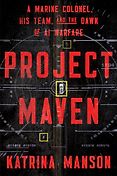
Let’s go on to the next book: Project Maven: A Marine Colonel, His Team, and the Dawn of AI Warfare, which opens with that moment when a computer beats the world’s top player of Go. Is this another scary book?
Yes, this is a scary book. We had a book on our shortlist in 2024 called Unit X, which was about how the Pentagon and Silicon Valley are transforming the future of war. Two years later we’re in a war, and Katrina Manson—who is a former colleague at the Financial Times—has dug deep into this story about how the Pentagon has taken on AI tools in order to create these frightening, potentially autonomous weapons.
She’s built the book around a colonel, Drew Cukor, who has been at the tip of the spear in Project Maven, which is the name of the operation to get AI into combat.
‘Is this a business book?’ you might ask. But it brings in the fact that all the big companies—even the ones that are trying to play nice, like Anthropic—have Pentagon contracts. Palantir, which is in the news here in the UK because of its involvement with the NHS, is clearly one of the companies that has benefited from being at the spearhead of this technology, and algorithms from other companies like Microsoft are also involved.
The book covers, to some degree, the pushback from within the technology industry—the workers at Google who objected to being involved in the project.
It’s very up to the minute and topical because there’s a lot of discussion going on about the future of warfare. I mentioned that there weren’t any China books on this year’s shortlist, but this is obviously a book that implicitly and explicitly talks about how AI is being thrown into the battle for military dominance, where China’s own military ambitions play very strongly. And clearly, to some extent, this is also a Trump book because the Trump administration is gung-ho behind developing military technology and becoming—or cementing itself as—the most powerful AI-powered military in the world.
Is there an example of what might happen if AI is heavily involved in combat?
I tend to think about the autonomous weapons. That was the cause of Anthropic wanting to pull back from dealing with the Pentagon. Its contract seemed to be drawn up to allow the Pentagon simply to use its AI models to do what it wanted with autonomy, without any intervention, and that was worrying. The book shows just how far militaries have come in developing swarms of autonomous weaponised drones that could be deployed in conflicts not so far in the future.
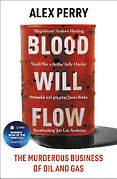
Let’s go on to Blood Will Flow: The Murderous Business of Oil and Gas. I initially thought this was going to be about oil and gas in general, but it’s focused on a very specific event in Mozambique. Do you want to tell me what it’s about and why it made the shortlist?
This is a real page-turner, the book that’s probably closest to a thriller. It’s also a really splendid piece of reporting.
Alex Perry, the author, has gone to track down everybody who was affected or involved—insofar as they still are around to talk to him—in a rampage by Islamist militants through a town in northern Mozambique in 2021. That prompted the big French energy company TotalEnergies to suspend its offshore natural gas project there, and to have to fight claims that it didn’t do enough to protect its subcontractors. I should say Total denies those claims.
From this—and also going back into history—he builds a picture of the human damage that the fossil fuel industry has done over its 20th- and 21st-century history. He uses the Mozambique example as a way to demonstrate the almost unnoticed damage that has been done. A lot of the people who were killed and that he’s spoken to were the workers and subcontractors who were the little people in this big picture.
There is a very big person in the book as well, who is still the CEO of TotalEnergies, Patrick Pouyanné. He is painted as this extraordinary alpha male fossil fuel executive with Napoleonic powers at the top of Total. As I say, the company denies what Perry alleges, but the book is a powerful counterweight to the public marketing of oil and gas companies.
I felt sad at the beginning, when he’s interviewing local officials, and one of them says, ‘We thought when they found gas, it would be a good thing for our community.’ Instead, it brought death and destruction.
The allegation is that the oil and gas compound itself—which was within reach of being able to assist—didn’t send any of the big protection forces that it had to help out. The idea that runs through the book is that there is this sealed-off world of oil and gas that discovers, extracts, and makes large amounts of money, and that beyond those fences, beyond the boundaries of those companies, people suffer.
The publicity for the book says it delivers a morality tale, and the book does, in a large sense, draw this depressing moral.
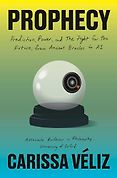
Let’s turn to the final book on this year’s shortlist. This is Prophecy: Prediction, Power, and the Fight for the Future, from Ancient Oracles to AI by Carissa Véliz, who is based at the Institute for Ethics in AI here in Oxford.
Prophecy has a completely different flavour from every other book on the list. She goes back to the Greeks and the oracles of Delphi, that’s one of her interesting starting points and talks about prophecy and old-fashioned prophets. She gives some very acute insights into why we shouldn’t be as trusting as we are of so-called accurate forecasts.
Again, we always pose the question: ‘Is it a business book?’ Very clearly it is, because not only does it talk about prediction in business in general, it goes quite deep into insurance industry forecasting and is right up to date in terms of what’s built into the algorithms that are driven by AI.
It’s a very sceptical look at what happens when we believe or become too focused on predictions. Her line is essentially that forecasting has always been about people exerting power, and that one should be very careful before you swallow predictions. These days, of course, we don’t necessarily even know when we are subject to the predictions built into algorithms. We should be very careful and ask the question: ‘What are we actually being pointed to here, and why?’
It’s quite a personal book. There’s quite a lot of her own experience. It’s written in an extremely lively and unpredictable way, which I think is a virtue here. It has a lot of interesting insights about the pitfalls of prediction and the ways in which prediction has led us down the wrong track.
She’s a philosopher. In that sense, it’s a bit of a step away from the journalists who often dominate our shortlist. It’s nice to have somebody who is an intellectual thinker in a different discipline from economics or business on this occasion.
Is there an example you could give from the book?
There’s this bit where she introduces her own agent, Andrew Wiley. He talks about his distrust of the data and of authors who predict their own books will be bestsellers. He prefers to focus on the quality and the enduring value of the book. That introduces a longer discussion of how, by reading ebooks, we are simply feeding data to Amazon and giving power to profit-driven companies that want to drive us away from physical books.
Thanks so much, Andrew, for talking us through these books.
It’s an exciting list. It’s different from previous years. It’s going to be intriguing to see which book wins.
Five Books aims to keep its book recommendations and interviews up to date. If you are the interviewee and would like to update your choice of books (or even just what you say about them) please email us at [email protected]
Five Books interviews are expensive to produce. If you've enjoyed this interview, please support us by donating a small amount.