Let me just begin by asking: Is it a good time for Black horror writing?
It’s a great time for Black horror writing. In the recent past, Black horror has just sort of permeated the pop culture consciousness. When the movie Get Out was released, it put Black horror right into the mainstream. You also have movies like Sinners suddenly dominating the cinema.
So you have all that going on, and on top of that, there is this resurgence of Black horror in genre writing—you have The Ballad of Black Tom, you have Ring Shout, you have Let’s Play White, all these different books reestablishing the literary canon that is Black horror.
Black horror especially seems to surface when we are living in more oppressive times. They are stories of resilience and resistance, of acting through one’s agency, and of how to navigate terrifying times.
If you look historically, you’ll see that this sort of writing has always bubbled right there beneath the surface, going back to Pauline Hopkins in the mid 19th century, all the way through stories written through the Jim Crow era. There have always been stories that have positioned us as fighting against the systems we live under.
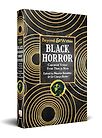
Were you seeking to highlight this history in your anthology, Black Horror: Canonical Voices from Then to Now? You worked with Dr Chesya Burke to compile this new publication.
It wasn’t so much that as positioning that anthology in conversation with a couple of other anthologies— Sheree Renée Thomas’s Dark Matter, which looks at the length and breadth of history of speculative Black fiction, and Jordan Peele’s Out There Screaming, which asks what the modern scene looks like. We thought, hey, what is the journey between those two points? What does the current Black horror scene look like, and what did the rise of that scene look like? And, through the lens of community: What does that burgeoning Black literary community look like?
I’m going to ask you about each of your book recommendations in turn, starting with Tananarive Due’s The Reformatory, which came out in 2023. It’s set in a reform school in Jim Crow-era Florida. Would you tell us more?
One of the things about Tananarive Due is that she’s sort of the shadow under which we all work, when it comes to the modern Black horror scene. She came to prominence in the 1990s with My Soul to Keep, and she’s the one we still look to. Tananarive Due is out there doing the thing. Tananarive and Octavia Butler; I remember writing my first short story the same year Octavia Butler published Parable of the Sower, so I feel I’ve marked my career by those two women.
With The Reformatory, you see a master storyteller writing in the strength of her full powers. It ties in a sense of real history, pursues powerful characters through the system, and, again, it goes back to those themes I was talking about: What does it look like to resist and survive under that system, those conditions.
I haven’t had a chance to read her latest one, Mazywood, yet.
Speculative fiction seems a very interesting way to wrestle with what are, essentially, haunted histories. Of embodying them in a new, strange way.
Absolutely. I think the power of speculative fiction is that you can have all these powerful conversations, difficult conversations, because there is that bit of a remove. We can put it in an alien context, or put it in a fantasy context, and then it’s easier to have those conversations.
With horror, the context gets more difficult. We don’t put the same remove in there, we make it even more uncomfortable and difficult , and that’s going to be part of that rollercoaster of living through that history all over again.
You’ve already briefly mentioned your next book recommendation, which is The Ballad of Black Tom, which was released in 2016. It’s a reimagining of a H.P. Lovecraft story.
Yes. It’s interesting that Lovecraft has loomed so large over the speculative fiction world, and especially in the horror world. As Black creatives, how are we to position ourselves in the shadow of this huge racist, who basically demonises us?
But then a book like The Ballad of Black Tom says: hey, you know what? Alright. Let’s wrestle with this, let’s reimagine it. You tried to demonise us, so let’s interrogate you through story. So it’s a response to Lovecraft in some ways, but it also asks what the real horror is underneath. Is it the systems we live in, the systems you created? How are we going to survive and thrive? While also dealing with that existential dread that is out there.
It’s described as a ‘fantasy horror novella.’ Novellas seem to be very popular in horror writing—much more so than in other genres.
Novellas are actually my favourite length to write. My absolute favourite. Tor.com were the first to bring back the novella form, around 2015 or 2016. Nnedi Okorafor’s Binti came out around that time too. Before that, novellas were basically a dead market. They weren’t seen as a profitable thing. So I was writing all these stories, without anywhere to publish them, and then all of a sudden they came back into favour.
But the novella used to be a standard. I mean, if you look at a lot of so-called literary classics, many of them are basically novellas. Then they fell out of fashion because publishers believed people wanted more bang for their buck. But we really do like novellas, these quick reads. We can read the entire thing in one sitting, but still feel enmeshed in this world. The Ballad of Black Tom shows exactly what that length can do.
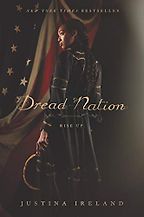
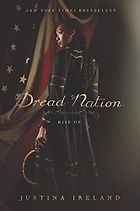
Let’s talk next about Justina Ireland’s Dread Nation, which came out in 2018. It offers an exciting alternate American history, in which the Civil War takes a terrifying turn as zombies rise from their graves at the Battle of Gettysburg.
I don’t think even Justina understands the impact of that book on the rest of the scene. Until then, we just hadn’t seen that sort of work rise up and take the market by storm.
Dread Nation reminds me of that tabletop supernatural role playing game, which dealt with the Weird West—Deadlands. It very much has that Deadlands vibe, where you’re dealing with alternate history, the Civil War, then throw in zombies on top of that. Then through all that, she’s asking questions about race; about wrestling with monsters (dare I say “ghosts”) of the past.
Dread Nation is a really seminal book, and there were a series of books that hit the scene at the same time with alternate takes on history, including Cherie Priest’s Boneshaker. All these genre-mashing books, where they are not one thing but rather meshing two together. Boneshaker was alternate history, but you also had a steampunk vibe. Dread Nation has alternate history and zombies—two great tastes that taste great together. Bringing zombies into alternate history was a powerful injection into the genre at the time; storytelling that hadn’t been done before.
I keep coming back to this thread through a lot of Black horror: the whole idea of revisiting history in new and fresh ways. With Dread Nation you have that, and I hadn’t seen anything like it since Steven Barnes’ Lion’s Blood, an alternate history of the slave trade. As with Dread Nation, you have that sense of turning history on its head, and bringing a sense of horror all at the same time.
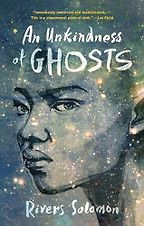
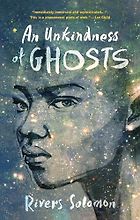
Right, and there’s further meshing of genres in An Unkindness of Ghosts by Rivers Solomon.
It has the same vibes going through it. Basically, you have this Southern plantation system reimagined on a generational starship. So, as a reader, you’re like: What just happened?
You have the main character who—these themes touch a little close to home—has been approved by the system, so she gets to navigate through the system in a sort of enlightened role. But on another level, how does she relate to her friends and family still caught up in the rest of the system? She’s navigating both worlds, to the point where she has to choose.
An Unkindness of Ghosts has one of my favourite deathbed scenes of all time. I don’t want to say too much, but one of the main characters, a close friend, is dying, and gives a terrific speech railing against the system and the world and the protagonist needing to choose her place in it. I remember reading the scene and throwing the book aside thinking, yeah, that’s the speech I want to hear.
What does she gain by setting this in space?
I’m in two minds about it. On one hand: in the far-flung future, we’re in generational starships, yet we are still wrestling with this antebellum type system. So I feel like – oh man – a certain way about that. But on the other hand, it lets us look at this system in a whole new way. Because we don’t have the trappings of the antebellum South, the whole story is recontextualised, and we can have different nuanced conversations because of that. And we’re not trading on torture porn, oppression porn, or anything like that. We can examine issues of oppression through this new lens.
So it’s a delicate tightrope that Rivers is walking with this story, but it does allow us to enmesh ourselves in the story without the whole weight of history behind it. Because enslavement was a horrific time, and it’s hard to mine that for entertainment, frankly. Recontextualising it allows us to have the room to brief and examine the issues with a bit of remove.
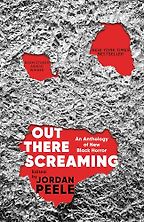
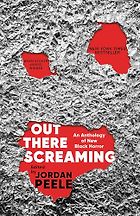
That brings us to your final book recommendation, which you mentioned right at the start: Jordan Peele’s anthology Out There Screaming: An Anthology of New Black Horror. Why do you recommend it?
If you want a nice sample platter of Black horror, you won’t get a much better book that this. I mean, yes, I have a story in this book, one of my favourite stories I’ve written, but you also have most of the heavy hitters in this genre, and some of the great up-and-coming writers. So if you like short stories and you want a sense of the breadth of the genre, this is a great one-stop-shop.
That feels like something you’ve aimed to get across in this interview—the true range of writing out there.
Yes, absolutely. Take An Unkindness of Ghosts, it’s a sci-fi horror novel. The Ballad of Black Tom is Black horror but it’s also cosmic horror because it’s dealing with H.P. Lovecraft. With The Reformatory, we have historical horror. With Dread Nation, you have traditional monsters and this alt-history element.
So you see all this genre-blending under the umbrella of horror. And in Jordan Peele’s anthology, you have a lot of atmospheric horror, a lot of psychological horror, and all together a broad tour of what the Black horror scene looks like today.
Is there anything else you’d like to mention?
I should say that, for the most part, we’re actually looking at horror through a Black American lens. So we’re not taking into account stories of the rest of the diaspora: What does Caribbean horror look like? What does African horror look like? I do need to do a deeper dive into these other areas, to see how they are interrogating this idea of what horror looks like.
Interview by Cal Flyn, Deputy Editor
November 17, 2026
Five Books aims to keep its book recommendations and interviews up to date. If you are the interviewee and would like to update your choice of books (or even just what you say about them) please email us at [email protected]
Five Books interviews are expensive to produce. If you've enjoyed this interview, please support us by donating a small amount.