Chinese science fiction is increasingly available in English, and mirrors the country’s philosophical and historical developments. Chinese literature scholar Mingwei Song, a professor at Wellesley, talks us through his top five choices—from 1905 to the present day—and tells us about the ‘new wave’ taking the Chinese literary world by storm.
Your choices take us through a little over a century of Chinese sci fi. Could you give us a sense of the trajectory – I know you’ve written of a ‘new wave’…?
Yes. In the 20th century, science fiction was a modern genre in many other countries, but not in China. There were many reasons: political reasons, and a Confucian mindset of not talking about the supernatural. But towards the very end of the 20th century, writers like Liu Cixin, the author of The Three-Body Problem, or Han Song, the author of Hospital, began to create amazingly interesting science fiction writings, deeply entangled with China.
It was largely unnoticed, very much underground, in the last few years of the 20th century. In the beginning of the 21st century, they began to attract writers, mainly through a science fiction magazine in Sichuan called Science Fiction World – not from Beijing or Shanghai, not from the metropolitan centres of China, but from the hinterland. Science fiction began to develop into a very prosperous genre, with a sizeable community.
I got into things at that time, and began to see that this was something really interesting. I gave it the name ‘new wave,’ borrowing from the French New Wave. I thought, this is not just experimentalism – though it had that, no problem. It challenges a lot of the established rules of mainstream Chinese literature, and it’s subversive, in the sense that it’s not giving us a common accepted understanding of reality. So science fiction began to form an epistemological shift: it changed the way we think about, perceive, understand and write about the world.
By 2010, there had been a series of interesting events, including a major conference that I helped co-organize in Shanghai. It was a huge gala for all the literary celebrities, and a thousand people came, including all the mainstream writers… and science fiction became the black horse of that gala. People felt it was astonishingly cutting-edge, and so interesting. By that time, Han Song and Liu Cixin had already produced very sophisticated work, even though they were so unknown to the mainstream. So for the rest of the literary world – wow. This was like a miracle. That’s what I call the new wave subversion, or the new wave challenge.
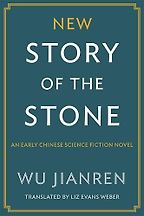
This was written in the early 20th century. I found things were uncannily similar in the first decade of the 20th century in China. It was also underground. Legally speaking, these were not writers who could just be accepted by the Qing government. These writers, they were revolutionaries. They saw potential in science fiction, and what they saw in it was mainly a utopian vision for a better China. Before The New Story of the Stone was written in 1905-8, there was a major reformer who wrote a dreadful novel; but really he was a thinker, an enlightenment intellectual – like a Jean-Jacques Rousseau or a David Hume. He experimented with writing a novel called The Future Record of a New China, and it did exactly what Thomas More did: imagined a better future, a different political system, as a way to criticise the current one.
The author of The New Story of the Stone was a far better novelist – one of the best novelists of that time. He was an H. G. Wells. He did both realism and science fiction, and was a progressive thinker; but he also had very dark thoughts about human nature, and whether a utopian society would really be all good. So, The New Story of the Stone has the complexity of a good literary work.
And it’s part of literary tradition – there is an original Story of the Stone, right?
Yes. The Story of the Stone is also known as The Dream of the Red Chamber. This novel is like China’s Pride and Prejudice. Everyone knows all the details, and it’s been adapted into all kinds of other forms.
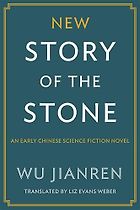
The New Story of the Stone is about the male protagonist, the most familiar male character of the Chinese novel to a modern reader. The author Wu Jianren studied foreign affairs and worked at the Jiangnan Arsenal, which was the main industrial base of early 20th-century Shanghai, and he gave this character a lot of his own intellectual capacity. So he turned him from a traditional scholar, always in love with the fair ladies, into an enlightenment intellectual who is deeply worried about the nation. At that time, there was a trend of embracing everything new, modern and Western. Wu’s character, the Jade Boy, has his own judgment and doesn’t see everything new as good.
The novel is in two parts, because writers at that time always wrote for journals. Wu wrote twenty chapters for a journal in 1905, in which this Jade Boy was suddenly implanted in modern-day Shanghai, facing both imperial power and Western imperialist oppression. Then three years later, in 1908, he wrote another twenty chapters. In part two, he travels to a future world; but in this novel, it’s a part of China that kept all the virtues of Confucian tradition. It’s not the old-age tradition of Confucianism, but more like industrialised Confucianism. It reads like steampunk. And you have all the Confucian concepts and technologies associated with Confucian ideas. He also forms his judgement here – he’s not just an admirer of this future world.
There is also plot, of course, but I won’t give you spoilers about the plot. And the novel has an ambiguous ending. I like it very much. I’m actually doing an anthology of early Chinese science fiction for the MIT Press to be released next year, and I think this is one of a couple of the best science fiction novels coming from that time period. And we’re fortunate enough to have this new translation of the novel available this year, published by Columbia University Press.
When you were talking about the focus on Confucian values, I was thinking what a huge challenge that must be for a translator…
Yes. This one was written in vernacular Chinese. In my anthology, we also had a few pieces written in archaic Chinese. Archaic Chinese about space odysseys: that’s very difficult to translate. I felt grateful that I had very good collaborators.
I really celebrate New Story of the Stone for its utopian vision, but also its very subtle irony. It’s a unique reflection on the temporality, on the historicity, on the nationality… on a lot of things.
Lao She is a highly recognisable name in China. He’s perhaps the best-loved author of pre-1949 China, for many reasons.
He spent many years in London and was Christian. He began learning to write by imitating Charles Dickens, and his language is extremely humorous. When I read his novels, I cannot stop laughing; it really has that dose of British humour. And he’s a good person through and through, with a moral compass in him, and could observe society with such sharp eyes.
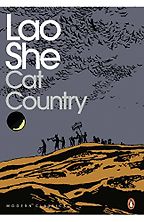
Most of his novels are about social reality. But in 1932, the year when Huxley published Brave New World—and I have evidence that Lao She knew that novel: in correspondence with another writer, he offered his comment on Huxley’s novel—he began to build a totally Chinese Martian story.
In every way, this is a dystopian novel. So only a few decades on, the Chinese are no longer celebrating utopian novels, but dystopian novels. I think it’s an important part of the atlas of the global dystopian swerve.
Yes, really interesting. So what’s in this dystopia?
The novel is bizarre, absurd. Unlike his other novels, which were usually published in journals for the common reader, this novel was serialised in a totally modernist avant-garde journal. It’s absurd as a progressive thing, not in the sense that it’s nonsense: absurd for experiment, to invert things.
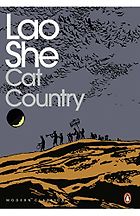
This is about a cat country on Mars. If The New Story of the Stone is amplifying all the Confucian virtues, this is the same virtues now turned upside down, and amplified as terrible, horrible things in this cat country. The cat people are like the Chinese people transformed into a new species, which makes everything that’s invisible in ordinary society absurd in this context.
The novel begins with a human spaceship that has crashed on Mars, and a person who has to deal with the cat country. In the beginning, he’s very fascinated by it, but gradually sees the darkness. This novel was very unique in Lao’s writing, and also very unique in the entire Republican literature – the literature before the Communists took over in 1949, when writers could still freely express their ideas. This novel was reprinted many times until 1949. Then it disappeared.
Ah – of course. What did that mean for Lao?
In 1949, Lao was actually living in New York. He spent at least three years in the US, and a few of his novels were translated into English – including Rickshaw Boy, which was his most popular novel, but the translation at that time was horrible. He had criticised the Communist Party very harshly before, so he was advised to stay in the US. But eventually he got such a heartwarming invitation from the Communist Party that he went back.
This novel, of course, was banned because it contains lengthy irony about communism and how it came into the cat country – it’s very obvious. Six or seven years later, Lao She experienced exactly the same thing he described in Cat Country. He wrote about how those who were influenced by that foreign religion, radical Marxism, persecuted and killed their teachers. Lao She died in 1966. When the news of his death came to the United States, Cat Country was translated into English for a purpose.
I think the translation by William Lyell is perfect. And Penguin Classics released a new version when science fiction had this revival.
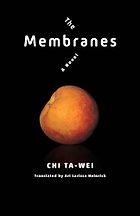
Your next choice bridges the years of censorship in the People’s Republic of China by looking at Taiwanese fiction… Tell us about Chi Ta-Wei’s The Membranes.
Science fiction played a role in communist China because it’s an imitation of the Russian system, and in Russia there was science fiction. So in China, there was science fiction, but it was pure propaganda. But in Taiwan and Hong Kong, there was also science fiction writing, and the American influence. We’ll talk about the new wave coming from the People’s Republic of China, but if we look at Taiwan and Hong Kong in the 1980s and 1990s, there was a new wave in the line of the Anglo-American new wave.
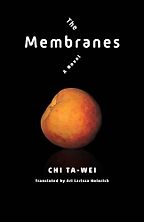
The Membranes was written by a gay writer during Taiwan’s democratisation, post-martial law. The gay community was no longer taboo, and The Membranes can be called gay science fiction. Interestingly, Chi Ta-Wei considered Taiwan, homosexuality and science fiction to be the same. Taiwan had an odd existence in the world, not legitimately considered a country by the United Nations, always pushed around in world politics. Homosexuality in the 1990s was a new phenomenon, and people were trying to make people aware of its existence and the need for gay rights. Science fiction was, to Chi Ta-Wei, a very interesting metaphor. It is not hooked by the rules of mimesis. It’s a fantasy, it’s a genre that owns freedom.
The Membranes is a super complex text. It has many different layers of meaning, and the story also takes place on different narrative levels. It’s like a puzzle. It’s highly intellectually stimulating, and I think it’s a miracle. When it was translated by a transgender Australian scholar into English, I was invited to write a blurb for it. What I wrote is that it is like a labyrinth, a very high level of fictional experimentalism with meaning-making and dual meanings, non-binary on every level: gender, genre, meaning.
Tell us about the central premise…
It begins by depicting this woman who is a beauty fish – a person who does make up for skin. But when you penetrate all the layers of meaning, this is about weapon-making. It’s about warfare. It’s about things that were hidden from people. So it stretches from a seemingly very beautiful thing, naive and innocent, to the question of how to have a redemption of warfare and disasters in the human condition.
It’s a future world. It’s not just about Taiwan, but Taiwan is very central to it, and Taiwan’s place in this future world is an interesting question too.
Following in the footsteps of Chi Ta-Wei, there were quite a few very, very good Taiwanese writers. I’m campaigning and fundraising for them to be translated into English. I hope more people will see those novels.
Is there a pattern to what is translated into English, a bias?
Oh, there’s a bias. I think in Europe, in Italy for example, they have more freedom because the publishers are less manipulated by money. But in America, the publishing business has really been under the influence of profit. A lot of Chinese books translated into English are serving the need of a certain American mindset, of viewing China as almost alien, as the hostile enemy—novels that expose the bad things about communists. Which is totally fine, of course. But there are also novels that are more complicated than this, such as these novels. They may not appear to be criticism of the politics directly; they have the quality of literature. Just as we read Murakami, why shouldn’t we read Chi Ta-Wei? It’s not about politics; it’s about the world we share.
Columbia University Press has been doing a lot of good things. They have a series of translation projects, and they’re translating famous names, good writers.
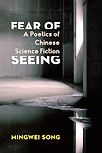
We’re about to come to the new wave. We left off in PRC with writers being suppressed. In your book, Fear of Seeing, you write that now science fiction has its unique poetics, “the representation of the invisible”…
Yes, I do think it represents the invisible. Recently, I was revisiting this, and I give a definition of the poetics as “apocalypse”. There’s no such thing as an apocalypse in the Chinese tradition. It’s always a circle: the end of the dynasty, the beginning, things starting all over again. The definitive end game is not there. But this new wave of science fiction began with the very dark imagination of an apocalypse.
The Greek root of the word means revelation: at the moment of apocalypse, you see things that were hidden from you before. Like the Christian idea, and Christianity also had a huge influence on science fiction, right? But it was borrowed by these Chinese writers, who lived through the Mao years, and then through the 1989 student protest. They saw the backfiring of China’s golden age of political reform. Then, in the 1990s, the economic reform state that turned the country into a monstrous leviathan, very different from what people were thinking about China in the 1980s. China was uniquely left when the entire socialist bloc collapsed, and stood still as a socialist dictatorship, married with this capitalist market system. It’s a very strange situation.
Crying out for literature…
But if we look at Chinese literature of the past thirteen years, very few writers could write about what was happening. They could not write about this huge change, for both political reasons and for market reasons, and it’s just such a big challenge. They could write about the past – Mo Yan wrote about the inhuman Mao years, no problem – but they could not write about the contemporary.
Then came these writings about apocalypse or similar scenarios. For example, Han Song wrote a story titled “My Fatherland Does Not Dream”. He wrote that the entire Chinese population were turned into sleepwalkers during the nighttime. That’s why they were so tired during the daytime. When they were turned into sleepwalkers, they did all the things the country designated them to do. They would go to the shopping mall to use credit cards to buy things they did not need. They would go to the classrooms, sleepwalking teachers teaching sleepwalking students. Sleepwalking construction workers building more buildings than the entire population needed…
Of course, this is very easy to interpret because it’s so obvious. It showcases the nightmarish side of China’s economic miracle, giving us a sense of the dark truth that was deliberately hidden. But he wrote other more sophisticated novels, like Hospital…
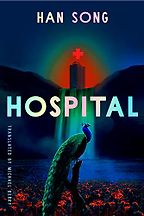
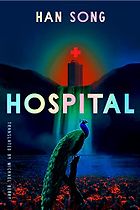
It was written four years before the pandemic began. He wrote about a Chinese city turned into a hospital; the entire nation turned into a hospital; the entire Earth was a hospital… Eventually, a hospital is found on Mars, and we understand that the universe is a hospital, and the hospital has a purpose.
The hospital is run by a certain programme, whose sole purpose is to keep the hospital as it is. So it’s not about treating patients; it’s about keeping everyone sick. Certain people ascend to the role of doctors, but they suffer all the same. So the entire world is filled with diseased people.
Han Song and I share the same editor, and she persuaded him to write a sequel to the first one. In that, Han Song imagined a world in which there were no women, only diseased old men. We can interpret it as allegory, but it’s not like Cat Country; it has more than just the political critique of society.
So these are multi-layered?
They’re very complicated. I read the set of novels three times before I began to try to write about them, and I can’t say I exhausted everything offered by Han Song in this novel. It’s a critique of human limitation, but also technology… In Hospital the AI is called the Life Controller — Siming — which is an ancient name for a god, deciding on people’s disease and recovery. In Han Song’s writing, it gradually turns into a person, and this person is like a peacock which only loves its own beauty. It no longer cares about the hospital. The system is running perfectly, it doesn’t need to worry about that. What it wants is to be a self-serving behaviour artist, who could keep producing art to be its extension. So, this is like how power operates…. If we look at this world, we know that people who have power eventually only love themselves or the power itself. Han Song’s vision is that this is no longer a human condition, but a technological metamorphosis of power.
It also has a deep level of Buddhist philosophy. It’s very like Philip K Dick – he has the vision of Dick, and the similar tendency to write in such a crazy way. I recommend it. I think when Hospital was introduced to the market, they made a mistake: they shouldn’t have labelled it as like the Three-Body trilogy. This is the opposite of the Three-Body trilogy.
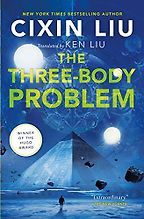
Well, that brings us to your last choice. Tell us about Liu Cixin’s The Three-Body Problem – probably the best known of your choices for Anglophone readers.
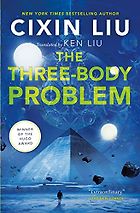
Yes – this is really the novel. I actually had a conversation with Liu Cixin last night. He has been my friend for many years, and we can speak to each other very candidly. And he felt that whatever he wrote into this novel was not what people see today, and that it’s quite a dangerous novel.
At the time he was writing it, Chinese science fiction was a very small thing. There were only a handful of writers, and they read each other’s work, with some high school students who were their fans… He never expected this to have such huge influence. Today in China it is celebrated as national pride. The pro-nationalists – they called themselves the Three Body Party, and later they called themselves the Industrial Party – they represent the far left in China. In the US, it would be called the far right – ultra-nationalist thinking. They felt the Three-Body trilogy was their Bible. They worshipped Liu Cixin as the person who miraculously created the dark forest scenario. They took it for real. They think this is real politics.
Liu Cixin intended it to be something totally different. It was all built upon Maoist thinking, and the Three-Body trilogy was fundamentally an echo of the most inhuman crisis happening in Chinese history; an extension of the scar wound, spiritually and physically, to the level of not just the future world but also to the entire universe. Pre-emptive strike is the fundamental rule of the dark forest scenario, but Liu Cixin made it very clear: this is a guarantee of mutual destruction. It means there’s no peace, there’s no hope.
Sounds like grim political reading…
Without involving Liu Cixin, I have for years tried to promote the poetic heart in the dark forest. (There are some spoilers coming.) I try to argue that even though he presented this very cold, inhuman universe to us, he kept alive a woman who was given the power to push a button to bring total destruction to both the Trisolaran world and the human world – but she did not have the heart to do that. And her name has a heart in it. Her name is Cheng Xin – ‘Xin’ is ‘heart’. And Liu Cixin did something amazing: he kept her alive in the mini universe that was built outside time. This mini universe is called 647 universe, and if you read it in Chinese, it’s liù sì qī universe – Liu Cixin universe. So that’s his gift for this woman with a heart of compassion. And what is more, it’s eventually revealed that what we were reading was written by this woman.
It’s a monument to humanity. For years, I have been promoting this idea: while most readers accept the dark forest scenario as a metaphor of international politics, or as a Hobbesian understanding of the relationship between the individual and the state, I always promoted this poetic part.
It’s a beautiful interpretation.
Liu Cixin gives us a hint about how to interpret the trilogy. The lover of this woman, who for whatever reason was sent to deep space and only left his brain, came back in a virtual body. He had a conversation with the woman, but they couldn’t pass information to each other. They had to only talk about love.
He told three fairy tales. All kinds of people interpret the three fairy tales to understand them as something containing information. But I think Liu Cixin intended them to be a token of love. If you compare what happened later, you can see they contain certain information predicting the future, but that’s not important. What he really wanted to give her was the emotion in it. And I think this is also Liu Cixin giving us the right way to read his novels: there’s something extra outside the political scheme. There’s something outside that, in how he passed it to her and how she received it, and the way she never thought of using it to interpret the future; and this is the person who is the last human survivor, and eventually wrote this history of the three-body saga. This is the poetic heart.
Chinese political observers and now American political observers, they see in this something threatening – that it’s a Chinese conspiracy for taking over the world. I think they both missed what is really shining, what is really beautiful and precious in it: the poetic heart.
Five Books aims to keep its book recommendations and interviews up to date. If you are the interviewee and would like to update your choice of books (or even just what you say about them) please email us at [email protected]
Five Books interviews are expensive to produce. If you've enjoyed this interview, please support us by donating a small amount.
Mingwei Song
Mingwei Song is a professor of Chinese Studies and Chinese at Wellesley College. His most recent monograph is Fear of Seeing: A Poetics of Chinese Science Fiction. He also published a book in Chinese: The New Wave in Chinese Science Fiction: History, Poetics, Text 中國科幻新浪潮:歷史,詩學,文本. In 2012, he edited a special issue for Renditions that translated stories by authors such as Liu Cixin and Han Song into English for the first time. In 2018, he co-edited The Reincarnated Giant: An Anthology of Twenty-First-Century Chinese Science Fiction.
Mingwei Song is a professor of Chinese Studies and Chinese at Wellesley College. His most recent monograph is Fear of Seeing: A Poetics of Chinese Science Fiction. He also published a book in Chinese: The New Wave in Chinese Science Fiction: History, Poetics, Text 中國科幻新浪潮:歷史,詩學,文本. In 2012, he edited a special issue for Renditions that translated stories by authors such as Liu Cixin and Han Song into English for the first time. In 2018, he co-edited The Reincarnated Giant: An Anthology of Twenty-First-Century Chinese Science Fiction.