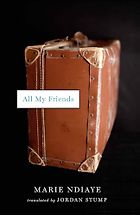
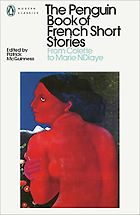
The French short story tradition is varied and innovative. Patrick McGuinness, editor of the Penguin collections, introduces five of the best, all of which "understand that the short story can be anything it wants, but it does actually have to be short." Ranging in content from the fantastic to the achingly banal, these gems of the genre will leave you pondering them for much longer than they took to read.
I won’t ask you for a definition of short stories, as you write in your anthology that “it is easier – as well as more enjoyable – to read short stories than to define them.” So could we instead introduce people to the range and variety of the French short story tradition?
Yes. When I was putting the anthology together, I was trying to work out what counted as a short story. The French like categorising things. They like things to have borders, pigeonholes, and definitions, and once they’ve got them, they like blurring the borders and exploding the categories and smudging the definitions. I think that’s a pretty good way to proceed. So my question to myself as I began was, where does one start?
When you think about the French short story, you think of the classic 19th-century short story, with a beginning, middle, and an end – not necessarily in that order. These have a shape and, if not a formula, at least some traits by which they can be recognised as a short story. But you don’t necessarily know where you’re going to stop with these kinds of definitions… Some of the stories that I chose were pieces of memoir that were framed as stories. Others were pieces of newspaper headline – if you think about it, a small ad in a newspaper is a story, isn’t it? A lot of the writers I was interested in were playing with the form, asking what it was and what it could do.
All the stories today appear in your anthologies, although some are also available in their original collections. Tell us about the anthologies’ scope.
My anthology starts with the late medieval period and goes on through to the world of a few years ago, the 2020s. They all understand that the short story can be anything it wants, but it does actually have to be short. It doesn’t have to be a story. But it has to be short, and it needs to go in, do its job, and then go away again. And I hope that that’s what I have found in these different examples.
As with a lot of these anthologies, the word ‘French’ is less solid than it looks. Quite a lot of the people I put in are coming from different parts of the world. The ‘Frenchness’ of these writers was something I was interested in pushing and exploring, and that’s why there’s a lot of Swiss and Belgian and North African, all sorts of francophone writing.
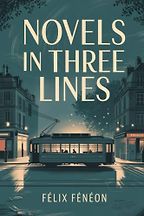
Great. Well, let’s begin with the very short, published in 1906: Felix Fénéon’s Three Line Novellas (also translated as Novels in Three Lines)
In French, it’s Nouvelles en Trois Lignes. This takes us to the various definitions that the French have – there’s the conte, which is like a traditional story; the recit, which is often defined as a story, and a way of telling a story, that foregrounds its own telling and its own narrator; and the nouvelle. ‘Nouvelle’ doesn’t map directly onto ‘novella’– it’s often much shorter, but that’s how it’s often translated.
Fénéon was a very brilliant art critic, and he was very mischievous. He was one of those writers who thought that everyday life contained as much drama and sorrow and tragedy and comedy and – importantly – absurdity, as all of the best put-together short stories. So he creates these tales which are true – he gleans them from what the French would have called the petite brèves, the day-to-day little news morsels, a sort of news in brief.
I find them very sardonic, very funny, and very sad. I think that with these stories, Fénéon is trying to make reality speak for itself in as unmediated a way as possible, while also making his readers sense the spectacular nature of everyday life.
You talk in your foreword about using the length as a resource rather than just a limit, which I thought was a lovely way of looking at it – can we talk a bit about that?
That’s right. With these tiny micro stories – I guess they are the forerunners of what we would call microfiction (although they’re micro facts.) – the length is a resource. You cannot successfully do anything in any form, whatever it is – whether it’s an eight-hundred-page novel, a sonnet, or whatever – unless you respect the demands of its size, shape, and so on. And once you do that, you realise that the shortness is a resource… The distinction between form and content is something that we’re taught in school. But doing things properly, form and content should be inseparable (when you’re writing – perhaps when you’re analysing, you take them apart).
With the three-line novellas, Fénéon is showing you that even in three lines, you can have tone and style. There’s no form, no length too short for personality to express itself.
Your second choice oozes personality. Please introduce Huysmans’s “M. Bougran’s Retirement.”
Joris-Karl Huysmans wrote a very famous novel called À Rebours, translated as Against Nature, which is the book Dorian Gray reads in The Picture of Dorian Gray, and it influences his decadent immorality and so on. The novel was a huge intervention in the culture: it was described as falling like a meteorite into the literary landscape. It’s the story of a hopelessly snobby, very rich aristocrat who escapes from the world, decorates his palace in exactly the way he wants, and has a tortoise encrusted with jewels and so on.
One of the things that Huysmans was fundamentally interested in was escape and the failure to escape. “M. Bougran’s Retirement” seems to me a rather sad and funny and caustic short story about a man who can’t bear to retire. When he finally does accept that he has to retire, he goes back to his crappy little flat and has it decorated exactly like his office, and gets a big desk, and even pays a local boy to bring him bits of paper that he can stamp. I find that incredibly sad, incredibly poignant.
When I was younger, I found it hilarious, and as I inch towards retirement myself, I start to find it actually too close for comfort. I think there’s something there about work, about how work bleeds us dry, but also how we are ready to be bled. It’s a bleak but very funny story – and the sort of story which a reader could read two or three times and find it completely different each time, depending on how they were feeling.
I found it horribly relatable, and I’m not retiring, just trying to make myself stop at weekends. It was rejected at first for being so unlike the novel that he was loved for. Was he going off in a new direction generally at this point, or is he using the short story as a chance to experiment?
Quite a lot of his novels had been about people trying and failing to escape, and he tries various means… The question of escape in Huysmans’s work is everywhere. Later on in his life, he became a devout Catholic, and he didn’t renege in any way on what he’d written before, but the books become much more about an escape into religion. So they’ve all got that one thing in common.
People didn’t like “M. Bougran’s Retirement” because they felt that he wasn’t doing what they wanted him to do, and yet in a strange way they recognised his major themes and preoccupations. They just weren’t delivered in the same way, or not in the right way. They were made sad and ridiculous, poor and threadbare.
Bring back the jewel-encrusted tortoises.
That’s right. If you’re going to play this game, play it with a lot of money and lots of luxuries.
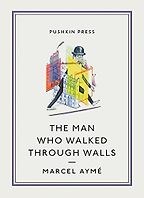
Let’s talk about your third choice – a very literal escape artist in this one. Tell us about Marcel Aymé’s The Man Who Walked Through Walls.
This is a story that I’ve loved since I first read it as a child, because it has these magical properties delivered – like a lot of Marcel Aymé’s surrealism – in a deadpan style. What’s ‘the man who walked through walls’ going to do with his extraordinary gift? Not very much, actually. Likewise, the beautiful beginning, the accidental nature of how he discovers his gift…
It was a much-loved, very successful story. People felt in some strange way they could relate to it, because the marvellous becomes banal, but also the banal can become marvellous. There’s this strange Mobius strip you get in Aymé’s work where fantasy and a flat reality don’t seem to oppose each other anymore. They become each other’s avenues – one gives rise to the other and falls back into the other.
In a strange way, Marcel Aymé and the Huysmans are both about ordinariness: what is the ordinary? Is it formed by habit? Do we get used to the extraordinary to the point where it becomes ordinary, or is it a quality in itself? Is it a thing that we make through constant exposure to it? Marcel Aymé tried a few other variants on that, but nothing was ever as popular as The Man Who Could Walk Through Walls. Le Passe-muraille, it’s called in French, which is even more beautiful – ‘The Wall-Crosser,’ literally translated.
The fantastic has a big role in the French short story tradition. Could we talk a little about that? Is this story representative?
Yes, one of the big feeders of the French short story in the mid-to-late 19th century was the ‘fantastique’. Many writers had a go at doing a version of it, and it very quickly became something tricksy and often amusing, and also in its own way very conventional. There are rules in the fantastic: it isn’t the same as the surreal. The fantastic needs to be logical; the fantastic things that happen need to be believable within their fantastical universe.
It was also a reaction against the 19th century’s increasing secularism and belief in rationality. What’s the first thing you do when you have converted everything mystical into rationality? You want some more mysticism, don’t you? No one ever sits there and says, ‘Great, everything’s really rational now. We can rest.’ I always remember being excited as a teenager when I discovered that Arthur Conan Doyle — author of Sherlock Holmes, the most rational detective, the answerer of questions par excellence – Arthur Conan Doyle himself was a big believer in ghosts and fairies and the occult and all of that. Is that cognitive dissonance? No, I don’t think it is. I think it’s some strange need to balance: the impulse for the inexplicable never goes away. So when you’ve explained loads of things, you start finding things you can’t explain. Flaubert has a version of that where he says that knowledge is a circle, and as the circle of knowledge expands, so does the circumference of the circle that touches on ignorance.
Marcel Aymé’s story is a reply, perhaps, or an attempt to recharge the late 19th-century fantastic heritage, but then to apply it in a rather grey, middle-of-the-road Paris – austerity Paris.
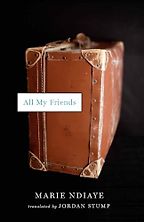
Could you tell us about your fourth choice? Next we have “Revelation” by Marie Ndiaye.
This is a very moving, rather sad story about betrayal, and feelings never quite coming off – or not having the right feelings for the right people. It’s visceral, because it’s a mother and child. I liked its unresolvedness and its epiphanic non-epiphany – because the idea that we must always learn something is another thing that stories play with, of course. Some of my favourite books, especially of the 19th century – like Flaubert’s Sentimental Education, or Musil’s Man Without Qualities – they’re framed as novels about self-education, the bildungsroman. But what happens if you learn nothing? It’s left to the reader to learn something or to feel something.
It feels extremely contemporary, and very French. It’s also about alienation and discomfort. It happens on a bus, so there’s a sense of the stages of the journey being staging posts of feeling and of narrative. I generally like films and stories that have the shape of a journey, especially a journey that doesn’t go anywhere.
In sum, what would you say it’s about? It’s a hard one to describe without telling the whole story, as it’s sparse…
Yes. It’s about… someone who betrays their child by not feeling for them.
Ah, perfect.
It’s about betrayal and self-justification and the failure of self-justification. We might also think of that classic French idea of bad faith, where we lie to ourselves, and we know we are lying to ourselves, but we choose to pretend to ourselves that we believe the lie in order to get or do what we want. I was very struck by the way this story beautifully and poignantly finds the staging posts of that emotional drama.
We’ve come now – alas, another poignant staging post – to your last choice. This is “The Disappearance of Honoré Subrac” by Apollinaire…
I was very pleased to find this for the anthology because Apollinaire didn’t do many short stories. This one is playing with the fantastic genre, but it also has a certain element of ridiculousness and comedy and burlesque, almost music hall stuff – adultery and wardrobes and beds and things like that. But it is a very revealing story as well, because it is nonetheless about emotions, and in some strange way about honour. I thought it had huge amounts of personality.
A bit like The Man Who Walked Through Walls, it’s about what one does with special powers and gifts. This one seemed to me to be more melodramatic, perhaps more comical as well. Like a lot of these stories as well, the framing device is a narrator telling you something in a slightly tongue-in-cheek way, and the framing here works quite nicely.
He does so much work in those first couple of paragraphs. It boils down to ‘No one can solve this disappearance, and I told them the truth but no one believes me, which is fair enough’ – which opens up a world of expectation.
Yes – and actually that reminds me that quite a lot of those stories in the fantastic genre are framed in such a way that the reader is being told a secret, which they will then keep or know or believe as well. They’re involving in that way. ‘I’m telling you, reader, this: no one believes me, but you will.’ I think that’s why people like the fantastique too – they’ve got a stake in it. When cleverly and correctly handled, it’s one of these genres that draws people in, and you can’t fluff it because you don’t have much time.
Five Books aims to keep its book recommendations and interviews up to date. If you are the interviewee and would like to update your choice of books (or even just what you say about them) please email us at [email protected]
Five Books interviews are expensive to produce. If you've enjoyed this interview, please support us by donating a small amount.
Patrick McGuinness
Patrick McGuinness is a British-Belgian writer and academic. The author of two novels, a memoir and two books of poems, he teaches French and Comparative Literature at Oxford, where he is a Fellow of St Anne's College.
Patrick McGuinness is a British-Belgian writer and academic. The author of two novels, a memoir and two books of poems, he teaches French and Comparative Literature at Oxford, where he is a Fellow of St Anne's College.