You’re one of the judges of this year’s Wilbur Smith Adventure Writing Prize. Before we get to the books that have been shortlisted, can you tell us a bit about your qualifications as an adventurer?
I’m a professional traveller and filmmaker. I tell stories from faraway places. The projects I do are through a company called Grammar Productions, and what unites them is travel and history—a journey with a pedigree of some sort. I’ve worked across five continents and done all sorts of things, but I guess I’m probably best known for a series called The Last Overland and the a book that I wrote about that. It was about a journey from Singapore to London in a 1950s Land Rover. It was recreating a journey from the 1995-6, called the First Overland.
I now run a production company that sends people all over the world doing great journeys with great stories behind them.
And is there always a lot of history involved?
I studied history and it’s my favourite subject. It gives any journey, in the present day, a greater meaning if you are investigating something that went before, whether that’s following in the footsteps of an author that’s been dead for centuries, or going in search of a lost civilization, or just going to the end of the lane with your daughter. It’s trying to learn something about why the world is the way it is that makes a journey worthwhile.
In terms of the books on the 2026 adventure writing shortlist, what qualities were you looking for when you were deciding which one should be the winner?
I’m a nonfiction travel writer, which is easy because you’re going from A to B. You maybe have to find a narrative around it, but you’re basically dealing with something that’s happened. Whereas I admire anyone who writes fiction because you’ve got this infinite universe of possibility, and you’ve got to make it work.
The lens I applied when judging was, ‘Does this take me on a journey where I learn about a part of the world or a period of history—or both—that I had no idea about, and do it in a way that didn’t feel like homework?’ If I’m going to dedicate my time to a book, I want to come away having learnt about a place or a person. I love historical fiction or anything that takes its leap from real people and real places. That really inspires me.
My favourite book of all time is The Glass Palace by Amitav Ghosh. It’s the book that started my career. I knew nothing about Southeast Asia. It was a book that was so well written that not only did I leave it feeling like I could enter that world for a bit, I then decided to dedicate my whole academic and professional life to it for about 10 years.
That’s what I’m looking for.
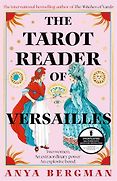
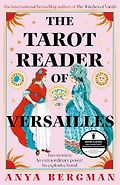
Let’s turn to the books that made the short list of the 2026 Wilbur Smith Adventure Writing Prize. First up is The Tarot Reader of Versailles by Anya Bergman. So this is historical fiction with fantastical elements, but based on a true story. Tell me about it and why you liked it.
This is the book I wanted to pick up first, just because I have a soft spot for the French Revolution. The ancien regime and the 18th century is just a fascinating period of French history. It’s about a character who I now know was real, but I’d never heard of. I enjoyed the book because the historical setting was something I’d spent a lot of time reading about, but the story was told through the eyes of a character that I didn’t know existed. It was just a really enjoyable romp.
And the main character was a tarot reader?
Yes, you get them today. She was the celebrity shaman of the day. She was reading the fortunes of the great and good in the midst of this time of complete turbulence, and—whether it’s true or not—having an impact on the way that events are unfolding. That mixture of realpolitik and superstition and fortune-telling—I loved it.
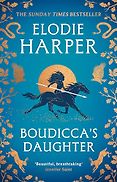
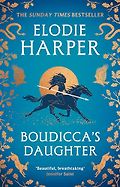
Let’s go to the next book, which is set in late Iron Age or early Roman Britain. This is Boudicca’s Daughter by Elodie Harper.
I have a real soft spot for Boudicca. There’s a massive statue of her on Westminster Bridge in London. The Victorians loved Boudicca. She was seen as an ancient British rebel against the Romans, which is weird because she’s from a completely alien culture to what we consider as England from Alfred the Great onwards. She was part of a culture and with a language that we wouldn’t recognise today, but she’s embraced as this national hero.
I also love reading about Dark Age Britain—I’m a huge Bernard Cornwell fan.
The only thing I knew about Boudicca’s daughters was that they were raped. That was the inciting incident for Boudicca’s revolt. They’re never named, and you never hear anything about their story in the sources.
What I really loved about this book is that it brought to life somebody who was just a footnote. It builds a whole world and a life for this person we know nothing about. It’s done in such a way that, as long as you accepted that it was fiction, it was a really good way of trying to step into the shoes of someone who has found themselves on the edge of two worlds.
And is it a realistic kind of depiction of that world, do you think?
I mean, as much as we can be realistic about a culture that was essentially eradicated and happened a very long time ago. There’s not a lot to work from, but I found the story compelling.
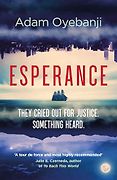
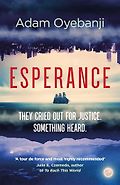
Let’s go on to Esperance by Adam Oyebanji. What was this one about?
This was probably the most ambitious book on the shortlist. It’s really unique. It mixed murder mystery, sci-fi and the slave trade. The author is a fascinating man whose day job is exposing financial terrorism and sanctions evasion and investigating high financial crime.
The book starts off with this mad, impossible murder and takes you on this journey. What I loved about it was that it taught me aspects of the history of the slave trade that I wasn’t aware of. So that was very interesting.
Is it set in the present or in the past?
A mix.
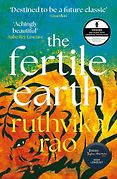
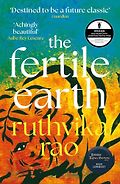
Next we have The Fertile Earth by Ruthvika Rao. This was the winner of this year’s Wilbur Smith Adventure Writing Prize—please tell me why it’s such a great book.
I knew it was the winner from the moment I started reading it. It follows a family over time. It’s quite similar to The Glass Palace in that it takes place across several decades in India, although 100 years or so later. It’s set in post-independence India, in the 1960s and 70s, during the Naxalite uprisings around Hyderabad. I’ve read a lot of Southeast Asian history, but I never knew much about the Naxalites. Now I understand who they were and what they were trying to do.
The writing is exquisite, and you wouldn’t need to know or care about India in the 1960s and 70s to find this book unbelievably moving. I’ve worked a lot in India, so when she’s describing the colours and smells—which she does amazingly—I think, ‘I’ve been to places like that. I know what that thing she’s describing smells like. I know what that tree looks like. I know what the dress she’s talking about looks like.’
It sounds amazing.
It’s one of those books that I was literally finishing it at seven in the morning. My daughter woke up and she was crawling all over me, but I just carried on reading to the end.
And what was the Naxalite uprising about? What was the cause of it?
It’s a dismantling of the Raj, but also a system that’s much, much older than that—a feudal system where you have the landowners overseeing an indebted, indentured servitude. They have generational farming families and the landowner in the grand house in the middle. It was a form of modern slavery, where families were expected to send workers to the house for free.
It tells the story from both sides. It tells it from the perspective of the landowners, this class of privileged Indians in a world that’s falling apart, but it also tells it from the Naxalite point of view. It shows why people joined this incredibly ruthless, brutal, bloody, murderous campaign to dismantle the feudal system. It’s horrific. It starts off with a horrific mass murder and ends going back to it again.
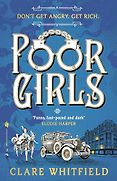
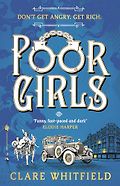
The next book takes us to 1920s London. This is Poor Girls by Clare Whitfield.
This one’s great fun. It’s a story about 1920s gang culture, with female protagonists. It’s really well written, and it’s pacy, and the characters are great. The question we asked ourselves as judges is, ‘What counts as an adventure?” This is not the classic Joseph Campbell hero’s journey, necessarily. No one goes on a great adventure and comes back. But there is an adventure here. A woman breaks out of her life and and enters a life of crime and has an adventure along the way.
Having spoken to judges of the prize in previous years, my feeling is that the Wilbur Smith Prize is trying to broaden the definition of an adventure, I think.
Yes, my own book The Last Overland is more the standard formula of the hero’s journey—someone feeling the call of adventure, and going out and documenting their own change across six months.
In these books, you’re following a character across time, and it is an adventure. There’s endurance, there’s rebellion, there’s amazing perseverance in the face of hardship. In each of these books, you will find a character that is inspiring—someone who spurs you to go out and see more of the world and do something you didn’t think you could do beforehand.
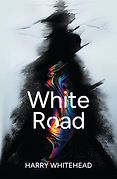
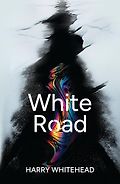
And last but not least on the shortlist we have White Road, an eco-thriller set on an Arctic oil rig by Harry Whitehead. What’s this one about?
It’s just a cracking murder mystery adventure, and really well written. I actually started out in the oil industry; it was my very first job. I never worked on a rig—and certainly not an Arctic one—but I know the kind of characters in that industry. I know how hard a life it is, and the strange people that it attracts.
It’s a great read. It really transports you into that world. Interestingly, a lady came up to me at the prize event. We were talking about the book and she said, ‘I’m from the high Canadian Arctic, and I was amazed at how somebody from Scotland had written it so well.’ So that’s not praise coming from me, but from someone from northern Canada, which speaks well of Harry’s research.
I’ve seen it described as part oil rig drama, part survival story. Does that sound right?
Yes, it does. And with a bit of a ghost story in the middle of it, as well, which is nice.
Five Books aims to keep its book recommendations and interviews up to date. If you are the interviewee and would like to update your choice of books (or even just what you say about them) please email us at [email protected]
Five Books interviews are expensive to produce. If you've enjoyed this interview, please support us by donating a small amount.