Whatever space an artist occupies, their ability to communicate to us a vision that emerges from that space takes us well beyond their practice and the space in which their art is made. As Debbie Hillyerd, Hauser & Wirth Partner and Senior Director of Learning, makes clear, we learn about the issues, political or cultural issues or technological issues of the day through their vision.
Where art is created contributes very much to our understanding of it. What you quickly learn when you study artists is that the studio is often the foundation of their practice. That space is the focus.
Before I worked for an art gallery, I was an academic. I taught for 22 years. I used to be fascinated by the work students produced in the university studio compared to the work they did at home. They were still in the process of defining their studio practice. In time, they came to fully occupy that space, and in doing so it helped define their artistic identity.
At the art gallery Hauser & Wirth I’m fortunate in being able to work directly with artists, get to know them personally, and to visit their workplaces. The studio is where they spend much of their creative life. And yet we look at and understand artists principally through their work in exhibitions or their work reproduced in publications. We don’t necessarily see how much the studio influences their art and their career, their philosophy and outlook on life.
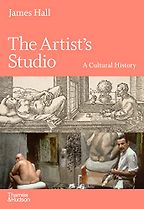
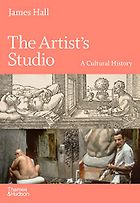
Let’s talk about the first book by James Hall, The Artist’s Studio: A Cultural History. He shows how the site of making has been identified as important since the beginning of history but has evolved in ways that also reflect the artist’s status in culture, and the evolution of the idea of the artist from being just a craftsman to being something more like a cultural protagonist.
This book provides a historic perspective of making from ancient times through the Renaissance to the present day. There have been important changes, paradigm shifts in the status of craftsmen and artists, and different understandings of the artist’s role in society over time. The studio is the arena for these developments.
At Five Books we’ve previously looked at the Renaissance, and in particular, a moment of ‘self-fashioning’ in the artist graduated from being just a craftsperson to being understood as a creative force.
And some sort of entrepreneur. There’s beautiful artwork that was created in the Renaissance almost as an entrepreneurial activity. Think of the ateliers of Rembrandt or Rubens and other artists who had what we often refer to as ‘schools’. And that is true to this day, where the studios of prolific artists operate like workshops or even factories employing a number of crafts persons, facilitators, technicians etc.
“ The contrast is between that of a medieval guild of producers and the ‘production’ of the eccentric artist, for example, with Warhol and the Factory. ”
James writes in such a fluid and easy-to-read manner. Don’t be put off when you see a book like this and think, oh, it’s art historical, as that means it will be dry or stuffy. This is art history at its most eloquently written. He draws examples from many historical epochs, but it’s not a conventional chronological survey. James is able to take us into the workspaces of Dürer in one passage, then Claes Oldenberg in the next, and these may be juxtaposed with observations about the life of an artisan in the twelfth century. There’s a lovely myriad of styles and tastes which makes it really entertaining to read. Taking the studio as his focus, he narrates us through a Western art history.
It’s important to acknowledge that the book does have a Western leaning however, and addresses the creative spaces of those artists who belong to a particular story or historical trajectory.
Intriguingly, he considers not just artists but looks at the cultural history of those who are working, for example, in textiles or in goldsmithing. He includes writers. He may be looking at things from a Western visual arts perspective, but his is a very expansive view of what the studio can be and what the creative act consists of.
That may be the thing that I’m most drawn to, in James’ book and in general. What is the studio? It can be so many things. If I’m honest, the question takes me back to the shop, the workshop, the shed. Jack Whitten’s Woodshed, for example, which we will talk about in a moment. What do we call this space? And what does this space consist of? He shows how in early times this space was always a space for production. Specifically, the production of process, the production of manufacture. Whereas the production of ideas is something that came later. The contrast is between that of a medieval guild of producers and the ‘production’ of the eccentric artist, for example, with Warhol and the Factory. The shop, the factory, the studio – there is a continuity here, from one decade to another, even if the cultural artifacts being created are very different.
I remember working with the estate of American sculptor Alexander Calder for an exhibition where I learned that Calder himself called his studio a shop. In the US, a store and shop can mean workshop or worksite. The studio can be the site of production and of commerce, as well as creativity. The semantics of the word and its many interchangeable meanings are really interesting.
“There’s an undercurrent here about how does the artist want to be perceived? How do they want to be seen? And architecture can set the stage for answering that question.”
Warhol certainly was making an analogy between contemporary art and historical examples and taking it one step further. James Hall tells us in his book that people at this time were retailing from the workshop, from the studio. So, the studio becomes a site of retail. He also talks about Claes Oldenburg calling his studio ‘the shop’, very much in the spirit of Pop Art and its close connection to the commercial and consumerist culture of the day. He represented the store as the ultimate Pop gesture. That was then picked up by the likes of Tracey Emin and Sarah Lucas in the 90s when they created their ‘Shop’, something like a cross between a studio and a gallery, a store front for their work. That relationship between the artist and the commercial world has always been there, arguably, at least since the Renaissance. We’ll also get on to Jack Whitten and Lee Lozano in a moment because one of the things these artists were reacting to was the commodification of art. That comes across very clearly in their writings.
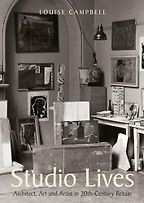
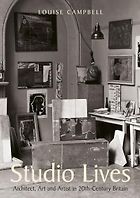
The idea of the workshop or the studio as a storefront dovetails nicely with Studio Lives, by Louise Campbell, which takes as its starting point the studio as a stage in Victorian Britain. At the end of the 19th century, Britain was teeming with bourgeois artists who combined art and enterprise, making a decent living. There was this kind of cult of personality that was gripping Britain at the time where the studio becames almost a shop window for a Victorian audience to witness artists at work and to celebrate them as personalities. The architecture of the space then becomes important.
Again, a beautifully written book. The book very much looks at the ways in which architects and artists collaborate to create these special spaces or sites. I crave for some of the examples that James Hall didn’t include, but here they are in Studio Lives, artists like Barbara Hepworth and Ben Nicholson, or Clive Bell. She also talks about writers, such as Virginia Woolf, not just visual artists. That’s an important point as well. It takes us to the recognition that often the distinctions between different art forms – music, the visual arts, literature – aren’t drawn by the practitioners. Even Whitten illustrates this in his writing, that we somehow pigeonhole everything so conveniently that afterwards we only get a single story, when the reality is much more varied and much more interesting. These books really, for me, tell the bigger picture.
That bigger picture concerns architecture as well. There are various academic research projects underway connected to art schools in the UK that have closed down. I was lucky enough to study at Birmingham Art School, which was a very traditional Victorian art school in central UK. I also did my first training at Bournville College of Art and Design, which was this beautiful building in a Quaker Village established by George Cadbury, and very important in the history of the development of art schools and the link to the Arts and Crafts Movement in the UK., Then I went on to one of my early teaching jobs at Horsham in Sussex. I’d had a personal journey that had taken me into some of these art schools. I witnessed the brutalist Central Library in Birmingham being demolished because whilst celebrated by architects, many were anti-brutalist architecture; I was sad to see the place where I’d done most of my learning about art history topple. Architecture seemed to be a very big part of my life as student and in my lived experience.
“We’re in the artist’s environment and we’re learning about them as an individual, their times, the society in which they work.”
Studio Lives talks with an empathy about the architectural practitioners and the artists of the 19th century. There’s an undercurrent here about how does the artist want to be perceived? How do they want to be seen? And architecture can set the stage for answering that question. There’s a wonderful passage in the book where she talks about Nicholson painting Hepworth’s piano. Only he paints the piano white. It’s no longer a piano! An artistic gesture, to be sure, but not an artwork, as it was never exhibited as a sculpture. I love reading about these studio antics, the things that happen in the studio that illuminate the life and work of the artist.
And how the physical space of the studio informs or even dictates the ultimate form that the art takes.
In Paris you can see a mock-up of Constantin Brancusi’s studio, a setting that is almost like a theatre stage, with the artist as protagonist in his own drama. Or take Francis Bacon’s studio, which was basically lifted up piece by piece and transported from London to Dublin and recreated to its last detail.
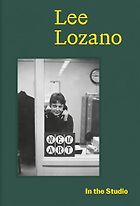
The artist has become a very different kind of practitioner as we move into the 21st century, working ever more conceptually, more digitally. Take the work of Lee Lozano. A lot of her practice was about questioning the idea that received notions of what an artist is, what an artist’s studio is. You might say that her life was her studio. Let’s talk about Lee Lozano: In the Studio.
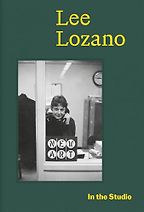
Focusing on the artist’s daring and provocative paintings, drawings, and conceptual work, this new publication offers a fascinating introduction to Lee Lozano’s pioneering practice. She was very aware of what we assume the artist should be, of what the studio should be, and she rejected that.
I’m personally connected to this series, I wanted something that was accessible to everybody but had respect for the artist and was built on archival material, and it had to be affordable. Through conversations with Michaela Unterdörfer and the team at Hauser & Wirth Publishers, we were able to build the concept of the series into something tangible, incorporating a ‘behind the scenes’ view of artists at work that would serve as a companion for art lovers and newcomers alike.
In the Studio series is titled this way because the studio is the context for learning. None of the books in the series exclusively talks about the studio. We’re in the artist’s environment and we’re learning about them as an individual, their times, the society in which they work. Lee Lozano is a perfect example, and the publication on her is brilliant because it tells us about the extremity of her life and work, which is well outside of what we might normally understand.
“Interestingly, the very idea of home is also the subject matter for so many artists.”
It’s the stuff that’s on the periphery, that the artist has determined herself. She was extreme by rejecting convention consistently. I’m going to change my name. I’m going to change my name many times. I’m going to reject my personal identity, who I am as defined by the art world or society, and I am going to live on my own terms. I’m going to be an artist but reject the art world. I’m going to disassociate myself from people. And from the typical studio. Then even more, in a way, her studio became these handwritten notebooks, a record of her artistic life. Not even something that’s architectural at all but an intellectual space.
She writes, “The ideal I have of a kind of art not for sale, which is democratic, which is not difficult to make, which is inexpensive to make and which can never be completely understood. Parts of which will always remain mysterious and unknown.” That’s contrary to the very idea of art that we’ve inherited from art history. Redesign yourself to suit yourself, she writes. It’s a very uncompromising view.
Lozano’s saying that we’ve constantly got to re-evaluate, re-address, and not assume, and don’t take anything for granted. The artist’s job is to make us see the world through an artist’s eyes. That’s the magic of artists. And, in Lozano’s case, we shouldn’t have expectations that an artist must have a studio with four walls and a floor and an easel or a computer. Lee Lozano: In the Studio has just been released and we’ve already got a few more in the pipeline for early next year.
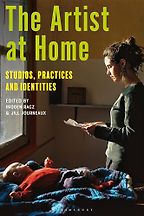
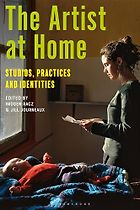
Let’s talk about The Artist at Home by Imogen Racz. Lozano’s studio practice blurs the lines between work and life. I feel that this book examines the question of work/ life balance for an artist, in contrast to someone in a nine-to-five job, for example.
That’s why I chose that book. It’s a more accommodating idea of the studio. The book was written as a result of a university conference, so it’s more of a research volume. Even for the casual reader though, the book is worth giving your attention. It asks fundamental questions: What is the importance of the studio? Why do artists often work from home? What is the distinction? I love the kitchen as a metaphor for the studio.
In The Artist at Home, we’re asked to consider what are the aspects of daily life that are either metaphors for artistic practice or that come to embody an artist’s practice so that it isn’t separate from the home. Interestingly, the very idea of home is also the subject matter for so many artists. The Artist at Home is a much more critical dialogue about the process of making art. We can make art in the digital realm, we cannot be afraid of languages, forms, processes or forces outside of any of the traditions. Lozano was revolutionary in not being afraid of rebuking the system, criticizing the system and divorcing herself from the system.
In this book we learn that the artist’s studio is not a mythical space, it’s a real environment. Even if what happens when that environment is not always a tangible thing, it’s often a virtual thing.
That doesn’t make it any less real.
Indeed. Whatever space an artist occupies, their ability to communicate to us a vision that emerges from that space, takes us well beyond their practice and the space in which their art is made. We learn about the issues, political or cultural issues or technological issues of the day through them, through their vision. There’s a kind of fierceness, embracing, challenging that an artist does of everything. A constant questioning. Unlike those who simply follow the rules or listen to the directions, the artist continually questions.
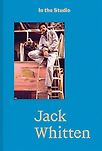
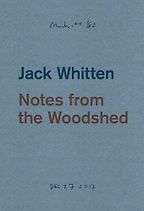
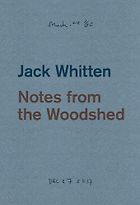
Notes From the Woodshed has intriguing passages that conjure the kitchen too. Painting is sometimes described as cooking with pigments, combining ingredients into something that makes more than the sum of its parts. Jack Whitten literally lays out a recipe for making one of his incredibly complex, labour intensive paintings. This could double as a cookbook for artists in a way.
The publication compiles five decades of abstract artist Jack Whitten’s personal writings. So many artists love this book, so many artists say how important it is. It is really shaping up to be one of the classics by an artist writer, right up there with Delacroix’s journals.
You’re seeing the process of experimentation, a jazz-like mindset, very much engaged with materials, very much engaged with his period, the civil rights struggle in the US, the socio-political context. And it highlights the importance of art as a form of self-reflection. It is a classic.
“These books show that it’s beyond the solitary endeavour, it’s much more than that.”
Even if Whitten said that he never intended for these to be made public. He was writing these as his private thoughts. These are his mitherings on the art world, his relationships, his practices, and especially his identity, his life in New York at that time as a Black artist. The point about Jack Witten is that he was very clever. His background was in philosophy and physics, as he originally intended to go into medicine. We know that he always thought with ambition about himself and beyond himself into the world, being human in the world.
With all those skills and abilities he had, and the freedom of knowing that these were just writings for himself, he didn’t have the inhibition of worrying about writing for the reader. He was talking to himself, so his notes have a natural voice.
They’re actually very funny. They’re emotional. They’re informative. It’s like the full package. He’ll write “I’m Black, I’m old and I’m tired of being teaching and having no money. What am I going to do?” We can admire his real sense of emotional durability. I think that every reader will relate to something that Jack says. It’s very human. As somebody who wanted to be a painter myself, passages that always hit me viscerally is when he talks about paint. “I just want a slab of paint.” The physical material stuff of paint is honestly expressed and you can feel it.
But then he takes us through something that’s so deep, informative, mathematical, scientific, cultural, political. Artists carry out endless research into materials, into current affairs; they know about their contemporaries, they know about art history. When we see exhibitions, we credit the curators, we look at the beautiful paintings, but we don’t often stop and think about all the work that the artist is doing that isn’t seen.
At the same time, there’s a light-heartedness in this book. And some great art world gossip! I read them as humorous comparisons with other artists when he talks about Smithson’s Spiral Jetty. Whitten gently mocks him saying he just uses tons of dirt. Then he goes on to say that he’s going to use an even bigger brush than de Kooning. Even while he says he’s the first artist in history to use an Afro-Comb to make a painting. It’s a funny competitiveness. Or “Art is not a substitution for religion. Someone should have told Rothko that.” I love it.
Whitten says that art is the one spiritual form that we can really depend on, even when politics has gone crazy, organised religions are politicised, you can always depend on art to pull us through. Art needs a locus for its making, whether that’s physical or conceptual. You rightly point to the amount of intellectual work, enquiry, research that happens behind the scenes that we never see on the canvas or in the gallery.
That, in a way, is an enlarged sense of what the studio represents. We often fall into the trap of thinking that the studio has an inherent solitude about it. These books show that it’s beyond the solitary endeavour, it’s much more than that. The lingering idea of the studio as a soloist’s stage may be a vestige of the idea of the artist as a kind of romantic hero, the great individual. That’s very much a 20th-century idea that someone like Lozano or Whitten were looking to debunk, and it opens up so many more ways in which the studio can enlighten, inform and delight. Art need not be a rarefied experience, and it is never just a single story.
Five Books aims to keep its book recommendations and interviews up to date. If you are the interviewee and would like to update your choice of books (or even just what you say about them) please email us at [email protected]
Five Books interviews are expensive to produce. If you've enjoyed this interview, please support us by donating a small amount.
Debbie Hillyerd
Debbie Hillyerd is Hauser & Wirth’s Senior Director of Learning & Partner, overseeing the development of global learning, philanthropy and charitable projects across the organization. Prior to this, Hillyerd lectured at Bath Spa University, University of the West of England, Northbrook College and Loughborough University in the UK, teaching Critical Studies, Fine Art and Curatorial Practice. Her career in education spans over 30 years, during this time she has written and consulted for various international institutions in the education sector.
Debbie Hillyerd is Hauser & Wirth’s Senior Director of Learning & Partner, overseeing the development of global learning, philanthropy and charitable projects across the organization. Prior to this, Hillyerd lectured at Bath Spa University, University of the West of England, Northbrook College and Loughborough University in the UK, teaching Critical Studies, Fine Art and Curatorial Practice. Her career in education spans over 30 years, during this time she has written and consulted for various international institutions in the education sector.