The history of the Aztecs is the best documented of all the Native American peoples, shedding light on life in the Americas before the arrival of the conquistadors. Professor Michael E. Smith, an archaeologist at Arizona State University, introduces books about the Aztec Empire — with a focus on documentary sources and artefacts that reveal not only how the elites lived, but also ordinary people.
Before we start, perhaps you could say, just briefly, who the Aztecs were and why it’s useful or important to study them?
The Aztecs were a group of several million people living in central Mexico when the Europeans arrived and the Aztec Empire was conquered by Hernán Cortés. It’s important to study them because they are the best documented and best understood Native American group. The books I have chosen focus on documentation and evidence about the Aztecs.
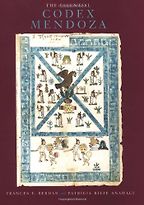
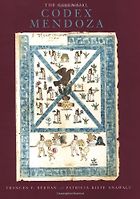
Let’s get straight into them. First up is The Essential Codex Mendoza, edited by Frances Berdan and Patricia Anawalt. Tell us about this book.
The Codex Mendoza is a pictorial document. It was painted by Aztec scribes a couple of decades after the Spanish conquest, and it’s one of our best sources of information about a number of aspects of Aztec society.
It has a section on the expansion of the Aztec Empire, which kings conquered which towns. It has a section on the taxes paid by the Aztec provinces, who gave how much of what kind of goods. And then it has a section on daily life, from birth to death, and what life was like for the Aztecs. Mendoza was the Spanish administrator, and he wanted to show the king of Spain something about the Aztecs. So, he found a couple of the old scribes who had kept these pictorial records before the conquest, and had them create in three parts the Codex Mendoza.
He then sent it off to the king of Spain. But the ship got intercepted by French pirates and the Codex ended up in Paris, where the Royal cosmographer of the French king wrote his name on the first page. It’s now in the British Museum. It’s a colourful document, and it’s a great source of information.
There have been lots of editions over the years. The definitive edition was put together by Patricia Anawalt and Frances Berdan and published in a very expensive four-volume series with plenty of analysis. But they also published this paperback version, which focuses on the actual Codex and has less analysis and is more accessible. This is something we know about the Aztecs in a form of writing that the Aztecs actually used.
Are there a lot of extant Aztec documents? And if not, is that a problem for historical interpretation?
It depends on your definition. If your definition includes documents painted shortly after the Spanish conquest, there is a lot of documentation. Scribes continued the tradition after the Spanish conquest, and so a lot of the early pictorial and written documents are really pretty good representations of what went on before the Spanish arrived. But there are only a handful of painted manuscripts from before 1519.
Let’s move on to Book of the Gods and Rites and the Ancient Calendar by Fray Diego Duran. Tell us about this one.
Some of our best information about Aztec culture and society is from the Spanish friars, who wanted to convert the natives to Christianity. They thought that the more they learned about native religion and native culture, the easier conversions would be.
Among these friars was Fray Bernardino de Sahagún, who wrote a 12-volume work, the Florentine Codex, that is often singled out. It’s very extensive and detailed. Diego Duran, another Spanish friar, was an ethnographer. He went around documenting what he saw of Aztec culture. He interviewed people, and he recorded information about religion and ritual. But he also went out to the markets and observed that they sold dogs. They had all these dogs in cages, and it just smelled awful. Also from him, we know about the Aztec ball game and how people gambled on it. He gives us fascinating glimpses into many aspects of Aztec life, recorded by an inquisitive Spanish friar.
Did the Aztecs intermarry with the Spanish conquerors, or did they live in a parallel society alongside them? What was the interaction like?
There was a lot of interaction. Most of the early Europeans to come over were men, and a lot of them married indigenous women. Society soon became a blend, and a process of mixing went on. Today, most scholars would say that almost everybody in Mexico is a mestizo, a blend of the indigenous and the European, with some blacks from Africa in there, too.
Let’s move on to the next book you’ve chosen, Aztec Imperial Strategies. What’s this one about?
This is a book that presents the results of a project undertaken by six Aztec specialists, including me. We had archaeologists, historians and art historians, and we basically remapped the Aztec Empire. The Aztecs had an extensive empire. We can read the Codex Mendoza and see where the provinces were, who the Aztecs conquered and when they conquered them. But how did the empire stick together? The only other map of the Aztec Empire was published in 1952 and it really made some questionable assumptions. We decided we needed to redo this and map the empire, not from the point of view of the Aztec armies marching out from Tenochtitlan, but rather from the point of view of local communities and how they were conquered, how they were incorporated into the empire, and how they related to the empire, the kind of taxes they paid.
When we mapped the empire from the ground up, we found something new. We found that there were two kinds of provinces and two ways that they controlled their provinces. There were standard tax provinces. They’re all in the Codex Mendoza. You just have to read that to figure them out. But there was another kind of province. Along enemy borders, the empire would say, ‘You don’t have to pay us regular taxes. You just have to keep a fortress or garrison here and keep our enemies from crossing.’
The project showed a new view of how the Aztec Empire was organized, and we were able to do that because we worked from the ground up. We took all the towns throughout the empire, found local documentation and related it to documents like the Codex Mendoza.
Were the Aztecs able to resist the Spanish militarily when they turned up, as a result of their own imperial culture, or was that not possible?
That’s one of the central issues of the Spanish conquest of the Aztecs. The Spanish had superior weapons and tactics and so on, but the Aztec Empire had armies in the tens of thousands. However, they never sent the full force of the empire against Cortés and his followers. If they had done so, when Cortés landed, they would have won, for sure. Eventually, who knows what would have happened, but they didn’t immediately attack Cortés head-on because the Aztec king, Moctezuma, hesitated. He wasn’t sure who the Spanish were and what they were going to do.
Cortés was very astute. He quickly allied himself with local dissident groups that didn’t like being part of the Aztec Empire and got their troops to go with him. So, when Cortés finally made it through to the Aztec capital, Tenochtitlan, it wasn’t just Cortés and 400 Spaniards. It was Cortés, 400 Spaniards, and thousands of troops from the enemies of the empire.
The Aztecs could have defeated the Spaniards early on, but ultimately, other forces, particularly the epidemic diseases that were introduced, were just too devastating.
Let’s move on to book number four, The Nahuas After the Conquest: A Social and Cultural History of the Indians in Central Mexico by James Lockhart. Tell us about this one.
This book opened up a whole new kind of document and perspective on the Aztecs.
The writings of Duran that we talked about were in Spanish. They were written down in Spanish. But the Aztecs spoke a language called Nahuatl. The written version of Nahuatl was limited. You couldn’t write, say, a novel in it, but you could record things about taxes and conquests, as in the Codex Mendoza. The Aztec Empire had scribes. It was a bureaucratic empire. They had people keeping track of taxes and activities and peoples.
After the Spanish conquest, the Aztec scribes and nobles quickly saw that the European alphabet was very useful, and they adapted it to the Nahuatl language very shortly after. They started to produce documents in a written form using the European alphabet, but in the Nahuatl language. This was important because, after the conquest, central Mexico was a colony of Spain. It was called New Spain, Nueva España, but there just weren’t many Spaniards. So they relied on local nobles and local officials to administer it, keep the peace and keep records of births and deaths and things that empires like to keep track of. Local officials started writing this stuff down in Nahuatl using the Spanish alphabet.
For a long time, scholars didn’t pay a whole lot of attention to these documents. Lockhart really opened this up. He unearthed hundreds and hundreds of them throughout Central Mexico. He got a group of his history students at UCLA working on them, and it delivered a really new perspective.
Was there anything particularly striking about that new perspective that emerged, that perhaps turned previous interpretations upside down?
Here’s one example. If you read the Spanish accounts after the conquest about the Aztec empire and society, they say that the colonial nobles did not pay taxes or tribute. They were exempt. That’s the way things were in ancient times, and therefore that’s the way things should be under the colonial period. It’s in all the textbooks on the Aztecs: nobles didn’t pay taxes or tribute. But the administrative documents that Lockhart and his students studied make it quite clear that nobles did pay taxes on a regular basis.
So why did these other accounts say that they didn’t? Well, I can just see the nobles interacting with the Spaniards, claiming that in ancient times nobles didn’t pay taxes. They fooled the Spaniards. Perhaps they didn’t fool them entirely. The Spaniards needed these colonial nobles to help organize society and run things for them. So they decided they wouldn’t make them pay taxes and went along with this (false) idea that they hadn’t paid taxes before the Spanish arrived. Until the work by Lockhart and his students, we had no idea of the correct information.
The documents analysed by Lockhart and his analysis of them are just full of insights about the way things worked on a local level shortly after the Spanish conquest. It revolutionized our ideas of how local society was organized and how things worked locally because the Spanish language documents just don’t have a lot of the details, and they can’t always be trusted.
Finally, you’re recommending Leonardo López Luján, The Offerings of the Templo Mayor of Tenochtitlan. What’s this one about?
Probably the most important archaeological find on the Aztecs is the remains of the central temple of Tenochtitlan. It’s called the Templo Mayor. It was a huge temple. It had lots of offerings and sacrifices. It was a major part of the religion and the empire of the Aztecs. Scholars always knew where it was. It wasn’t lost. It was just buried under colonial buildings in the centre of Mexico City. Then, in 1978, some workers were digging a trench to put in some electrical cables, and they found a fancy carved relief, an Aztec relief, and they stopped what they were doing and exposed it.
That set off an excavation, directed by Eduardo Matos, lasting decades. It turned out that the early stages of the Templo Mayor were much better preserved than anyone had thought. A lot of the interesting finds were not just around what the temple looked like. Aztec priests had constructed small buried chambers where they placed rich offerings full of goods. There were animal bones, coral, jade, pottery and stone sculptures—all kinds of stuff that was of value. As the excavators explored the Templo Mayor, they found hundreds of these offerings. Leonardo López Luján was involved in that project, and this book really describes the archaeology of the highest level of Aztec society.
What was the religion of the Aztecs before the Spanish arrival?
They had lots of gods, but as I tell students, these weren’t anthropomorphic gods like Greek gods. The Aztec gods were more nebulous. They were forces or spirits. Lots of different gods were worshiped at different kinds of temples in different contexts. A lot of what we know of Aztec religion was what was written down by people like Diego Duran, the friars after the conquest, because they were very interested in ritual and myth and so on.
Getting at Aztec religion is really difficult, because no Aztec priest ever sat down with a Spaniard or a native literate person after the conquest and explained the details of Aztec religion. Everything we know about it is filtered through Christian friars or through indigenous people who had been Christianized. It’s difficult to discover what was really there, as opposed to interpretations blended with ideas from Christianity. So it’s a really tough topic.
Do these gifts in the temple shed some direct, unfiltered light on the question?
Exactly. That’s why they’re so important. It’s not just someone telling us what they meant. We can see the symbolism of these offerings. To interpret what they mean is still difficult, but it is direct evidence. I wanted to include a book that was based on archaeology.
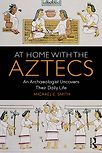
Finally, tell me about your own book, At Home with the Aztecs. What hole were you filling in the picture with that?
The Templo Mayor deals with the emperor, the high priests and the elite of Aztec society. But what about commoners? What about everyday life and regular people? They’re not well represented in the written sources. There’s a little bit of information in Duran and the Codex Mendoza and Lockhart’s documents, but to really see what life was like for the 99% in Aztec society, you need archaeology.
I have spent most of my career excavating houses, workshops and agricultural fields in provincial areas that were conquered by the Aztec Empire, in order to reconstruct what life was like. At Home with the Aztecs is a synthesis of several decades of excavation.
I also went on courses to learn how to write in a narrative fashion because I wanted to write for a general audience, which is very different from academic writing. I learned to do that and the book won best popular book in archaeology in 2017 from the Society for American Archaeology.
Congratulations! Was there anything particularly striking about the domestic culture of the Aztecs that would have seemed particularly unusual to the European settlers who came in the 16th century?
There was a lot of ritual on the domestic level. People performed a lot of little ceremonies in their homes. We find little ceramic figurines and various goods that were used ceremonially. Women were curers. We’ve found musical instruments, flutes, whistles and rattles. Before my excavations, scholars thought musical instruments were only found in offerings in places like the Templo Mayor. I was in touch with an expert in Aztec music and explained that I had found these things in trash deposits and commoner households. He thought I must have been mistaken, but I showed them to him. He was very excited and came over to Mexico to explore my findings. The Aztecs had a rich domestic life, rich in domestic ritual.
It is also interesting that rural and urban households were very well connected and there were common styles throughout the empire. We were surprised to find these long, thin pieces of metal that, at first, looked like copper wire. I thought they couldn’t be copper wire, or if they were, they must be from after the Aztec conquest. It turned out they were bronze sewing needles. Scholars had found out that the Aztecs and other peoples of Mesoamerica did know bronze technology with alloys of copper and arsenic or tin. I was very surprised to see bronze objects showing up in farmers’ households in the Aztec Empire. It shows that they were well connected in trade networks, and were doing pretty well economically. That was a surprising find.
Five Books aims to keep its book recommendations and interviews up to date. If you are the interviewee and would like to update your choice of books (or even just what you say about them) please email us at [email protected]
Five Books interviews are expensive to produce. If you've enjoyed this interview, please support us by donating a small amount.
Michael E. Smith
Michael E. Smith is a professor of archaeology at Arizona State University. He has directed archaeological excavations at houses and workshops in the provinces of the Aztec Empire. His book, At Home with the Aztecs: An Archaeologist Uncovers Their Daily Life (2016), won a prize as “Best Popular Archaeology Book” from the Society for American Archaeology. Smith also carries out research on ancient cities and urbanism from a comparative and interdisciplinary perspective.
Michael E. Smith is a professor of archaeology at Arizona State University. He has directed archaeological excavations at houses and workshops in the provinces of the Aztec Empire. His book, At Home with the Aztecs: An Archaeologist Uncovers Their Daily Life (2016), won a prize as “Best Popular Archaeology Book” from the Society for American Archaeology. Smith also carries out research on ancient cities and urbanism from a comparative and interdisciplinary perspective.