Thank you for joining us on Five Books to discuss the work of James Baldwin. Could you begin by introducing us to Baldwin: who he was, and why we should continue to read him today?
A pleasure to be here. Baldwin is, without doubt, one of the foremost American authors of his generation. His life and work are fascinating because he not only produced an extraordinary body of creative fiction – like Go Tell It on the Mountain or Giovanni’s Room – but he was also one of the ‘chief chroniclers’ of mid-to-late twentieth-century arts, politics, and society, as his non-fiction and book-length essays such as Notes of a Native Son and The Fire Next Time make clear.
He was at the forefront of the Civil Rights movement, being a friend and fellow-traveller of such pioneering figures as Martin Luther King, Malcolm X, Medgar Evers, Maya Angelou, and Nikki Giovanni, and he was oftentimes called upon by both the media and institutions like Oxford and Cambridge to engage with “the race question” in the United States during the 1950s and 1960s.
Purely from a historical perspective, Baldwin is a wildly influential figure worth remembering, and he just so happens to also be a gorgeously evocative writer, responsible for some of the most poetic and perceptive books ever written. His literary, political, and cultural legacy is immense.
How did you make your selection—what factors did you take into consideration when creating your reading list?
Given how prolific Baldwin’s career and output were, I wanted to be as broad and inclusive as possible. I wanted to offer examples of the best his fiction has to offer, while also foregrounding the quality of his dramatic endeavours and the importance of the theatre in his development as an individual and as an artist, plus making clear that his role as social commentator simply cannot be ignored.
I also wanted to give readers an example of the kinds of writing that Baldwin’s legacy has inspired and generated. Baldwin has had a rich afterlife in the scholarly and biographical community. There have been countless academic monographs and edited essay collections published on him, plus an entire journal – the James Baldwin Review, established in 2015 – dedicated to him. So I wanted to strike a balance between, on the one hand, having Baldwin’s work speak for itself, a point that Baldwin was insistent upon throughout his life, while, on the other hand, making clear that his work has been part of wider critical debates since his death in 1987.
We haven’t forgotten about him.
There are a few notable omissions from your reading list. I suppose I expected you to select Giovanni’s Room, Notes of a Native Son and Another Country… Would you mind addressing that?
Certainly. Giovanni’s Room is widely acknowledged as his masterpiece, while Another Country was one of the most widely-read of his novels during his lifetime. Anybody approaching Baldwin is sure to have read one or both of these books, such that their inclusion in a list like this borders on passé.
Giovanni’s Room, in particular, is noteworthy for being an extraordinarily honest and frank depiction queerness written and published during a moment in history where homosexuality was legally outlawed and socially stigmatized. That novel deserves a whole feature unto itself, such that any remarks I can make here will barely scratch the surface. Notes of a Native Son is accounted for in my selection, albeit discreetly, and I’ll be a little more explicit how later.
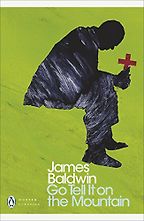
Sure, thank you. So let’s talk now about Go Tell It on the Mountain, which was published in 1953. It’s set in 1930s Harlem.
Go Tell It on the Mountain is Baldwin’s first novel and is, to me, the perfect introduction to his work. I read the novel for the first time when I was studying civil rights history at A-Level when I was around eighteen; my teacher thought that reading a work of fiction alongside studying the racial history and politics of the time would enrich our understanding of the period, and she was absolutely right.
The novel takes place primarily on the birthday of its protagonist, fourteen-year-old preacher John Grimes, and is based closely upon Baldwin’s own childhood. Baldwin, in painstaking and exquisite detail, foregrounds John’s experiences within his church, the Temple of the Fire Baptized; his contentious relationship with his family, especially his father; his efforts to reconcile his burgeoning queerness with his religious upbringing, and the fear and shame that emerges as a result.
In amidst John’s personal history, Baldwin weaves in and out of the present day of 1930s Harlem, focusing on the past of Elizabeth and Gabriel, John’s mother and father, and the lingering ambiguities surrounding John’s parentage. The experience of actually reading the novel belies any attempt I can make to do a proper introduction justice, so let me stop there.
Go Tell It on the Mountain features hallucinatory religious visions; Baldwin himself was preaching in a Pentecostal church at 13. How does this religious or spiritual intensity manifest across his career?
Undoubtedly so, and the question of Baldwin’s religiosity – or lack thereof – continues to preoccupy readers and critics of his life and work.
Go Tell It on the Mountain makes explicitly clear the importance of the Pentecostal-Holiness Church tradition upon Baldwin, a tradition that he rejected and rebelled against when left the church when he turned 17. Baldwin tried to articulate his ambivalence towards organised religion many times during his career, and I think his efforts are best summarised in The Fire Next Time, where he asserts:
It is not too much to say that whoever wishes to become a truly moral human being […] must first divorce himself from all the prohibitions, crimes, and hypocrisies of the Christian church. If the concept of God has any validity or any use, it can only be to make us larger, freer, and more loving. If God cannot do this, then it is time we got rid of Him.
It’s very powerful.
There is a palpable sense of feeling towards the Church, towards God, that Baldwin repeatedly circles in his life and throughout his writing and that, despite his anger, never fully stops contemplating or makes a clean break from. As Douglas Field argues, we need to understand “how his work diverges from, and resonates with, aspects of Pentecostalism, rather than simply labelling Baldwin as secular or irreligious.”
I agree with Field entirely. Saying that Baldwin was merely an apostate is much too neat, especially when the spectre of the Church and of Christianity appears in his writings long after he enters adulthood.
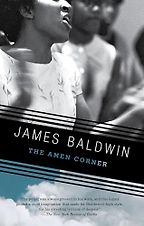
Let’s stay on topic with The Amen Corner, his 1954 play. It features a church pastor who, it transpires, left her husband to pursue a religious life. Would you tell us more?
The Amen Corner was written immediately after Go Tell It on the Mountain and, as Baldwin himself acknowledges in his introduction to the published script,
Writing [the play] I remember as a desperate and even rather irresponsible act—it was certainly considered irresponsible by my agent at that time. She did not wish to discourage me, but it was her duty to let me know that the American theatre was not exactly clamoring for plays on obscure aspects of Negro life, especially one written by a virtually unknown author whose principal effort until that time had been one novel.
The reason why Baldwin felt compelled to write the play, however, is two-fold, first because of the centrality of the theatre to his early life and, second because of his experiences in the Church, experiences that were first represented in Go Tell It.
As he outlines in The Devil Finds Work, Baldwin was taken to the theatre regularly by his elementary school teacher; he vividly recounts having seen Orson Welles’s Macbeth at the Lafyette Theatre in Harlem in 1936, a legendary production featuring a cast of exclusively Black and African American actors. Seeing that production was one of the formative cultural experiences that Baldwin experienced during his early life.
Crucially, Baldwin discovers the theatre at the same moment when he begins to realise, as he writes in his introduction to The Amen Corner, “the fact that I was born in the church”:
I knew that out of the ritual of the church, historically speaking, comes the act of theatre, the communion which is the theatre. And I knew what I wanted to do in the theatre was to recreate moments I remembered as a boy preacher, to involve the people, even against their will, to shake them up, and, hopefully, to change them.
Sister Margaret Alexander, the church pastor at the heart of the play, is a wonderfully exuberant figure who does exactly what Baldwin thought that the church-as-theatre should do: she involves her congregation, she shakes them up, and she tries to change them, no matter how forcefully. Yet her attempts at exercising authority over her flock while also denying her personal history renders her position within the church untenable by the play’s end and contributes to her exile.
Why do you see The Amen Corner as one of his best or most significant works?
On one level, The Amen Corner proves, to me, that Baldwin was an extraordinarily versatile craftsman. He could excel within an astonishing range of literary forms – the novel, the short story, the poem, the essay – and The Amen Corner is, without doubt, a wonderful play. On another level, however, Baldwin’s career as a playwright is virtually ignored; so many colleagues and fellow Americanists have no idea he wrote a play, let alone that his second play, Blues for Mister Charlie, had an ill-fated run on Broadway.
So when you consider the centrality of the theatre to Baldwin’s life and development as an artist, when you consider the context in which The Amen Corner was written – in the immediate aftermath of Go Tell It on the Mountain, the novel that launched his career – and when you then realise that Baldwin’s theatrical efforts have long been underappreciated, I think it’s important for his plays, and for The Amen Corner in particular, to have a moment in the sun.
Baldwin, in fact, was working on a play entitled The Welcome Table (which has been staged in the early 1990s by the Academy of the Arts in Philadelphia but which has never been published) immediately prior to his death. The fact that Baldwin was returning to the dramatic form even towards the end of his life proves his love for the theatre, and The Amen Corner as an expression of that love, is difficult to ignore or deny.
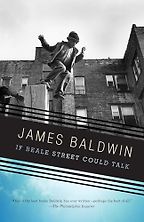
Got it. Next, let’s talk about If Beale Street Could Talk, which is a much later novel, released in 1974. In it, a young woman falls in love with a man who has been wrongly accused of rape.
To me, no matter how corny what I am about to say might sound, there is no purer artistic expression of the power of love – regardless of sexuality – than Tish and Fonny’s love in that novel. The novel is littered with innumerable examples of such expressions; taking one example at random, Tish says that she
thought of Fonny’s touch, of Fonny, in my arms, his breath, his touch, his odor, his weight, that terrible and beautiful presence riding into me and his breath being snarled, as if by a golden thread, deeper and deeper in his throat as he rode—as he rode deeper and deeper not so much into me as into a kingdom which lay just behind his eyes. He worked on wood that way. He worked on stone that way. If I had never seen him work, I might never have known he loved me.
Such moments of complete and utter erotic abandon suggest that, to Baldwin, as with a writer like Tennessee Williams, sexuality and emotionality are inextricably linked; sexuality becomes a means through which to express the depthless nature of one’s adoration for another.
Dagmawi Moubshet made an interesting point in The Atlantic: “the novel centers on the emotional bonds holding two African American families together. By contrast, the author had spent the previous decade instead writing and thinking about love as a collective American experience, one whose power came from the fact that it could cut across racial lines.”
I think Moubshet is right to broaden Baldwin’s focus on love beyond Tish and Fonny themselves. Their erotic and emotional relationship exists within a much wider network of familial love, and the novel is profoundly invested in exploring the extraordinary lengths people will go to support those they love when external forces threaten them. The efforts of Tish’s mother, Sharon, to clear Fonny’s name are perhaps the most obvious example.
What is particularly interesting about Beale Street, then, is that Baldwin concentrates this enormous idea of love within the intimate relationships between particular people and families. The fact that Tish’s love for Fonny never diminishes at any point in the novel, even after he is falsely imprisoned for sexual assault, but that their love is sustained and is, in fact, the only means by which they are able to survive the racial and legal injustice they face, effectively proves a point that Baldwin introduces in The Amen Corner, funnily enough: “It’s a awful thing to think about, the way love never dies!”
In other words, Tish and Fonny’s love is the only source of relief and sustenance they get from this awful situation, but paradoxically Fonny’s imprisonment is an awful physical impediment to that love, which is incredibly cruel and ironic, I think.
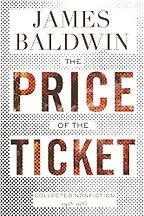
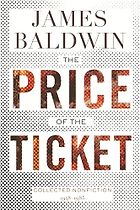
Next we will talk about two nonfiction books, first Baldwin’s own collected nonfiction The Price of the Ticket. What are the highlights – does it include his famous essays from The Fire Next Time?
Yes, and if you’ll permit me, choosing The Price of the Ticket was kind of a cheat because the volume contains most of Baldwin’s substantive nonfiction, including Notes of a Native Son, Nobody Knows My Name, The Devil Finds Work, and yes, The Fire Next Time. I simply couldn’t bring myself to choose only one of his essay collections, because to do so would diminish or underrepresent just how incisive and persuasive Baldwin’s prowess as a public intellectual was and remains.
Crucially, his essays are as engaging, thought-provoking, and awe-inspiring as his creative work; to me, non-fiction is usually so difficult to recommend to a casual reader unless the author in question is truly adept at the essay form (say Virginia Woolf or Toni Morrison). Baldwin, as I’ve made clear earlier, is just such a writer, because he communicates his ideas with such breathtaking precision and clarity. By far my most highly treasured quotation of his is from No Name in the Street:
People pay for what they do, and, still more, for what they have already allowed themselves to become. And they pay for it very simply: by the lives they lead.
If that doesn’t convince you to pick up Baldwin’s essays, nothing will!
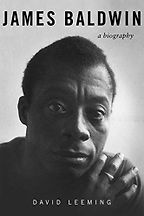
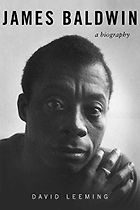
That brings us, finally, to David Leeming’s James Baldwin: A Biography. What do we learn from this that Baldwin does not tell us himself?
Leeming’s biography is interesting because he and Baldwin were close friends. So, unlike biographers like Joseph Blotner (of William Faulkner) or John Lahr (of Joe Orton or Tennessee Williams), who maintained a distance from their subject, Leeming’s work is intended to be an inside view of Baldwin – not salacious, but certainly not superficial, either.
Readers of this particular biography get an acute sense of Baldwin as an author – there are individual chapters dedicated to each of Baldwin’s major works, including, crucially, his plays and screenplay – and Baldwin as a man: his relationships, his public persona, and his temperament. So, as with the best biographies, you get a truly rounded view of the man; you see what makes him tick as a creative artist, but you also see him during moments of… emotional abandon, let’s say, that border on the intense and, at times, even hilarious.
One moment that springs to mind is during the original Broadway production of Blues for Mister Charlie, the rehearsals for which were physically demanding and emotionally heated. Baldwin was having countless issues with the producers, particularly Lee Strasberg, because of the play’s length and because of his insistence that ticket prices be kept affordable for working-class African Americans. Leeming writes that, during one rehearsal session, Baldwin arrived at the theatre “in a towering rage, to which he gave added metaphorical value by climbing an electrician’s ladder” accusing Strasberg of, “among other things, incompetence ‘to the point of sabotage’.” That image of the 5’5” Baldwin, this usually contemplative and poetic figure, getting so up in arms about the ‘incompetence’ of his producers that he scales an electrician’s ladder to give them a piece of his mind is just delicious!
Leeming’s biography set a standard for Baldwin scholarship, and while there have been subsequent, excellent biographies like Mullen’s James Baldwin: Living in Fire or Nicholas Boggs’s Baldwin: A Love Story, Leeming’s book remains the gold standard as far as Baldwin’s life is concerned, I would say.
What has Baldwin’s writing come to mean to you?
As an academic, I’ve long been fascinated by what we call the ‘single-author study,’ a comprehensive scholarly examination of a writer’s body of work. So far, I’ve written two, one on William Faulkner, the other on Tennessee Williams. Any book takes years to write, and so you have to be able to find a subject that you know will sustain your interest for the foreseeable future and keep you in the library or at your desk for hours on end. Baldwin is the third such writer who I’ve decided to take on with a single-author study; I am currently in the early stages of writing my third book, James Baldwin Between Stage and Screen: The Politics of Sacrifice, which looks at Baldwin’s dramatic and cinematic output and what they tell us about the nature of socio-political, religious, and interpersonal sacrifice.
The figures at the heart of my project – Sister Margaret Alexander in The Amen Corner, Richard Henry in Blues for Mister Charlie, and Malcolm X/El Hajj Malik El-Shabazz in One Day When I Was Lost – become vessels through which Baldwin is able to represent the impact that an unshakeable belief in an idea – the Pentecostal Church in Margaret’s case, social injustice in Richard’s, and the Nation of Islam in Malcolm’s – has upon the individual during the civil rights era of the 1950s and 1960s.
I won’t say too much more about the project at this point, other than that I hope the finished book contributes to a resurgence in popular and scholarly attention on Baldwin’s contributions to the theatre and to cinema, which deserve to be celebrated. On a more personal level, I suppose the fact that I’m willing to spend several years of my life thinking and writing about Baldwin is itself an answer to what his work has come to mean to me. I keep finding things in his writing that surprise me, challenge me, move me, or force me to reconsider what I thought I understood about him since first encountering him. After spending several years reading Baldwin, I still don’t feel that I’m finished with him – and, for a scholar, I can think of few greater compliments to pay a writer.
Interview by Cal Flyn, Deputy Editor
September 30, 2026
Five Books aims to keep its book recommendations and interviews up to date. If you are the interviewee and would like to update your choice of books (or even just what you say about them) please email us at [email protected]
Five Books interviews are expensive to produce. If you've enjoyed this interview, please support us by donating a small amount.