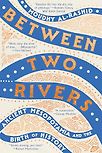
Mesopotamia, the fertile region between the Tigris and the Euphrates, is a hugely significant part of human history, yet has often been left out of the classical civilisations curriculum. Here, Moudhy Al-Rashid, author of Between Two Rivers: Ancient Mesopotamia and the Birth of History, recommends five recent books about Mesopotamia that shed light not only milestones of history, but on individual lives thousands of years ago.
Before we get to your book recommendations, can you help to clarify some of the names that crop up? How do Sumer, Akkad, Babylonia and Assyria fit in, and what time periods are we talking about?
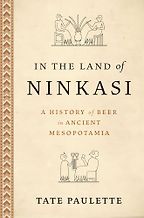
Mesopotamia is from the Greek, “between the rivers”. It starts getting used in very early Greek sources, and then it continues to be used — by the British, not the locals — until the birth of the modern Middle East in the early 1900s. Mesopotamia is a very problematic term. Tate Paulette, in In the Land of Ninkasi, talks about how colonial the term is, but that he is going to continue to use it. I also made the same decision in my book, because it’s a convenient designation, and if you start to get more clunky then it’s harder for people to follow exactly what part of the world we’re talking about, since it covers more than one country.
When we’re talking about ancient Mesopotamia, the region we’re talking about is Iraq, parts of Syria, and parts of Turkey. It is just a region; there’s no Mesopotamian civilisation. We may refer to the Mesopotamians as a broad brushstroke way to refer to the inhabitants of the region in antiquity. The time periods covered in these books are from around 3300 BCE to around 500 BCE. Until around 2000 BCE, in the south there were the Sumerians, but there was no Sumer in the sense of a civilisation or an empire. In the north, there were the speakers of Akkadian. These are cultural or linguistic divisions, more than anything else. Then the Sumerians disappear — at least in the records, they’re probably still around — and from around 2000 BCE until 500 BCE it becomes the Babylonians in the south and Assyrians in the north. So those designations refer to different parts of the region referred to as Mesopotamia during different eras.
Thank you for that very clear summary. Can you talk a bit more about the significance of the geographical situation between the two rivers?
It’s often called the twin rivers, the Tigris and the Euphrates. That’s possibly because they have the same origin point in the mountains of eastern Turkey, and then they flow through Turkey, Syria, Iraq, all the way down to the Arabian or Persian Gulf. The way they would flood and retract, and the way layers of sediment piled on top of each other, created really fertile soil. It was difficult to farm because of the unpredictable flooding, but it was very productive when it was farmed successfully. So the rivers really define the region geographically, and ultimately come to shape it culturally. All the clay deposits from the rivers become the medium for writing, and become an integral way that people understand their origins in ancient Mesopotamia. In both Sumerian and later Babylonian mythology, people are created from clay, and one of the ways to describe death is to “return to clay”.
Eventually, when people learn irrigation techniques, they’re effectively controlling the flood cycles of these rivers in order to harness water a little bit more effectively and predictably. So the rivers really do have a big impact on what emerges, on how the people understood themselves, and what they were able to build. They are quite different from each other, though. The Euphrates is a lot longer, and the water flows more slowly because more of it evaporates. The Tigris is a shorter, more fast-paced river. You can think of it like a marathon versus a sprint, and they create different city life around them, and different farming techniques as well.
All the books that you’re recommending here have been published in the last few years, and your book, Between Two Rivers, came out in 2025. Is it fair to say that Mesopotamia is becoming a hot topic, and are there any particular reasons for that?
I think it’s definitely a hotter topic than it was, but not as spicy as I’d like for it to be. One way into the interest is awareness of the influence of all the cultures to the east of Greece on the development of Greek and Roman civilisation. At the same time, there is a big movement to decolonise history in educational institutions throughout the UK and America. I think a big part of that is putting ancient Mesopotamia onto the historical map. It’s three and a half thousand years of written history; that’s over half of human written history. Putting that into the history books is a hugely important step toward doing justice to those eras and to the people who are there today, who were always aware of this history and for whom this history is all around them, but also doing justice to global history by putting it back into the narrative where it always was, but was never recognised as such. I hope that people are becoming more interested in history outside of the classical civilisations that people get taught, typically, in elementary school here in the UK, for example.
Yes, which are all, of course, important and interesting and a huge part of history. But that doesn’t mean that we have to ignore anything else that happened, and how they all influenced each other.
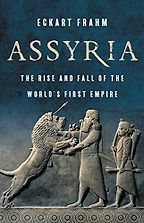
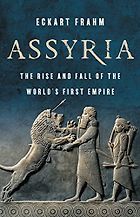
Eckart Frahm is a professor at Yale. He writes so accessibly about a really long and complex history — we’re talking about almost fifteen hundred years of Assyrian history — and he continues to follow the history of ancient Assyria into its legacy and how it survives in later myth and legend and stories. So it’s a really big period that he manages to condense into one book, and it’s somehow not boring to follow this chronology from start to finish. One of the reasons he’s able to make this history of political and economic milestones so interesting is that he peppers it with stories of individual lives.
That’s going to be a theme across all these books: the writers make a conscious effort to bring out the stories in the cuneiform sources that are not just about kings and queens and major literary figures like Gilgamesh. It is held together by very human moments. It’s about a woman named Urkittu-hamat who, during the twilight of the Assyrian Empire, sold herself into slavery for copper instead of gold, because that is how hungry she was.
Even as an Assyriologist, I learned a lot from this book. I learned about an attempted coup on the Assyrian Empire at its height, in which a diviner named Kudurru was forced by a general into a coup against the king (diviners were very important to the king during the Assyrian Empire, because they helped with royal decision-making). These personal stories remind us that the empire was full of people no different to us. I really love this book, and I use it in a lot of my lectures.
Frahm writes that world history begins with Assyria, that it was the world’s first empire. Do you agree? I have more often seen the state founded by Sargon of Akkad referred to as the first empire.
I would agree with you. I think the idea of empire is definitely earlier than Assyria, and it could be argued, and has been argued, that Sargon is the founder of the world’s first empire. It depends on how you want to understand empire. If it has to have a really good paper trail, then the Assyrians have a much better paper trail for their empire, and we can say more definitively what that looks like than we can for the old Akkadian or Sargonic Empire. Assyria is the biggest that the world had ever seen up to that point, for better or worse. I am actually very anti-imperialism, so I don’t talk about these things as positive movements in the history of humanity, but they happened, and they were very successful. I don’t think history begins with Assyria. What counts as history? I think anything that comes before right now is history; whether it’s before writing or after writing doesn’t matter.
This book is like a seven-course meal, but I would also like to recommend an appetiser to make it easier to make sense of the rest of the meal, or you could think of it as pairing wine and cheese: Ancient Assyria: A Very Short Introduction by Karen Radner. It is really a very good introduction. She gives a bit of background on the region more broadly, and there are some images as well as maps to help.
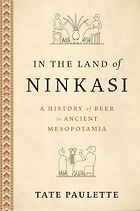
Tate Paulette brings so many elements of food and drink to life in this book. Those are often not addressed in histories of ancient Mesopotamia, but are really interesting because they are a way into social and economic history. Who consumed beer? Who made beer? How much were they paid? How much did it cost? What were the different kinds of beers, and who had access to them? How were dates, which were more expensive, used in beer production? How does beer production change from the very early periods to the much later Neo-Babylonian periods, when you have a lot more date-based drinks, more like a wine than a beer?
Like any good Assyriologist, Paulette looks at stories of individuals, of individual brewers, starting with Kushim, from the dawn of writing. We don’t know if Kushim was a person or an institution, but Paulette takes us through all the sources about Kushim and what they tell us about how beer was made, and what the ingredients were during these really early periods. These are some of the earliest examples of writing in human history. He talks also about taverns and tavern keepers, about how many of them were women, and what the law codes say about women tavern keepers, or women of different classes entering a tavern. He talks about taverns as social institutions and liminal spaces that may have been sometimes outside of the city, and rituals involved in the business of upkeep of a tavern.
Another thing I really loved in this book, which I think other readers would also love, is that he combines quite academic analysis of the sources — which doesn’t at any point feel overly dense or heavy — with narrative walk-throughs. He’s an archaeologist. I find it difficult to wrap my head around archaeological drawings of buildings, and Paulette really brings it to life. You get a sense of who would have had access to these buildings, what that says about society at the time, as well as the buildings themselves and what it would have been like to inhabit these spaces. He does an incredible job of that, and he does it with humour. There were some bits in this book where I was laughing out loud, unexpectedly.
Did everyone in ancient Mesopotamia drink beer?
Yes, as far as we know, everyone drank beer of some kind, maybe not the finest beer that was brewed for the deities or for ritual purposes, but even children drank beer. We don’t know how alcoholic the beer was. There are administrative records, which he talks about in the book, of children of workers being given rations of beer to drink. Beer is used a lot in medical recipes, and one of the possible reasons is that it was cleaner than water. When you’re ill, when your immune system is already depressed, you don’t want to get another secondary illness from contaminated water. Beer is a safe drink, even if it is alcoholic.
And there is a hymn to Ninkasi, the goddess of beer.
Yes, and he talks about the different ways to interpret this hymn. It is essentially a step-by-step recipe of how to make beer, but we don’t understand all the terms in it because Sumerian is not fully deciphered. He goes through the different interpretations offered and suggests how it might have been carried out. The last chapter, which is great, is how they actually brewed this beer based on the recipes from ancient Mesopotamia, and got people together for ancient beer tasting. How else to know if this recipe could be feasible, without trying to do it yourself and seeing what the outcome is? I love experimental archaeology.
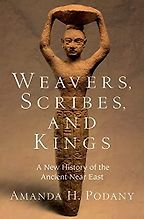
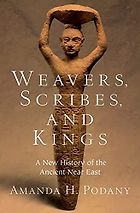
Podany’s book is really comprehensive, from before the birth of writing all the way to the Persians, and how life changed or didn’t change in Babylonia under the Persians. It is a really incredible book because she brings to life each era. She gives just enough historical context for you to understand the sources that she picks and chooses. This is a chronological history, and usually I find them a bit too dense and repetitive, but this one is structured around individuals, which I really love. Individual kings and queens, yes, but also abandoned children, enslaved workers who tried to run away, working mothers, men and women who made bricks in the baking sun with clay that would have been stuck in their skin… She brings it to life, and really thinks about the nitty-gritty details that aren’t in the sources, that you have to calculate through some other ways in order to bring this to life.
She gives an example, during the Early Dynastic Period — which is a huge period from around 2900 to 2300 BCE, the height of Sumerian culture — of how the most vulnerable in society, children without homes, went into a sort of care system. That often meant they were attached to different households or workplaces. I don’t want anyone to imagine that this was some utopia where children were treated amazingly, but they weren’t left behind. There’s one whose name was Putapada, which means ‘found from a well’. Podany talks about this child’s life and what we know about this child from the records. She does a really beautiful job of making it about people, but still covering a huge amount of time and giving enough information that you finish the book feeling like you know a lot.
She also answers questions that I’ve always had, for example about the very famous Assyrian palace reliefs, most of which are not in Iraq anymore. They’re incredible pieces of art, but we don’t actually know step by step how they were made. She fills in the blanks with adjacent sources on related pieces. For example, a statue was being fashioned during the Neo-Assyrian period by someone called Nabu-ashared. There are letters back and forth between this man and the king, where he shares competing ideas among different artists about how to style the work. He writes to the king with some complaints, and asks the king to tell him what he should do with the statue. I really loved that.
This book is really long, but it’s easy to follow because of the way she structures it through people’s lives and dives into details that make it so interesting. The other great thing about it is that it’s written in such a way that you can skip parts without feeling lost later down the line; it can be digested as a whole or piecemeal. But if you don’t have time or need some basics before doing a deep dive, Podany’s The Ancient Near East: A Very Short Introduction is amazing, too.
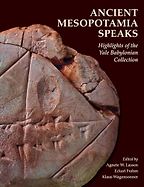
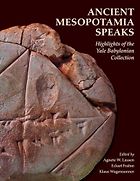
The authors of the different essays in this catalogue really let the sources speak for themselves. They guide you through it and help readers interpret some of it, but it is really a collection of what the sources say about different subjects. It feels like someone is holding your hand and walking you through these complex moments in history, giving just enough guidance for you to understand the sources and enjoy them. The stunning images stand out so much in this book, and it is really full of generous sharing of skill and knowledge, as well as of the objects themselves. There’s a wonderful chapter called ‘Number Culture: Old Babylonian Mathematics at Yale’, and some of the images are of tablets with area diagrams or other calculations that required a drawing of a spatial calculation. And there is a beautiful synopsis with incredible images of how people learned math four thousand years ago, and who learned it, so that you know what the people back then were making.
The other thing I really love about this book is that it is such a diverse sampling of topics. You have the hardcore intellectual history, like the birth of writing, Old Babylonian math, ideas about time and calendars. But you also have chapters about family life. There’s an incredible chapter about food that breaks down recipes to the point where you can make them at home. So it is a really nice melange of topics that can appeal to any reader, and you don’t have to read it from start to finish, you can just pick the ones you think are interesting. At the end, there are more pages of objects that have been referenced throughout, a catalogue of photos and descriptions of objects. It pairs image and text nicely for those who want to see the objects but can’t travel to Yale, like most people. I really love this book. I recommend it to everyone. Many of the chapters have been made publicly available, but I’m really glad that somebody gave me a hard copy to look at.
I was really fascinated by the chapter on cuneiform. Can you elaborate a bit on the birth of writing?
Yes, of course, it’s one of my favourite topics. Someone asked me on a podcast last year if people in ancient Mesopotamia knew they were on the cusp of something world-changing when they developed writing. I said, based on where these texts were found, probably not. About four thousand tablets were found in a kind of rubbish heap from the layer of archaeology just before 3200 BCE. They document the development of this technology that people needed to keep track of vast quantities of information that would be difficult to do in your head or using tokens, which had been used traditionally for a long time before writing was developed. These tokens were like little game pieces, where each one represents a certain number of a commodity. At some point, the method of containing this information moved from individual tokens to a single clay tablet with the same information traced onto it. Initially, this information — I don’t think we can call it writing — is more like a mnemonic device, a number followed by a drawing of the thing being counted.
Like an oil jar or beer jug emoji?
Exactly. And then you start to see lists of signs that were being used by the administrators in these transactional records, but also signs to try to make the information more complete. Around 2900 BCE, they stop tracing — it’s actually quite laborious — and that’s when you start to get the telltale shape of the cuneiform wedges impressed into clay, the tiny triangles with the lines, and you start to find hints at grammar. Then it just takes off from there.
Over time, how many languages were written in cuneiform?
About ten. Within the region that we call Mesopotamia, it was primarily Sumerian and Akkadian, and then later old Persian. The Hittites used it a little bit further north in what is now Turkey. Hurrian was also written in cuneiform. Ugaritic had a cuneiform-based alphabet. In Syria, Eblaite was a cuneiform language. The cuneiform writing system became quite flexible.
Who learnt to write? Did people go to school to learn to write in ancient Mesopotamia?
Writing was passed down within scholarly or scribal families. A specific subset of society got to go to school because they were connected with or part of these families. This included girls. Someone who worked in administration would have had to master the signs they needed to make everyday legal and transactional records, and the occasional calculation for the yield of a field. They would have had really good math that they learned as part of the standard curriculum. Babylonian and Assyrian scholars who did an apprenticeship with another scholar, let’s say a medical practitioner, would have had to master the entire repertoire of cuneiform signs. That is at least six hundred signs, and within each sign there are multiple meanings, some of which are syllabic sounds, some of which are words, some of which are specific combinations, and you have to pick the meaning from the context. Even if they were writing in Akkadian, they used a lot of Sumerian logograms as well. There are a lot of different meanings for each sign, and that’s a product of how the writing system developed, which itself is a very interesting history.
In a lot of periods there was functional literacy, so even if you didn’t go to school, you learned enough signs, say around one hundred, to be able to draft your own letter to a business partner or to a loved one, so that you didn’t have to pay a scribe to do it.
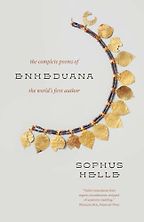
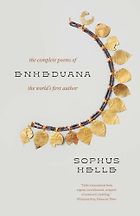
We have come to your final book recommendation about Mesopotamia, Enheduana: The Complete Poems of the World’s First Author, with translation and essays by Sophus Helle. I really like his version of Gilgamesh, too, and am glad you picked this book. What do you want to highlight about it?
Sophus Helle is an incredible writer and a meticulous scholar. These translations of Enheduana’s work capture what it might have felt like to read them or to listen to them in the original. The poetry is so impactful and so breathtaking, and he does such a great job of striking a balance between fidelity and poetry. It’s just gorgeous, I don’t know how he does it. He includes some essays on Enheduana herself, her historical context, and the textual history of the work. These are also beautifully written and readable; somehow, even his academic writing is quite poetic, and it offers a window onto the world before you immerse yourself into the poetry.
One thing that I really love about this book is that somebody with absolutely no knowledge of Sumerian, of Enheduana, of the Sargonic Empire, of cuneiform, of Mesopotamia, someone who’s never heard of any of these things, can pick this book up and A) read it with ease and enjoy the beauty of his language, and B) really get a sense of this world by the end of it. He opens it up to so many people, which is wonderful. I really love his work. Enheduana is the earliest writer whose name we know.
There is some argument about whether she really composed the poems, because the earliest extant versions are from several centuries after her lifetime. Can you shed any light on the argument for or against the historicity of her authorship?
I think it’s interesting to complicate her authorship of the poems without necessarily concluding at the end that she didn’t author them, because I don’t think that’s where these arguments have to lead. There are other ways to interpret the evidence. As far as I know, all Sumerian literature is only known from later copies made in schools by Babylonian students learning the Sumerian language. The idea of an original is a difficult question in and of itself. There was a practice of crediting well-known historical figures with authorship to lend credibility to a piece of work. I don’t know that this is an argument against her authorship; it might also be an argument for saying that they’re crediting her because she actually wrote them.
Helle makes the point that, unlike hymns that were written in the names of later kings, these poems are soul-searching and poetically pathbreaking. Their purpose was to help keep people safe from the violent whims of the gods, by invoking the gods and enlisting their help. Can you talk a bit about that?
What I think is interesting about Enheduana’s hymns is that although she was high priestess to the moon god Nanna (that’s the Sumerian name, Sin is the Akkadian name), many of her hymns are about Inanna, the goddess of love and war — Ishtar in Babylonian and Assyrian pantheons. She extols this goddess’ power in a way that is surprisingly graphic at times. It’s different, definitely, to other hymns that are quite formulaic.
I do think that there is a power that she talks about in her poetry that beautifully captures what people can and can’t have control over in their lives, that they are at the mercy of the divine, or what they understood as the divine. There’s no distinction in the terminology for ancient Mesopotamia between a phenomenon and the deity responsible for the phenomenon. There is no other way to refer to the moon other than by the name of the moon god. There is no way to refer to the sun except by the name of the sun god. I think there was a real sense that these divine beings were not separate from the world, they were the world. They were in control of the climate, of the harvest. Whether people lived or died was at the mercy of these phenomena, and these phenomena were the deities responsible for them. That power is captured really beautifully in Enheduana’s poems.
Enheduana was a priestess, and rituals would be very important in that role. How important were rituals to people in Mesopotamia in general, do we know?
I think they were very important. A ritual is a kind of expression of one’s connection with the phenomena I was just talking about. It’s a way to feel some kind of control over – or participation in – these phenomena that people relied on for their survival. I also think rituals are ways for people to come together. We still do these, it’s a really human thing. At my college, for example, there is a Christmas tree lighting ceremony. I take my kids every year, even though we’re not Christian, because it’s not a religious ceremony, it’s just such a nice thing in the community to be a part of, especially when it’s dark and rainy and there’s a bit of light there, and a reminder that these are people that you might be able to rely on if you need to.
I think that the priestess, in leading these rituals, had a very important role that transcended a symbolic figurehead. This was really deeply important to the people of Ur where Enheduana was the high priestess; an important part of their marking the seasons, an important part of their hoping for a successful harvest in a climate that was oscillating between flood levels of rain and scorching heat. These were important things that she presided over, and it would have involved quite a lot of practice and training. That was in addition to her administrative role as a priestess, because the temple owned lots of property, including agricultural property, so she would have had a lot of hats to wear within that role that was not just ritual-based, but that ritual was a big part of.
What do we know about how the ancient Mesopotamians saw themselves? What was their relationship with the wider world? Did they write about other people and other lands?
There were vast connections between people in the heartland of what we would call Mesopotamia, and people exterior to that. There were periods of international trade, like the old Assyrian period from around 1900 to 1600 BCE, when primarily women living in Assur were weaving textiles that must have been really something, because of the prices they were fetching in a trading post called Kanesh, in what is now Turkey. There is definitely a sense of a different place with different practices and different people that they found ways to interact with in a peaceful way. And we see linguistic hints at trade; how the word for horse, for example, migrates from the beginning of horse trading. So I think there’s definitely knowledge of them being in a much wider world.
There are also terms for self, for individual. There’s a word ‘ramanu’, which means self or soul. There is a sense of the individual and its place in a wider nexus of divine and human and animal and natural world, and how to mediate all those different relationships. There are so many different ways to answer that question, it’s a great question. Of course, we’re talking about three thousand years of history, so someone in 2800 BCE would answer the question very differently to someone in 538 BCE, when Cyrus arrives from Persia and takes over Babylon. And a king might answer very differently to Putapada, who was found in a well and incorporated into a workforce so that he wasn’t left on his own. It’s a very rich question.
We have barely touched on science. Can you talk a little bit about the development of science in Mesopotamia?
From the earliest writing in ancient Mesopotamia, you can find attempts to bring order to what, as we all know, is a chaotic world. Even the early lists that are arranged thematically that generate signs for writing is an attempt at completeness. We might not approach it in the same way, but that systematisation, that way of thinking scientifically about the world is there from a very early period.
There are also very early records of how regularly they were making observations of the natural world, whether it was the human body or the skies. They were almost obsessively observant, so much so that they were able to predict cyclical phenomena, astronomical phenomena, for example, or distinguish between different types of seizures, whether epileptic or not. Part of the reason for this was because anything could be a divine message.
I think they were doing science very early in very interesting ways, and if we approach it without anachronism, as people trying to make sense of the world around them in a systematic way, then we can add so much to the history of science from the cuneiform sources.
Thank you very much for introducing these fascinating books about Mesopotamia to our readers. By the way, I really enjoyed your own book Between Two Rivers and the way it’s concerned with people’s lives. I particularly loved the description of bricks with dog paw prints and clay writing tablets with children’s fingerprints from thousands of years ago.
Five Books aims to keep its book recommendations and interviews up to date. If you are the interviewee and would like to update your choice of books (or even just what you say about them) please email us at [email protected]
Five Books interviews are expensive to produce. If you've enjoyed this interview, please support us by donating a small amount.
Moudhy Al-Rashid
Moudhy Al-Rashid is an Honorary Fellow of Wolfson College, University of Oxford, where she specialises in the languages and history of ancient Mesopotamia. She teaches Akkadian texts and the history of science in Mesopotamia, and regularly appears on podcasts.
Moudhy Al-Rashid is an Honorary Fellow of Wolfson College, University of Oxford, where she specialises in the languages and history of ancient Mesopotamia. She teaches Akkadian texts and the history of science in Mesopotamia, and regularly appears on podcasts.