Remote and romanticised, Easter Island – or Rapa Nui – has often been misportrayed as a mysterious site of ecocidal ruin. Terry Hunt chooses five books that paint a truer picture of the island’s history, from the accounts of early voyages to the pressures of joining the modern world. The tale that emerges is one of ingenuity, resilience, and mighty 'statues that walked' – as well as a lot of rats.
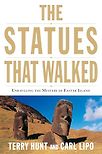
The Statues That Walked: Unraveling the Mystery of Easter Island by Terry Hunt and Carl Lipo
Easter Island, or Rapa Nui, is an incredibly remote island. When do we believe it was first settled? Maybe that’s a big question to start with…
It’s actually not such a big question. There have been many answers over the years, but the evidence now clearly lines up on around 1200 CE. We’ve looked critically at all the evidence for anything earlier, and the evidence very clearly converges on that date. It lines up with other parts of eastern Polynesia and the eastern Pacific in general, and it lines up with the oral traditions in terms of the number of generations in the genealogy. Any earlier radiocarbon dates are highly problematic; once you scrutinize each one, there’s no evidence left. So it fits the evidence for Rapa Nui itself, and it fits the regional picture.
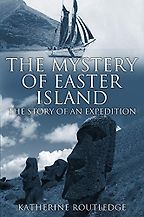
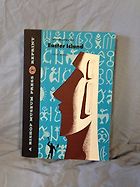
Your first choice collects some of those oral histories you mention: that’s The Mystery of Easter Island, a 1919 book by Katherine Routledge. Could you tell us about it?
I like this book because it’s a really interesting adventure of a woman who was on the frontier of women in archaeology, who left England and went on a great adventure, and ended up staying on the island longer than she had planned. She was there at a time when she could talk to old people who remembered much of the oral tradition. There may still be gaps because of the tragic history of Rapa Nui, but it’s a very interesting read.
I like the older books because they predate some of the misconceptions that would follow later.
You quote her in your own book: she found it “even more difficult to collect facts out of brains than out of stones.” Is that to do with the gaps you mention, or broader difficulties with oral history?
That was Routledge’s view, because she realized that there were conflicting accounts. Any memory is limited. She was also dealing with a small number of people after such a tragic history, so certainly details had been lost, and she recognized that. So I think that maybe different accounts she got from different people led her to be somewhat sceptical.
Could you explain briefly about that tragic history?
Yes… We could start with the Dutch in 1722. European contact would bring Old World disease. There’s almost no way around that: any contact would introduce diseases that native Polynesians, and for that matter Native Americans, had no natural immunity to, and that was tragic in the Americas and in the Pacific Islands. Then, in 1770, the Spanish arrived. They were on the island several days and would have certainly introduced disease.
In 1774, when Cook arrived on the British expedition, they were the first to describe an island that didn’t look so good. They described a tragic landscape, and I think what they were seeing was the aftermath of an epidemic that probably arrived with the Spanish. They talk about sites that are in ruins. They depict human bones on the surface. The naturalist on Cook’s voyage, Forrester, and his son speculate about how there must have been more people in the past. They must have been, in their words, more opulent, more happy. They were describing a past that differed from what they saw on their visit. That’s where the tragic story is first recognised by Europeans, probably because they were close on the heels of the Spanish visit and its impacts.
Then the tragedy just continues. By the early 19th century, there was slave raiding. The epidemics continued. By the 1860s, there were more really large slave raids. Then, finally, following the abolition of slavery, repatriation – and repatriated islanders came back with more disease. By the late 1800s, there were only 111 Rapa Nui people left after an original population that was probably 3000 or a bit more.
It’s a terrible, terrible story, and it’s really about disease and slavery and nothing to do with trees or anything like that.
Yes, we will come to trees and the ecocide theories later on your list. Your second choice is Ethnology of Easter Island, written in 1940 by Alfred Metraux. Please tell us about it…
This is similar to Katherine Routledge. It’s a very detailed work, in the style of the time. Metraux records a lot of details, oral traditions, culture, and some observations about archaeology. It’s a compendium of as much information as he could gather.
Again, I like it as an early work, because it’s detailed, and he recognized what later writers did not: the tragedy that was brought by European contact. In fact, he refers to this as one of the most tragic stories in the Pacific. That insight at that early date is really valuable, something that was ignored by authors in the 1970s, 80s and 90s.
It’s insightful, detailed, and certainly a valuable reference. It may not be the easiest reading, but it’s a great source.
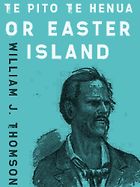
Your third choice is a source from even earlier – from the paymaster of the SS Mohican, William J. Thomson, writing in 1891. Please tell us about Te Pito te Henua, or Easter Island.
This is a fun book, because it’s also an early visit. He does some primary archaeology. He does an inventory of moai and ahu, and describes things in detail. He also records some genealogies and oral tradition.
His description of the island is very colourful. He talks about all the flies, and the dire conditions of the island at that time – a time when it was probably at its worst. It’s interesting in that regard. Again, as an early source, it predates the moralising that will come later, about environment and ecocide and things like that.
His survey of the moai and ahu was very comprehensive. Could we talk about these a moment? The moai are the famous statues, seen as such a mystery – what is so mysterious about them, and what do you make of them?
The mystery comes from the paradox or enigma of a small, isolated island with few resources – and really its size and isolation are extreme – making a huge investment in monumentality. The statues weigh up to eighty tons and were transported, sometimes several miles. Not only that, but there are also three hundred or so massive platforms that supported many of these statues, all around the island.
The mystery, I think, also comes from the European perception of an island that had become depopulated – which was caused by disease, but they didn’t recognize that. So the mystery grew larger and larger, because without understanding their own impacts, Europeans wrote about the mystery more and more: who made these statues? Where are all the people? Why did they do this? What is the story?
That all persists even today. When I lecture, for example, people ask me questions like, ‘Does anyone live on Easter Island?’ I find that question very strange, but I see where it comes from, because they see photos of statues in a lonely landscape, and they think it’s very mysterious if there are no people there. But of course, the descendants of the people who carved those statues are there alive and well. So the mystery has been about all this monumentality in a place where you least expect it.
I love the title of your book, written with Carl Lipo: The Statues That Walked. I know that’s how the movement of the statues is described in some of the oral histories. You believe that is accurate, that they were transported vertically, not horizontally, as some people have suggested. I loved all the experiments reconstructing different methods.
Yes, people have done experiments on moai transport, and our book predates some very important studies that we published afterwards: we walked a moai that weighed more than four tons, and we walked it with ease. We used three ropes. It was featured in National Geographic as a cover story, and we’ve since published more on simulations of the size and the physics of transport.
We know that they were transported vertically; it fits all the evidence. What I would say about earlier experiments using logs, for example, or other methods that are not walking – most of them are horizontal transport – is that the archaeologists engaging in that completely overlooked or ignored the archaeological evidence on the statues. Aspects of their form, like the fact that they lean forward and have a low centre of gravity; the way that they’re found on the roads; the positions they’re found going uphill and downhill; the way that they’re broken; the way that some of them are buried…All of these things point to vertical transport, and if you are rolling them on logs, you’re ignoring all of that evidence. You just made something that you think looks like a moai and put it on logs, and yes, you can sort of roll it.
As I tell introductory archaeology students, just because we can show that something is feasible doesn’t mean that’s how it was done. We have to show more than feasibility. We have to show that it explains the vast majority of the evidence that we have in front of us, and maybe even leads us to new observations that are also confirmed. In the process, we’re always trying to prove ourselves wrong. That’s science, and it’s a very powerful approach.
To get back to the title of our book, The Statues That Walked. The book was written before we tried out vertical transport, but we understood it from the evidence, and the book title reflects the idea that the answer was always there. The answer was staring us in the face, because the Rapa Nui people in their oral tradition had told us the answer. We had to find out ourselves, because oral tradition is oral tradition, and it has a different standard of truth, for example, than science. Often, when I talk to Rapa Nui people, I say, ‘We had to find out for ourselves, and what I can show you is how we discovered what you already knew’ – which is an exciting way of acknowledging their accomplishment, and their knowledge of their accomplishment. So The Statues That Walked acknowledges that they knew the answer, and that we had to discover it in our own terms.
It seemed to be a running theme in the book, that people saw what they expected to see in the archaeological record. I was very struck by the obsidian blades, the mata’a, that were assumed to be weapons despite being very badly designed for fighting.
Yes, I think that idea came from our unquestioning faith in early European visitors. If they called something a weapon, then we treat that as history. But if you read the logs, you can see this underlying theme of them being very nervous about the behaviour of native islanders. They go ashore with guns, and lots of apprehension, and if they see something that could be a weapon, then it is.
It turns out that the mata’a is a multi-purpose obsidian tool. They have a stem that allows you to attach them to a wooden handle, and there are some examples in the British Museum that are still attached to a small, short wooden handle. Now, a short wooden handle means that it’s also not a very good weapon, because you’d have to be very close to someone to use it. Also, we’ve analysed the shape, and it’s not about creating a point. That happens occasionally, but you’re fracturing the stone to create a sharp edge, which can be used in cutting and scraping. The tools are most commonly found in garden areas, so unless people decided to fight in garden areas, they’re there because they’re being used for agriculture – cutting bananas and harvesting crops, etc, and preparing food. Even when we look at the wear from their use under a microscope, we see cutting and scraping, and no blood residue or anything like that.
But because anxious European visitors called them weapons when they were very nervous, it stuck. We see an undue respect for everything they observed. I like to point out that we have to understand them culturally as well – they’re not just objective observers. I mean, they were burning witches at the stake at home. They had their own issues. So we should always look at the observer culture critically as well.
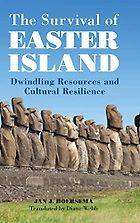
We’ve touched a few times on a major distorted story about the island: the idea that the islanders committed ecocide by cutting down all their trees. Let’s turn to your fourth choice, which disputes that: Jan J. Boersema’s The Survival of Easter Island: Dwindling Resources and Cultural Resilience. Could you tell us about this?
This is a more modern book, and it takes in the historical information and the archaeology of the island, and is one of the first synthetic attempts to talk about resilience. It does this fairly well. I reviewed the book at one point, and have only minor issues with it, but I like the theme of it. Boersema’s work has been very influential in terms of arguing for smaller population size, no collapse – against the bias that has come to the story about the island. So I think it’s a useful modern source, like our own, and like our forthcoming book…
Oh, a new book?
We are on contract with Oxford University Press, and it could still be a year or more away, but the book is in the editing stage right now. It’s an academic book, not so much for a public audience, that will deal with everything about Rapa Nui.
Exciting. So, Boersema is also against the idea that the islanders experienced an ecocidal collapse – starting with man-made deforestation, and pushed by this into starvation and violence. Why are there no trees on Rapa Nui, if that’s not accurate?
Eight hundred years ago, when Polynesians arrived on the island, there were literally millions of giant palm trees, similar to the Jubaea Chilensis in mainland Chile: an endemic, large, slow-growing palm on Rapa Nui. It’s been given a different species name, but that species is extinct. It would have been the dominant part of the vegetation.
Polynesians arrived, and they were agriculturalists, bringing chickens and rats with them. They may have attempted to bring dogs and pigs with them, but there are no dogs or pigs in the archaeology of the island, so if they made it there, they’re a needle in the haystack.
The rats were the Pacific or Polynesian rat. Rats can reproduce at a staggering rate: you could literally have one breeding pair, and within a few years, you can have millions. I’m not exaggerating. This is a classic case of invasive species. They have no natural predators on the island. They have a virtually unlimited food supply in the nuts of the palm trees and other native seeds and plants. Numbering in the millions, they would severely depress the regeneration of the forest. So that happens almost on day one, because within a few years, you would have a lot of rats and a lot of rat impact. The natural regeneration cycle of the forest is halted.
Now add to that fire, because Polynesians are bringing crops – taro, sweet potato, yams, sugar cane, bananas – and they need places to plant crops, and so they’re probably going to burn areas to clear natural forest for planting. Fire and rats, depressing regeneration. Eventually, over about the course of four or five hundred years, this leads to deforestation.
We’ve published recently modelling rat demography, the characteristics of the trees, the timing, etc. What we’ve shown in simulation modelling is that rats alone could deforest the island through their impacts. But people added to that, and they sped it up a little bit by adding fire to the mix. So I’m not arguing that rats alone did deforest the island, but they could, and that tells you how profound their impact was. We have similar studies in the Hawaiian islands, showing that they deforested parts of the Hawaiian Islands very quickly with a native palm.
So there was a disappearing forest… But you and Boersema think that wasn’t decisive for the islanders?
Yes, over the course of four or five hundred years, the forest disappeared. Rapa Nui people were planting more and more areas. They were dealing with the challenges of agriculture on Rapa Nui: seasonality and temperature and rainfall, the devastating effects of wind and salt spray, and nutrient-poor soils. To mitigate these problems, they used lithic or stone mulch, and they made manavai, which are stone planting circles, and they plant their crops in those areas.
Meanwhile, the palms were few and far between. Were the palms a food source? They could have been for a while, but the rats probably out-competed them for the edible nuts, because the rats will eat immature nuts. Were the palms ever a source for canoes or barges? No, palms are actually not trees; they’re in the family of grasses, and that means they have a hard exterior bark and a soft, spongy, fibrous interior. You can’t make a dugout canoe out of a palm tree; some of the Pacific islanders can make small canoes out of coconuts, but they’re not very reliable. Palm logs will get saturated and sink. For a barge, they’re not buoyant enough, and also get saturated and sink. So the loss of the forest did not change opportunities for fishing, as some have suggested.
Deforestation did not have an economic impact on the island. It may have created some added challenges to the agriculture, but those challenges were already there with the soils, the seasonality, and the potential for drought. Those were problems that had to be solved, regardless of whether there were trees or not.
By the time the Dutch arrived in 1722, there may still have been some palms, because the Dutch describe what they say are woodlands in the distance. We don’t know exactly what that means. They also describe the islanders eating nuts, so they may have been eating palm nuts from the few remaining trees. What would happen with the rats? The rats would have declined as the trees declined, because they were tied to that as a main food source. Like any invasive species, they would peak and crash over time, and eventually, when Europeans introduced the black rat or the ship rat and the Norway rat, the Polynesian rat almost certainly went extinct. We think it’s extinct today on the island.
That’s the story of rats, deforestation, and agriculture. Certainly not ecocide. In fact, as the forest declined, the carrying capacity of the island may have gone up because there was more land to cultivate.
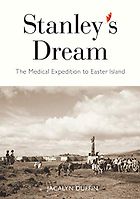
Let’s talk about your last choice now – tell us about this 2019 book, Stanley’s Dream: The Medical Expedition to Easter Island, by Jacalyn Duffin.
I’ve just started reading the book. What I like about it, even without finishing it, is that it’s a really interesting look at a modern turning point in the island’s history – the point of expanding the runway on the island, changing the island from its isolated and tragic history (as opposed to its pre-contact history), and its globalization. The book is about a medical expedition, but it captures the island at a really interesting time that we’ll never see again.
I’ve been going to the island for twenty-six years now, and twenty-six years ago, you had a little bit more of a sense of what this book is about than you do today. Tourism has increased so dramatically. So this book, to me, is a little peek at what the island was like when it was still isolated. In 2000, when I first went to the island, there was no internet. There was one pay phone, which we would go and stand in line to use. It was a very different place, and it has changed profoundly in the last couple of decades. This book captures that moment, and it’s also an interesting look at the social and life history of people on the island.
Thank you – this is a great list for anyone wanting to get to know the island. I love that your choices span 130 years
To reiterate – some of the modern writing about Rapa Nui is, to be blunt, not really trustworthy. It still has the blinders on of a political agenda about collapse and ecocide, and uses the island inappropriately as a metaphor for destroying our planet. It’s really not that at all – it’s actually quite the opposite. It’s a story about resilience, and ironically in the island’s history, it’s also a story about the risk of being too connected to the outside world. Today, when a flight is cancelled, the grocery shelves can empty pretty fast. So it goes from resilience in isolation, to high risk in globalisation – that’s probably the true story of the island. Isn’t that an ironic lesson from the island, given what’s been said about it?
I also think that it’s an absolutely amazing place. The people are wonderful. The archaeology is astonishing and it is a record of this monumental accomplishment of people who lived there in the past. It’s something that today’s Rapa Nui people can be very proud of.
May 10, 2026
Five Books aims to keep its book recommendations and interviews up to date. If you are the interviewee and would like to update your choice of books (or even just what you say about them) please email us at [email protected]
Five Books interviews are expensive to produce. If you've enjoyed this interview, please support us by donating a small amount.
Terry Hunt
Professor Terry Hunt focuses on human and environmental histories of the Pacific Islands. He is the co-author of The Statues That Walked: Unraveling the Mystery of Easter Island, with Carl Lipo, which details Rapa Nui's archaeological history. The book won the Society for American Archaeology's Book of the Year award in the public audience category in 2011.
Professor Terry Hunt focuses on human and environmental histories of the Pacific Islands. He is the co-author of The Statues That Walked: Unraveling the Mystery of Easter Island, with Carl Lipo, which details Rapa Nui's archaeological history. The book won the Society for American Archaeology's Book of the Year award in the public audience category in 2011.