More books are ghostwritten than you might imagine—and if it’s done well, you’d never know. Ghostwriter Joshua Lisec explains how it works and selects five standout examples, from Alexandre Dumas to Donald Trump.
First, personal characteristics: A good ghostwriter needs to be highly conscientious. This is not trainable; this is a personality trait. A conscientious individual can pick up on the nuances of what’s being communicated and what’s sub-communicated. They must understand how something will be perceived by people, so they’re not simply a transcriber and then a proofreader of what was transcribed, but they’re able to interpret the work to cast it in the best possible literary light. I call this skill ‘hearing between the lines’ when we’re interviewing our clientele.
Obviously, good ghostwriters also need to have discretion. We need to have a high openness and low judgment, because much of what authors will be sharing with us will not, in fact, be public; it’s for our eyes and ears only, so to speak. And clientele, in many cases, are afraid of being judged personally for indiscretions or issues that they’ve had in their past that they want to reframe for the public eye, for their personal brand and public relations goals. And so, we need to be advocates for them.
How do you find different voices for people?
I recommend ghostwriters have their own voice and that they be published elsewhere because it helps the person understand the ghostwriter, and it helps the ghostwriter understand what works for a voice, and what doesn’t work. This allows them to drop into character. If you’ve never been an actor, how can you train other people to be actors? If you’ve never played the sport, how can you have any business coaching the sport? You don’t know what it’s like. Ghostwriting versus authorship is very much like that. If you’ve been in character, so to speak, your own character, your own voice, dropping into that for your own fiction or your own nonfiction, you need to be able to do that for yourself first, and then you can go from there.
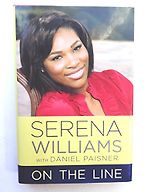
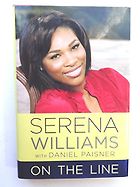
Let’s look at the books you’re recommending. First up is On The Line by Serena Williams, ghostwritten by Daniel Paisner. Why is this an excellent example of the genre?
Athlete books are normally for sports fans only and if you’re not a fan of the sport or of the person, you don’t have much interest. But this is a human interest story. It’s not simply an autobiography, but a memoir—the difference being that memoirs are more episodic. They’re part of periods of a person’s life, and that’s what this book by Serena is. It doesn’t cover everything about Serena’s life story, but it’s a period of her life. The second thing to note is that there’s no suspicion that she didn’t write this. The ghostwriter has a credit, so there’s some acknowledged co-authorial involvement here, but it’s still written in the first person. I think it’s an excellent example of really reading a book by the author. At no point does one assume that it’s not the author saying anything.
What period of her life does it actually cover?
It starts one year before publication. So an autobiography might read, I was born here, I did these things, but this particular one is about the passion, about the origin story of the tennis energy that Williams has. There is a little bit of reflection going back, and she does talk about her first memory of tennis. It feels very conversational.
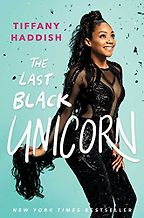
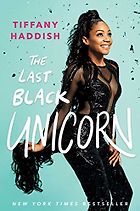
Yes. I met her on the publicity tour for this book. Tucker Max is also a comedian. What’s good about this particular book is that Tucker Max, the ghostwriter, isn’t featured on the cover. He’s not even featured in the marketing of the book. This is Tiffany’s story. There was non-stop publicity for this book. It was supremely well-marketed. The author seemed to believe in the story, she seemed to be excited to have you read her story, her experiences. There was no hint or otherwise to tell that she had a ghostwriter.
Sometimes, when a celebrity or a famous person has a ghostwriter, they’re a little bit hesitant or blasé about promoting the book. They almost refer to the book in third person, as if they want to say, ‘Oh, that book someone else wrote.’ They don’t quite come out and say that, but there’s a distance between themselves and the book that is a little bit odd. Those of us who are in the know might think, ‘OK, so you had a ghostwriter, and you feel bad about it.’
Tiffany Haddish didn’t feel bad about it. The book received a huge amount of praise from the mainstream press. It was a New York Times bestseller. It was an explosive release that nobody would shut up about. Even I thought, ‘Wow, really, is this ghostwritten? That’s impressive!’
One of the things that is done in the book is conversational transcripts between Tiffany and other people in her life. That creates a very immediate realism for the story that you don’t see often. It’s a fun ride. If one enjoys comedy in print, you’re going to enjoy The Last Black Unicorn.
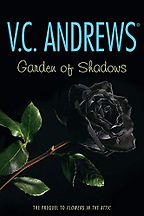
Let’s move on to The Garden of Shadows, by V.C. Andrews, ghostwritten by Andrew Niederman. This is just one of her novels that he has ghostwritten: Andrews died in 1986, and he’s carried on writing her novels.
Yes, that’s right. So the time I first heard about this novel, I was working at a public library as a teenager, and the popularity of the V.C. Andrews novels was notable, given the number of them I was regularly having to re-shelve. I wasn’t quite in the know yet about ghostwriting, particularly the ghostwriting of novels. I couldn’t work out how Andrews seemed to be writing books so fast. I would look at the copyright years and wonder how this author could have written so much over such a long period of time. It seemed crazy. And then I came to realize that this wasn’t all the author, because the author had died. In all the years of working at that library, I never realized that about V.C. Andrews. But for her long-time fans, there are no obvious tells for there being a ghostwriter. If you don’t know, you’re not going to get suspicious.
Why is Neiderman ghostwriting them and not just writing them as himself?
I believe it has to do with brand recognition. Readers get used to what a novelist is going to be like. One of my favourite novelists is James Rollins, who writes an interesting techno-adventure/historical fiction/thriller type of mashup. There is a particular type of story that he tells from the perspective of particular characters, and the plots are basically all the same. You get exactly what you pay for. If suddenly James Rollins were no longer able to produce his works for whatever reason, James Rollins is not simply a name; it’s a brand. So hypothetically, one could continue writing James Rollins in the same way that V.C. Andrews continued writing, and if you understand the profession of ghostwriting, then, well, this is a perhaps literal ‘ghost’ writing.
Has Andrew Niederman written anything by himself or not?
I believe so. He’s an award-winning writer in his own right.
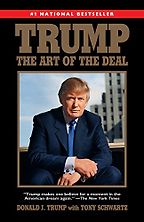
Let’s move on to number four, which is one everyone will have heard of these days: The Art of the Deal by Donald Trump, ghostwritten by Tony Schwartz. I haven’t read this, but I read an interview with Tony Schwartz, in which he said he regretted helping. Is that true?
He claimed that was the case. This was around the first election, the first Trump administration, when there was a massive wave of giving him attention if he had anything to say about Donald Trump. I noticed, for someone who claims to have regret doing a book, he sure was giving a lot of interviews and getting profiled an awful lot. Searches for this guy’s name were exploding across Google. At that time in publishing, I was getting consistent outreach inquiries from aspiring authors and by far the most common question at that time was, ‘Can you help me write a book about this Trump thing?’ — both positive and negative. I have a feeling Schwartz saw a marketing opportunity and went and told the press on that side what they wanted to hear.
That said, the book is fantastically written, and to this day, anyone who reads it will report that they hear Donald Trump’s voice. If one listens to Trump at his rallies, his style is almost like a redneck comedy special, someone like Jeff Foxworthy, a sort of Redneck comedian character. There was a really popular show on Canadian public television that was shown in the United States when I was a kid, called The Red Green Show. It was a variety hour of working-class humor. Think the humor of Home Improvement, let’s say, or Roseanne from the 80s and early 90s. That is Donald Trump’s humor and explains why he has been so resonant with that entire population in the United States as a political figure.
That comes out in this book. I don’t think even his most ardent supporters have any idea the book is ghostwritten. So if Tony disagreed with Trump at the time of the writing, it demonstrates great skill in capturing the voice to such an extent that when I read it, it’s like Trump is in my head. I hear his voice there. It’s so well written.
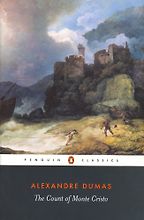
Dumas notoriously wrote his masterpieces, including The Count of Monte Cristo, with heavy assistance from Auguste Maquet.
Everyone has heard of The Three Musketeers and The Count of Monte Cristo. These are stories from the Western canon that are so well-known that it is almost a requirement to know them. And yet, most do not know of the collaboration that Alexandre Dumas had with Auguste Maquet.
At the insistence of the publisher, Maquet’s name was left off the title page. In reality, he was almost like a co-author. They collaborated on these books together and basically divvied up the work. One would write the outline and the plot, develop the characters and write the narrative of the story—that was Maquet —and then Dumas would add colourful dialogue and details.
This is another example of a ghostwriter where everyone knows the one name, and yet not the other, despite an equal, if not greater, contribution. The plot and the characters and the first rough drafts were written by a man largely lost to history, and that is fundamentally the profession of a ghostwriter, unfortunately. They truly are a ghost.
Joshua, what book are you most proud of having ghostwritten?
I would like to say I’d give a different answer depending on the day. But my answer today is going to be Stay Off My Operating Table by the cardiologist, Dr Philip Ovadia, MD. As of this point, it’s sold almost 70,000 copies. That book mainstreamed what is now mainstream about metabolic health. Nobody can tell that it was ghostwritten, but Dr Ovadia was so thrilled with the experience that, before the book was even released, he announced me as the ghostwriter. He’s had me come on his podcast and give interviews about having ghostwritten the book and what the experience was like. It was great. We’ve written a sequel together, with me as co-author, Stay Off My Kitchen Table, where there’s much more in my own voice.
Five Books aims to keep its book recommendations and interviews up to date. If you are the interviewee and would like to update your choice of books (or even just what you say about them) please email us at [email protected]
Five Books interviews are expensive to produce. If you've enjoyed this interview, please support us by donating a small amount.
Joshua Lisec
Joshua Lisec has ghostwritten more than 110 full-length nonfiction books since 2011 on everything from metabolic health and internet marketing to political tell-alls and current events reporting that have been translated into several languages. He has also written novels and nonfiction in his own name, including Bulletproof and So Good They Call You a Fake. As a leading expert on author voice authenticity, Joshua has helped executives, coaches, inventors, multimillionaire and billionaire entrepreneurs, philanthropists, politicians, and religious leaders find the best way to say what’s on their minds and in their hearts.
Joshua Lisec has ghostwritten more than 110 full-length nonfiction books since 2011 on everything from metabolic health and internet marketing to political tell-alls and current events reporting that have been translated into several languages. He has also written novels and nonfiction in his own name, including Bulletproof and So Good They Call You a Fake. As a leading expert on author voice authenticity, Joshua has helped executives, coaches, inventors, multimillionaire and billionaire entrepreneurs, philanthropists, politicians, and religious leaders find the best way to say what’s on their minds and in their hearts.