Historical fiction can be both a valid and a valuable mode of examining unrecorded or forgotten figures in history, argues the award-winning novelist Alice Jolly. That is especially the case for women's history, which is so often thinly documented. Here she highlights five immersive novels that foreground female stories.
Thank you for selecting these five historical novels that bring to live the women who have been written out of history. In a previous interview, you described historical fiction as “an important subset within the mainstream of the writing and studying of history,” and I thought that was a striking way of framing it. Perhaps you’d expand on this point in the context of women’s history specifically.
Yes. It’s easy to reduce historical fiction to the period dramas we see on screens—where all the Elizabethan people have lipstick on. Whereas, actually, historical fiction really is important as part of the study of history. In particular, it can fill in the gaps in the mainstream historical accounts. It is often in the gaps that we find the women. Also, it can take us right into the minute so that we’re not looking at the past through hindsight.
We know women’s stories often don’t appear in the mainstream but we sometimes don’t see that women’s sensibilities have also been left out. An example of this appears in my novel, Mary Ann Sate, Imbecile. Mary Ann is a very simple woman, but she says: “Why are we always telling the story of what changes? Why don’t we tell the story of what remains the same?” And it’s true that mainstream history, almost by its nature, is about progress and conflict, and events that move things forward. Which is great, of course, but the people living through events often don’t experience them in that way at the time.
The novel I’ve just written begins with the words: “History isn’t history when it’s happening.” Whatever you live through, you just live through it, and it is only later that you may you realise that you have been part of it an extraordinary period in history.
I also feel very deeply about historical accuracy. So yes, we can centre women, but if we do, we mustn’t write bad history by giving women ideas and thoughts that they simply wouldn’t have had at the time. I don’t want history to be about picking out things from the past in order to make a point about the present. We need to really immerse ourselves in the thinking of the time.
You can’t just impose present-day narrative on to historical events. You can’t expect to walk straight through the door of a historical novel, you need to learn the language, accommodate yourself to what is going on because you are entering another world. The past is, literally, a foreign country, and the novel can ease us into modes of thought we might find uncomfortable, or ideas we no longer accept. That’s very exciting.
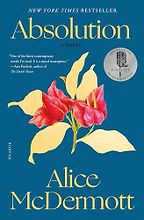
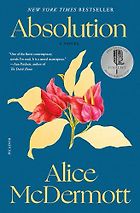
All of this sounds very relevant to your first book recommendation, which is Absolution by Alice McDermott. It’s set in a very specific community at a very specific time and place. And it foregrounds women that I’ve not seen much mention of in the history books. Would you tell us more?
Yes. These are women who are very peripheral, but they are located right where a momentous event is about to happen: the Vietnam War. The characters in this book are educated and progressive young American women who go with their husbands to Vietnam and live in a compound which is entirely American in style. Their lawns are green, as though they live in Westchester, and they live affluent lives. They have gardeners and cooks, and because they are liberal, they feel quite guilty about all this. But, of course, they enjoy it as well. They have fantastic social lives with cocktail parties and concerns about dresses, make-up and hair.
The writer is really coming at her subject matter through a side door because what lies behind all the superficial glitter is America’s disastrous attempt to ‘save’ the Vietnamese from communism. So, in this very closed world, we see the contradictions in the lives of these women. As one of them says, she was walking on air, but she “was not an airhead.” Aware of the poverty around them, they set out to do good.
There is an incredible memorable character called Charlene. She’s beautiful, clever, manipulative, but she’s also startlingly frank and practical. She wants to deliver little baskets of small luxuries to Vietnamese people to help them—because they are the lesser race, and it’s incumbent upon her, with her American college education, to offer them support. But as the novel continues, we realise there is something deeper going on. Charlene is also helping American women, back in America, who are unable to have children to adopt abandoned babies in Vietnam. The morality of this becomes horribly confusing and conflicted.
I loved this book, because it’s so slippery and tricky, so nuanced. It would have been easy to write a book where you hate these women, but you don’t—you sympathise with them, because they are trying to do something good, trying to support their husbands, trying to participate in the local culture, yet they can’t cross the cultural divide. And they can’t get away from a fundamental arrogance which makes them feel sure that America is a good society and that Americans know how to do thing the ‘right’ way.
The book is told by Tricia, who is looking back years at these events from many years later because she has been contacted by Charlene’s daughter who has questions about what was really going on in Vietnam. The question, I suppose, behind the book is: Is a white saviour better than no saviour at all?
Interesting.
Would it have been better for them just to leave people alone? Not to meddle? Yet they had a good motivation. The novel is really questioning the whole business of aid and also asking the reader to consider if there are some cultural boundaries we can never cross. It’s subtle and fascinating, while also being a gripping read. Also, it’s depiction of female friendships is deadly accurate and very uncomfortable.
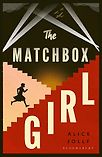
I like a novel that allows us, as readers, to be on the ground as seismic historical events take place, or are about to take place. And I think that’s also true of your own multi-award-winning novel The Matchbox Girl, which is set in 1930s Vienna and features the real-life children’s hospital where Dr Hans Asperger worked. Could you talk a little about your research and where you saw potential for fiction?
It really began with Dr Asperger himself. This was around ten years ago. At that time there were very contrasting views of Asperger. Some of the darkest evidence against him had not yet come to light. I wanted to know who he really was. So that’s where I started but I soon found that some of the lesser characters were more interesting than Asperger himself. In particular, two women who were central to the first autism diagnosis had some how been forgotten, and I wanted to put them back at the centre of the story.
I didn’t have to skew history to make that happen, because it was all there in the documents. Women were very central to the work of the Curative Education Ward in Vienna, but that part of the story has been overlooked.
That’s interesting. It’s reminds me of a point made—if I remember correctly—by Elaine Showalter in the introduction to A Jury of Her Peers, in which she argues that major female authors have always existed, although their contributions have been omitted or erased for all sorts of reasons. There’s a mysterious, recurring amnesia about the role of women through history.
That’s right. In Vienna, they kept the records of doctors but not of nurses, and through that decision, the work of one very key person was lost. Another was Jewish and had to flee Vienna. Before she left, she had been carrying out work which really laid the foundations of the first autism diagnosis, and her contribution should undoubtedly be remembered.
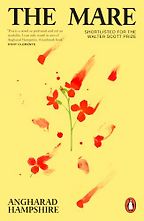
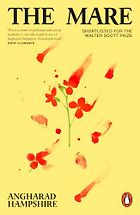
Well, some women want their contributions to be lost to history; next we are going to discuss Angharad Hampshire’s The Mare, which was previously featured on Five Books when it was shortlisted for the Walter Scott Prize last year.
It’s a very interesting book. The woman at the centre of it, Hermine Braunsteiner, was a real person but she is a woman we would like to forget because she was a concentration camp guard, known for being extremely vicious.
The novel starts with a young American guy called Russell who goes on holiday to Austria and meets a seemingly pleasant young woman. This is Hermine. He marries her and they go back to the States. They are living a comfortable, normal life in suburban New York when a New York Times journalist knocks on the door and tells Russell who his wife really is. All of this is based on events that really happened.
What Angharad Hampshire has done is take us into the minds of these people. Part of the story is told through Hermine, part through Russell. It’s a story about denial. But what’s interesting is that we begin initially by feeling broadly sympathetic towards Hermine. We see her in Austria in the 1930s. She is a housemaid with no particular qualifications or abilities. Her whole life is going to be spent in low-grade domestic work. When she’s goes to Germany, she gets offered the opportunity to double her salary by working in a new prison for women that is just opening. She takes the job. Why would she not? But, as the story unfolds, we’re increasingly appalled.
As a character, Russell also becomes incredibly interesting. His sections of the book are addressed to Hermine, and they are like a love letter. He is devoted to her, and he will stay that way. No matter what is revealed about her, he still clings to her.
What makes this book so challenging is that you can’t quite dismiss these people. You want to say, well, she was evil and he was delusional. But you’re taken into their world. Hermine is extradited to Germany and stands trial. At the trial, she says: I’m being held scapegoat for a whole system. So many were involved, I took orders, I did what I was told, so why I am the one paying the price?
I’m somebody who has read many books about the 1930s and the Second World War. I’m always trying to answer the question of how people who are essentially harmless end up doing appalling things. This is the novel that has come closest to answering my question. It’s a clever, difficult, uncomfortable read.
And it raises questions about the power of fiction to create sympathy for unlikely people—real historical villains.
That’s right. The truth is, in terms of viewpoint, the person holding the microphone is the person in whom we make our emotional investment. That’s true even when we don’t like them. I think fiction becomes amazing when it forces us to empathise with a person we dislike. That’s an exercise that we need to go through, because simply saying, ‘these people are very bad people,’ doesn’t get you anywhere. The point is that Hermine was a woman like hundreds of other women. She was a woman like us, you know?
So it’s a thought-provoking book, and it’s also a propulsive read. These revelations unfold slowly. You keep thinking that, at some point, Hermine’s going to wake up to the real level of her guilt. You also except that at some point the author is going to tell us how terrible this all was. But the author is incredibly restrained. She lays it all out and leaves the reader to decide. Neither Hermine or Russell ever really confront the truth of what has happened, because they can’t, you know? At that point, suicide would probably be the only option.
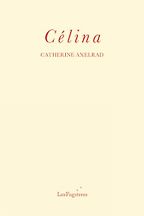
Thank you. Your next book also explores morally complex characters, albeit in less extreme circumstances. Would you introduce us to Catherine Axelrad’s Célina? It features a chambermaid who enters into a sexual relationship with her employer, the author Victor Hugo.
Yes, this is a small press book and it is short, delicate, fragmentary. It was translated from the French by Philip Terry, who is an emeritus professor of creative writing at Essex University. He’s a wonderful translator.
Some years ago he translated this book because he really admired it, then he couldn’t find a home for it, so he had it sitting around for a while before he stumbled upon Les Fugitives, a wonderful small press that translates short French novels into English.
I think it took time for this book to find a home precisely because it is that work of historical fiction which makes no compromises in telling us what it really have been like to be a poor person living in that period. Victor Hugo himself remains peripheral. In fact, it isn’t even really mentioned that he is writing Les Misérables, although the reader figures that out.
This is also a book with a great sense of place. We feel the Channel Islands as isolated, cold, rocky, bleak. The sea is always heavy and grey, a damp mist always hangs low. The atmosphere is silent, serene, enclosed.
At the centre of this world is Célina, a maid servant whose life is tragic. Members of her family have died of tuberculosis, and she has been treated badly in her workplace. She gets the opportunity to take a job in the Hugo household, and this seems a good option for her but then she has an affair with Hugo. In reality, it isn’t really an affair: he simply turns up in her room every night to have sex with her.
This is a difficult book to read in the modern context. We want to feel outraged because this is a young and powerless girl having sex with a rather hideous older man who simply takes it for granted that having sex with the housemaid is his right. We feel outraged on her behalf, but she feels tenderly towards Hugo and enjoys the attention he briefly pays her. She is somebody who has so little in life that the idea of resisting him wouldn’t occur to her.
For her, it’s love, or at least she feels moved by him. Yet, equally, when she has the opportunity to have sex with somebody else who comes to the house, she does. So the novel is, among other things, a matter-of-fact account of a totally powerless woman who finds small pleasures where she can.
This novel maybe small and slight but it has huge impact and it is admirably restrained, wonderful quiet and beautifully written.
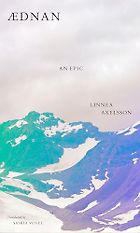
It’s a great recommendation, because it’s not a book that had been on my radar at all. Could we talk next about Ædnan? It’s described as an “epic, multigenerational novel-in-verse” about two Sámi families over the course of a century. Let me note for our international readers that the Sámi are the indigenous reindeer-herding people of the far north in Norway, Sweden, Finland and part of Russia.
This novel sounds as though it will be a big, challenging read, and it does cover a huge amount of ground but, actually, there are very few words on the page. The verse is fragmentary, leaving masses of white space. This creates a sense of the snow fields, visually, on the page.
It sounds like a dense read, and in a sense it is, because the language is poetical, lyrical. But the reader actually sails through it easily. Although it is epic, there is no sense in which it works through whole life stories. It’s more highly fragmentary focusing on tiny moments taking place amidst the vast landscape.
I absolutely loved this book. There’s a lot of references to Norse mythology. In Norse mythology there is always a leader or hero, but here the hero is the land itself, which is Ædnan. It’s about the people and their relationship with the land.
The Sámi have been caught up over many decades in the complicated politics of the far north. Also, at some point, in Sweden in particular, there were decisions aimed at ‘improving’ the Sámi. Their reindeer-based way of life came to seem problematic and the children were taken and put in residential ‘nomad’ schools— the contradiction there is obvious and, you know, that’s not going to go well, is it?
Their culture is lost or fragmented, because much of it was never written down. The youngest generation try to record their history, but it’s very hard to do. This book is, in part of an attempt, I suppose, to find a way to recreate history that really doesn’t exist any more.
I wouldn’t say the purpose of the novel is to centre women, but the women are very strong characters who try to hold the families and the culture together. The end of the book is quietly optimists, because the Sámi are actually taking the Swedish government to court to try to recover the land that they lost.
I just loved reading this book as it has a great atmosphere of the far north. I also appreciated the fact that it’s about how you can write down on paper something that can’t be written down. So it’s original and interesting and brave, as well as being a real pleasure to read. It’s both sad and uplifting, because it’s about the near-death of their culture and then the gradual revival, and the desire to tell their history. It’s a very unusual book.
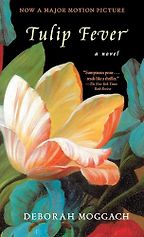
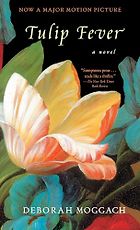
Another great recommendation, thank you. And I think it might bring us to our last book, Deborah Moggach’s Tulip Fever, which brings us to 17th-century Amsterdam.
This book is set around 1630, the time of Vermeer, so we already have a visual idea of this society through the amazing paintings of the time, which are so serene and intimate and domestic. At the centre of this book is a young woman called Sophia who has been married off to a much older merchant called Cornelis. She’s quite glad about that because she comes from a poor family and she will live in comfort.
Cornelis commissions a marriage portrait from a painter called Jan, and when Jan comes to paint this portrait it’s not entirely surprising that he and Sophia begin to have a relationship.
This is all set against the backdrop of Tulip Fever, a period in the history of Amsterdam when people became utterly obsessed with tulips. It was like the South Sea bubble, or the modern dotcom bubble, even the AI bubble—a moment where everyone piles in to invest, with the promise of making a huge amount of money.
So the novel is about greed and lust, and how Sophia becomes entirely immoral in how she schemes to get out of her marriage and start a life with Jan. What really fascinated me about this book is the viewpoint. Usually, as a novelist, you either choose a very intimate viewpoint, a one-character viewpoint, which makes the book intimate and internal. Or, you choose a much wider viewpoint with many different characters and the opportunity to give a view of the whole city. What is extraordinary is that the writer switches between these approaches in a way which is deft and surprising and highly effective.
She said that the book was written quite quickly, which surprises me. It doesn’t read like that. My god, her instinct for how to put this thing together was absolutely accurate. You really get both: investment in all the characters, but also this overview of Amsterdam at that time.
It’s a dark story about illusion and deception, what you see and don’t see. It’s not a positive view of love, because the relationship between Sophia and Jan is utterly obsessive. She becomes prepared to do awful things to make it work. But it also has that serene Vermeer quality, with a sense of the intimate lives of people in their houses, the feel of the city and its canals. She packs so much into what is actually a relatively slim book. I really wanted to unpick the writing of it, the way she moves back and forwards across time, space, character.
When you are looking for an idea for a novel, do you start with the setting or characters or story?
I don’t really have a rule, but one thing I’m always looking for is moral ambivalence.
What I love in a novel is to finish reading and think: I’m not quite sure what to make of that. I’m not sure what I’m meant to think about these characters. That’s there in Absolution, with Charlene taking babies from an orphanage to give them lives with American women desperate to have children. These moral questions always attract me.
That comes through in the books we’ve discussed. What also comes through is the sense of people making calculations, figuring out what makes sense for them in the moment. I suppose that’s something universal to all of us, whatever period we live in.
That’s right. And so often we are not considering the bigger picture. Looking back, we might think: Were they not aware of this, or that? But there is so much we just aren’t thinking about, or don’t know about, even today with the internet. We make the decisions that are good for us in the moment, we get through the day, we survive.
Alice will be appearing in conversation with Heather Morris at the OzLit Festival at Foyles, Charing Cross on 18 October, 2026. Tickets are available here.
Five Books aims to keep its book recommendations and interviews up to date. If you are the interviewee and would like to update your choice of books (or even just what you say about them) please email us at [email protected]
Five Books interviews are expensive to produce. If you've enjoyed this interview, please support us by donating a small amount.
Alice Jolly
Alice Jolly is a novelist and playwright. Her writing has won the PEN/Ackerley Prize, an O. Henry Prize and the V. S. Pritchett Memorial Prize, and been longlisted for the Ondaatje and Rathbones Folio Prizes. She also currently teaches on the Creative Writing master’s programme at the University of Oxford.
Alice Jolly is a novelist and playwright. Her writing has won the PEN/Ackerley Prize, an O. Henry Prize and the V. S. Pritchett Memorial Prize, and been longlisted for the Ondaatje and Rathbones Folio Prizes. She also currently teaches on the Creative Writing master’s programme at the University of Oxford.