We asked Tiago Russo and Katia Martins—founders of Craft Design, a studio that is compiling a library that aspires to be the authoritative reference collection of design books—to talk us through five essential texts on product design, from the democratic vision of Charles and Ray Eames to Japanese studio Nendo's playful wit.
Katia Martins: It’s the materialization of ideas and concepts through extensive research and experimentation. It’s palpable creativeness that bridges several different areas in an important dialog, understanding different needs, feelings, people, perspectives—all in order to achieve the best practical and aesthetic outcome possible. For me personally, the bridging aspect of product design is one of the most important.
Tiago Russo: I would add that one of the things that really differentiates product design from graphic design or digital product design is the understanding of materials—not just knowing what materials are going to do to a product or how they behave, but actually how they create that relation with the user, the bridge between ideas and people. How a certain material, or certain dimensions, can make a user experience better, more optimized, more efficient or simply more rewarding. The real translation from raw matter into usability—that’s the core of what we do
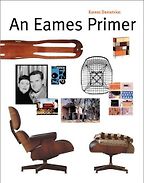
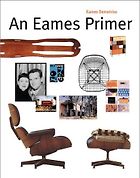
That bridging quality you mention, Katia, brings us nicely to our first book. Let’s talk about Charles and Ray Eames, who were exceptional bridge builders.
Katia: They’re the perfect example of what product design is. Charles and Ray Eames were an amazing duo, and the embodiment of product design.
Tiago: They also worked in a range of disciplines that cross over from pure design into other domains. What we commonly understand as core product design—retail product or furniture–was something they excelled at. They took their vision though into many different areas, from performative arts to photography and film, always going back to their know-how with materials and spatial relations, and applying all that expertise to their development and design process. Encompassing so many different areas and fields, their studio ended up developing great, humanitarian design—that’s the prime example we have through the ages of exemplary product design.
Katia: The Eameses even took design into education—that’s a massive step. Their relationship with IBM, for example, involved educating the public about the power of computing, and was a major watershed not only in design history but in the IT revolution. That’s the first connection I believe where you have informatics and design coming together in real symbiosis.
It’s notable that it’s written by their grandson. Do you think about the evolution of design over generations? A kind of aesthetic understanding that gets transferred from one generation to the next?
Tiago: For me that’s an essential appeal of this ‘primer’, more family journal than academic text or even coffee table book, and rich with anecdotes that aren’t typically in the realm of design history. This more personal sphere gives us tremendous insight into how both designers worked, individually and as a couple. Their practice is relayed to us by a member of the family, who has lived that experience, that vision, personally. That is also something that for the two of us as a duo is very relatable.
Let’s talk about the second book in your selection, Kaj Franck: Universal Forms.
Katia: Kaj Franck was a champion of anonymity. He believed designer names should be reserved only for unique art pieces, not functional objects made for the everyday. Yet his utilitarian forms became so iconic they denied him the very anonymity he sought!
How relevant is that stance today, in our era of design celebrity and maker identities?
Tiago: That’s an interesting question. I think it’s a discourse that we as designers have to have with ourselves. Today we live in this environment where we’re obviously battling with—as designers, as creative people, as artisans—this clash between commercial viability, being known, and at the same time the principle of what we are designing. Is it something that needs your name attached to it, or is it something that just needs to be good design?
In today’s day and age, there’s a belief that if you don’t market yourself, you don’t market your designs—it’s just going to be swallowed up, disappear in the mass of undifferentiated products. At the same time, Franck stood for something beautiful, the idea that design, when it’s actually effective or dare I say ‘good’, when it’s thoughtful design, it will outlast trends. It will outlast brands. It will simply exist as something that conveys utility and beauty.
“Encompassing so many different disciplines, Charles and Ray Eames ended up developing great, humanitarian design”
Katia: There’s a human need to create something that will outlast us. Something that will transcend. We all want that, ultimately. And I think Kaj Franck achieved that with his work. We need to be careful about over-branding ourselves, with the design being too brand-centric. At the end of the day, if it’s thoughtful design, if we create objects with meaning, whether or not they carry your name becomes irrelevant. The object will speak for itself. Ironically, in promoting ourselves, we try to make ourselves invisible as designers.
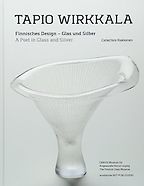
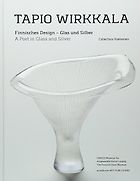
Let’s talk about another Scandinavian and your third book selection. The book’s subtitle calls Wirkkala “a poet in glass and silver”—suggesting his relationship with materials was almost literary.
Katia: Scandinavian designers have this amazing capability of extracting from their context, from their landscape, from their heritage, something that is truly unique. They are not alone of course, but I think they are a prime example of doing this well. Tapio Wirkkala had a poetic approach to materials that you can see in every single piece he created. It communicates a particularly Nordic sensibility.
Tiago: The poetry comes from the sense of place, but especially from expertise, from the deep knowledge of the materials. When you know your materials so well, worked with them for so long, you can start playing with them in ways that transcend the technical. The work becomes expressive. It becomes poetic. That’s what I see in Wirkkala’s work—this deep understanding of glass, of silver, of other materials that allows him to do things that seem effortless but are incredibly complex.
How does Portuguese landscape or visual tradition inform contemporary design?
Katia: I think there’s definitely a recognizable Portuguese formal language emerging. We have this tradition of ceramics, of textiles, of tilework. And I think contemporary designers are finding ways to reference that heritage without simply copying it. There’s a dialogue happening between tradition and innovation.
Tiago: The materials we have here—the stone, the cork, the ceramics—they carry centuries of knowledge. Contemporary designers who engage with those materials seriously, who understand their properties and their cultural resonance, they’re creating work that feels both rooted and contemporary. That’s the sweet spot.
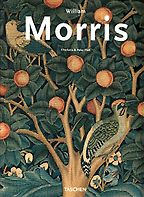
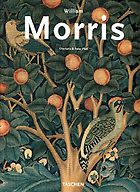
We’ve featured William Morris and a discussion of the Arts & Crafts movement on Five Books previously. Morris insisted that designers have moral responsibility for the quality and social impact of what they produce. How relevant is that stance today?
Katia: For me this is fundamental. Everyone who calls themselves a designer should have this sense of responsibility—to know that they have an impact on our shared reality, and they need to be mindful of that. It shouldn’t be the responsibility of a ‘sustainability consultant’ or an ‘eco-designer.’ This is every designer’s responsibility. We create things that all of us live with. If you call yourself a designer, you should have that responsibility embedded in your methodology.
Tiago: I completely agree. We’re in a moment where we can’t afford not to think about the impact of what we’re creating. Whether it’s environmental, social, cultural impact—these aren’t optional considerations anymore, if they ever were. They’re fundamental to good design.
We’re in a moment where automation and AI are becoming ever more prevalent, yet craft persists. What’s your take on new technologies and design?
Tiago: There are more tools available to us designers in every trade, with the advent of new digital technologies and AI and automation. But because it’s so easy to get concepts and ideas out these days—you can input a few simple prompts and design blurbs manifest automatically—technology is easily overused, and you’re obscuring, even killing the humanity behind the process itself. We need to remember that we are humans, designing for humans.
Even for industrial or corporate design to thrive, it needs to be creative. The more industrialized, the more mass-produced an object is, the more likely there will be a mass of competitors already doing the same thing. Brands are commercial entities. They need that spark of creativity to make their products different. By relying too much on automated tools—which take as their point of departure what is available to the algorithm, so by definition what has already been produced–what you end up with is a compilation of other people’s ideas. It’s false creativeness.
“It’s our role as designers to be curious by nature”
For design to thrive, for a product to be truly unique, to make a lasting impact–and above all for it to be functional in the real world–you still need to go analog and actually do your own research, your own exercise, your own creative processing. Otherwise you’re just adding more of the same. That’s not what I would consider improving the world through design.
Katia: We’re human. We have guts, we have senses, we have feelings that AI doesn’t have and won’t have. It may have a replica of that, but it won’t have the natural sense of these things. I’m not scared of AI. I’m sometimes scared of the people behind AI, because those are the people that will have the guts, the senses, the feelings to make it a force for bad or for good.
William Morris wouldn’t think that AI is a bad thing per se. He would say everything needs balance. He didn’t deny industry—he embraced it in an organic way. Morris felt that industry could be improved, so as to put it truly at the service of society. We need to be able now as designers to incorporate AI in an organic and humane way into our practice. If so, it could be a tremendous tool for improvement. I’m hopeful, but skeptical as well.
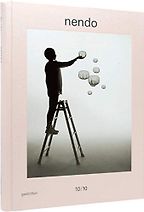
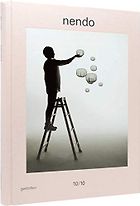
Finally, let’s talk about playfulness. Studio Nendo is led by designer Oki Sato. The book has this amazing structure—ten chapters, each exploring one design principle. But what really strikes me is the sense of design as playfulness.
Tiago: It’s our role as designers to be curious by nature. We need to be in constant search of different ways of expressing ourselves through our products, creating expressions that will be valid for users. Users’ tastes, like fashion, are in constant flux. Materials are in constant flux. Our role should be constant evolution, constantly adapting to everyone’s needs.
If you stop being curious, if you start saying, ‘I know how to make these chairs really well, I’ll just do them in different colors’—whether it’s chairs, phones, computers, whatever—if you keep going back to the same recipe over and over, you’re losing that curiosity. Without an overarching sense of curiosity about the way things work, it’s hard to commit to exploring, being different, allowing for natural evolution. To my mind that’s a sure road to becoming obsolete and irrelevant.
“Playfulness can bridge ages, and bridge artistry with technical knowledge”
The curiosity evident in Nendo’s work is in how this studio combines materials that have been used before in separate contexts. Take the transparent chair, a wooden chair which appears to be floating in mid air as the legs seem to disappear as they reach the floor. Nendo used wood craftsmanship following a Japanese tradition. In addition, though, the studio used resin and epoxy, a material that’s been in use since the seventies, in a really startling way, juxtaposing the organic with the inorganic, the apparently immaterial. It’s the combination of the two elements in a way that’s very subtle, and clever. We can’t help asking ourselves, how is possible? A floating chair? It creates curiosity from the user’s perspective. We do a double take, sit on it and question our own surroundings, even our own senses as we interact with this otherwise mundane object. That curiosity as designers keeps you relevant and generates curiosity in your users. Curiosity in turn generates delight.
Katia: As designers, we are trained to look at everything with analytic eyes. We’ll go for a walk and look for little somethings everywhere—the way a car door closes, the undulation in the pavement, a doorknob, something someone’s wearing. You get curious and start thinking, how can I carry that form or idea into something else, into another concept, another design?
It may be a playful moment. I can easily imagine a child saying, ‘I want to eat my dinner from a flying chair.’ Why should we stop at a chair that appears to float, when we can imagine one that flies? The designer (in this case maybe a mother or father as well) finds themselves wondering, How can I make this happen?’ These little moments carry joy and playfulness into the design process. The source material is inexhaustible. Design can make dreams come true!
Of course some of the simplest and cutest ideas may be some of the most difficult to produce—getting resin to work with wood in a way that is stable and functional and attractive, this is no easy task! There are many inherent challenges here. Did it pay off? Maybe you have a happy child eating dinner in a flying chair. Equally, you may also have an adult who’s mesmerised by this vision. Playfulness can bridge ages, and bridge artistry with technical knowledge. Design can bridge two seemingly incompatible materials. There are so many dialogues going on in one seemingly simple product.
The book organizes Nendo’s work around these systematic design principles—outline, error, process, multiply, link, conceal, skin, balance, magnify, fold. How do you think about problem-solving, and does your studio Craft Design employ a specific process?
Katia: As designers we need to have a process. Some of the designers in these books had the freedom to really explore and play with materials to an extent that was new in their day. We don’t always have that same freedom now—there are restrictions around sustainability, codes around production. Designers have to accept these challenges, and incorporate them into their process. We really want to become the next generation exploring materials, perhaps the same materials as these examples, only in different combinations, with different tools. This material intelligence is critical for us to step up as designers and create something lasting.
Tiago: Just like Nendo combining materials that were well known—woodworking with new perspectives—other designers have taken a similar approach. Shiro Kuramata is another example of transparent expressions in furniture. We may not be discovering new materials, but applying new expressions to materials that are already familiar, to make them appear unfamiliar or surprising.
If you go back a century ago, or even to the time of Kaj Franck or Tapio Wirkkala, there were materials being discovered or invented, and alongside this the machinery to utilize them was being developed. Glass has existed since at least Roman times, but it was the novelty of being machined by these Scandinavian designers that created a completely new language in glassware.
And here is the challenge for designers—to explore how we can get new expressions out of materials we already know. In the twenty first century, what is the likelihood that we will discover new raw materials? Everything has been drilled and dug up. But how do existing materials come together? And how could they come together? That’s where the creativity lies.
Five Books aims to keep its book recommendations and interviews up to date. If you are the interviewee and would like to update your choice of books (or even just what you say about them) please email us at [email protected]
Five Books interviews are expensive to produce. If you've enjoyed this interview, please support us by donating a small amount.
Katia Martins
Katia Martins is Co-Founder and Design Director of Craft Design. Her work balances technical mastery with emotional sensitivity and material intelligence, fusing innovation with intuition. Her portfolio includes collaborations with The Craft Irish Whiskey Co., LSA International, and Trick, her co-founded brand, where the Domino Tealight Holders became an international bestseller. Katia has been honored with numerous global accolades, including two Red Dot Awards, the iF Design Award, and recognition from the Women in Business Awards. She leads creative development and product innovation at Craft Design.
Tiago Russo
Tiago Russo is Founder and Creative Director of Craft Design, a studio dedicated to shaping products and experiences that redefine modern luxury. A multidisciplinary designer recognized internationally for his work in luxury product and sensorial storytelling, Tiago's career includes collaborations with The Macallan, Coty, and other global brands. His work has earned more than 130 international design awards, including recognition from iF, Red Dot, A' Design, Pentawards, and MUSE. His philosophy centers on design as a language that connects people to meaning and memory.
Katia Martins is Co-Founder and Design Director of Craft Design. Her work balances technical mastery with emotional sensitivity and material intelligence, fusing innovation with intuition. Her portfolio includes collaborations with The Craft Irish Whiskey Co., LSA International, and Trick, her co-founded brand, where the Domino Tealight Holders became an international bestseller. Katia has been honored with numerous global accolades, including two Red Dot Awards, the iF Design Award, and recognition from the Women in Business Awards. She leads creative development and product innovation at Craft Design.
Tiago Russo
Tiago Russo is Founder and Creative Director of Craft Design, a studio dedicated to shaping products and experiences that redefine modern luxury. A multidisciplinary designer recognized internationally for his work in luxury product and sensorial storytelling, Tiago's career includes collaborations with The Macallan, Coty, and other global brands. His work has earned more than 130 international design awards, including recognition from iF, Red Dot, A' Design, Pentawards, and MUSE. His philosophy centers on design as a language that connects people to meaning and memory.