The economic challenges we face today aren't the result of temporary shocks but structural changes that we need to grapple with, argues Jason Furman, a professor at Harvard and formerly the chief economic adviser to Barack Obama. He recommends five books to get us started—including the future of the dollar, China’s growth model, falling fertility, household financial fragility, and the enduring insights of Adam Smith.
Starting big picture, what concerns directed your economics reading this year?
My five books each grapple with limits—limits of growth, limits of institutions, limits of systems we once thought were stable. Whether it’s the dollar’s dominance, China’s growth model, falling fertility, household finances, or even Adam Smith, each book is addressing the question of how societies adapt when the assumptions they were built on start to fray.
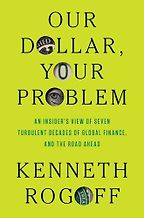
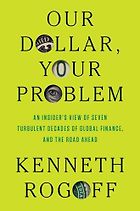
Let’s start with Our Dollar, Your Problem. Kenneth Rogoff has distinguished himself in the realms of academic economics and real-world crisis management—at the IMF, in policymaking circles, and at Harvard. But there’s no shortage of books on the global economy. So, what made this one stand out for you?
Ken Rogoff—full disclosure, he’s my colleague—has been at the forefront of international macroeconomic research and policymaking for more than forty years. He’s written on debt, financial crises, exchange rates, capital flows—pretty much every major topic you could name in international macro.
This book manages to pull all of that together in a way that’s genuinely readable and engaging, helped along by anecdotes from his own policymaking experience that both clarify the arguments and make them feel concrete and accessible to a much broader audience. There’s a clear throughline about how U.S. monetary and fiscal choices shape the global system, and how that system, in turn, constrains the United States.
The explicit narrative is a warning. Rogoff argues that the era in which the dollar enjoyed unquestioned dominance alongside broad global stability may be fading, and that erosion could bring more frequent or severe crises—sovereign debt problems, inflationary episodes, and financial instability.
But running alongside that is a quieter, almost contradictory story. The world has learned. Countries have more flexible exchange rates, larger reserves, less foreign-currency borrowing, and stronger monetary institutions than they did a generation ago. We also have new tools, like central bank swap lines, that didn’t exist in earlier crises. The fact that shocks like COVID did not trigger the kind of cascading emerging-market crises we saw in the 1980s or 1990s is not an accident. It reflects institutional learning.
The book is most interesting where these two stories collide. Overall, the book is balanced and nuanced.
As enthusiastic as you are about the book, were there places where you found yourself wanting to explore trade-offs in more depth?
I like the U.S. dollar as the global reserve currency as much as the next person. But I am not sure the advantages are quite as large as Rogoff claims. Some of the borrowing advantages the United States gets from it have diminished substantially over time. Moreover, I wanted to see more engagement with the counterargument that a strong dollar affects the U.S. economic structure, including manufacturing.
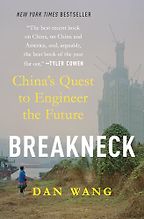
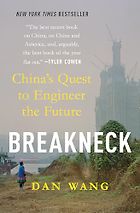
Your next book turns to China. Breakneck is written by Dan Wang, a technology analyst who has spent years studying Chinese industry and state capacity. What is the core idea of this book, and why did you find it useful?
It’s powerful because it’s simple without being simplistic and, like Rogoff’s book, is interspersed with engaging personal stories that deepen the substantive argument. Dan Wang’s claim is that China is largely governed by engineers and the United States by lawyers, and that this difference shapes everything from infrastructure to innovation to risk tolerance. Once you adopt that lens, a lot of observed differences suddenly make sense. Engineers tend to optimize for building and execution; lawyers optimize for process, rights, and constraint. Wang is careful not to turn this into a morality play. An engineering mindset can deliver breathtaking speed and scale, but it can also be ruthless when individuals or rights get in the way. That tradeoff—capacity versus constraint—is one of the most illuminating ways to compare political systems.
According to Wang, engineering works well for building big stuff. It doesn’t work well for protecting the rights of people who are in the way of that big stuff. Wang tends to support the engineering approach (but not without reservations) for infrastructure and manufacturing but condemns it (pretty much without reservation) for the one-child policy, zero COVID, and “fortress China.”
Are there moments where that engineering-versus-lawyering framework feels stretched, or where its limits become visible?
At times it does feel a bit too neat. You sometimes wonder whether the deeper distinction is simply authoritarianism versus democracy, with engineers and lawyers acting as proxies. But even when the analogy strains, it remains clarifying. It forces you to ask what a system is trying to maximize and what it is willing to sacrifice. That’s a productive question to ask about both China and the United States, especially in debates about infrastructure, regulation, and what people now call an abundance agenda.
Wang hammers away on the value of manufacturing. How persuaded are you by his case? Where did it raise questions for you?
Wang’s admiration for making things is visceral, and I share some of that instinct. But the book doesn’t fully articulate why the United States should manufacture more, or under what conditions. If the implicit model is Shenzhen-style assembly lines with harsh working conditions, that’s not an obvious aspiration. If the argument is about productivity, resilience, national security, or high-quality jobs through automation, then that case needs to be made explicitly.
Relatedly, I am skeptical of the admiration for Chinese ‘completionism’—the idea of being present in every manufacturing sector. Specialization matters, and there’s a real question about whether completionism diverts resources away from higher-productivity uses and ultimately slows improvements in living standards. Despite these differences—or perhaps because of them—I found the book enormously stimulating and well worth engaging with.
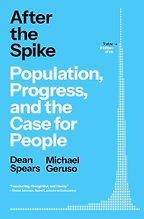
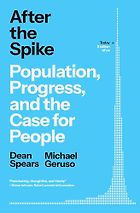
After the Spike is a very different kind of book. Dean Spears and Michael Geruso are development economists, and they’re writing about population rather than markets or states. What first drew you in?
It had the best opening sentence of any nonfiction book I read this year: “In 2012, 146 million children were born. That was more than in any prior year. It was also more than in any year since. Millions fewer will be born this year. The year 2012 may well turn out to be the year in which the most humans were ever born—ever as in ever for as long as humanity exists.” Such a simple and obvious fact but I had not known it before. I had to keep reading.
For most of modern history, population growth was a background constant; now we may be entering an era of sustained population decline. Spears and Geruso use that fact to motivate a careful examination of why fertility is falling so broadly, why it has proven so hard to reverse, and why this matters for economic growth, fiscal sustainability, and social vitality.
The central concern of the book is the ‘spike’ of population growth that has defined the past century—and the steep, possibly irreversible decline in birth rates now unfolding around the world. Spears and Geruso explain why this shift is happening, what the consequences are likely to be, and what might be done to stabilize global population levels. They make the case not only for why the trend matters, but also why we should want more people in the future, not fewer.
There was a time when the world feared having too many people; now these authors seem worried about having too few. Why has the demographic panic flipped, and what assumptions are smuggled in with that change?
One of the striking intellectual reversals over the past fifty years has been the shift from fears of overpopulation to concerns about underpopulation. Importantly, both perspectives can be valid: a fertility rate of 7 is clearly too high, but a rate of 1 may well be too low. The surprising reality is how rapid, widespread, and so far unreversed the fertility decline has been—posing significant challenges for economic growth, fiscal stability, and societal dynamism. Meanwhile, many of the dire Malthusian predictions from the 1970s have proven deeply misguided, if not outright false.
A substantial part of the book is devoted to rebutting popular arguments against population growth, some of which echo 1970s-era anxieties—such as the belief that more people inevitably mean more climate harm. Spears and Geruso challenge these ideas with empirical evidence and logical clarity. They also advance affirmative arguments for larger populations, ranging from economic benefits tied to innovation and productivity to moral claims about the value of human life and flourishing.
The default equation—more people, more planetary damage—feels almost axiomatic. Spears and Geruso unsettle it with empirical evidence and a moral argument for human flourishing at scale. Once that assumption is overturned, what replaces it? Do they sketch a solution or leave us with a harder set of questions?
The book concludes with a candid discussion of the limitations of current policies and the need for more ambitious thinking. While it doesn’t offer a single ‘solution’ to the population decline, After the Spike succeeds in what is arguably more important at this stage: raising awareness, reframing the conversation, and laying the intellectual groundwork for collective action. Problems of this scale are rarely solved quickly—but they are never solved at all unless people begin thinking and talking seriously about them. This book is a vital contribution to that process.
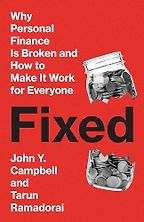
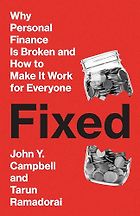
Your next choice narrows the lens from the big picture to household finance. Fixed is written by John Campbell, a financial economist, and Tarun Ramadorai, who works on global finance and inequality. Why this book now?
Problems with personal finance used to be a big part of the public policy debate but have faded in recent years. That is not because they have been solved, but because people forgot the financial crisis and moved on to other topics. Returning to this topic feels like a blast from the past. But it also is exciting and refreshing to see it addressed with such originality and cutting-edge research.
At its core, the book is about the persistent fragility of household finances and why market forces alone don’t fix it. Drawing on evidence from the United States, the United Kingdom, and India, John Campbell (another colleague of mine) and Tarun Ramadorai show that financial illiteracy is widespread and remarkably persistent. This wouldn’t be quite so troubling if financial markets were forgiving, but they aren’t. Instead, complexity, hidden fees, and product design often exploit consumer weaknesses rather than accommodate them.
I should say I’ve read a lot about this topic, but was still shocked at some of the questions people often get wrong, including: if you earn 2% interest on $100 over five years, how much do you end up with? The correct answer was “More than $102”—it didn’t even require understanding compounding.
These errors do not simply reflect lack of education but are undergirded by behavioral biases in thinking about the future; the lack of reinforcement learning when financial decisions have consequences decades later; and the social fact that people talk about personal finance even less than sex (the authors’ observation, not mine!). Companies, of course, don’t suffer from these issues, and their complex, opaque products—with bundling, hidden fees, and other traps—are often designed to exploit them.
The book seems skeptical of financial literacy campaigns and behavioral nudges. Is the problem that these tools underestimate how human psychology collides with sophisticated, profit-maximizing firms?
The authors make a compelling case that education runs up against structural barriers. People are present-biased, feedback arrives decades later, and personal finance is socially taboo—people talk about it less than sex. Firms, by contrast, face none of these constraints and can systematically design products that take advantage of consumer mistakes. Nudges help in some contexts, but they often suffer from leakage: improving outcomes in one account while worsening them elsewhere. That limits how much we should expect from light-touch interventions.
So, what do the authors propose instead?
They argue for more active regulation, closer in spirit to the original mission of the Consumer Financial Protection Bureau. In some cases, that means moving beyond nudges to what they provocatively call ‘shoves.’ One intriguing idea is a publicly designed, regulated personal-finance starter kit that households could default into—simple, transparent, and hard to exploit. The book feels both very current and like a revival of post–financial-crisis debates about consumer protection that have faded more than they should have.
What do you disagree with in the book?
Nothing.
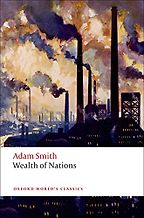
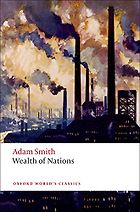
Your final book is The Wealth of Nations by Adam Smith—hardly a new release. Why include it?
Economists the world over are going to be celebrating the semiquincentennial of The Wealth of Nations this year, a book that was published on March 9, 1776. I first read it in college and recently, as we approach this milestone, decided to re-read it and was amazed about how fresh and vivid it felt, as well as how nuanced and humane it is.
In many ways, all of the questions in my other four books came out of The Wealth of Nations which is, justly, credited with launching the field of economics. It asked big questions about the nature of money, why different economies developed in different ways (including the American colonies—not yet the United States—and China), the past and future of population growth, and even a bit of personal finance.
Of course, we have learned an enormous amount since 1776, both through theory, experience, data and techniques that were not available to Smith, like statistical analysis. Economics is not hermeneutics, where economists pore over ancient texts hoping that by understanding them they can discover truths.
That said, Smith does have some bigger picture wisdom that remains relevant up until today, and in some cases expressed in ways that have not been surpassed since.
For a book written in the eighteenth century, The Wealth of Nations sounds uncannily contemporary. What is the central claim Smith gets so right that later thinkers have mostly been elaborating rather than surpassing?
The Wealth of Nations centers people. Wealth is not gold accumulation or national power, it is the living standards of the citizens. The source of that wealth is the people as well, through their work. This work is able to produce more through a division of labor (his famous example is the division of labor in a pin factory). And that division of labor itself can be finer—and thus people more productive and living standards higher—if there is more trade.
The division of labor then gives rise to how all these people are coordinated, the person farming the cotton, making the farming implements, making the thread, sewing the clothing, selling the clothing, making the die, and everything else. Smith’s answer is there is no coordinator but instead an ‘invisible hand’ where a combination of markets, prices and people acting largely in their own interest end up coordinating all of these efforts towards a common purpose.
The Wealth of Nations is seen as a free market bible, with the invisible hand as its central tenet—is that reading a convenient simplification that misses Smith’s deep unease about monopoly, collusion, and moral limits?
There is a lot of subtlety in Smith’s argument. He is very worried about monopolies and collusion between businesses. He discusses the way wages are set by a few businesses colluding on one side of the market, who take advantage of disorganized workers on the other side. He also has a broader and more subtle conception of morality than just the ‘greed is good’ made famous by Gordon Gekko in the film Wall Street.
Perhaps most important, Smith was an empiricist. He was grounded in history and observation. In that way, he set up the paradigm that an additional nearly two-hundred and fifty years of data and observation has brought us all the insights discussed in the other four books and more.
If we’re reading this list a year from now, what do you think will matter most?
What will matter most is whether we’ve recognized that many of today’s problems aren’t temporary shocks but structural shifts. Slower population growth, tighter global constraints, more fragile households, and rising geopolitical tension aren’t going away. The open question for 2025 is whether we respond by clinging to outdated assumptions or by updating our institutions in ways that preserve prosperity, stability, and human flourishing. These books don’t offer easy answers, but they do make clear that pretending nothing has changed is the riskiest option of all.
Five Books aims to keep its book recommendations and interviews up to date. If you are the interviewee and would like to update your choice of books (or even just what you say about them) please email us at [email protected]
Five Books interviews are expensive to produce. If you've enjoyed this interview, please support us by donating a small amount.
Jason Furman
Jason Furman is an American economist. He served as the Chairman of the Council of Economic Advisers under President Barack Obama. A leading voice on fiscal policy, inequality, and labor markets, he frequently contributes to public discourse on economic issues through research, writing, and media appearances. Currently, Furman is a professor at Harvard University's Kennedy School of Government and Harvard College.
Jason Furman is an American economist. He served as the Chairman of the Council of Economic Advisers under President Barack Obama. A leading voice on fiscal policy, inequality, and labor markets, he frequently contributes to public discourse on economic issues through research, writing, and media appearances. Currently, Furman is a professor at Harvard University's Kennedy School of Government and Harvard College.