I live in the UK, so January is inevitably gloomy, with lots of rain and mud. The excitement of having lots of beloved family members around gives way to a routine of dark mornings and cold evenings. Fortunately, January is also the month when the shortlists for the Edgar Awards are announced, my cue to read all the books that are in the running for the best novel award. I am a mystery book addict, but have a tendency to find one author I like and read all their books one after the other. What I like about the Edgars is being encouraged to try a variety, including books I wouldn’t necessarily be drawn to in a bookstore. Here are the seven books that made the shortlist in 2026:
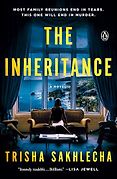
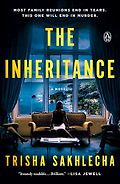
The Inheritance by Trisha Sakhlecha
The Inheritance by Trisha Sakhlecha takes place in a familiar setting for a whodunnit: an isolated island. In this case, it’s off the coast of Scotland, and the protagonists are a rich family from Delhi who have come to celebrate their parents’ wedding anniversary and the retirement of the family patriarch. As other reviews have pointed out, it’s a bit Succession-meets-Agatha Christie, making for a very readable page-turner.
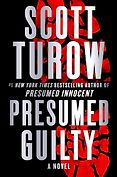
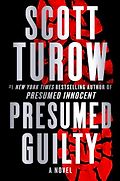
Presumed Guilty by Scott Turow
Presumed Guilty is Scott Turow’s second follow-up to his 1986 bestselling legal thriller, Presumed Innocent (subsequently turned into the brilliant 1990 movie with Harrison Ford, Bonnie Bedelia and Greta Scacchi). In Presumed Guilty, Rusty Sabich, the main protagonist, is in his late 70s after an illustrious career as a prosecutor and a judge. He has also found love again. Unfortunately, his stepson-to-be gets arrested for murder after the death of his girlfriend. Presumed Guilty is a long book (500+ pages) and gets really into the weeds of both Rusty’s life and the ins and outs of criminal procedure.
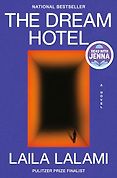
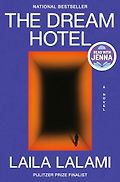
The Dream Hotel by Laila Lalami
The Dream Hotel by Laila Lalami has not only been shortlisted for a 2026 Edgar but was also longlisted for the Women’s Prize for Fiction in 2025, suggesting a literary merit beyond the boundaries of the crime genre. It’s a dystopian vision of a future where tech will predict if you’re going to commit a crime, preventing it from happening in the first place. This is quite a painful read, as you empathise with the unfairness of what the main character has to put up with. It also makes you want to switch off your phone and not give it any more information that might be used against you.
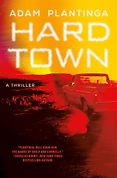
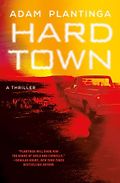
Hard Town by Adam Plantinga
Hard Town by Adam Plantinga is the second book in a series featuring Kurt Argento, an extremely tough ex-cop from Detroit (the first, set in a high security prison, is The Ascent). In Hard Town, he is housesitting for a friend near the Arizona desert, when a plea for help from a woman with a young child sucks him into a mysterious set-up involving ex-soldiers and a brilliant scientist.
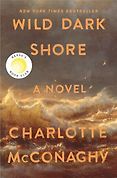
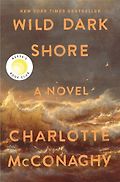
Wild Dark Shore by Charlotte McConaghy
Wild Dark Shore by Charlotte McConaghy is an eco-thriller set on a lonely island filled with penguins, seals and other wildlife in the Southern Ocean, between Australia and Antarctica. A research station is gradually being abandoned due to climate change and only one family remains, taking care of the island until they, too, are evacuated. The novel is suffused with beautiful writing about the natural world.
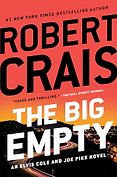
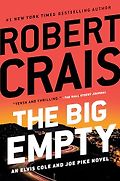
The Big Empty by Robert Crais
The Big Empty by Robert Crais is the 20th book in a series featuring Elvis Cole, a private investigator in Los Angeles, and his partner, Joe Pike. It’s also the third book in the series to be nominated for an Edgar Award for best novel (Freefall was nominated in 1994 and L.A. Requiem in 2000). The main character has a bit of the Philip Marlowe feel about him, though with 21st-century sensibilities. The plot revolves around an influencer who hires Cole to find her father, missing for the past decade.
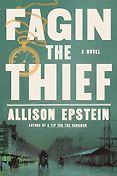
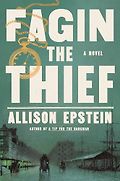
Fagin the Thief by Allison Epstein
Fagin the Thief by Allison Epstein tells the story of the villain of Charles Dickens’s Oliver Twist from his point of view. We follow Fagin as he grows up in the Jewish community in East London and, despite his mother’s best efforts, gradually turns to pickpocketing as the only way of getting by. His father is already dead, but we see his desperate—and unsuccessful—efforts to save his mother after she gets sick, and being ripped off by doctors. We see how he starts taking in street boys more out of altruism and loneliness than anything else. It’s a really sad tale, of the hardships of life in 19th-century London, but also occasionally comradeship and friendship. If you enjoy the setting of Fagin the Thief, you might want to read Moll Flanders (1722) by Daniel Defoe, in its sympathetic portrayal of life as a petty criminal in London, and partly based on a real person.
Five Books aims to keep its book recommendations and interviews up to date. If you are the interviewee and would like to update your choice of books (or even just what you say about them) please email us at [email protected]
Five Books interviews are expensive to produce. If you've enjoyed this interview, please support us by donating a small amount.