The UK’s Orwell Prizes aim to encourage good writing and thinking about politics, with panels of independent judges asked to find winning entries which best meet Orwell’s own ambition to make “political writing into an art.” Below are the books shortlisted for this year’s fiction prize, showcasing the power of storytelling to illuminate political realities.
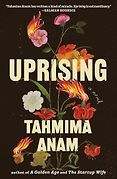
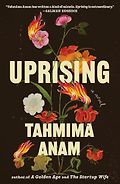
Uprising by Tahmima Anam
“Dark, intense and powerful, this is a heartbreaking story of women and children enslaved on a small island. Uprising presents us with several women’s trajectories as they are abducted or coerced into believing they were escaping poverty, only to become prisoners and sex workers. When a newcomer opens the door for these women and their island-born children, will they find the means to defy the caste system, child abuse and gender hierarchies? Uprising will leave you breathless.”—Olivette Otele, Political Fiction Judge
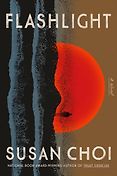
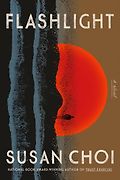
Flashlight by Susan Choi
“Flashlight is the mournful journey of a family across Japan, Korea and the USA, following the disappearance of a father in a coastal town in Japan, as well as a deep reflection on Japanese and American imperial legacies. Susan Choi masterfully demonstrates the impact of trauma and the way we multiply our identities, following several characters through its wide-ranging narrative. The novel is also an uncompromising analysis of difficult family ties, the impact of racial and gender discriminations, as well as the healing power of hope.”—Olivette Otele, Political Fiction Judge
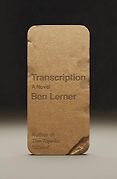
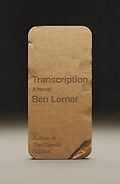
Transcription by Ben Lerner
“Transcription is a slender, masterful novel which tells a vivid and involving story about three people’s relationships with each other at around the time one of them chooses to end his life. As well as being a wry and intimate study of various kinds of love and admiration, it is also a novel about the place of recording and broadcasting technology in all our lives. As states and individuals struggle to respond to the altered, screen-dominated fabric of our world, Transcription articulates some of the central issues of our time with all the subtlety, indirection, and philosophical resonance which is the hallmark of fiction at its best.”—Scarlett Baron, Political Fiction Judge
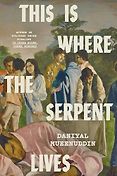
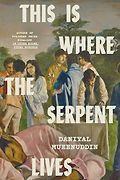
This is Where the Serpent Lives by Daniyal Mueenuddin
“Readers who remember Daniyal Mueenuddin’s debut short-story collection back in 2009 will find their patience rewarded in this, his first novel. Set against the backdrop of Pakistan’s chaotic cities and its still feudal countryside, This is Where the Serpent Lives is a vast family story – evocative and beautifully written – about class, wealth and politics. And it has a suitably Orwellian ending. Hollywood, take note!”—Fiammetta Rocco, Chair of Judges for Political Fiction
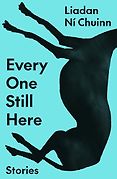
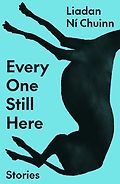
Every One Still Here by Liadan Ní Chuinn
“I was gripped by this collection of stories in which the political past and political present are interwoven to produce an atmosphere charged with grief and meaning. I loved the daring of its wrought metaphors; its taut, pitch-perfect dialogue; its haunting attention to the power of silence and of things left unsaid. I especially admired the ways in which each individual story conjures a highly distinctive but often elusive voice, involving the reader in the attempt to make sense of each character’s personal and familial histories – histories which emerge as subtly political even when they are not outrightly, traumatically so.”—Scarlett Baron, Political Fiction Judge
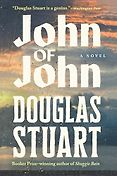
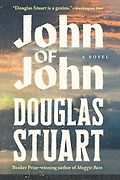
John of John by Douglas Stuart
“Douglas Stuart’s third novel—and, by some way, his best yet—impressed me most in the richness of its sympathy. It’s astonishing how well it treats the high friction between the conservative Presbyterian collective and the repressed gay individual: not just as a one-sided tale of right and wrong, but as a many-sided tragedy, painted with loving attention, in which no one is solely gaoler or victim. Its political and moral intelligence is acute. And Stuart’s prose is constantly gorgeous.”—Cal Revely-Calder, Political Fiction Judge
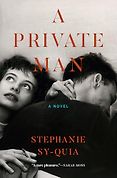
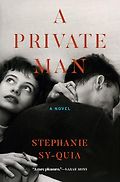
A Private Man by Stephanie Sy-Quia
“A Private Man is about people who, in their quiet, committed way, decide to make a difference. When two human beings are forced to choose between personal integrity and church-led morality, the decisions they make reverberate through their community and down the generations. It may feel like the fight for safe contraception and the right to choose has been won, but in many countries it hasn’t. And even where it has, it could slip away. This is a story to treasure and a book to remember.”—Fiammetta Rocco, Chair of Judges for Political Fiction
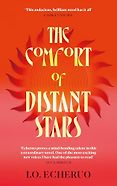
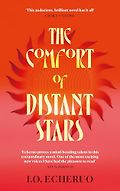
The Comfort of Distant Stars by I.O. Echeruo
“This novel is energetic and stylish and asks a sharp political question: who gets to describe the way you experience the world? It moves between its different modes — scientific, psychological, supernatural or semi-divine — so seamlessly, which in contemporary fiction is rare. I hadn’t read I.O. Echeruo before. His writing has been, for me, the discovery of the process so far.”—Cal Revely-Calder, Political Fiction Judge
Five Books aims to keep its book recommendations and interviews up to date. If you are the interviewee and would like to update your choice of books (or even just what you say about them) please email us at [email protected]
Five Books interviews are expensive to produce. If you've enjoyed this interview, please support us by donating a small amount.