Tell us a little about the Arthur C Clarke prize.
In the early 1980s, Arthur C. Clarke wanted to give something back to the British science fiction community and, after some debate, a juried prize was set up, with the BSFA, Science Fiction Foundation and Science Policy Foundation each supplying two judges and Clarke the prize money. The first winner was The Handmaid’s Tale, which I suspect your readers will have heard of, but it was controversial at the time… About twenty years ago, Clarke stopped funding the award and we set up the Serendip Foundation to run and fund the enterprise. At some point, the Science Policy Foundation had vanished and now the London Sci-Fi Film Festival supplies a judge. The five judges select six science fiction novels published for the first time in Britain for the calendar year and then pick an overall winner from the shortlist. We’re at that stage now.
What strikes you about this year’s list?
It could easily have been a shortlist without any male authors on it — a dozen or so years ago there was an all-male one — so British publishers are getting better at publishing female authors. All the books are very different, although in the judging, there was a certain amount of feeling there were similar novels which weren’t quite as good. E.J. Swift has been nominated before — for The Coral Bones — but the other authors are new. There are some thematic overlaps — the ecosystem, memory, AI and related technologies — but together they show the breadth of contemporary science fiction. I think there’s something you could give to anyone who wants to begin reading science fiction.
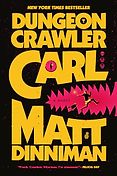
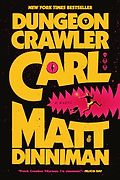
Let’s talk about the first book: Dungeon Crawler Carl, by Matt Dinniman. What’s this about, and why did it catch the judges’ attention?
It sounds crazy to say this about a book in which most of humanity is wiped out, but this one was chosen because it’s fun. The Earth is about to be pillaged of minerals by aliens and humanity is forced to enter an environment which resembles a multi-level computer game. A US Coast Guard, Carl, and his girlfriend’s cat, Donut, begin a quest for survival. It reminds me a bit of Nana Kwame Adjei-Brenyah’s Chain-Gang All-Stars from 2024, with elements of Battle Royale and The Hunger Games. Of course, previous winner Vurt, written by Jeff Noon, has game elements to it.
This book is often filed as ‘LitRPG’ – for anyone unfamiliar, could you tell us about that genre?
The label seems to have been coined in about 2013 for a phenomenon which dates back to at least the 1970s – the RPG is for Role-Playing Games and they’ve long had a crossover with science fiction and fantasy, dating back to Dungeons and Dragons, and there are novelisations of RPGs and novels set in game worlds. Then there are all those Choose Your Own Adventures and the Fighting Fantasy volumes, which were gateway books into fantasy for a lot of readers of my generation. Funnily enough, a small press novel by Kwan Ann Tan, The Waiter, was submitted this year and uses the forking narrative pattern.
‘Lit’ is short for Literature, a notoriously difficult term to define, but in this case, I guess it’s to distinguish it from tabletop, computer, or live action RPGs. The characters have to build up their skills as they fight and explore, rather like Dungeons and Dragons. Dinniman wrote the original as an online serial and then self-published before an American publisher picked it up. If you love it, there are already seven or eight sequels available. There’s been a certain amount of pushback by the more literary-minded of those who follow the award – but it was perhaps the title that produced the most passion among the judges.
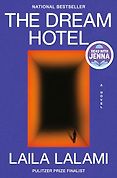
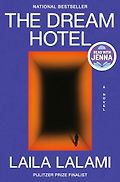
The second nomination is The Dream Hotel, by Laila Lalami. Please introduce us. What makes this one special?
This is a book-length descendant of Philip K. Dick’s “The Minority Report,” where citizens are arrested and punished before they commit a crime. This novel has everyone’s likelihood of committing crimes scored by algorithms and the protagonist, Sara Hussein, is detained because she may become violent. What begins as a relatively short sentence is at risk of being indefinitely lengthened if prison rules are broken. The system is clearly rigged. Meanwhile, the prisoners’ dreams are being recorded for probably nefarious purposes.
It’s an interesting time to be writing about AI. Where does this book fit into the debates and discussions – what does it have to say about AI?
I think this is more about the black box nature of algorithms than AI – I know I’ve had situations myself where my own experience is contradicted by computer records and it’s almost impossible to find a human being to put it right. What evidence is given prominence and who is responsible for any decision taken? It’s a long way from HAL 9000 or Neuromancer. AI is increasingly used to sort job applications and assess benefits, even to write legal arguments, and that is pretty scary. I think it’s a dystopian future where reality has overtaken the vision – immigrants rounded up because they might commit crimes and even countries attacked because they might become a threat. Science fiction has been warning us about this particular Kool-Aid.
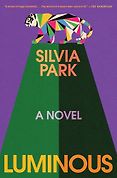
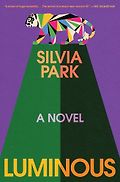
Third is Luminous, by Silvia Park. Tell us a little about this one.
This is more in cyberpunk territory, but it’s a near-future Korea rather than Japan or Hong Kong. North and South Korea have reunited, but there’s still a sense of tension in the country and post-traumatic stress on the part of the war veterans. Mechanical limbs and other parts have been developed for the injured and androids are being sold as companions and replacements for dead people.
This is a debut book, which is always exciting. What strikes you about Park’s voice?
It’s got the density of William Gibson’s Neuromancer, although it’s a very different novel. We have three threads, which inevitably connect up: Ruijie, an augmented child who finds a robot child in a junkyard, Morgan, who is a designer working on a new generation of androids and has a robot lover and Morgan’s brother Jun, a veteran who is working as a cop and looking for a missing robot. It examines trauma, loneliness, chronic illness and trans identities. You do need to pay attention and Park has somehow braided together enough ideas for half a dozen novels.
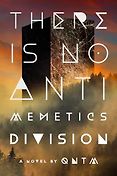
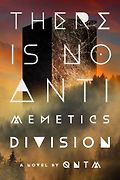
Next, we come to There Is No Antimemetics Division, by qntm. What’s it about, and what earned its spot on the list?
Like Dungeon Crawler Carl, it began as an online text; the book version has apparently been heavily rewritten.
There’s something called antimemetics, which erase memories – if The Dream Hotel was “The Minority Report,” then this is Dick’s “Paycheck.” Marion Wheeler is head of a division dedicated to eliminating antimemetics, but the rest of the division have forgotten who she is or whether there is even such a division. Wheeler is sent on a mission that almost certainly will fail – if only because she won’t be able to remember what it is. Like Luminous, it’s endlessly inventive.
This sounds mind-bending. Is this one going to demand a lot from us as readers?
My advice is to just roll with it – the judges admit it’s bonkers and loved that so much was packed into the pages. Qntm seems to be able to wring endless variations out of the idea of amnesia.
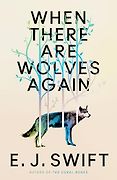
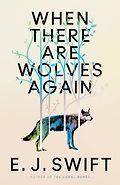
The next finalist is E.J. Swift’s When There Are Wolves Again, which has already won the Best Novel Award from the British Science Fiction Association. Tell us about this one…
I ought to know how often a Clarke winner has also won the BSFA. Let’s see: Greenland’s Take Back Plenty, Russell’s The Sparrow, Priest’s The Separation, Ryman’s Air, Miéville’s The City & The City, Leckie’s Ancillary Justice … a seventh of the time if my maths is right? The BSFA covers more fantasy novels than we do, of course. Details of other nominations and awards do come into our conversations – but the prize is for the book, not the author. Swift was shortlisted for The Coral Bones, but we don’t give someone the prize because they have been shortlisted before. Wolves, like The Coral Bones, is about the climate catastrophe, with two parallel plots rather than three. Lucy is living with her grandmother during the Covid-19 pandemic and becomes an environmentalist and Hester was born on the day of the Chernobyl nuclear explosion and becomes a documentary filmmaker. We follow them over fifty years as the climate worsens.
This is a pretty near-future setting. What are the major changes Swift imagines?
The big one – and half the time I can believe it – is that King Charles leaves the royal estate to the nation for rewilding. He’s long had an interest in ecology. Of course, a lot of people in power don’t approve. We also get a slow cranking up of environmental disaster. If you go back to the fifties, sixties and seventies, you’ll find a lot of environmental post-apocalypses in science fiction, but they tend to be set after the break. Swift carefully takes us through the decades-long process, without going for the special effects version that would be the movie. But it also manages to find room for optimism, which there isn’t a lot of about at the moment.
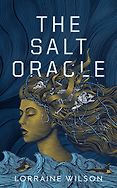
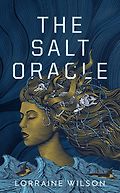
We’ve come to the last contender: The Salt Oracle, by Lorraine Wilson. What’s it about, and why did it stand out?
It’s a parallel to We Are All Ghosts in the Forest, but it stands alone. The internet has crashed and the world is haunted by electronic ghosts. On Bellwether College, which floats on the Baltic Sea, Aula is part of a group of people trying to control a small girl called the Oracle. Auli’s mentor is killed and she has to find out whodunnit, whilst ensuring they can get the information they want from the girl. The judges loved its sense of play and the literary quality of the prose.
It’s unusual to see ghosts on a science fiction short list. This sounds genre-bending…?
We might be in Clarke’s “any sufficiently advanced technology” territory. That seems only appropriate. There are horror and detective elements – but the author also talks about dark academia, which needn’t have any fantastical elements other than about the way universities work… It also reminds me of Le Guin’s “The Ones Who Walk Away from Omelas” – a utopia based on the suffering of a child.
Sounds like a wonderful short list. Is there anything that didn’t make the cut you’d like to give a shout-out to?
I’d probably best avoid mentioning the near misses – titles with similar themes to those shortlisted or books that only one judge loved, but loved a lot. In fact, the word ‘joy’ came up a lot in discussions, although I get the impression that we saw a lot of depressing books as well. Joy stood out. What with climate catastrophe, the international situation and domestic politics, we seem to be living inside an apocalypse. Maybe I can get away with mentioning two, or possibly four titles, as someone who didn’t have a vote?
I was very happy to see Geoff Ryman produce a new novel so quickly after Him. Animals was great, but it probably skews too horror for the Clarkes.
And I’d like everyone to read Solvej Balle’s On the Calculation of Volume, but it’s a novel published in seven volumes, and we could only look at the first three. Is that one place on the shortlist or three? Volume four has now been translated. She started writing it before the film Groundhog Day came out, but it’s got the same premise of someone reliving a single day with no way out. Like qntm, she has the ability to work through seemingly endless permutations of a simple idea – and each volume has a twist that keeps things fresh. It’s great to see translations being submitted to the Clarke Award – science fiction is not just Anglophone and never has been.
I’m not sure that I’d be looking forward to the final judging meeting if we’d let On the Calculation of Volume take three slots. It’ll be tough enough as it is. We don’t do joint winners or honourable mentions or runners-up these days, although there are a couple in our forty-year history.
As it is, I can’t guess which title the judges will pick in the end – the only thing I know is that it will be an author who hasn’t won the Arthur C. Clarke Award before.
Interview by Sylvia Bishop
June 27, 2026. Updated: August 24, 2026
Five Books aims to keep its book recommendations and interviews up to date. If you are the interviewee and would like to update your choice of books (or even just what you say about them) please email us at [email protected]
Five Books interviews are expensive to produce. If you've enjoyed this interview, please support us by donating a small amount.