Tell me a bit about the books you’ve chosen. For fans of spy novels, how was 2025 as a year?
I may sound like a broken record, but it really does need saying: spy readers were spoiled again in 2025. It was a bumper year, particularly for those of us who favour espionage fiction that leans toward realism rather than high-octane theatrics. In fact, narrowing the field down to just five titles proved more challenging than ever; this was easily the most difficult ‘best of the year’ list I’ve had to compile.
To give the selection some shape, I decided to focus on standalone novels rather than series. That inevitably means omitting some excellent books by writers like Mick Herron (Clown Town) D.B. John (Red Star Down), Alex Gerlis (The Second Traitor), and Merle Nygate (The Protocols of Spying), whose latest works are part of an ongoing series and are very much worth readers’ time.
Taken together, the books I’ve chosen reflect my long-standing preference for grounded, plausible espionage. Interestingly, only one of the authors, David McCloskey, is a former spook, sorry, CIA analyst. Another debut novelist, Sam Guthrie, comes from a background in Australian diplomacy and government, and that experience clearly informs his work. The fact that the other novels feel so authentic despite their authors having no direct experience in the clandestine world is a real testament to their craft. I’ve also included a work of non-fiction this year, a book that reads with the pace and tension of a thriller but is rooted firmly in truth. As I often say on Spybrary, ‘spy fact is frequently stranger than spy fiction.’
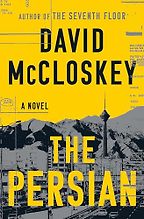
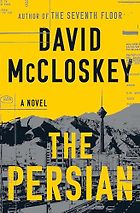
Let’s start with The Persian by David McCloskey, who has been on your list every year so far. This time it’s about Mossad and the Iranian intelligence service, is that right?
Yes! The Persian is a duel between Mossad and Iran’s intelligence and security apparatus, but what McCloskey does particularly well is avoid turning it into a simple good-guys-versus-bad-guys story.
When it comes to my love of spy fiction, my favourite spy novels tend to focus on agent handlers and the relationships with their assets/agents. Gifted authors like McCloskey create a realistic yet tense relationship between two parties, each with different aims, both of whom need each other. In this case, our protagonist is a Persian Jew, a dentist living in Sweden who dreams of giving up his practice and moving to sunny California.
The agent handler, one Arik Glitzman, is a formidable character and as you can read from this description, he is definitely not a desk jockey:
“Glitzman was rather Napoleonic, short and paunchy with a thatch of black hair and a round face bright with a wide smile. There was fun in his eyes and if they had not belonged to a secret servant of the State of Israel, they might have belonged to a magician, or a kindergarten teacher. Nothing in his mouth was really straight; his front teeth, the implants, were blazing white, while the rest were quite stained. I had assumed the implants to be the result of an accident, perhaps a tumble down the stairs, and only later would I learn I was half right: it had been stairs, but he’d been pushed. Also, the stairs had been in Dubai.”
But what is very interesting in The Persian is that the agent also becomes the agent handler and is tasked with recruiting an Iranian target: Roya, the wife of a talented Iranian scientist. At the risk of veering into Spoilertown, I shall say no more.
“In our frenetic preparations, Glitzman had insisted that Roya should experience an ‘abundance of realness’ in our first hours together. My words were critical. They would be an invitation to betray her country under the blissful ignorance that she was actually serving it. But there also had to be cold, hard facts.”
The novel moves fluidly between Israeli operators, Iranian officials, and civilians caught in the middle, and that balance gives it real weight. You feel the paranoia, the moral compromises, and the sheer human cost of intelligence work — not just the tradecraft. It’s tense, often brutal, but also surprisingly reflective. The protagonist is an unusual one in that he is a Stockholm-based Persian Jew who grew up in Sweden. I was fortunate to have lived in Sweden for a few years, so the occasional jab at Swedish society was on point and, to me, very humorous.
Is it based on a true story?
Not a single true story, but it very clearly draws on McCoskey’s real-world intelligence experience. McCloskey has that rare ability to make spy fiction feel operationally plausible — the way recruitment happens, the motivations of the main players, how cover stories are built, the grinding patience behind long operations, and the ethical grey zones everyone in that world inhabits.
The Persian is a novel written by someone who understands not just how espionage works, but how it feels, the waiting, the second-guessing, and the quiet moments where people realise what they’ve traded away to stay in the game. I applaud David for writing a standalone novel rather than the familiar waters of his Artemis Proctor series.
I really enjoyed his first book, Damascus Station, also set in the Middle East. It’s a good region to read and learn more about.
Absolutely. The history, the grievances, the cuisine (David’s exotic food references always make me hungry!) the politics, the layers of identity and loyalty all matter, and The Persian leans into that complexity rather than flattening it.
What I like most is that you come away feeling you’ve learned something not in a didactic way, but through realistic characters and chilling consequences. If you enjoy spy fiction that focuses on the more realistic spy plot and characters with a moderate splash of action, then McCloskey is fast becoming one of the most reliable names to look out for.
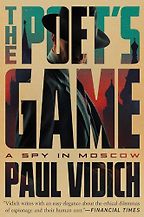
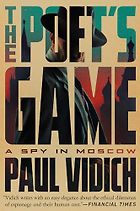
Next up, we have The Poet’s Game by Paul Vidich, which takes us back to Russia. Could you tell readers what this book is about?
On the surface, the setup is classic espionage. A senior CIA source in Moscow claims to have kompromat on the American president and wants out before Russia does what Russia has a habit of doing, nothing pleasant.
He’ll only speak to one man: Alex Matthews, his former CIA handler, long retired from the Agency and now a successful businessman with deep ties to Moscow. Matthews left under challenging circumstances, but he’s still trusted by the people who matter and is trusted enough to be asked for one last favour. But as the blurb says, “Something, though, is off about the whole operation from the start. The Russians seem one step ahead and the CIA suspects there is a traitor in the agency. Alex realises that by getting back into the game, he has risked everything he has worked for in his new marriage, his family’s safety, and his firm.” So the stakes are high.
Vidich is another author you rate highly, I think — he’s been on your list before.
Paul’s literary hero is Graham Greene and stylistically, they are very similar. Despite being American, Vidich writes in what we once called the British style of espionage fiction. However, with the likes of writers such as David McCloskey, Dan Fesperman, I.S. Berry and Michael Idov following suit, I am not sure we can continue to use that term anymore.
Vidich’s real strength is authenticity. The tradecraft feels right. The bureaucracy feels painfully familiar. And most importantly, the characters feel real. Matthews is an excellent protagonist: a former Moscow station chief still affected by the death of his first wife, struggling with a resentful teenage son, and increasingly unsure whether his second marriage is as solid as he hoped. But it’s not just about writing believable characters; Vidich’s novels are rich in atmosphere. In The Poet’s Game, Vidich captures modern Russia superbly. I felt like I was walking down the streets of Moscow.
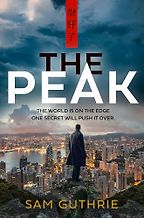
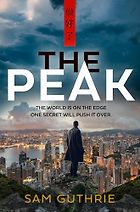
Let’s turn to The Peak by Sam Guthrie, which takes us to China, which—surprisingly—doesn’t tend to feature in that many spy novels. Tell me more.
The Peak, for me, is the standout debut of the year. It’s an Australian political-spy thriller that moves at real pace, but never at the expense of character or credibility. It combines the narrative pull of a first-rate mystery with sharp dialogue, a well-drawn cast and an espionage conspiracy that feels uncomfortably plausible.
Written by former diplomat Sam Guthrie, the novel unfolds over a 24-hour period and is brilliantly told in the first person by Charlie Westcott through his interrogation by the Australian secret service. A political fixer, he finds himself scrambling to protect the reputation of his lifelong friend, government minister Sebastian Adler, who has apparently taken his own life. At the same time, Australia is hit by a severe national security crisis as a coordinated blackout brings parts of Australia to a standstill — and Chinese intelligence begins to move.
As Westcott tries to untangle Adler’s political ambitions, personal relationships, and increasingly dangerous international entanglements, he finds himself up against forces far more powerful than he anticipated. It’s a story about loyalty, reputation, and the uncomfortable realities of how power could operate when the pressure is on.
The Peak moves between Beijing, Hong Kong, and Canberra, tracing events from Sam and Charlie’s childhoods, through the handover of Hong Kong, and into the present day. It works on several levels: a coming-of-age story shaped by a complicated love triangle, a tightly plotted spy thriller, and a genuine race against time.
The book crackles with energy and is very hard to put down. It’s smart, timely, and hugely confident for a debut. I agree with my honourable friend and spy nerd, the political journalist Tim Shipman, who believes The Peak has the makings for an excellent, gripping Netflix thriller. TV execs take note! I must comment on the music tracks that are referenced throughout: Guthrie is clearly a fan of The Smashing Pumpkins and mixtapes. (Search The Peak on Spotify for the accompanying playlist).
Based on recent news headlines, China will prove fertile ground for writers, and I expect we will see many more spy thrillers involving China in the future.
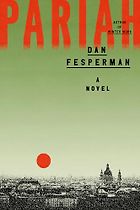
Now we’ve got Pariah by Dan Fesperman. Is this the one to go for if you want a bit of humour?
Pariah is a funny read but the novel is more satire than parody.
In the book, Hal Knight is a disgraced comedian-turned-politician whose career implodes after a #MeToo scandal. Just as his public life appears to be over, the CIA recruits him for an unlikely task: infiltrating the authoritarian regime of a fictional country, Bolrovia, an Eastern European dictatorship whose strongman leader, Nikolai Horvatz, happens to be a huge fan of Hal’s schoolboy humour.
Knight is a strong central character, driven by a search for redemption. Hal’s instincts as a comic, timing, reading a room, and knowing when to lean in or hold back make him unexpectedly effective as an intelligence asset.
At times, the book is genuinely funny, sharply observed, and clever. Fesperman even weaves a Beatles track with its lyrics into a hilarious sequence, but this is not all satire; there’s also something much more menacing and brooding beneath it. Fesperman paints an unsettling picture of a society living under an authoritarian regime, and when the novel turns dark, it really lands. The regime’s security chief and Hal’s minder are both convincingly drawn, adding weight and menace to the story. Unsurprisingly for such a contemporary novel, Russian influence operations feature heavily in the background, and they’re used to good effect.
In a former life, Fesperman covered Eastern Europe as a reporter, and that experience shows in the convincing atmosphere he evokes for his fictional country. I could picture it, smell it and even taste it. Chimney cakes feature heavily in this one; Google them and drool.
Fesperman is a writer who is willing to take risks and try something different. A heads up for fans of spy thriller TV series, Apple TV has commissioned an eight-episode spy series titled Safe Houses based on a 2018 novel written by Dan Fesperman.
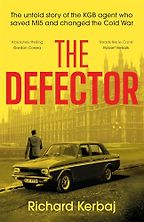
Finally, a nonfiction book — which is exciting, as sometimes these are even more gripping than novels (I’m thinking of The Traitor and the Spy by Ben MacIntyre). Tell me about your last choice, The Defector by Richard Kerbaj.
The Defector is billed as the “untold story of the KGB agent who saved MI5 and changed the Cold War.” The defector in question is Oleg Lyalin, and, if truth be told, I knew very little about him, so I am grateful to Kerbaj for educating me about his impact on Cold War espionage and history.
Lyalin’s defection changed everything. Arrested in London for drunk driving, he defected almost impulsively, revealing that while posing as a Soviet trade representative, he had been running agents and assessing Britain’s vulnerabilities, ports, energy supplies, and infrastructure. MI5 suddenly realised it had been hunting phantoms such as the MI5 director and deputy director, Roger Hollis and Graham Mitchell, while missing the real threat. The response was swift and dramatic: within weeks, Britain launched Operation FOOT and expelled 105 Soviet ‘diplomats’ and their families, dealing the KGB a devastating blow.
What really stands out is the writing. Kerbaj captures the psychology of these figures with a novelist’s touch while staying rigorously factual, turning intelligence history into a gripping read. It’s an important book, and a timely reminder of how easily intelligence services can lose their way when fear and paranoia override judgment.
Through the figure of Lyalin, we gain a deeper understanding of how the Soviets operated in London. You don’t need to be a Cold War expert to appreciate this book either. Kerbaj deserves real credit for laying out the earlier Cold War context in clear, accessible language, setting the scene for what follows. In short, this is emphatically not the kind of dry espionage history that can sometimes put readers off.
Staying with non-fiction, I must give a shout-out to Gordon Corera’s A Spy in the Archive: How One Man Tried to Kill the KGB. The book is about Vasili Mitrokhin, a KGB archivist who defected to the West and smuggled out vast amounts of secret Soviet intelligence files. It’s another stranger than fiction espionage history story!
Interview by Sophie Roell, Editor
December 25, 2025. Updated: March 27, 2026
Five Books aims to keep its book recommendations and interviews up to date. If you are the interviewee and would like to update your choice of books (or even just what you say about them) please email us at [email protected]
Five Books interviews are expensive to produce. If you've enjoyed this interview, please support us by donating a small amount.