

Books by Bronwen Everill

“It is about how, starting in the late 18th century and continuing pretty much up to the present, over and over again, even the best-intentioned Western interveners in Africa have consistently misunderstood the economic systems in whatever bit of Africa they happen to be in. Over and over and over again, they failed to recognize the extent to which these African economies were highly developed and indeed often reflected the kinds of economic principles and policies that economists today expect. But instead of seeing that, Westerners—ranging from those who were trying to abolish the slave trade to those advocating post-war development—kept insisting that Africa was a backward agricultural region that needed to modernize, to industrialize, to integrate, to develop. People in Africa, they insisted, didn’t understand anything about economics, so Africans needed Westerners to explain to them how to organize things. And over and over, these Western ideas were wrong, unhelpful, and frequently had terrible consequences for the African economies that were the objects of Western intervention.” Read more...
The Best Nonfiction Books: The 2025 British Academy Book Prize
Rebecca Earle, Historian
Interviews where books by Bronwen Everill were recommended
-

1
The Burning Earth: An Environmental History of the Last 500 Years
by Sunil Amrith -
2
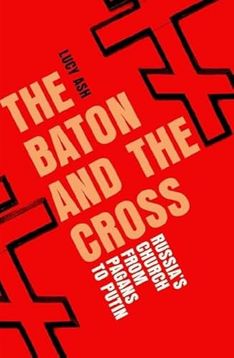
The Baton and the Cross: Russia's Church from Pagans to Putin
by Lucy Ash -
3
The Golden Road
by William Dalrymple -
4
Africonomics: A History of Western Ignorance
by Bronwen Everill -
5
Sick of It: The Global Fight for Women's Health
by Sophie Harman -
6
Sound Tracks: A Musical Detective Story
by Graeme Lawson
The Best Nonfiction Books: The 2025 British Academy Book Prize, recommended by Rebecca Earle



The Best Nonfiction Books: The 2025 British Academy Book Prize, recommended by Rebecca Earle
To be shortlisted for the annual British Academy Book Prize, books have to be both rigorously researched and highly readable. Historian Rebecca Earle, chair of the 2025 judging panel, talks us through the books that made this year’s shortlist, from an environmental history that opens with Genghis Khan and the Mongol expansion to a ‘musical detective story’ that investigates the sounds made by our ancestors down the millennia.
