You’re a professor of social anthropology at Oxford and the author of Age of Security, a new book about the security industry and our obsession with self-protection. When you began working on the book, did you think about what an anthropology book aimed at a general reader should do?
A very good question. Anthropology’s strength has often been in seeing the big issues in the intimate, everyday side of life. That’s also the case in many of the books I’ll be discussing today. Anthropologists start, perhaps, with a small, insignificant detail, then branch out from that to see how it connects to how the world works right now, or the changes we see around us in politics, on a national or international scale. I think that’s what I’ve been trying to convey in my own book: how this idea of security, of being safe and protected, filters down into our daily lives as a kind of anxiety around our children, how we engage the online world, how we buy CCTV or camera doorbells for our houses. All of that links to what is happening at the wider, political level.
Anthropology has a clear role to play in bringing the everyday together with political or systemic realities.
I hope you don’t mind me asking a rather basic question, but how does anthropology interlink with the fields of sociology and psychology?
Well, I’m quite eclectic, myself, I think we need to be in academia. I draw as much inspiration from sociologists as from anthropologists, and I learn a lot from psychologists. In anthropology, we often like to work with how people see the world themselves, the cultural-social world of other people. Many sociologists also work ethnographically, so there’s clear overlap between what we do—that is, following people in their everyday lives. Psychologists, of course, engage with people’s intimate lives on an even more fine-grained scale. So in some ways, we all share methodologies and outlooks, but we all contribute something distinct. In my view, we all get a richer understanding of society, and human sociality, the more we work together.
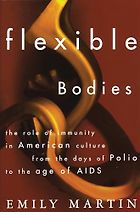
Let’s look at the books you’ve chosen to recommend, starting with Emily Martin’s Flexible Bodies: Tracking Immunity in American Culture from the Days of Polio to the Age of AIDS.
This is a book I read as an undergraduate. For a long time, anthropology has been associated with studying small communities over a long period of time. Emily Martin did something different: she was tracking the idea of flexibility, and the idea that Americans had of the immune system as an organising trope in American culture. She followed this idea through all sorts of sites, from alternative health to scientific labs, activists, corporate trainers, and saw how this idea came back again and again.
She wrote at a particular time, in the mid-1990s, when ideas of flexibility were gaining salience in the economy. Workers should be flexible, take opportunities as they arose. Companies should be flexible, not the monolithic old model of earlier decades. People shouldn’t expect a job for life. That kind of thing.
She saw that as interacting with how we thought about the body, how we related to our own bodies, how we protected them through vaccination, building flexibility, training ourselves as individuals. She took this very beguiling approach to understanding how an idea, flexibility in this case, came to be so important in the organisation of American society and politics.
That created new opportunities, but also new inequalities—what about the people who can’t be flexible? People get left behind. They feel they are not part of this fast-moving, flexible economy that we’ve all been living for the past few decades. Emily Martin was, some years ago, already putting a finger on a central challenge that we continue to live with today.
It seems to me a very difficult thing to do: to recognise ideas that are underpinning how we, ourselves, think. I suppose the currents of thought in the water we swim in.
Yes, the fish don’t think about the water. Certainly, as Emily Martin argued at the time, the idea of flexibility and individual freedom was key to the 1990s and the period that followed the Cold War. Today, I’m arguing that security has become an abiding idea that we see represented in so many areas of life—how we related to our children, how we protect our bodies, how we think about borders, how we think about the nation under threat. These ideas overlap.
I feel indebted to Martin, and those like her, as I follow the idea of security through a range of sites, from Swedish suburbs to the borderlands of migration, conflict zones, and so on.
Can we talk next of the Mary Douglas book Purity and Danger? It was first published in 1966 and it feels like a modern classic.
Yes, it is a modern classic, but interestingly it was quite neglected at the time it came out. It was a period of social upheaval, the 1960s, and she was writing against the grain of her time, as she herself later reflected, in that she was focused on social stability and hierarchy and how we organise society.
You mentioned sociology. She was very much inspired by the sociological tradition, going back to Emile Durkheim, the founder of modern sociology. She came from that structuralist tradition, one could say.
She tried to understand through everyday examples how we deal with things that are polluting, dangerous or dirty. Her classic aphorism is that dirt is simply matter out of place. A pair of shoes standing in the hallway? Fine. Put them on the table? Dirty.
Her idea was that we have to understand the world around us and how we try to put order back into the world. How do we organise away those impurities, pollution, dirt?
It’s a really beguiling book that took years to take off, but has now informed how later generations study issues like insecurity and danger. When we think of migration and borders, for example, you can see borders as a mechanism for keeping something dangerous out of the polity. Often, they are framed in terms of pollution and the breaching of taboos; this is precisely the language Mary Douglas deployed.
She set the tone for how we think about danger, pollution and dirt—how they are socially constructed. And we are at a moment where we see danger pressing in on us from all corners, and feel that quest to purify, to order society again. We should heed her warnings and her analysis of the function of dirt and matter out-of-place in society, and how the chips fall when we start to reorder things.
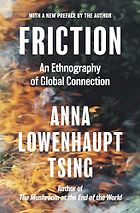
Let’s talk next about Anna Tsing’s Friction: An Ethnography of Global Connection, published in 2004.
Yes, it’s a wonderfully written ethnography of forest logging and environmental destruction in Indonesia, and the industries that sustain it. She spent a long time in rainforests among loggers, villagers, activists and so on, and—like Emily Martin—tries to get the big picture. She travels across sites rather than staying in one single community.
What this shows us is how we might envisage a kind of global ethnography or anthropology of the forces that structure our lives, which we may cooperate with or resist. In Tsing’s case, this was the heyday of globalisation. Everyone was talking about it, and often in the abstract. But Tsing showed that ‘the global’ is not an abstract force—you can see it in particular encounters, in particular places. Migrant labourers arrive in a forest to log it. Corporations come in to talk to village elders, trying to establish a foothold. When activists start speaking back, they sometimes use the language of international organisations to do it. All this is the work of a globalised world, and it is happening in Indonesia at the same time as it is happening in rust belt America or in any mining site anywhere in the world.
Through very evocative prose, she shows us how global forces are there where the rubber hits the road, in that moment of friction between the global and our everyday. Where economic concepts play out and become hard and fast realities. It’s a multifaceted view of globalisation that I think few other anthropological books have achieved.
It’s another inspiration to me. I’m also taking a global object of study in the security industry. I offer encounters from the United States to Sweden to Mali: security politics doesn’t always play out in the same way, but we can see meaningful patterns in how it unfolds across very different countries and places.
I’m familiar with Tsing’s book The Mushroom at the End of the World, which had impact far beyond academic circles.
She clearly has a reach that few anthropologists have today. It’s a curious title, isn’t it? And, like the title, it has a novelistic or poetic tinge that helps to bring the reader into the story of a rare mushroom that is sought by international markets. By tracing this one object, we learn about an unevenly globalising world and the hunt for resources in that world.
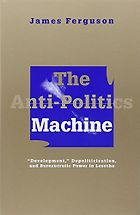
The fourth book that we are going to discuss is James Ferguson’s The Anti-Politics Machine, which was first published in 1990.
Another key inspiration for me. It was certainly a groundbreaking book at the time.
Ferguson is not writing in that novelistic or narrative tradition. But the reading pays off for anyone who wants to understand why policy interventions may fail repeatedly and what they actually achieve in the process. This is a problem that is very much still with us today—for example, with David Keen I wrote Wreckonomics, about the various ‘wars’ on drugs, crime, migration, terror and why these interventions persist despite the disasters they keep generating.
I think James Ferguson has some good answers for us, or pathways to an answer, in The Anti-Politics Machine. He looked at a more benevolent type of operation—development projects in southern Africa, and specifically in Lesotho, a small enclave country entirely enclosed by South Africa.
For a long time, Lesotho had served as a labour pool for the mines in South Africa. A large proportion of the population was migrating across the border for work, but international development agencies were coming in and treating it as some kind of rural hinterland that had to develop its agricultural methods. He’s arguing, well, there’s a reason why this keeps failing; it’s because the map doesn’t match reality. You think the country is something that it is not, it’s actually highly dependent on South Africa and politically subservient, not an isolated backwater beset by problems of its own making.
But this misreading of the country’s situation also strengthens the power of the bureaucrats, the state, and international organisations in all sorts of ways. That was not necessarily the plan from the start, but by the end their development machine gathers a kind of momentum by itself. This book was a real inspiration for many of us who study these big interventions that cost a huge amount of taxpayer money, that often fail, and that keep perpetuating themselves in the form of wars, or development projects, or what-have-you. Who stands to benefit from them? They are very frequently self-serving, even when they don’t work out as planned.
I find this in security as well—these warlike operations with security operatives and the politicians who justify and fund these interventions. They stand to strengthen their position even as the threat they are ostensibly combating is growing stronger. As we saw, for example, in the ‘war on terror.’
Ferguson’s book has real lessons for us in how we understand policymaking and the political world around us. He’s been hugely influential, including in NGOs and in the aid world itself. People have taken his ideas to heart. So there’s also something hopeful in here: that we could dismantle this machine and build something better.
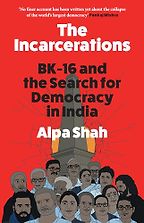
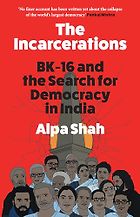
I think that brings us, finally, to Alpa Shah’s The Incarcerations, which came out in 2024.
Yes, this is an example of anthropology in the public domain. Alpa is a colleague of mine here at Oxford, and she has previously written another very impactful book called Nightmarch about Maoist insurgency and resource extraction on indigenous land in India. This book very much follows on from that, and both are equally relevant, I think, to your readership. They are both extremely readable narratives driven by stories of individuals caught up in systems that target those seen to be a threat to the state or polity.
In The Incarcerations, she looks at 16 people who were arrested in connection with the Bhima Koregaon case, in which a Dalit commemoration was seized upon as a national security threat. These activists and intellectuals were then targeted and imprisoned. Alpa goes into their stories in great detail, and how they have been caught in a dragnet that is increasingly worrying and disturbing in its reach. We can see how Alpa’s story of the perils of Indian democracy map onto many other parts of the world where dissent is repressed with cybersecurity or where policing power has been greatly increased.
We can see popular support of these kind of measures as a way—going back to Mary Douglas—of excising that danger from the body politic. Of reordering society. Of removing taboo topics from the public arena.
So Alpa’s book speaks to that security obsession that I argue has taken hold all around the world, and that is now paired with a new set of tools at the disposal of governments and others. She does it with a keen eye for individual stories and what it takes to survive in these conditions. I think it’s a compelling example of how anthropology can speak to wider debates and reach audiences well beyond the discipline.
A theme of all your recommendations is how, no matter how events unfold in a local context, there is some common mode of being or mode of thought that we can all relate to in some sense.
Yes. My book also ends in a call for reviving a more humanist outlook in the face of what is often a very dehumanising system. In migration controls, for example, we see ever harsher deterrence measures. People being effectively bartered across borders. We see it in all sorts of spheres where this security mindset takes hold, from fighting crime to rearmament. Once we face a ‘security threat’, all bets are off. The first step out of this escalation must be to find some common ground for calm and open debate – precisely the kind of thing that our security politics tends to curtail.
All the books I have selected are trying to understand these powerful socio-political systems that surround us in our everyday lives, and how these systems operate, how they constrain and impinge upon our lives. But also, perhaps, how we can fight back or change them for the better.
Is there anything else you want to add?
The Anti-Politics Machine, Flexible Bodies and Friction were all published in that moment of globalisation that unfolded as the Iron Curtain fell. They grappled with those ideas of liberty, flexibility and free markets in powerful ways. But I would argue that we are now at the other end, we are exiting the heyday of globalisation, and in reaction to that world they wrote about we are now seeing the rise again of security and borders as abiding themes: the closing off of channels of trade, of migration. Of framing others as a threat, and of framing connections in the world around us as a source of danger rather than opportunity.
We need to take a step back, both as citizens and scholars, to understand what is happening. The shift has happened so fast and quite stealthily. So we haven’t yet found our bearings. I hope my book contributes to our understanding of how this security obsession—this concern with protecting our borders, nations and ourselves—is a reaction to what we have lived through over the past few decades. Supposedly open globalisation generated all sort of inequalities, discontent and friction. We need a better response than this security juggernaut. But first, we need to understand the beast in order to tame it – how it appeals to us, how we desire its protection and, as Mary Douglas might have noted, how it helps instil a false sense of order in a chaotic world.
Interview by Cal Flyn, Deputy Editor
August 19, 2026. Updated: September 3, 2026
Five Books aims to keep its book recommendations and interviews up to date. If you are the interviewee and would like to update your choice of books (or even just what you say about them) please email us at [email protected]
Five Books interviews are expensive to produce. If you've enjoyed this interview, please support us by donating a small amount.