The country house gathering seems to be a scenario with a lot of potential for mystery books. What do you think the appeal is?
Well, I think it is as much about the period in which country house mysteries tend to be set as the actual setting. We don’t get so many contemporary country house mystery novels. People think of them as set in the 1930s, maybe the Victorian era.
So, if we’re talking the 1930s, then it might be very formal, hierarchical, structured, and everyone very polite to one another—but at the same time stabbing one another in the back, physically and perhaps literally, or sleeping with one another’s wives or stealing from their mother-in-law, or blackmailing their own child. So it’s about the contrast between the bloody murder or terrible crime with the sensibilities and manners of the time.
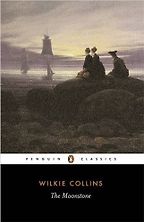
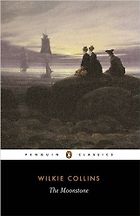
Absolutely, and I can see that reflected in some of your choices here. You’ve gone for some real classics. Can I start off by pointing you to Wilkie Collin’s The Moonstone?
Now, The Moonstone is one of the first proper English murder mysteries. Well, deaths occur, although they are not the central mystery, which is slightly different. But I do think you can lump it into the class of English detective fiction, and although its debatable, The Moonstone has a good claim on being the first of those.
Wilkie Collins was a great 19th-century writer, who came out of the gothic tradition. Everything is quite isolated, there are dangerous characters, there is threat and death and corruption lurking in the background. He’s also interested in social mores. His other great book, The Woman in White, is about the place of women in society, particularly how women could become discarded by their upper-class lovers.
The Moonstone is interesting because it is a classic country house mystery, where this cast of upper-class, slightly wacky, slightly exaggerated characters are all gathered for an 18th birthday. There’s this mysterious, possibly cursed, diamond at the centre—the ‘moonstone’ itself. And not only is it one of the earliest examples of the genre of a single individual trying to work out who committed a crime by tracking down clues and interviewing people, it is also one of the very first to subvert the genre.
Sorry, this will be a spoiler.
Not to worry, it’s been out for many years.
Okay. Well, the extraordinary thing about it is that the detective realises that he committed the crime himself whilst in a laudanum-induced haze. An extraordinary thing! I’m not sure anyone else has done it, actually. Agatha Christie, famously, wrote The Murder of Roger Ackroyd, in which—another spoiler—the narrator was the murderer all along and kept it from you. But in The Moonstone, the narrator discovering that he is a criminal at the end of the book is much stranger. It’s really interesting.
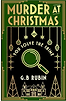
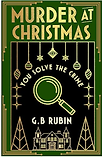
Well, talking about subverting the form, perhaps you should tell our readers about your new book Murder at Christmas. It takes an unusual approach.
Yes, you solve the crime. It’s rather like the old ‘choose your own adventure’ books that a lot of us remember fondly from our youths. They’re the ones where you direct the storyline by turning to page 35 if you examine the cave, or page 112 if you want to chase the mysterious stranger.
I’ve written a number of murder mystery novels, and I thought it would be fun to allow the reader to become the hero of the story for a change. Because, whenever we read books, we really always want to be inside them, as one of the characters. Probably the sleuth, the one who is pointing the finger in the great denouement. So this gives people a chance to do that.
Planning a book like that must be a very different process.
Well, I’m not a great planner. I’m kind of the opposite: I just start down and start writing, and see where it takes me. That sort of works when you are writing something like Murder at Christmas. I’m constantly going back and editing and changing things, instead of meticulously planning in advance as some writers do. That’s much more efficient, I’m sure, but it doesn’t work for me.
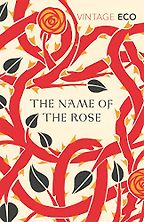
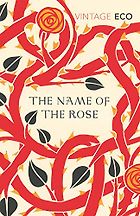
Let’s talk next about Umberto Eco’s The Name of the Rose, which features a very different kind of country house.
It is. I’m pushing the definition. It’s a country monastery, to be more precise, and we are going way back in time to the 14th century. The book is set in a remote Italian abbey up in the mountains, where a series of dreadful, religiously-inspired murders take place.
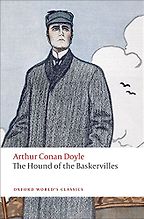
Your detective in this case is William of Baskerville; the name is a reference to ‘The Hound of the Baskervilles.’
This is a very serious novel. It’s quite thrilling, but it has a lot of theoretical and philosophical thought in it. A lot of the book is about medieval church politics. So it’s fascinating. There are arguments about heresies and whether or not Jesus owned the shoes that he wore—which, actually, wars have been fought over, because if Jesus had possessions, the Pope could be a rich man, basically.
Your hero, William of Baskerville, is a brilliantly deductive English monk. He’s a little bit arrogant, a bit pompous. That’s his only failing. He’s a very attractive figure.
It’s a book I’ve read more than any other book in my life. Probably five time? And I’ve seen the film, the TV series, listened to the audiobook… It’s an astonishing work of philosophy and an exciting thriller.
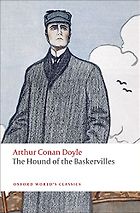
Shall we talk about The Hound of the Baskervilles next, as you’ve mentioned it?
Yes, of course. This is an English country house mystery, although people don’t think of it in those terms. Probably because it’s more brutal. It’s gothic. The house in this case is much more isolated than is typical, up on these lonely moors, and there’s this eerie, deadly spectre….
It contrasts with what we usually think of in country house mysteries, which is ladies in pearls and evening gowns, gentlemen in black time. In this case, it’s a demonic dog pursuing people across the moors. Although, when Lord Baskerville is first murdered, when Holmes is brought in to investigate, he was wearing a dinner jacket and smoking a cigar outside his house. He had dressed for dinner, even though it was just him and his servants and nobody else around for miles. Presumably this is what they really would do—still dress formally for dinner. There’s a sense that you had to adhere to these social customs or society would break down. It’s very amusing.
Yes. Something aspirational in it. I’m not sure why, as I can’t imagine the formality would be terribly enjoyable.
Yes, we see it very much from the outside—the pretty dresses, the nice cars. We forget about the rampant tuberculosis, the people dying in wars…. We generally see the upper class at play. The working class, not so much.
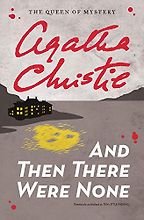
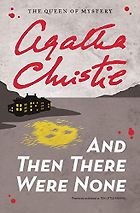
Absolutely. Shall we discuss And Then There Were None next? I suppose I think of this almost as the ur-text in this genre. Would you agree?
That’s interesting, because it’s one of the most brutal. It’s one of the most bleak stories in this genre. Certainly the original. Most people know it from the stage or film adaptations. Christie wrote the stage version, but was asked to give it a bit more of an upbeat ending, which she grumbled about but did. She wasn’t’ very happy with it.
The original ending is just that, well, you know, everybody is dead. Including the ones you really liked. So it is the ultimate in some ways, in that everyone is just wiped out.
I think it’s more shocking than most of Christie’s output. Much more than her Poirots or Miss Marples, or her lighter books like the Tommy and Tuppence series. And it’s regularly voted or considered by the public her best work, which is interesting because her most famous work doesn’t feature either of her two most famous detectives, and just features everyone getting horribly bumped off.
And I suppose it takes to an extreme that aspect of the country house mystery: the sense of being isolated, cut off from the world in some way.
Yes, literally. They are on this remote island, where there is just nobody there apart from two strange, surly servants. It’s a hellish landscape, really. Or to be more precise, like purgatory. They don’t know what’s going on. They don’t know if they are going to live or die, then, one by one, they realise they are all going to be picked off one by one and they can’t get away. They can’t fight back, because they don’t know where the danger is coming from, who is killing them. It’s quite terrifying.
I think the essence of noir or gothic literature is unseen threat. That’s the difference with your basic thriller, like a war thriller. If you know where the danger is, what you’re up again, you can go into battle. Whereas in the gothic, you don’t even know if it’s another human. You just know there’s some threat out there which may or may not kill you soon.
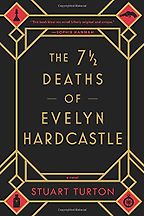
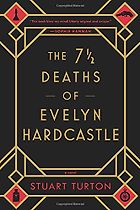
Let me move us on to your final book recommendation, which was one of the most truly entertaining books I’ve read in recent years. This Stuart Turton’s The 7½ Deaths of Evelyn Hardcastle. Would you tell our readers about it?
Again, I’m not sure: is this subverting the genre? Distilling the genre? It’s hard to say, but it certainly does something quite strange with the genre.
For those who haven’t read it, it’s essentially a Poirot-esque murder mystery, but the main character keeps dying and being reborn in the bodies of the other suspects. He has to solve the mystery in order to break the strange time loop in which he finds himself.
It’s imaginative, it plays with the genre and does something new, and it’s been very successful all around the world.
Right. It has that classic country house-party setting. And the reading experience is quite like playing a computer game.
Maybe Stuart was partly inspired by computer games, I don’t know. Maybe it’s been done before, I don’t know. But the way Stuart did it made it very successful.
Well, that’s great. Thank you. It’ll give people some reading ideas for the Christmas break. Will you be reading any country house mysteries yourself over the holidays?
Probably. Do enjoy the mince pies. Watch out for carol singers. And try not to murder anyone.
Interview by Cal Flyn, Deputy Editor
December 8, 2025
Five Books aims to keep its book recommendations and interviews up to date. If you are the interviewee and would like to update your choice of books (or even just what you say about them) please email us at [email protected]
Five Books interviews are expensive to produce. If you've enjoyed this interview, please support us by donating a small amount.