Thank you so much for putting together this list of books by or about Jack Kerouac, the celebrated American author and icon of the Beat Generation. When I think of Kerouac, I think: stream-of-consciousness, rebellion, hitchhiking, drug-taking. What have I missed—or misunderstood?
Sincerity and faith. Joy, vulnerability and sadness. A fatal sensitivity and unresolved dualism—what the poet George Mouratidis called “distinct but nevertheless entwined imperatives—domesticity and ‘kicks’, tradition and progressiveness, nostalgia and possibility—an ambivalence on both a personal as well as broader sociocultural level of significance.” Above all, tenderness.
What’s absent most often when people talk about Kerouac is the writer. Kerouac became an icon in his own lifetime, a man who named a generation, an artist of deep faith commodified to sell fake rebellion and khakis, but he’s somehow been effaced from the making of his own books. (‘That’s not writing’, Truman Capote said, ‘it’s typewriting.’)
That he was a writer who came from the French-Canadian immigrant diaspora had much to do, I believe, with the hostility he faced in his lifetime—he came from and wrote about people at the margins of America—as did his anti-militarism and pacifism at the height of the Cold War. Hence the term Beatnik, a conflation of Beat and Sputnik intended to smear Kerouac, Ginsberg and others as communists.
As American as Whitman and Melville, but also a French-Canadian writer (‘Ti Jean’) who as a child predominantly spoke in French Canadian dialect and whose work, as Ronna C. Johnson has written, is ‘an amalgamation of African-American musical styles with canonical European-derived literary ones’, a pivotal figure positioned between the modern and postmodern, Kerouac was a writer only America could produce, as his friend John Clellon Holmes said, and only America could so wilfully misunderstand.
Interesting. And it’s an interesting selection of books, too. I know Big Sur, of course, but I guess I expected to see On the Road. How did you decide which five books to select?
Well, I guess anyone who has any interest in Kerouac will have read On the Road and maybe The Dharma Bums. I read those books as instructive manuals when I was a kid, and On the Road changed my life like it changed everyone else’s, as Bob Dylan said. But over the years I’ve come to regard the three novels I’ve chosen as his best—with honourable mentions to Dr. Sax and Desolation Angels.
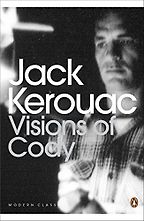
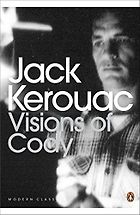
I really believe Visions of Cody is one of the great unread American novels of the twentieth century—and I think I can see its influence on writers like Thomas Pynchon and David Foster Wallace. Ultimately, and from its opening sentence, Visions of Cody is for me just a deeply joyful reading experience. It’s up there with Ford Madox Ford’s Parade’s End as an all-time favourite book.
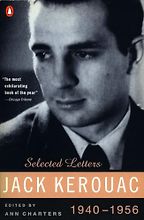
I’ve chosen the first volume of his letters purely for the joy of reading him at the beginning of everything, and because letter writing is maybe a lost art—the urgency, the blaze of his intelligence, the determination to succeed and love of the craft burns off the page.
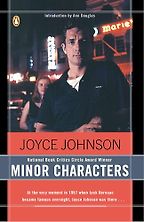
I had the honour of meeting and talking with Joyce Johnson and I believe her account of Kerouac and that period—Minor Characters obviously resonates as an account of the specific struggles of young women artists like Johnson at the time, but it’s also clear eyed, unsentimental, atmospheric and bittersweet with young love, possibility and adventure.
You edited a 2007 edition of the ‘original scroll’—the 37-metre-long typewritten draft of On the Road. The story of that book’s composition forms a key column of the Kerouac legend. Would you say a little about that experience, and whether it altered your understanding of him as a writer?
Kerouac’s immaculate archive is housed in the Berg Collection at the New York Public Library. I have a fascination with the compositional history of novels, their beginnings and false starts, the paths not taken, the breakthroughs, and researching the novel there over twenty years ago was a very happy, blessed experience, a great joy of my life.
Kerouac began writing a book he called On the Road as early as 1948, after finishing his first novel The Town and the City. Over the next two and a half years he began and abandoned multiple prototype versions of the novel, including one written in French. All these false starts sooner or later come to a stop with Kerouac blocked and unable to continue—a period he described as ‘almost three years floundering in ‘hipness’ and dissolution and ambiguity.’
What becomes apparent straightaway then, is that while the impossible romance of the three weeks Kerouac spent writing the ‘first’ version of On the Road in April 1951 continues to dominate the imagination when we think about Jack Kerouac, the novel did not appear out of clear blue air and was not written ‘spontaneously.’ And also that the form of the April 1951 manuscript—sheets of Japanese drawing paper cut and taped to fit his typewriter so that Kerouac didn’t have to keep stopping to fit a new page to the machine—was a solution to a problem, and not something ‘found’ or ‘accidental.’
So for anyone who researches Kerouac the idea that he was just some drunken bum or idiot savant who channelled true life stories onto the page is clearly a bad faith argument and not the true story. He was a deeply serious craftsman. What also became evident to me is that the ‘scroll’ manuscript of On the Road was really the wildflower from which the magical garden of Visions of Cody grew.
Right, yes, because your first book recommendation is Visions of Cody, which I believe he wrote almost immediately after On the Road. Would you tell us more?
Yes, Kerouac’s wrote this experimental masterpiece in 1951 and 1952, very soon after completing the ‘scroll’ version of On the Road in the early summer of 1951.
In the second week of August, 1951, Kerouac was admitted to the Kingsbridge VA hospital in the Bronx for treatment for recurring thrombophlebitis. In hospital, Kerouac read Proust, Melville and Malcolm Lowry, and began a new journal. The Kingsbridge text is where Kerouac makes an explicit commitment to experimental writing. It allows us to date Kerouac’s first use of the technique suggested to him by the painter Ed White that Kerouac called ‘sketching’—”why don’t you just sketch in the streets like a painter but with words,” as Kerouac reports White saying “in a Chinese restaurant on 125th Street”— a technique which leads him away from conventional linear narrative.
The discovery of sketching, as Tim Hunt has written,
freed Kerouac from the need to translate his experience into fictional figures which then had to be manipulated like markers in a board game. It freed him to concentrate on the interplay of perception and imagination, and the way this interplay assumed substance in language.
The journal is also where Kerouac makes the conscious connection between his experiments in form and the work of the new bop jazz musicians—specifically, hearing Lee Konitz’s play ‘I Remember April’ at Birdland in the early hours of October 8th. Konitz’s dazzling improvisation and variations on the tune’s theme and melody, his profound interiority, made Kerouac suddenly realise that Konitz was “doing exactly what I’m doing with a sentence.” Kerouac would call 1951, “the great year of my enlightenment.”
In a May 1952 letter to Ginsberg, he wrote,
I began sketching everything in sight, so that On The Road took its turn from conventional narrative survey of road trips etc. into a big multi-dimensional conscious and subconscious character invocation of Neal in his whirlwinds.
This expanded, multi-dimensional and expanded re-telling of the Road story and friendship with Neal Cassady became Visions of Cody.
Fascinating. What does that look like on the page?
Visions of Cody is a non-linear collage text centred around the figure of Cody Pomeray (a version of his muse and friend Cassady), comprising a sequence of brilliantly realised sketches, linear narrative, taped conversations, fictional representations of those tapes, culminating in a differently-told account of the events that make up the narrative of On the Road.
About 275 pages in, there’s a section called Joan Rawshanks in the Fog, an account of Kerouac watching the Hollywood actress Joan Crawford filming an outdoor scene in San Francisco, that may be the best thing he ever wrote, and stands as the most brilliantly sustained example of the new sketching technique.
Did it find a sympathetic audience?
“Jack’s book arrived and it’s a holy mess,” Allen Ginsberg wrote to Neal Cassady on July 3rd, 1952, after reading Cody in manuscript. He thought it full of “meaningless bullshit” It was “great allright” but Kerouac had done “everything he could to fuck it up.” He thought the book would never be published, and called Kerouac
a fucking spoiled child, he done fuck up his writing money-wise and also writing wise.
That’s very funny.
John Clellon Holmes, in an essay called ‘The Great Rememberer’, recalled his own reading experience of the novel in manuscript and how he had cursed Kerouac for
writing so well in a book which, I was firmly convinced, would never be published… I recall that I cursed him, rather than the publishers, or the critics, or the culture itself that was excluding him. Some years later, I reread Cody with a feeling of amazement at my own confusion that was fully as great as my shame.
Visions of Cody was not published in Kerouac’s lifetime. When it was, in 1972, Allen Ginsberg said that in Cody, Kerouac had achieved the “most sincere and holy writing of our age.”
I was intrigued by the author’s note that begins Visions of Cody, in which Kerouac claims his work to comprise “one vast book like Marcel Proust’s Remembrances of Things Past,” excepting, he adds, that he writes “on the run instead of afterwards in a sick bed.” Do you agree? Are his books all-of-a-piece?
Yes, that’s right. Kerouac’s novels—the Duluoz Legend—are a multi-volume saga of his life and the lives of his friends. And Proust (like Zola and Balzac, arguably) was a big influence.
It’s not accidental that at the end of On the Road, Dean Moriarty makes his final appearance carrying his battered copy of In Search of Lost Time. Like Proust, and as Allen Ginsberg recognised, Kerouac’s mature prose style, encompassed
all the back of the brain imagery. This required sentences which allowed for interruption with dashes, allowed for sentences to break in half, take another direction. It allowed for individual sentences that might not come to their period except after several pages of self-reminiscence, of interruption and the piling on of detail.
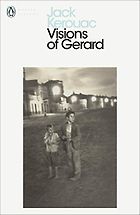
Next, you’ve chosen Visions of Gerard, which was written in 1956 and published in 1963.
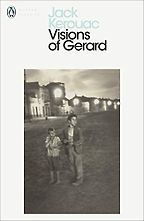
Visions of Gerard is one of three childhood novels in the Duluoz series—four if you count The Town and the City. It’s a remarkable meditation and profoundly tender, mythopoetic account of Kerouac’s older brother Gerard, who died in childhood. Gerard is conceptualised as a Catholic child saint or martyr figure.
Gerard’s death was perhaps the signature event in Kerouac’s life, and his guilt in being the ‘wrong son’ who survived and the psychic and actual debt he felt he owed to his mother, is central to understanding him. Kerouac tells a story of Gerard’s story that he needs to believe.
Kerouac’s Catholic faith was extremely important to him.
God is a very real presence in all of Kerouac’s work, and in his telling the reason the work is done at all. As he writes in Visions of Cody:
I am writing this book because we’re all going to die – In the loneliness of my own life, my father dead, my brother dead, my mother faraway, my sister and my wife far away, nothing here but my own tragic hands that once were guarded by a world, a sweet attention, that now are left to guide and disappear their own way into the common dark of all our deaths, sleeping in me raw bed, alone and stupid: with just this one pride and consolation: my broke heart in the general despair and opened up inwards to the Lord, I made a supplication in this dream.
In his novels of boyhood Dr Sax, Visons of Gerard and Maggie Cassidy, Kerouac’s French Canadian childhood in the mill town of Lowell, Massachusetts in the 1920s and 1930s—the wild overflowing river and dripping woods, the grand houses and redbrick mills and tenement blocks, the cemeteries, the French schools and Stations of the Cross—are all saturated by and mediated through a kind of everyday supernaturalism, one informed by a nexus of Catholicism, American pulp fictions and Kerouac’s adult engagement with Buddhism.
Visions of Gerard always reads to me as a profoundly European text, like something by Gide or Alain-Fournier. I don’t know anything else like it in American literature.
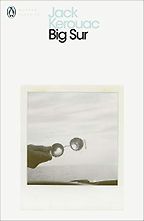
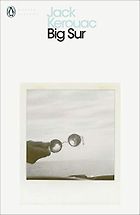
Now we come to Big Sur, which was written after Visions of Gerard, but which was published before, in 1962.
This is the essential post-Road, post-celebrity Kerouac novel, in which his alter ego Jack Duluoz, alcoholic, overwhelmed by success, excess and fame, is caught between drunkenness in San Francisco and a fragile, paranoid sobriety in Lawrence Ferlinghetti’s isolated cabin on the California coast.
Although Kerouac would ultimately die young from complications of cirrhosis.
As early as 1951, in the VA hospital, he wrote in his journal on November 12, 1951:
I’m beginning to see my own tragedy. All I have to do is look in the mirror. Too much drunkenness, it finally eats at the source of your strength + belief, especially if you’re insanely sensitive.
Big Sur is both a deeply upsetting account of a breakdown and remarkable for being written at all. How is Kerouac the artist able to record his own path to destruction with such clarity and preternatural perception?
When it comes, the breakdown devastates. The prose brilliantly and disturbingly represents his elastic, paranoid consciousness, preternatural perception and self-awareness. Michael Polish made a great film from this book—the best film adaptation of Kerouac’s work—with a brilliant Jean-Marc Barr as Kerouac.
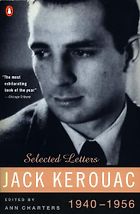
Thank you, I’ll look it out. Your fourth book recommendation is the first volume of Kerouac’s Selected Letters. What do we learn of Kerouac via his correspondence?
The young Kerouac was a superb letter writer, and this first volume is really the record of a young man hopelessly in love with writing: ambitious, interested in everything, his energy is irresistible.
Reading these letters is a heavenly but bittersweet experience. As William Burroughs said, “you feel that he was writing all the time; that writing was the only thing he thought about. He never wanted to do anything else.”
How did his writing style and approach change over time?
He’s a pretty conventional American writer until 1951. It’s critical to understand that Kerouac really only becomes an experimental writer after he’s written On the Road—which is a realist, linear novel with a form borrowed or familiar from Moby Dick and The Great Gatsby.
It’s when he begins writing Cody in autumn of 1951 that he commits to what he called ‘wild form’, ‘deep form.’
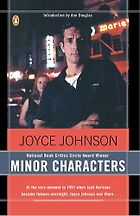
I think that might bring us, finally to Joyce Johnson’s 1983 memoir Minor Characters, a first-hand account of Beat culture. She was witness to the pressures of Kerouac’s sudden fame.
Joyce Johnson’s brilliant, clear eyed, non-romantic memoir of her life with Kerouac is a great corrective to the kind of hero-worshipping I indulged in as a young man reading On the Road. Fondly, she gets in all his vulnerability, shyness, and colossal single mindedness—or selfishness, if you prefer. In this context I should also mention Carolyn Cassady’s equally valuable Off the Road.
The ‘minor characters’ of which Johnson speaks are women. Do you see the Beat writers as misogynistic?
I don’t know how to answer that, if I’m honest, or even if I’m qualified to. From this vantage point, perhaps yes, but maybe we can also say that Kerouac’s attitudes were formed both by the uniform sexism of the time and place he lived in, and by having a mother who did everything for him, and to whom he was impossibly precious as her surviving son.
With Kerouac, as with any artist, there’s also a selfishness that’s tied into the search for self-realisation and self-expression that manifests as something that looks like misogyny. What is clear from his relationships, or non-relationships, with Edie Parker, Joan Haverty, Joyce Johnson, Alene Lee and others, and from his frankly unforgivable behaviour towards his daughter Jan, is that nothing could keep Kerouac from writing. That’s not to excuse him.
What’s interesting to me is that many of the most brilliant Beat scholars are women—Ann Douglas, Ronna C. Johnson, Regina Weinreich, Joyce Johnson and my colleague Penny Vlagopoulos—and these writers are drawn to the radical implications of Kerouac’s work in the context of 1950s Cold War America, notwithstanding any sexism or misogyny they have found in his work.
How do you feel the writing of Kerouac and his peers has aged more generally?
The fundamental issues Kerouac, Ginsberg, Burroughs, Gary Snyder, et al. were dealing with—how to live an authentically self-realised life at a time of militarism, global insecurity, wars, endless consumption and commodification, and how to protect and connect to the living spaceship we’re all travelling on—mean that in part they’ve never seemed more relevant. But if you’ve only read On the Road, then the answer as far as Kerouac is concerned, is probably not well.
But I think we’re still catching up with the Kerouac who wrote Visions of Cody, Dr Sax, Mexico City Blues, Wake Up, Desolation Angels, Book of Sketches. As Tim Hunt wrote in Kerouac’s Crooked Road over 45 years ago: “A postmodern Kerouac? A postcolonial Kerouac? A Kerouac whose life and work might bear on our current concerns with ethnicity and class? These are positions waiting to be constructed.”
Interview by Cal Flyn, Deputy Editor
July 8, 2026
Five Books aims to keep its book recommendations and interviews up to date. If you are the interviewee and would like to update your choice of books (or even just what you say about them) please email us at [email protected]
Five Books interviews are expensive to produce. If you've enjoyed this interview, please support us by donating a small amount.