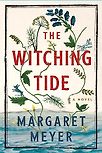
The figure of the witch recurs across cultures and time periods, and remains a source of fascination even today. Here, Margaret Meyer—author of The Witching Tide, an acclaimed historical novel inspired by a notorious English witch hunt—recommends five brilliant fiction books about witches, and explains how the witch serves as a symbol of female power in a patriarchal society.
Novels about witches and witch trials have found large audiences in recent years, with some brilliant new additions to the field—your The Witching Tide among them. Is there something in the ether?
When my book came out in 2023, I think there were at least ten other witch hunt books published in the same year. I used to joke that we, ‘the Coven,’ had made a conscious decision all to publish at the same time.
In actuality, though there was a peak that year, the figure of the witch holds an enduring fascination for a lot of women, and continues to be a figure of fear and repugnance for a lot of men, because she is a symbol of disobedience. The witch represents a certain type of female power, a rejection of patriarchy. There are references to the ‘Witch of Endor’ in the Bible; Saul consults her because he wants to know his destiny, but he doesn’t like what he hears.
So the witch is a figure who stands outside patriarchy, is able to critique it and rebut it in lots of ways, play it at its own game. Dead witches are the most potent, because they are well beyond reach. Yet they are also reviled. Or: so they are reviled. Whichever way you look at it, they are fascinating creatures, a potent symbol of women’s agency. For all these reasons, I think the figure of the witch, together with the historical fact of witch hunts, is never going to go away.
The Salem witch trials of 17th-century Massachusetts have been the focus of popular attention for many years. But, of course, witch hunts and trials are a global phenomenon.
I live in Norfolk, and there is lots of evidence around Norfolk and Suffolk of the East Anglian witch hunt, which took place from 1645 to 1647. It’s a famous witch hunt, the one where Matthew Hopkins set himself up as the self-styled ‘Witchfinder General,’ and, working alongside John Stearne, was responsible for the deaths of over 200 people, most of them women, and possibly closer to 300. We’ll never know; estimates vary and the records aren’t necessarily accurate.
It cost a lot to have your witches outed by the Witchfinder General. It wasn’t a cheap process. Hopkins and Stearne earned quite a bit of money from their exploits, particularly Hopkins. He positioned himself as a kind of vermin control, sanctioned by God. Because obviously witch hunting was a godly thing to do.
To highlight just one example: Hopkins made three visits to Aldeburgh, a former fishing town in Suffolk. On his third visit, in the winter of 1646-47, he rode in for the trial at the beginning of the week and when he rode out of town at the end of the week there were seven women on the gallows. Hopkins tended to go for obvious targets: older women, unattractive women, strange women, solo women with no men folk to speak for them—if they had husbands, they were either away fishing (essential for food) or fighting in the Civil War.
Both Hopkins and Stearne employed female assistants: women called ‘prickers’. Generally they were midwives, understood female anatomy, and they would body-search women: strip them naked, and examine them from the top of their scalps to between their toes, pricking their flesh with a bodkin needle. They were looking for devil’s marks—any kind of blemish, mole or skin defect—and possibly a teat, for suckling imps. If a woman were pricked and did not bleed, that was considered strong proof that she was a witch. When I was writing The Witching Tide, I wanted to write about what it must have been like to be a woman colluding with the witch hunts.
“The witch represents a certain type of female power, a rejection of patriarchy”
Another motivating factor was that, of those seven women, only some of them were named in the court transcripts. I was very moved by that, very upset. This is true of a lot of continental European witch hunts too, not just the English ones. They didn’t bother to record these women’s names in the court transcripts, and after they were put to death, their bodies might literally be thrown away on deconsecrated ground. To this day, nobody knows where the Aldeburgh witches were buried – but it was certainly not in any parish graveyard.
It struck me that it was bad enough to lose your life for doing nothing, but to lose your name as well? It’s like these women have been wiped from history. I wanted them to be remembered.
It’s very difficult to give a factual account. The records are very patchy. But through fiction we can come as close as we can, or give a convincing approximation based on adjacent evidence. And in this way these women are not forgotten.
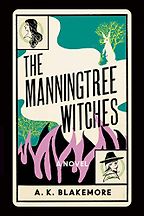
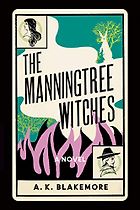
Your first book recommendation, A.K. Blakemore’s The Manningtree Witches takes place during the same period of witch hunts, but in Essex.
Yes, the witch hunt lasted over two years and started in Essex—in fact, it originated near Manningtree, where Matthew Hopkins and John Stearne were living at the time.
When the Manningtree book was published, I was still writing my book, and initially it really took the wind out of my sails—to have the same witch hunt and very similar evidence covered in such a wonderful way. But I recommend it because it is a very powerful depiction of that period in English history.
It’s based on real women and real events, but it’s told with an incredible contemporary energy. There are very compelling characters particularly in the person of Rebecca West, a real person. She and her mother Anne were among the very first victims that Hopkins and Stearne singled out. Anne West had form, I suppose. She’d been accused of being a witch several times in the past. So, an obvious target.
But what The Manningtree Witches does is portray that mother-daughter relationship in such a beautiful and compelling way, showing how patriarchal institutions prise their closeness apart and contaminate their relationship.
In the novel, one turns against the other: the daughter is persuaded to give evidence against her mother and some other women—which did happen in the witch hunts. Women would turn against one another, sometimes for religious reasons.
Also, this was a time of extreme hardship. The Civil War was raging, food was very, very scarce because the army had requisitioned it all. Then, in East Anglia, there were a series of crop failures and storms. On the east coast, around Aldeburgh, the harbour got silted up after a particularly bad storm and that was the beginning of the end for the town’s herring fisheries. So it was a kind of perfect storm of circumstances that formed the backdrop to the witch hunt and set the stage for Hopkins and Stearne.
The Manningtree Witches is a very beautiful, very vivid book, and it brings across very clearly the plight of these women—and what happens when women are persuaded to disbelieve themselves.
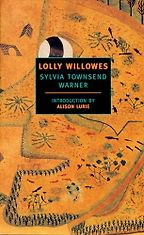
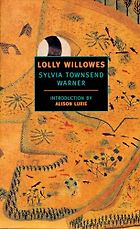
It was such fun to re-read this after a period of years. It’s a so-called feminist classic, a slim little book.
The first two-thirds are quite light, almost boring. I think intentionally. Then, two-thirds in, there’s this very dramatic shift.
It’s about this woman, Laura Willowes, who is a spinster. After her mother dies, she lives with her father and brother and is gradually boxed in as a kind of unpaid servant to the family. There’s no opportunity to escape or have a life of her own. The book is exploring how patriarchal society can diminish women’s lives, even ostensibly in supportive and loving ways.
Lolly, as she’s known, has become very bonded to the natural world and the village she is living in. Then her nephew comes to live with her. Again, this is very much an imposition, she doesn’t want him there. Then this kitten turns up and scratches her.
Lolly immediately understands that this kitten scratch, which causes her to bleed, is a pact with the devil. She understands that, tacitly, she has known this was going to come, has in some ways desired it. And so she commits to becoming a witch. All of a sudden, she has a new life before her: the life of a witch, although she is fully aware, that she’s going to pay the price for that. She’s not sure what, but there must be one.
It’s all told in this wonderfully witty prose. In some ways it’s a satire, in other ways, it’s a very, very serious book. I think it’s actually very trenchant in the way it’s describing how domesticity traps so many women, and how few options there are to escape that.
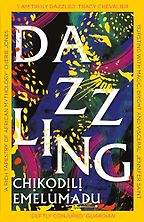
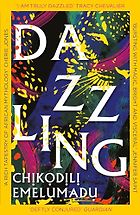
Well, thank you. The third novel on witches you’d like to recommend is Chikodili Emelumadu’s Dazzling, a debut that came out in 2023.
This is a wonderful book. It’s set in Nigeria. Chikodili is a Nigerian-British author and spent some of her life growing up in Nigeria. So this book is steeped in West African culture and spirituality, particularly Igbo culture.
It’s a very vivid, sensory world full of pitfalls and possibilities. One of the things Chikodili does is play those two alongside each other very deftly.
Dazzling follows two young women on the cusp of adolescence, Treasure and Ozoemena. Treasure’s father has died and her family has been cast into poverty. One day when she goes to the marketplace to scavenge, she meets a man whose feet aren’t touching the ground. He’s hovering. He turns out to be a spirit. He says he can bring her beloved father back, if she’ll do a terrible task for him first.
Her storyline is very moving because it does lay bare how society can commodify girls like Treasure. I don’t just mean in Nigeria, I’m thinking also of Epstein—and how young those girls were when Epstein got hold of them. In so many of these stories, there are no people protecting these women. They were ripe for the taking.
Chikodili approaches it in a different way, but she’s making the point about how a girl like Treasure can be commodified and used.
Ozoemena comes from a wealthier family. She has the prospect of a good education. She’s about to go to boarding school. But she comes to understand that she’s going to be the recipient of what the book calls “an honour never before bestowed on a girl.” She’s part of the Leopard Society—if you get a chance to hear Chikodili talking about the Leopard tradition, it’s very worth listening to. Leopards are spirit entities or avatars tasked with guarding families. In the book, the leopard spirit has always gone through the male line, but suddenly Ozoemena finds that it’s her. So the book is about her grappling with the physical and psychological effects of inhabiting a leopard entity. It’s a creature of enormous, not necessarily governable powers. At the same time, Ozoemena also an adolescent girl getting to grips with her peer group, life in a boarding school, and all that entails.
Eventually the two storylines meet, there’s a confrontation in the end between the girls and their two destinies. The ending is very quick, and you can’t see it coming. It’s a very compelling, exciting book, but it is also addressing, in an allegorical way, what price women have to pay to find their freedom.
It’s interesting to see cross-cultural parallels in portrayals of female power as veiled or disguised. Often as supernatural.
I was thinking about that this morning. Victoria Smith published a very important book, Hags: The Demonisation of Middle-Age Women, on this phenomenon, in which she took issue with the fictionalisation of witches and witch hunts. I can see why.
Hilary Mantel also spoke of how she didn’t have any patience with the trope of all these wise women with their herbs and their lore. I think that is a legitimate concern; if you tip it into a kind of hippy-trippy dancing around a cauldron, doing their sympathetic magic—it’s all a bit, light, a bit woo-woo. But at the same time, how else do you write about a woman stepping fully into her power? I think it’s quite difficult to do without resorting to metaphor or symbol.
What’s so great about Dazzling is that Chikodili does this completely unapologetically, and in part because in Igbo culture, magic is regarded as normal, as woven into everyday life.
I grew up in New Zealand. Māori culture similarly does not have these hard and fast distinctions between ‘real’ and ‘other-worldly’ domains: they’re all-of-a-piece. So although patriarchy is everywhere, ways of expressing feminine power do differ. Witches and spirit avatars and familiars and all of these symbols are important vehicles.
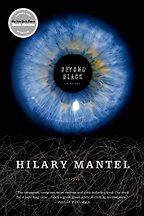
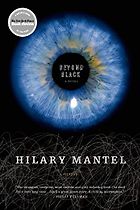
Interesting. Well, you mentioned Hilary Mantel. She’s the author of our next book, Beyond Black. And it’s an interesting novel, because it’s a strangely ambivalent book about the spirit world. It features a professional medium deeply troubled by her dealings with rude and needy spirits.
I just love this book. It’s one I go back to again and again. I probably re-read it every couple of years. On one level, it’s bleakly satirical. It’s got all Mantel’s wit and incredible precision and turns of phrase. And, I don’t know for certain, but I think she was interested in psychic mediumship, and she certainly describes in her more biographical works certain close encounters of the spirit kind, put it that way.
In Beyond Black, we have Alison Hart, a professional psychic medium, and her sidekick—I suppose her manager—Colette, who is business minded, not very interested in mediumship at all, but very interested in getting the most out of Alison.
Yes, it’s a strange twist on the workplace novel.
It’s a very unlikely relationship, which at times is portrayed as quite toxic. Yet they are also codependent on each other. Mantel depicts that with her usual wit and insight. Alison the medium is what Victoria Smith’s book would call a ‘hag.’ She’s older, she’s overweight. Similarly, Colette is not a particularly likeable or attractive person. They’re engaged in an enterprise that just isn’t that attractive. Yet, when you read the opening pages, you know we are in very liminal territory.
It starts in a car. Alison is being driven to her next public engagement by somebody who we eventually come to learn is Colette:
There are nights when you don’t want to do it, but you have to do it anyway. Nights when you look down from the stage and see closed stupid faces. Messages from the dead arrive at random. You don’t want them and you can’t send them back.
Then, here’s Alison speaking directly, a couple of paragraphs later:
It’s no good asking me whether I choose to be like this, because I’ve never had a choice. I don’t know about anything else. I’ve never been any other way.
So here are those universal themes: lack of choice, lack of agency. In this case, Mantel is showing another face of witchcraft, which is mediumship. A very archetypal depiction of witchcraft, in a way. And she does it with incredible compassion.
Readers tend to come down on one side of the fence or the other: either the medium Alison is quite literally possessed by a number of spirits, including the malevolent Morris; or, on another level, it might be an extended metaphor for Alison’s childhood trauma. So again, we have these themes of passive versus active, worldly versus otherworldly, all embodied in one physical presence, who is compelling to people because of a power this person appears to hold, but also a presence that people find repellent.
I suppose your own protagonist, Martha, could represent this archetype too.
Absolutely so. It wasn’t necessarily a conscious decision, because the character of Martha evolved as I wrote her. When I began, it was like I had a postcard in my head: a picture of a woman in a green, faded, tatty, long dress, standing in a herb garden. I could see she was older, her hair was under a coif, and she was looking at me. That was the starting point. I started free-writing about this figure. It took a long time for her to come fully into focus: her situation, her background, the witch hunts.
It took me a long time to understand that she didn’t speak. The first time I tried to write a scene with Martha, I wanted to write some dialogue, but every time it came to Martha’s turn to speak, it was like trying to get blood out of a stone. That happened a few times, and actually halted my writing of the book. How was I going to write a novel with a protagonist who doesn’t speak? Then it dawned on me that she couldn’t speak. Then, after drafting many thousands of words I came to understand that Martha’s not speaking was the result of trauma, and was also standing in for the speechlessness, the silencing of women in that period and in fact throughout history. It’s not necessarily that they have chosen not to speak, although lots of women have made that choice. Even women who have spoken up have been disbelieved or ridiculed, or had their words used against them, as often happened in the English witch hunts. Once I understood all that, it became possible to carry on with the book.
The other thing that influenced me was that, in the early stages of writing the novel, I was also working part time in prisons—male prisons—and with guys who were there, for the most part, because they had murdered women, or were in for abuse or domestic violence. That kind of thing. Twice a week I was going in and spending time with these men, and then coming away to write about women who were victims of violence hundreds of years ago. That whole theme of what was being said, versus what was not being said; what was being owned up to and what was not being owned… that was all running in the background. Being an older woman myself, definitely falling into Victoria Smith’s category of the ‘hag’, and going into those prisons—it was a confrontation with that phenomenon, an interesting experience to have.
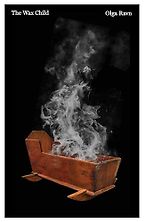
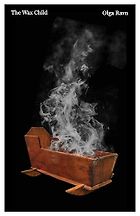
Let me move us to your final witch book recommendation, which is Olga Ravn’s recent novel The Wax Child. It’s set in 1600s Denmark. I’ve seen it described as a ‘historical horror novel.’ Would you agree?
I don’t like that description. I mean, the events are horrific, but this is not a horror novel.
These are real historical events featuring real women. Olga addresses this in the acknowledgements: the book is based on witch trials that began in the late 16th century and continued into the 17th century. As in England, a lot of women lost their lives. Olga Ravn condenses this period of time and draws nine or ten of these real women into one storyline to create a really vivid set of characters: their lives, their preoccupations, their concerns.
At the same time, Olga makes the witching doll, or the ‘wax child’ as she calls it, the point of view character. It’s an amazing writerly feat to create a consciousness out of an apparently inanimate object. To give it consciousness, sentience, a sensibility, and to carry that off for a whole novel. Some people might find that horrifying. I just thought it was magical.
I use that word cautiously. The book is set in a time where there was real belief in sympathetic magic. In other words, people believed you could influence events or other people through objects that had some connection to the person or event. So the story opens with the creation of the wax child:
I am a child shaped in beeswax. I am made like a doll the size of a human forearm. They have given me hair and fingernail parings from the person who is to suffer. I was borne by my mistress for forty weeks under her right arm, as if I was a proper child, and my wax was softened by her warmth.
A bit later on, she says:
No one listens to a thing I say. Although I speak all of the time.
And throughout the story, that’s a theme that’s returned to over and over again. You can hear the resonances with some of the other books we’ve been talking about: how important speech is, how imperilling the lack of speech is, what happens even when women do speak up, and that they’re guilty until proven innocent.
So the wax doll carries all of that. The doll is able to report on the thoughts and beliefs and actions and the life circumstances of this group of women who become the subject of a witch hunt. The doll is also able to look back in history and to look some way forward into the future. It knows what’s in the king’s mind, the Danish king who ultimately orders the witch trials to go ahead. It knows what’s in the mind of the witch hunters. All of this is rendered in this just extraordinary prose. It’s a very, very profound book.
There are obviously horrible elements in it. The wax child itself says:
I was made as an instrument to do harm.
It’s upfront about that. But there aren’t many examples of harm being done via the doll, whereas what is much clearer is the harm being done to the women. And you’re on the edge of your seat throughout, because of course to be caught with a witching doll is absolutely incriminating. (Unlike in England, where women and men were generally hanged, on the Continent accused witches were burned or beheaded.)
In my book, Martha also has a wax witching doll – a ‘poppet’. Martha could leave her poppet safely at home, but she chooses not to. She knows full well it is a liability, yet she goes back and back to it because it is the only tool she has to gain any purchase at all over her very precarious situation. I think Olga Ravn is doing something similar, but takes it further. The wax child itself has agency of a sort. But, partly, that agency has to be made operational by one of the women using it.
The ending is very moving.
Had I eyes that could weep, I would have wept. But I am only a doll, a child of wax. I cannot move my hands. My wax mouth cannot be opened. And yet I speak.
There we are again. That’s a vast question that the doll is posing. How is it possible to speak hundreds of years later, without a mouth? She’s also asking: how is it possible that these monstrosities can take place? That’s the real horror.
It sits with me, because belief in witchcraft in other cultures is still very, very strong. Every year, hundreds of women and children around the world are injured or put to death because of accusations of witchcraft. Tragically, it’s not a historical phenomenon at all.
I think we live in an era when hatred of women is reaching an all-time high. One of the responses to that is through witches—whether fictional or real, witches are women, one way or another, claiming their power.
Five Books aims to keep its book recommendations and interviews up to date. If you are the interviewee and would like to update your choice of books (or even just what you say about them) please email us at [email protected]
Five Books interviews are expensive to produce. If you've enjoyed this interview, please support us by donating a small amount.
Margaret Meyer
Margaret Meyer has been a journalist, editor and publisher, and was for five years the British Council's Director of Literature. Her writing includes essays, flash fiction and short stories. Her 2023 debut novel, The Witching Tide, was inspired by the events of the East Anglian witch hunt of 1645-7 and is dedicated to the more than 100 innocent women who lost their lives. An international bestseller, The Witching Tide was shortlisted for the 2023 East Anglian Book Award and named as one of that year’s best historical novels by Waterstones, The Sunday Times, NPR and The New York Times.
Margaret Meyer has been a journalist, editor and publisher, and was for five years the British Council's Director of Literature. Her writing includes essays, flash fiction and short stories. Her 2023 debut novel, The Witching Tide, was inspired by the events of the East Anglian witch hunt of 1645-7 and is dedicated to the more than 100 innocent women who lost their lives. An international bestseller, The Witching Tide was shortlisted for the 2023 East Anglian Book Award and named as one of that year’s best historical novels by Waterstones, The Sunday Times, NPR and The New York Times.