Translated fiction "expands not only our literary horizons, but also our moral and emotional imaginations," explains Troy Onyango—the writer, editor and judge for the 2026 International Booker Prize. He introduced us to the six novels that made the shortlist, including this year's "formally inventive" winner and a "razor sharp" book about a "mediocre witch."
We’re here to discuss the shortlist for the 2026 International Booker Prize. It’s a really interesting selection of books. Was it difficult to cut the longlist down to size?
Thank you! Arriving at the shortlist was incredibly hard because the longlist was full of books that were ambitious, intelligent and deeply alive to the complexities of the world we’re living in. Narrowing that down to six meant having very difficult conversations not just about literary excellence, but about which books continued to resonate and deepen in the mind over time.
What ultimately united the shortlist was a sense of urgency and distinctiveness. These are books that we felt were entirely themselves.
While reading this year’s submissions, did you notice any trends?
One thing that stood out was how many books were grappling with history and power, but doing so through intimate, deeply human stories. Questions of exile, memory, authoritarianism, gender, violence, belonging, and identity kept surfacing across very different literary traditions.
There were a lot of “dark stories” ranging from cannibalism to all sorts of killings. Yet despite the darkness in some of these books, there was also tenderness, humour and a persistent belief in human connection.
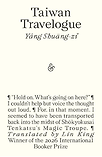
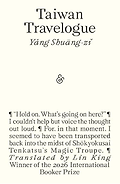
The 2026 winner of the International Booker Prize was just announced as Yáng Shuāng-zǐ’s Taiwan Travelogue, translated by Lin King. It’s been a sensation in the Chinese-speaking world—winning Taiwan’s prestigious Golden Tripod—and also received the National Book Award for Translated Literature when it was released in the US in 2024. Would you introduce it to our readers?
Taiwan Travelogue is one of the most formally inventive books on the shortlist. It is difficult to summarise without losing the essence but I will try. It is set in Japanese-occupied Taiwan in the 1930s and it follows the relationship between two women through food, travel, language, colonialism and desire.
What’s remarkable about this novel is how it uses seemingly small details, meals, conversations, observations, to explore larger questions of empire, identity, translation and cultural power. It’s playful, intellectually rich and deeply layered.
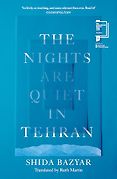
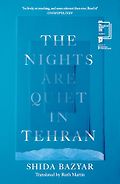
We will look now at the shortlisted titles, starting with The Nights Are Quiet in Tehran by Shida Bazyar, translated from the original German by Ruth Martin. It’s about an Iranian family living in exile and spans thirty years. Would you tell us more?
The Nights Are Quiet in Tehran is an extraordinarily moving novel about revolution, exile, inheritance, and the complicated idea of home. Shida Bazyar traces one Iranian family across generations and geographies, from the aftermath of the Iranian Revolution to life in Germany. What emerges is a portrait of displacement that feels both politically precise and profoundly intimate.
What I admired most was its polyphonic structure: each voice carries its own emotional and political understanding of history, and together they create a textured portrait of lives lived between cultures, languages, and identities.
Speaking earlier this year, Bazyar said: “in order for us to strengthen our empathy for other people in other contexts, literature has to be translated into other contexts and languages.” Has your experience as a judge underscored this idea?
Absolutely. One of the great privileges of judging the International Booker Prize is encountering worlds, histories and sensibilities that might otherwise remain inaccessible to many English-language readers.
Translation expands not only our literary horizons, but also our moral and emotional imaginations. It reminds us that people living in vastly different contexts are often wrestling with recognisably human questions: love, fear, freedom, loneliness, dignity, survival. Translation resists cultural isolation and insists on opening up the conversation.
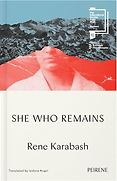
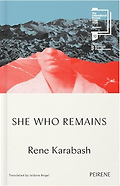
Next, you’ve selected Rene Karabash’s She Who Remains, which was translated from Bulgarian by Izidora Angel. It’s about a woman who elects to become a “sworn virgin” in a remote Albanian village. What did the judges admire about it?
This is an astonishing novel about identity, gender, violence and freedom. It takes a very specific cultural practice, the “sworn virgin” tradition in the Albanian mountains, and transforms it into something emotionally expansive and universal. What impressed us was the intensity and precision of the voice. Izidora Angel’s translation, which preserves the rawness and musicality of the prose, is beautifully done. The novel is brutal at times, but also lyrical, sensual, and psychologically layered. It explores the ways societies impose identities onto bodies, while also asking what it means to survive those structures.
It’s fascinating to get insights into other cultures through fiction. Do you consider geographic spread when compiling the shortlist?
The primary consideration is always literary merit. As judges, we try to read as blind as possible. One of the joys of translated literature is precisely that it opens doors into different histories, aesthetics and ways of seeing the world. What’s exciting about this shortlist is that the geographic spread emerged organically from the books themselves. These novels come from different literary traditions and political contexts, yet they speak to one another in so many ways. Together, they create a conversation across borders.
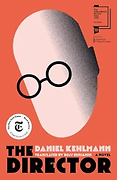
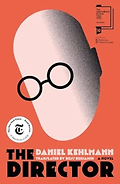
That’s beautiful. Could we look at Daniel Kehlmann’s The Director, next? Like his previous novel, Tyll—shortlisted for the International Booker Prize in 2020—it has been translated from the German by Ross Benjamin. It follows a very brilliant film director, living in exile from Nazi Germany, as he is courted by the new regime. Could you tell us more?
Inspired by the life of filmmaker G.W. Pabst, The Director is a brilliant and unsettling exploration of art, compromise, vanity and moral collapse. The novel examines what happens when an artist confronts authoritarian power and begins rationalising proximity to it.
Daniel Kehlmann is extraordinary at capturing ambiguity. The novel never allows easy moral distance. Instead, it forces us to confront how ego, fear and opportunism can slowly erode ethical certainty. The translation by Ross Benjamin carries that atmosphere of unease and sharp intelligence with incredible elegance.
All artists must be opportunists to some extent. I suppose it might speak to fears of ‘selling out’—whether that be commercially or to literal dictators. Is that how you see it?
I don’t think so. I believe that the novel is interested in that elasticity of self-justification in a frightening manner. Most people like to imagine that moral compromise announces itself dramatically, but often it happens incrementally, through accommodation, ambition, vanity, fear or the desire to keep working.
The book becomes unsettling precisely because it refuses simplistic binaries between innocence and corruption. It asks us all difficult questions about the responsibilities of artists, but also about the stories people tell themselves in order to survive or succeed.
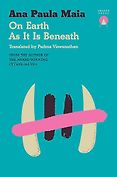
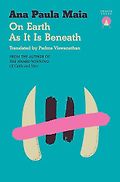
Could you tell us about On Earth As It Is Beneath, by the Brazilian writer Ana Paula Maia? It has been translated by Padma Viswanathan.
While it is the shortest novel on the shortlist, On Earth As It Is Beneath packs a punch. It is a deeply haunting novel set in an isolated penal colony built on the ruins of a former slave plantation. Ana Paula Maia creates a world that feels almost mythic in its brutality, examining violence, masculinity, power, and dehumanisation with remarkable precision and restraint.
What impressed us was how much atmosphere and philosophical weight Maia achieves in such a short space. It’s a novel that feels stripped to the bone, and yet it retains the stark and menacing quality of the story.
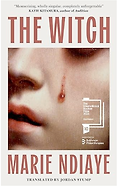
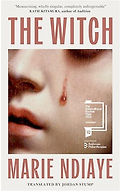
Next we have The Witch by Marie NDiaye, translated from French by Jordan Stump. I love the summary on the Booker website: “A mediocre witch, in a mediocre marriage, tries to pass on her gifts to her twin daughters, who, it becomes apparent, have skills far beyond her own.” What did you like about it?
The novel is just as funny as the description on the website. Marie NDiaye’s The Witch is unsettling and psychologically razor-sharp. NDiaye has this extraordinary ability to make the ordinary feel uncanny.
Beneath the humour and absurdity is a very acute exploration of motherhood, mediocrity, resentment, femininity, and power. The novel constantly shifts beneath your feet emotionally; one moment it’s comic, the next deeply disquieting. It is a novel that lingers because it resists easy interpretation.
How do you go about comparing novels from such different literary traditions? Have you found it difficult, or invigorating?
It is both difficult and invigorating precisely because the books are so different. The task isn’t to flatten them into sameness, but to ask how successfully each book achieves its own artistic vision.
Once you start reading you begin to recognise excellence across radically different styles, traditions and narrative approaches. Some books overwhelm through voice, others through structure, emotional intelligence, philosophical depth, or formal experimentation.
Judging translated fiction also reminds you that literature is far larger than any single canon or tradition. That’s enormously exciting!
Five Books aims to keep its book recommendations and interviews up to date. If you are the interviewee and would like to update your choice of books (or even just what you say about them) please email us at [email protected]
Troy Onyango is a London-based writer and editor from Kisumu, Kenya, and the founder of Lolwe, a Pan-African literary and arts magazine. He is also the owner of Lolwe Books, an indie Pan-African bookshop in both Kenya and the UK. His debut collection of short stories, For What Are Butterflies Without Their Wings, was published in 2022. He was a finalist for the Caine Prize for African Writing, a nominee for the Pushcart Prize, and the winner of the inaugural Nyanza Annual Literary Festival Prize.
Troy Onyango is a London-based writer and editor from Kisumu, Kenya, and the founder of Lolwe, a Pan-African literary and arts magazine. He is also the owner of Lolwe Books, an indie Pan-African bookshop in both Kenya and the UK. His debut collection of short stories, For What Are Butterflies Without Their Wings, was published in 2022. He was a finalist for the Caine Prize for African Writing, a nominee for the Pushcart Prize, and the winner of the inaugural Nyanza Annual Literary Festival Prize.