Every year, the William Hill Sports Book of the Year award—the world's longest-running sports writing prize—highlights the very best new books in the genre. We asked Alyson Rudd, chair of the judges, to introduce us to this year's winner—The Escape, by cyclist Pippa York and reporter David Walsh—and the six runners-up.
Thank you for joining me to discuss this year’s shortlist for the William Hill Sports Book of the Year. What were you looking for, when you were looking for the best sports books of 2025?
That’s a good question. We don’t set out the rules, as such, but the general consensus among the judges is: authenticity, good writing, and the idea that a good book should be able to grip you, even if it is about a sport that is not your favourite sport, or even a sport you don’t know much about at all. The story should be so well told, or so gripping, that it pulls you in. I think that’s the key to a truly great sports book.
But, as I say, there are no hard and fast rules. It just emanates from discussion. We don’t use the word ‘entertainment’; some of the books on the shortlist this year, I don’t think you’d call them entertaining. I think you’d call them important. It’s great if you can do both, but it’s not necessary.
That’s interesting—to think of these books as needing to appeal to people who are not already fans. But it makes sense. I suppose what makes sports books so engaging is the sense of stakes, the emotion, the ambition, and those can be universally appreciated.
Oh, yes. Sport isn’t life or death. It’s supposed to be a pastime, something people do to take their mind off the stress of work or everyday life. But within sport, it does feel like the most important thing. So there has to be an emotional connection. A straightforward route to reaching someone who isn’t a specialist is passion. If the author’s passion for the subject matter comes through, that can be enough.
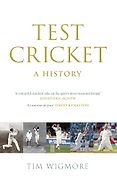
If I can give you an example: there’s a huge book on this shortlist called Test Cricket: A History, which is daunting. It’s the sort of book you’d automatically buy someone you know who loves cricket, but you might think ‘I’m not going to pick that up, because I don’t know a lot about cricket.’ Well—that’s sort of the point of the book! It tells you everything you need to know.
So if you can look at a book and think: ‘I’m not sure that’s meant for me.’ Yet, once you start it, you realise it probably is? Then there’s your reason for being on the shortlist.
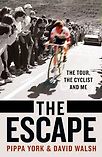
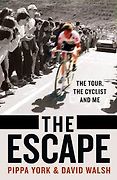
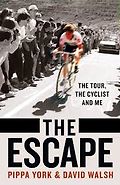
Let’s start our discussion with the book recently crowned the William Hill Sports Book of the 2025, which is The Escape: The Tour, the Cyclist and Me, by Pippa York and David Walsh.
This is an unusual book, not least in its format. You’ve got David Walsh, a renowned journalist who has done a lot of work on cycling—who did a lot to bring down Lance Armstrong and reveal the truth about his doping. He’s a very tenacious journalist. And, basically, the book is him, David Walsh, in a car with Pippa York, as they do the tour circuit, both acting as journalists.
Pippa used to be known as Robert Millar, the first British rider to win a Tour de France classification, and was our greatest cyclist for a while. Then Robert Millar transitioned, to become Pippa York.
So you get two stories in one. You get the pair of them driving around the tour circuit, staying in crummy hotels, meeting people involved in the tour, reminiscing about key races they’ve been part of or reported on. Then, as they drive around, David is also asking Pippa about the process of transitioning and how difficult that was.
“Sporting autobiographies can be cut-and-paste affairs. For an autobiography to get on our shortlist, it can’t be that”
It’s essentially Pippa York’s autobiography, but told in a completely different way, through conversation. It takes autobiography to another level.
These days, for any autobiography in the running for Sports Book of the Year, it’s very important that it’s a cut above your standard sporting biography. Those still exist, and they can be pretty much cut-and-paste affairs, written with the fan in mind. It’ll have a big picture of the face of your favourite star on the cover, it will tell you when they were born, when they got their big break, how awful it was when they broke their leg, and how fantastic it was when they won gold, how they cope with retirement, whatever. It’s a bit A, B, C through to Z.
For an autobiography to get on our shortlist, it can’t be that.
The road trip is an clever format for biography. Isn’t it true that a shared activity makes for more free-flowing conversation?
David will prompt Pippa to explain what it was like growing up, knowing that he—at that point, ‘he’—was in the wrong body, saving up his pocket money to be able to buy girls clothes, the fear of being seen in those clothes by his classmates, and how awkward it was being discovered by his father in those clothes.
Maybe you would, maybe you wouldn’t get that level of detail if it had been a standard autobiography. But you feel like David gets an awful lot from Pippa York in conversation. It’s a very intriguing book.
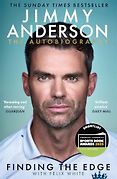
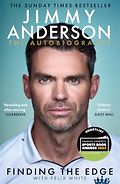
Absolutely, and I think an important one too. I’ll now walk us through each shortlisted book in turn. Shall we start with Finding the Edge by Sir James Anderson? Why is it one of the best sports books of the year?
In Jimmy Anderson’s autobiography, from the opening pages you know you’re going to get something very honest and with a good deal of reflection. We join him, having been told: ‘You’re old now, Jimmy, we don’t need you any more. Your life as a top rank cricketer is over.’ He’s sat on his own reflecting how difficult that is going to be for him. Eventually he realises that sitting on a bench looking at an empty cricket field might be a nice, not a sad thing, to do. It can prompt those feelings, what cricket gave him.
Then we get his story—how, even from when he was a young child, he felt there was something in him, and he didn’t know what it was. He felt different, like he didn’t belong. That’s beautifully expressed. So we learn how cricket filled that hole in his life.
It’s an interesting take on what it means to be a top class sports person. Everyone who succeeds in sport has to devote themselves to their craft. It’s more than 10,000 hours. You give your life to it. And you think, well, what makes someone want to be so focused?
You get an insight into that with this book. It’s like he’s born with this need to fill something. Cricket can give him that sense of competition, camaraderie, a sense of belonging, of being needed.
His ghost writer, or collaborator, Felix White is given a name check. That’s a good thing. I don’t like it when they hide who the ghost writer is. He has gone to great lengths to find Jimmy’s voice. There are autobiographies that feel like they are written for teenagers because they are so basic. This is a grown-up, reflective book. And you do need a really good ghost writer to enable someone to explore those ideas. I very much doubt that, if you’d just given Jimmy Anderson a pad and pen, he’d have constructed it this way. It would be difficult for any of us to do that. You need to collaborate, to find a way to convey the story to the audience.
Sometimes you don’t get to know someone if all they do is say ‘I joined this club, then I left that club, then I had two children…’ You don’t get to know someone if they just list their achievements. You need to dig, and you’re only going to dig if you do it with a good collaborator.
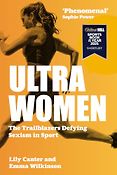
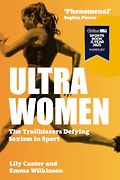
Absolutely. Ghost writers don’t get enough credit, and they are surely pulling a lot of the weight in the field of autobiography. Shall we talk next about Ultra Women: The Trailblazers Defying Sexism in Sport by the endurance athletes Lily Canter and Emma Wilkinson?
Yes, it’s an interesting book, this one. It looks sort of flimsy, like a PhD paper you might pull out of a university library. It doesn’t scream at you: ‘This will be a rollicking great read!’ But it really is.
One of the quotes on the front says: “Phenomenal!” And it is phenomenal, because the women in it are phenomenal. If you know about women in sport, and understand the trials and tribulations of being a woman in sport, you might not be so surprised. But I think the majority of readers will be absolutely blown away by what women can achieve in the most gruelling races like ultra marathons.
This has been going on for well over a century: women have found that they can beat men over very, very long distances. The more gruelling and longer the race, the better they do. If it requires very little sleep, women tend to be better able to cope than men. There are stories of women doing these incredibly, incredibly onerous runs while breastfeeding. It’s just phenomenal what women can achieve.
“Readers will be absolutely blown away by what women can achieve in the most gruelling races”
There are two truths that seem contradictory in this book. One is that, anecdotally, it seems women are better than men over a certain distance. But, two: the science just isn’t there yet. There isn’t enough scientific investigation to support that argument, so we can’t be absolutely sure.
We can guess why it might be the case: fat reserves, what a woman’s body goes through when it goes through child birth, and so on. But there just isn’t enough known about the physiology and biology of women. So we don’t get the big hurrah conclusion, the eureka moment you would like from a book like this. But I don’t think that necessarily detracts from the book, because you are introduced to a succession of female protagonists who are all magnificent.
For me, they are mainly magnificent for their matter of factness. They have a few babies, they start running because they need the money to feed these babies, they read about a race and the little pot of gold you get if you win it, and they think: ‘Well, you know, I could do that.’ Of course, there were often men who concluded they couldn’t possibly have done it, but there are far more women than I realised who have competed in and succeeded in these incredible ultra-marathon races and left men in their wake.
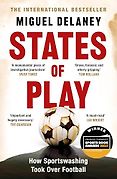
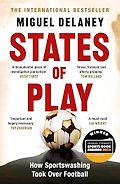
Fascinating, thank you. I’ll keep us moving through the books on the shortlist for the title of the best sports book of 2025. Can we look next at States of Play: How Sportswashing Took Over Football by Miguel Delaney?
As chair of the award, I often tell people that the award is important because it has improved the standard of writing about sport. People do write better about sport than they used to. It’s not entirely down to the Sports Book of the Year prize, but it is partly.
One of the significant things this year has been how much hard work and effort has gone into a lot of the books that made the list. Miguel’s book is a prime example. Boy, has he done his research! This is not something cobbled together, it is minutely observed and crafted.
Now, that could lead to two things: first, a treatise that is not very accessible, or second, a very readable and very engaging book. You feel like you’re in the brain of Miguel, and his soul as well. You can feel that this is a serious subject that requires as much research as possible, but also a subject he cares about emotionally. You just feel this is someone who loves sport—in this case, football—and doesn’t like what’s happening to it because of the rise of sportswashing.
Just for the benefit of any readers who haven’t come across this term, ‘sportswashing’ is what we call it when a controversial country or organisation tries to launder their reputation by sponsoring sports competitions or buying major teams.
He takes you through the big, big picture of it. So: the history of sport and money, which is another way you could describe this book. He looks at all aspects of it.
Sportswashing is something that bothers me a lot, and so I was a bit worried that I would just be depressed at the end of this. That it would say: look, the world is rubbish, money rules and sport is ruined. But, actually, he remains upbeat about it. He points to the innate passion of football fans and says it doesn’t have to be this way.
Women’s football, for example, is almost the antidote to the elite men’s game, because they take their community with them. The people who go to watch women’s football don’t pay a huge amount of money to watch it. It remains part of the local community. So there’s hope, he says.
If you ever wondered why the World Cup was held in a tiny, hot country like Qatar, this book explains the power of the oil rich nation.
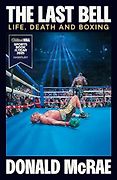
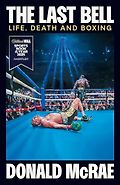
Thank you. Let me ask you next about Donald McRae’s The Last Bell: Death and Boxing.
Donald McRae is a well known journalist, famous for his work on boxing, both in books and in his journalism. I think he is hinting that this is his last book about boxing, though he may change his mind.
There is always something of him in what he writes, but he’s gone the extra mile on this one. There’s a lot about his relationship with boxing, a sport that often leads to terrible head injuries and even death. So he’s aware it is an odd sport to love when it can be so cruel.
He explores that alongside grief in his own life—the death of his parents and his sister—he juxtaposes his grief and the grief of people he knows through boxing, when they’ve seen their loved ones in the ring getting battered. It’s a very moving book, and made all the more moving that this is sort of a life’s reflection, if you like.
It’s interesting, isn’t it, that someone who has earned his money through the knowledge of boxing and the passion for boxing—that when he comes to really analyse how he feels about it, you’re left thinking that maybe you’ve wasted a lot of your life on this because it’s caused so much pain. It’s a difficult sport.
Then just as you’re beginning to feel a bit depressed, he’ll throw in one of his beautiful descriptions of how a bout unfolded. And you’re reminded—or, well, I was reminded—that this is why I prefer literature about boxing to actually watching boxing. I find it quite difficult to watch, but I can read about it.
It’s a brutal sport.
I’d rather be one step removed.
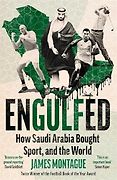
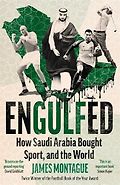
I think what comes through in so many of these books is the complicated love that people come to have for their chosen sports. The more they are immersed, the more they become aware of its limitations or flaws. We return to the subject of sportswashing with our next book, James Montague’s Engulfed: How Saudi Arabia Bought Sport, and the World.
In the judge’s meeting, this was seen almost as a companion book to States of Play. They are both about sportswashing, but James Montague’s book is more focused on Saudi Arabia. So it’s a more localised view. And you get an awful lot of the fan voice, if you like.
If States of Play is very big and grand, an overview, this goes into the nitty gritty. He goes into a pub in Newcastle and speaks to fans, who say—over quite a number of pages—why should we be the ones to have to worry about sportswashing? We’ve been waiting a long time for money to be invested into the club, so why do we have to stand up and say it isn’t right, and that we don’t want this money? Why should we be expected to be held to a higher level of political correctness?
What you do tend to get in this book are lone voices who are sort of screaming into the wind, saying they don’t want Saudi money in an English football club, because nobody is really listening. You get a feel for how the Saudi decision to go into sport affects people on the ground.
Weirdly, you could actually combine both these books on sports washing and get one big book that doesn’t contradict or repeat itself, because one is the macro view and one is the micro view.
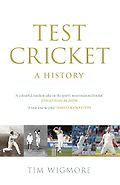
Fantastic. I’d like us to return to Tim Wigmore’s Test Cricket: A History. Earlier you described it as a book containing everything you need to know about test cricket.
Well, even the judges—who know a lot about test cricket—were taught things they didn’t already know. That impressed them, because if you know your cricket, you think you know everything.
It’s so nicely put together, diligently researched and calmly written so it allows itself to breathe. For example, the first test match was between Canada and the USA. You’d have said the first test match would be between England and someone, wouldn’t you? But even if you knew that little nugget, you are reminded of the context, and how it makes sense.
He weaves through enough anecdotes, he takes you on a journey. I suppose it’s a bit like going on a posh, well though through, cruise ship around the world, rather than a cheap one dropping you off willy-nilly at different ports and hoping you have a nice time on the disco deck. It takes you on a journey that feels very natural; when he shifts from Australia to South Africa to India, you don’t think, ‘It’s jumping around all over the place.’ You feel like you have a good captain at the helm.
It’s a thoughtful, meandering journey through sport. And it pulls off that unique thing where I think, as I said, it would be a great read for both someone who loves their test cricket but also someone who doesn’t
As my final question, have you been left feeling optimistic about the state of sports writing?
Oh yes. If you were to do a graph of the standard of writing over the years, it just keeps inching up and up. There has not been a year where it’s plummeted, it’s always getting better. I think now it’s inevitable that there will be good writing on the shortlist, but the added ingredient this year was that level of research—the hard graft that has gone into these books. Then good writing on top of that, what more can you ask for?
Five Books aims to keep its book recommendations and interviews up to date. If you are the interviewee and would like to update your choice of books (or even just what you say about them) please email us at [email protected]
Five Books interviews are expensive to produce. If you've enjoyed this interview, please support us by donating a small amount.
Alyson Rudd
Award-winning sports journalist at The Times, Alyson Rudd has returned to chair the William Hill Sports Book of the Year Award judging panel for a remarkable seventh year. A published author of both sports books and novels, Alyson is also a qualified football coach and referee.
Award-winning sports journalist at The Times, Alyson Rudd has returned to chair the William Hill Sports Book of the Year Award judging panel for a remarkable seventh year. A published author of both sports books and novels, Alyson is also a qualified football coach and referee.