Europe experienced huge cultural, social and religious change throughout the Middle Ages. You may know it as an age of kings and queens, castles, crusades and chivalric knighthoods, but historians of the period often neglect the seismic events of the far north and east, explains Thomas Williams. Here, he recommends five books that may upend your understanding of medieval Europe.
Let’s start by defining our terms. When do you consider the medieval period in Europe to have begun, and when did it end?
It’s not a straightforward question, particularly for someone like me, an early medievalist. My idea of the early Middle Ages probably begins somewhat before many other people’s. There’s a popular conception of the Middle Ages as the period from the Norman Conquest onwards: the period of knights, castles, crusades and all the rest of that business.
But for me, if you want to define the medieval period as something in the west of Europe that is post-imperial, but with structured kingship and the institutional presence of the Christian Church, then I think the sixth century is probably the earliest you can reasonably go. But it’s probably not until the seventh century that it starts to look recognisably ‘medieval’.
There is also the complicating factor of what is sometimes called ‘Late Antiquity’, which doesn’t have any hard-and-fast boundaries, but is sometimes imagined to run from the late third to the seventh century.
In terms of the end-point, we’re imprisoned a little bit by Anglophone historiography, which likes to think in terms of the Reformation and Henry VIII’s break with Rome. Obviously, things can feel very different depending on where you’re standing in Europe. But I think the Reformation is still probably the conventional endpoint.
When it comes to my own geographical areas of interest, you could look at something like the collapse of the Teutonic Order in the Baltic, which is broadly speaking part of the Reformation. The secularisation of the Prussian branch of the Teutonic Order occurs in 1525, and that’s an interesting moment. It’s a watershed, where a very distinctive theocratic monastic state, so bound up with ideas and institutions we think of as definitively medieval, breaks down and becomes secularised and Protestant. In Livonia, where the Catholic Order persists, the geopolitics change in the mid-sixteenth century; you suddenly have the Russians under Ivan IV (‘the Terrible’) making land grabs into the Baltic and effectively destroying what remains of the monastic state; it feels like a very different world.
So, yes, this doesn’t nail it down, does it? But very broadly speaking, those would be my parameters. You could pick any number of things, couldn’t you? I suppose the fall of Constantinople to the Turks in 1453 is another contender, but we’re in the right sort of ballpark with the sixteenth century.
I suppose any of these sweeping demarcations have to be, to some extent, artificial. Retrospectively imposing an imaginary framework upon a messy past.
Absolutely. This really gets to the heart of what I’ve been trying to do with my book. It looks at two chapters of medieval history, or what are often seen as distinct chapters: the Viking Age, which in the popular imagination is a time of pagan gods, longships and axe-wielding barbarians, and the age of the Crusades, which is popularly a time of knights, castles, piety and holy war.
They sit very separately, at least from the English perspective, which situates the Norman Conquest right in the middle as a dividing line, with this absurd notion that the Viking Age ended with the death of Harald Hardrada on the battlefield at Stamford Bridge in 1066.
Being familiar with both sides of the divide, it struck me quite forcibly that this is a very false picture, because they bleed into each other in profound ways. The Viking Age doesn’t just stop; it carries on in different forms, with different language and different objectives. But strands and themes carry through deep into the High Middle Ages – longships being one – and things we associate with the High Middle Ages are found in the Viking Age as well: Christian kingship, ideas about holy war, that strange combination of faith and belligerence. So one is in conversation with the other.
Yes. It’s interesting to see how your recommended authors have chosen to organise or bracket their own work. Would you talk through how you made this selection of five books—what you were thinking about?
Well, it was an interesting conundrum. Medieval Europe is a vast subject, spanning an enormous chronological and geographical range. Inevitably, I was looking for books that spoke to my own interests and field of research, but which also said something broader about Europe through that lens.
I knew I couldn’t attempt complete coverage, or I’d be getting into what’s going on in Iberia and the Holy Roman Empire and agricultural change and social transformations and architectural history and goodness knows what else. It would become a fruitless exercise in trying to hit all the bases. So I wanted to find a route that came from a particular perspective. The list reflects my research interests, but also my professional career trajectory and how I’ve arrived at my understanding of Europe.
It was hugely influential because it foregrounded the idea that there is nothing inevitable about Europe as we find it today, or about how it developed in the Middle Ages. Europe was constructed rather than simply coming into being.
In some ways, that feels obvious now, because a lot of work has built on Bartlett’s ideas or challenged them in different ways. But at the time it was published, the notion that Europe was itself a product of colonial expansion, rather than just an exporter of colonial mentalities, was quite radical.
I think that was very persuasive, although parts of it are open to challenge. I would say that Bartlett doesn’t always give due weight to the contingencies around this narrative. The shape of the Europe that emerged was the product of a series of accidents and circumstances that could have turned out differently. Much of the way Europe expanded – north, south, east and west – was also the product of complicated negotiations with other peoples, cultures and ideas, and of the transformations that resulted. It wasn’t entirely a process of erasure and replacement. So there are nuances to the model that I would suggest are valuable to keep in mind. But broadly speaking, it is compelling. Europe was made, it was not inevitable.
Did you meet with this book early in your specialisation?
Not particularly. My background is primarily as an early medievalist, and much of my training was archaeological. I came to the High Middle Ages, and the later Middle Ages, as an extension of previous work I’d done on the Viking Age, which was itself an extension of my work on the even earlier Middle Ages.
I first read this perhaps ten or fifteen years ago, which doesn’t seem that long ago to me. Long enough, I suppose, but it wasn’t formative in my journey, if that’s what you mean. Many of the things it touches on—the Northern Crusades in particular, which form a main plank of his argument about the expansion of Europe’s northeastern frontiers—were subjects I first encountered as an undergraduate.
I had one lecture on the Northern Crusades, and I remember being stunned by it because it was the first time I’d ever encountered this history and I found it mind-blowing. The story of the pagan temple at Arkona and its destruction by the Danes in 1168; the fact that there were still pagans in the Baltic in the late fourteenth century using black powder weapons against the knights of the Teutonic Order; or that Henry Bolingbroke (the future Henry IV) led an army to besiege Vilnius in 1390. This stuff really stayed with me.
I’ve continued to keep abreast of the subject, and writing God’s Hammer was an opportunity to bring a lot of those interests into the book and into conversation with things I’d already studied in more detail. So Bartlett has been in the background for me, but I also find his work interesting because of the broader resonances. He’s talking about the High Middle Ages, but his account of the aggressive manner in which the Roman Church pushed its exclusive message through the conversion period can be applied to the Viking Age and to the seventh-century conversion of the Anglo-Saxons. You can also see it operating within Francia in the sixth century, and you can trace the origins of the process even further back.
Your book God’s Hammer is subtitled ‘A History of the Viking Crusades’. Could you say more about that?
The title is deliberately provocative, because the idea of a Viking ‘crusade’ will feel counterintuitive to most people. There are two things going on here. One is the fact that Scandinavians participated in and led formal crusades, both to the Holy Land and in the Baltic, from the beginning of the twelfth century (towards the end of what would traditionally be seen as the Viking period), into the thirteenth century and beyond.
So there’s that side of the equation: definite Scandinavian involvement in the crusading movement. How ‘Viking’ that was is one question that the book seeks to answer.
The other side of it is that you have what I would call ‘holy wars’ or proto-crusades: aggressive wars of conversion waged by Christian kings long before the First Crusade got underway. You see this very strongly in seventh-century England, in the Frankish world with Clovis and Charlemagne and – most importantly for my book – in Viking Age Scandinavia, where a very aggressive push to Christianise the Scandinavian regions began in the tenth century, bound up with a drive to establish a more dominant model of kingship, a specifically Christian model of kingship.
All of this arguably stretches right back to Constantine at the Milvian Bridge, a foundational narrative for the idea of muscular Christian kingship, wrapped up in Christian symbolism. I’m particularly interested in how those ideas were packaged to appeal to the pagan societies of the north, and what the results of that were.
So I’m coming at this from both ends, which I think is fairly unusual. Not many books have tried to take that long view, and certainly not from a Scandinavian perspective.
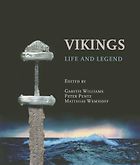
Thank you so much. You stay with the Vikings for your next book recommendation, which is Vikings: Life and Legend, a book published in 2014 that offers an overview of the Vikings’ incredible influence.
This is the book associated with the British Museum exhibition in 2014. I joined the project in 2013 as project curator, and – although I can’t claim credit for the intellectual formation of the exhibition; the book had already been written by the time I joined the team – I laid a lot of the groundwork for the show, working with the objects, writing text for the exhibition itself and developing and delivering the public programme.
The bigger argument the exhibition was making was that we shouldn’t see the Vikings as an isolated phenomenon affecting Britain and parts of western Europe: a walk-on part in history, or a disruptive event that arrived like a spell of bad weather. In truth the Viking world had an enormous footprint. Through their maritime culture, the Vikings became the first people to reach four continents. They forged communication networks and effected cultural transformations that had a profound impact on the trajectory of Europe. They shaped the political destiny of multiple European nations: England, Scotland, Ireland, France, Russia and Ukraine among them. The exhibition was giving the Vikings back some of their dignity, agency and transformative power in the European story.
That’s hugely important for how we understand the medieval world as an interconnected whole, rather than a collection of isolated national stories.
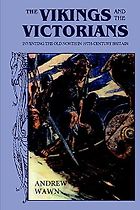
This is an interesting one. It doesn’t specifically address the medieval world as it was, but rather how our idea of it—and, specifically, of the Vikings—is largely a product of the nineteenth century. It’s a creation of Victorian scholarship, even down to the popularisation of ‘Viking’ as the term for these people. Before the Victorians, they had been called ‘Danes’ or ‘heathens’, and sometimes Norsemen. There was no fixed way of describing them, and then ‘Viking’ emerged as a preferred term in that period, for better or worse.
The ‘Vikings’ were a Victorian creation, and the implications are huge, because the Victorians also brought assumptions about race, heredity, empire and the superiority of the Germanic world. Those assumptions had implications for how Britain saw itself and how its role as a Christian empire was perceived.
There’s a massive amount of baggage bound up with the creation and perpetuation of these ideas. Again, it gets me into this business of not wanting to accept the categories and boundaries established through historiographical convention.
This has implications for the whole medieval period and for medieval Europe as an entity: what defines Europe, what defines Christianity, what defines paganism, and so on. When you start to peel back the layers of the onion, you can quite swiftly find that you’re looking at a nineteenth-century antiquarian construction founded on little more than late-imperial prejudices about the world in which its creators lived.
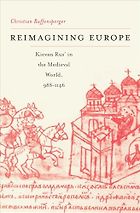
It’s a very useful prompt for readers, to remind them to think critically about perceived wisdom. I’ll keep us moving: next we have Christian Raffensperger’s Reimagining Europe: Kievan Rus’ in the Medieval World. This is a topic I’m not familiar with at all—could you introduce me?
Yes. This is helpful I think because it sits in a useful conversation with Bartlett’s book. It’s not a direct corrective, but a complicating factor. What Raffensperger is essentially saying is that we tend to look at Europe as a western-European-centric entity that expands into a sort of ‘outland’: the amorphous world beyond Frankish Latin Christendom.
Raffensperger argues that, if you look at it from an Eastern European perspective, you find yourself in a highly developed, sophisticated Greek-Christian world, both in Byzantium and in Kyivan Rūs – the precursor state, if you like, to modern Russia, Belarus and Ukraine.
His core argument is that if you strip away preconceived notions of what Europe is, you find that Rūs, as it was then constituted, had much deeper connections with western Europe and was more important in terms of its diplomatic, economic and outward-facing connections than we tend to assume. It should really be thought of as a Christian European power, no different from medieval France, the Holy Roman Empire or England. It’s an attempt to reframe what we mean by Europe.
If you think about Bartlett’s argument, his perspective is of a western Frankish Christendom that is expanding outwards towards the east. Well, yes, it is, but it is meeting something equally sophisticated, equally Christian and equally vibrant. It’s only historical accident, in the shape of the Mongol invasions, that really scrambles that map. We don’t know what Europe would look like had it not been for the disruption of southern routes to the Black Sea in the thirteenth century, or for that matter the sack of Constantinople by the Crusaders in 1204. These were historical moments with huge transformative effects. We don’t have a counterfactual for what Europe might otherwise have become.
What’s coming through in your book recommendations is an invigorating sense of destabilisation. They call into question everything we think of when we think of medieval Europe, right?
Yes, I like that! I think that’s one of the reasons I’ve been drawn to these writers and books. As God’s Hammer probably implies, I’m interested in the collision of worlds: what happens in those interactions, what are the messy crossovers, and where are the moments of contingency on which so much of this history hangs. Are we looking at things clearly? Are we standing far enough away to get the proper picture? Or are we enmeshed in modern, preconceived visions? All these books address that in different ways.
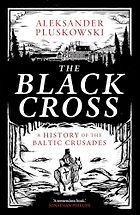
This is the newest book on the list. It only came out this year, and it’s a wonderful book. It sets out in clear and logical detail a subject that is woefully undertaught, misunderstood and, frankly, not even known about by many: despite the fact that these crusades fundamentally transformed the boundaries of Europe in ways that other crusading movements spectacularly failed to accomplish.
A lot of people studying medieval history would be astounded to learn that Scottish crusaders travelled to fight holy wars in the frozen forests of Lithuania, or that the biggest castle in Europe – Malbork in Poland – was built as the headquarters of the Teutonic Order in former East Prussia. These are bonkers narratives if you’ve never encountered them before. The landscape and climate give the whole thing an amazing cinematic quality, with its wilderness and snow. It’s quite a wonderful story.
Crucially, Pluskowski’s book fundamentally updates the previous history of the subject, Eric Christiansen’s The Northern Crusades, published in 1997. That’s also a great book and one that had a great influence on me personally. But it’s also nearly thirty years old, and there has been a huge amount of archaeological work on the northern Crusades that has been conducted in the last fifteen or twenty years, much of it led by Aleksander himself.
I actually dug with him for a season in eastern Poland, in Masuria. His work produced a massive amount of environmental data that show how the Crusades transformed the physical landscape, patterns of land-use and biodiversity in the region, as well as the physical castles and churches built by the Teutonic Knights and others during their conquests, and the cultural and religious changes experienced by people in material terms. The Black Cross draws on all of this new work as well as the medieval chronicles of the period to really enrich understanding of the period. So a big thumbs-up for that.
Thank you, and it’s great to have a sense of spread in the book choices—we have books from several decades ago coming right up into the present. As a closing question, do you have any other suggestions to offer readers seeking to expand their understanding of the medieval world?
I’d emphasise a couple of things I’ve already mentioned. Any approach to the Middle Ages risks getting bogged down in older scholarship that brings a lot of inherited baggage with it. People should be alert to that: always challenge the assumption on the page.
The other thing I’d say, if people are really interested in this stuff, is to go back to the primary sources. It’s all very well reading a secondary work that retells a historical narrative, but you’re effectively reading another layer of interpretation, which colours the framing of the history it’s trying to tell. If you go to the primary record, you can see what the chronicler was actually trying to say in their own words. Of course, we’re often dealing with translations, so it’s not completely straightforward. But it’s one of the easiest ways to cut through a lot of that accumulated historiographical or cultural baggage.
It’s particularly important at the moment because the Middle Ages is where a lot of ethnonationalist narratives draw their sustenance. If those narratives aren’t challenged, or if people aren’t looking at the actual sources on which they’re supposedly based, they’re going to be easily misled. It happens all the time.
Five Books aims to keep its book recommendations and interviews up to date. If you are the interviewee and would like to update your choice of books (or even just what you say about them) please email us at [email protected]
Support Five Books
Five Books interviews are expensive to produce. If you've enjoyed this interview, please support us by donating a small amount.
Thomas Williams is a historian and archaeologist and the author of Viking Britain, Viking London and Lost Realms. He was project curator of the British Museum’s major international exhibition Vikings: Life and Legend(2014), and later curated the museum's early medieval coin collection. He holds a PhD from UCL and is a Fellow of the Society of Antiquaries and Royal Historical Society. His new book God's Hammer: a History of the Viking Crusades is out now.
Thomas Williams is a historian and archaeologist and the author of Viking Britain, Viking London and Lost Realms. He was project curator of the British Museum’s major international exhibition Vikings: Life and Legend(2014), and later curated the museum's early medieval coin collection. He holds a PhD from UCL and is a Fellow of the Society of Antiquaries and Royal Historical Society. His new book God's Hammer: a History of the Viking Crusades is out now.