Could you tell us a bit about the background and remit of the Pol Roger Duff Cooper prize?
One of the things that’s most striking about the Duff Cooper Prize is its extraordinary heritage. It’s been going since 1956 and its first judges included the likes of Maurice Bowra, Cyril Connolly and Raymond Mortimer. Remarkable. It has, too, an extraordinary list of past winners, everyone from Lawrence Durrell and Gitta Sereny to Margaret MacMillan, Anne Applebaum, Lucy Hughes-Hallett, Victoria Glendinning and Seamus Heaney. So it has an exceptional history.
What the judges are looking for are books written with rigour, originality and narrative drive—exactly the sort of books that I was drawn to on the Sunday Times when I was a literary editor there and exactly the sort of books that most general readers of serious nonfiction crave.
What also makes the prize distinctive is that the judges each serve five-year terms. This gives the award a continuity that other prizes can’t match, and leads to a really reassuring consistency in the books that are selected. And the prize, looking back at the lists of past winners, has got better and better in the past 20 years under the guidance of Artemis Cooper. You look down the list and think of almost every winner, ‘Yes, that’s one I really want to read.’
What books are eligible?
It’s a prize for all types of nonfiction, really, but the focus tends towards biography and history. Although this year we’ve got an ecological/travel/nature book in Adam Weymouth’s Lone Wolf on the shortlist, which is slightly outside the general tendency of past years—but it’s such a wonderful book that it just jumped onto the list.
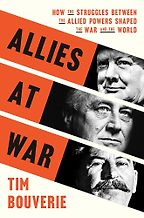
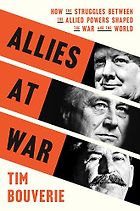
Let’s get on to the books themselves. First up is Allies at War: The Politics of Defeating Hitler by Tim Bouverie.
This is just a tremendous read. When you look at the title, you may think that it will be covering very familiar territory, given how many books have been written about the Second World War. But Bouverie writes so well, and with such freshness, that he completely hooks you.
Early in the book, for instance, there’s a whole section about the importance of Spain in the Second World War. This has been written about before, of course, but it’s handled here with such intelligence and such freshness and such energy that it feels completely eye-opening as it charts British attempts to bribe the Spanish to keep them out of the war and German attempts to get them to enter.
The book is also deeply researched, but beyond this, what makes the book so special are the contemporary resonances that ring out on every page. We watch Churchill as he manoeuvres his way through the war, trying to inveigle the Americans into the war, then trying to control Roosevelt and Stalin, and we cannot help but project forward to today. There are so many echoes with what’s going on now, and it has such contemporary relevance. It’s an absolutely gripping read.
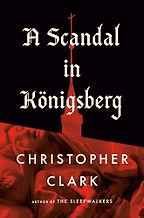
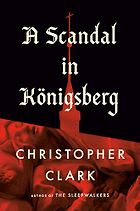
Next up, we have Scandal in Königsberg by Christopher Clark.
This was a real surprise for me, but an immensely pleasurable one. Christopher Clark is an outstanding historian, one who often paints on a very broad canvas in books such as Sleepwalkers, which is about the outbreak of the First World War.
This book, though, is very different. It’s a beautiful little pearl of a book, just 160-odd pages long. In it, he tells the story of a religious and political furore that broke out in the 1830s in the small German port of Königsberg, when two preachers in a small religious sect, one called Johann Ebel and the other Heinrich Diestel, became caught up in a huge and very public scandal. Clark is brilliant at both dealing with the material at hand and looking at its wider implications. He gives us, for instance, a gripping picture of the post-Napoleonic Wars landscape in eastern Germany, with the eruption of religiosity and dozens of different religious sects, and how alarmed the different German authorities became by these developments. And he paints an acute portrait of the charismatic Ebel, who was eventually accused of gross sexual impropriety.
All of this Clark lays out brilliantly. But what particularly interests him, and gives the book its real charge, are the modern echoes of this scandal, the rumours, the paranoia, the lies. It’s an early version of the culture wars, essentially, and Clark happily but subtly draws parallels between what happened then to what’s happening today: fake news and alternative facts. It’s absolutely wonderful and a total surprise. I was completely gripped.
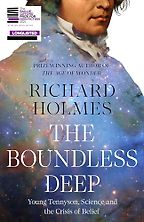
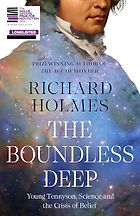
Our next book is The Boundless Deep: Young Tennyson, Science and the Crisis of Belief by Richard Holmes.
Holmes has won the prize before, of course, for Coleridge: Darker Reflections. He is a peerless writer about the Romantics and early Victorian poets, but I think he’s really excelled himself in this book. We tend to have a particular image of Tennyson, as a Victorian dinosaur—a sonorous, granite-like figure, but Holmes comes at the Poet Laureate, not from the present, but from his youth, and in so doing completely changes our picture of the man. Tennyson becomes, in this telling, vigorous, thrusting, inquisitive, dynamic, and very emotionally erratic as well. Holmes recasts him as someone who’s walking the dividing line between religion and science, and who is gripped by the contemporary moral arguments on both sides of these polar positions. Tennyson was fascinated by the scientific discoveries being made at the time, and Holmes reinterprets a lot of his early poetry in this light.
The book is also the story of two key friendships of his youth. One was with Arthur Hallam, who died tragically young and whose death poleaxed Tennyson and eventually, of course, brought forth his great poetic sequence In Memoriam. The other was with Edward Fitzgerald, the poet and translator of the Rubaiyat of Omar Khayyam, who becomes, in Holmes’s book, something very like Tennyson’s conscience. Tennyson is this young, dynamic, erratic figure who alternately delights and confounds and disappoints Fitzgerald, who watches rather sadly with us in the last 50 or so pages as Tennyson subsides from a dynamic young figure into a rather dull and static Victorian colossus. It’s beautifully done, and one of the best biographies I’ve read in years.
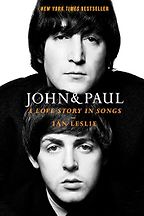
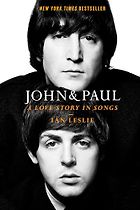
Let’s move on to the next one, John and Paul, a Love Story in Songs by Ian Leslie.
Like the Richard Holmes and Tim Bouverie books, there is a feeling of familiar territory here. Is there anything else to be extracted from the Beatles story, anything else to be said? But Leslie’s book is full of surprises and originality. He has previously written books on psychology, and he approaches the story of the Beatles through the central friendship between Paul and John, and the really intense relationship the two had right from when they first met as teenagers, all the way through to John’s death. What we get from this is a fresh perspective on the band in a story told with great narrative intensity.
Leslie clearly has an enormous knowledge of, and deep passion for, the Beatles, but what really gives the book its edge is his determination to rescue Paul from the nay-sayers and to make clear just how central he was to the Beatles and how, in fact, it was he, rather than John, who was the driving force behind the band. He makes a very convincing case for that.
It’s a brilliant achievement and the book is packed, of course, with all sorts of fascinating anecdotes—around the promiscuity of the band, for instance, and the way in the early days that they would write songs in the back of the touring van as they were going from one gig to another. It’s extraordinary, and it makes you realize again, with great clarity, what a phenomenon they were.
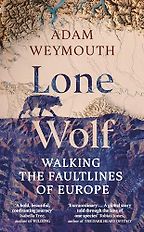
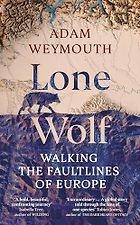
Finally, we have Lone Wolf: Walking in the Faultlines of Europe by Adam Weymouth.
This, as I’ve already said, is perhaps not a typical Pol Roger Duff Cooper book. It’s a mix of nature, environment and travel writing in which Adam Weymouth travels in the footsteps of a tagged wolf called Slavc, from Slovenia all the way through to Italy. But it’s so beautifully written, and goes so far beyond the usual remit of a nature book, that it leapt onto the prize shortlist.
Weymouth’s first book, Kings of the Yukon, was about a 2,000-mile trip he took across Alaska in a kayak. What that book did brilliantly was mix absolutely exceptional nature writing with inquiries into the tensions between nature and humans along the river. He does something similar with this new book. Here he walks from Slovenia all the way to Italy, following in Slavc’s tracks and stopping along the way to take the temperature of the different regions through which he passes. Everywhere he walks, he meets people who are affected by the growing number of wolves. (There used to be almost no wolves in the region, but now, partly because of Slavc, there are hundreds of them.) What he charts in the book—brilliantly, in my opinion—are the tensions this increased presence creates in the human community through which he and Slavc walk.
Weymouth is an exceptional writer, someone very much in the mould of Robert Macfarlane, and he writes as beautifully as Macfarlane does about nature. He also loves to explore the tensions between man and animals, and does so exceptionally well. So in every country he goes through, he looks at the fear that the wolves cause, the resentment that the protection of the wolves by the EU causes amongst farming communities, and how the wolves become emblematic of much broader political tensions between local communities and central government, and how populism becomes caught up in this duel. So it becomes not just a piece of nature writing. It becomes, in many places, a book about the politics of modern Europe and about the tensions between populism and liberalism. It is an extraordinary achievement.
The winner of the 2026 Pol Roger Duff Cooper Prize will be announced on 16 March
Interview by Benedict King
January 28, 2026. Updated: March 18, 2026
Five Books aims to keep its book recommendations and interviews up to date. If you are the interviewee and would like to update your choice of books (or even just what you say about them) please email us at [email protected]
Five Books interviews are expensive to produce. If you've enjoyed this interview, please support us by donating a small amount.