I wonder if you could just explain what a default is and why sovereign debt restructuring is famous for being such a complicated process?
A default is when a debtor doesn’t pay money back that was borrowed, typically in a bond or a loan, on time or in full. The heart of the problem with sovereign default and debt restructuring is that governments are different from individuals. They can’t just not provide their services. They are responsible for the well-being of people. They can’t simply take orders from judges or other countries to pay for or not pay for this or that public service in order to pay their bondholders back in full.
Government debt restructuring is a very difficult—nearly impossible task. But people have figured out ways to do it anyway. These five books teach how it is done.
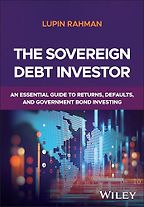
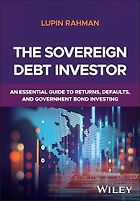
Let’s move on to the books. First up is The Sovereign Debt Investor: An Essential Guide to Returns, Defaults and Government Bond Investing by Lupin Rahman. Tell us about this one.
Lupin Rahman was most recently the head of sovereign investment at Pimco, one of the world’s leading investment funds. This book was just released in 2026, so is the most up-to-date source out there. In 50 pages in part four of the book, Rahman details why countries default and the steps in the debt restructuring process. It includes short case studies on Greece’s 2012 debt restructuring and Argentina’s messy 20-year process.
The rest of the book explains the background on government bond markets and so on. If you want to read only one book, read this one. And if you are short on time, read part four.
Is sovereign debt restructuring something that retail investors can invest in, or is it just for the pros?
Historically, there have been many opportunities for retail investors to buy bonds of developing countries denominated in U.S. dollars or Euros, but this has recently changed. Sovereign bonds used to be issued around the world with a denomination as small as $1,000. However, after Argentina’s default in 2001, which was owned by over half a million retail investors in Europe, many in Italy, European officials enacted a new regulation making it hard for foreign countries to issue bonds into Europe with a denomination of less than $150,000. This protects small investors in Europe, although in the U.S., sovereign bonds are still available in denominations of $1,000 if the issuers are registered with the SEC.
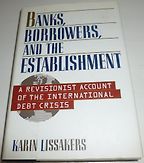
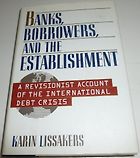
Let’s move on to book number two, Banks, Borrowers and the Establishment: A Revisionist Account of the International Debt Crisis, by Karen Lissakers.
This book teaches why almost every Latin American country defaulted on its debt in the 1980s and how the debt crisis was resolved over a decade.
The author is a former US government official and she gives an in-the-room account of what happened. She explains the life-threatening exposure of US banks like Citibank, who lent boatloads to these countries, and she explains how the US Treasury, in particular, US Treasury Secretary, Nicholas Brady, the Fed and the IMF, helped the countries and the banks come up with a way to restructure the debt to help the countries recover but not kill the banks, swapping the defaulted loans into new instruments called ‘Brady Bonds.’
It’s written in plain English. It’s an exciting read, and frankly, it’s eye-opening because she explains how US tax rules encouraged banks to lend too much to Latin American countries before the crisis broke out. It’s the ultimate insider’s account.
Next up is The Power of the Purse: A History of American Public Finance 1776-1790 by E James Ferguson. This is taking us back a couple of hundred years.
The United States was the Argentina of the late 1700s, in default to British and Dutch lenders on both federal and state debt. We were the new world. They were the old money. The U.S. was still in default on pretty much everything when the Constitution was enacted in 1789. To deal with these defaults was one of the key reasons the U.S. needed the Constitution to supersede the Articles of Confederacy.
E James Ferguson’s book is on the US finances of the period, and on the restructuring of the defaulted debt. Hamilton features large in the story. Not only did he insist on a strong federal government, he insisted that the U.S. settle its debts on reasonable terms. He argued that the United States had to have a strong national credit, if only for the US to be able to borrow money in a time of war to defend itself. The U.S. graduated from being an Argentine-style deadbeat to a respectable borrower under Hamilton’s leadership as Treasury Secretary. But don’t read this to adulate him. Read this to learn that he barely got the votes in Congress to pay our debts. From this, you should better understand why President Milei is having so much trouble getting the Argentine political system to balance its budget in order to stop defaulting. We were once there too.
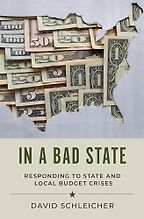
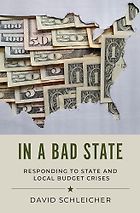
Next is In a Bad State: Responding to State and Local Budget Crises by David Schleicher. What story does this one tell?
This is an unconventional recommendation because it dives into U.S. state defaults.
U.S. state debt is not guaranteed by the federal government. It is sovereign debt, and in the 1800s, several states defaulted, as Yale Law School professor David Schleicher details in his book.
U.S. states defaulted in the 1800s not because of war, but because they borrowed too much money and spent it unwisely on infrastructure projects such as canals. They planned badly. They were incompetent in execution. And there was theft and fraud. The context was that New York had just built the Erie Canal and thrived. The other states had a fear of missing out, rushed to borrow, invested unwisely and had no new revenue from the projects to pay bondholders back. Then the people didn’t want to raise taxes to pay the debt their states had incurred. Eventually, they were convinced to raise taxes and improve their borrowing policies, but it was a painful learning process.
U.S. states also defaulted on all their Confederate rebel debt, as well as much of the Reconstruction era debt. Today, U.S. states and cities rarely default because the law and practice of borrowing by municipalities is well designed. With that said, in the last decade, both Detroit and Puerto Rico defaulted and restructured their debt.
When a state or city defaults, is there some role for the federal government, or is it completely out of the picture?
The federal government wipes its hands of municipal defaults because the states are sovereign. The United States federal government has limited powers and limited responsibilities. It does not guarantee state and local debt.
One subtlety is that a city, such as Detroit, is a creature of its state. So, the State of Michigan got heavily involved with Detroit’s bankruptcy. Then we have the case of Puerto Rico’s bankruptcy, where Congress had to step in because Puerto Rico is not a state, but a territory, and lacked the power to restructure its debt that Detroit had access to because of a quirk in federal bankruptcy law.
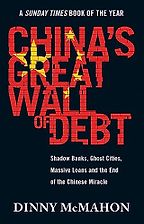
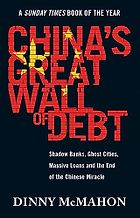
Let’s move on to the last book, China’s Great Wall of Debt: Shadow Banks, Ghost Cities, Massive Loans, and the End of the Chinese Miracle by Dinny McMahon.
China, since 2008, has been making very large-scale mistakes with debt, just as our states made funding infrastructure in the 1800s, and our commercial banks did lending to Latin America in the 1980s. Wall Street Journal reporter Dinny McMahon gives a breathtaking account of China’s mistakes, including why ghost cities were built in the middle of nowhere. This book explains how, in the early 2000s, China lent massive sums to the province and city of Wuhan, and it exploded in growth. Then. they said, let’s roll that model out to our far-flung provinces and also to poor countries in Africa and Venezuela. China adopted a debt-driven growth model, which it accelerated during the Global Financial Crisis. Many of China’s post-2008 projects, however, have failed to generate adequate returns. China’s financial system is choking on the debt, which is primarily held by 100% government owned financial institutions. This debt needs to be restructured, just as we restructured our national debt in the 1700s, our state debts in the 1800s, and the debt owned by Latin American countries to our banks in the 1980s.
It’s the same story replaying itself again and again: governments get in wars and/or spend money unwisely and find themselves in a conflict between paying creditors and providing public services. It’s a difficult problem, so the urge is always to kick the can down the road and pretend the debt can be paid back next year. That, however, doesn’t really help to normalize the situation because banks can’t lend to new borrowers if they are stuck with old loans that are being unpaid or only partially repaid.
Do the Chinese have a framework within which to work this out, or is part of the problem that they don’t?
The Chinese tend to delay payments, and forgive a little bit, and rewrite contracts so you don’t really know what’s going on. The lack of transparency makes it hard to follow on a bank-by-bank basis, but the slowdown in Chinese growth in the last few years has very much been caused by the lack of new borrowing and lending capacity in the system.
So, what are the biggest things readers get out of reading these five books?
After reading these five books, I hope readers will see connections between the past and the present and start to ask questions like, ‘Isn’t the situation in China today kind of like the U.S. state defaults in 1840?’ I hope they will also see that U.S. public debt is skyrocketing at the same time the political system is unwilling to raise the tax revenue to pay for it. We have over $30 trillion of unfunded debt, which puts the country in a situation quite similar to where we were before Hamilton fixed our finances in 1790. Billions and trillions of dollars and our economic stability are at stake. People need to understand government debt better. It’s really not that hard if you invest some time to get used to it.
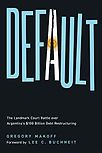
Tell us briefly, before we wrap up, about your book on the court battle over the Argentinian debt.
Argentina’s debt story is a truly Shakespearean drama. When people ask me about sovereign debt defaults, they always want to know whose fault it was. Was it the political deadbeats or the evil bankers? They want to assign blame. The truth about the Argentina story that I try to lay out over 300 pages is that it’s really complicated. There are many different parties with different motivations, and they’re caught in a world with impossible rules, trying to survive as best as they can. By this I mean that countries have citizens who desperately need services. At the same time creditors want to get repaid, but don’t have sufficient power to force a foreign country to pay them back. Both sides need it resolved to move on with life. Then the U.S. Treasury and IMF try get involved to try to sort things out, but in Argentina’s case the fighting went on for years and years.
In Argentina’s case, the plaintiff—some hedge funds—just refused to stop suing until they got every penny and more. On the other side, the Argentine government refused to give even an inch. The conflict took 15 years to resolve. It was truly awful.
My book goes into the detail of the law of the negotiation process. It’s narrower than these other five books, but it’s good to come to it after reading the others.
Five Books aims to keep its book recommendations and interviews up to date. If you are the interviewee and would like to update your choice of books (or even just what you say about them) please email us at [email protected]
Five Books interviews are expensive to produce. If you've enjoyed this interview, please support us by donating a small amount.