Stonehenge was built in a couple of different phases. When did that take place?
The main monument that we think of, the stones in the middle, was put up around about 2500 BC, so about 4500 years ago, but it had a number of phases as a monument. It started around 500 years earlier than that, when it was just an earthwork enclosure. After the stones were put up, they were rearranged a few times, and various other things happened to the site. So it has a really long history.
We think it was built by the Neolithic inhabitants of Britain, who were largely pastoralists. They had cattle and pigs; they were farmers, but it doesn’t seem like they were very settled – they moved around a lot. We know that they travelled over long distances and did all kinds of interesting things at that time. People from far away came together to build Stonehenge – we’ve got evidence that people travelled to the site from across southern Britain, if not further afield, to take part in the feast and the construction.
Can we say anything about why?
It’s a prehistoric temple, and it’s built to align with the movements of the sun, so it must have had religious significance for the people who built it. The solstice axis and the arrangement of the stones are really the only clues we have for what went on there. It’s been excavated a number of times, but there isn’t any clear evidence for things like fires or pottery or depositions of any artefacts – the kind of things you would find normally on archaeological sites that tell you about what happens inside these monuments. It seems to have been kept quite clear of everyday things, which suggests it’s maybe sacred space.
The alignment on the solstice suggests that people gathered there to observe the sunset and the sunrise in midwinter and midsummer – although it’s quite small inside the monument, so presumably it was only certain people who got to go inside, even though it would have taken hundreds of people to build it.
So, it’s a religious monument. We’re not sure why exactly, or what their beliefs were, but they must have thought the sun was important and the turning year was important, and possibly that they had to conduct some kind of ceremony in order for that to continue.
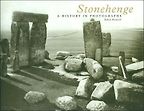
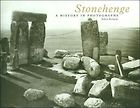
Let’s turn to the first book you’ve chosen: Stonehenge: A History in Photographs, by Julian Richards. What can you tell us about this one?
As the title implies, this is a picture-heavy coffee table book with extended captions, rather than full narrative text. It goes from the earliest photograph, which is 1853, and which happens to show a royal family picnic at the stones, right the way through to more modern photography. But mostly it’s historic, black-and-white photography.
It’s a really captivating book, because it shows Stonehenge in all the different phases of restoration. Big phases of restoration took place in the 1920s and then again in the late 1950s, and it’s fascinating to see them moving the stones around with big cranes. Also, the early photographs are really fascinating, with Victorian tourists. And there are some photographs which are quite shocking, with graffiti on the stones, and the stones being used for protest and that kind of thing. There are some from the First World War, showing a military airbase really close to Stonehenge, which is quite amazing to see…
It’s just a really intriguing book to flick through. We think of Stonehenge as being this pristine monument that sits there in the middle of nowhere, apart from a road nearby, but actually it’s had a complicated past. The recent history of the site is quite fascinating, as well as the prehistory.
Who was undertaking that restoration work? Has it always been a public site?
It was a privately owned site until 1915, when the Antrobus family, who owned the site, decided to sell the estate and the monument. It was sold at auction. The youngest member of the Antrobus family, who would have inherited the land, died in the opening month of the First World War and then the father died quite soon after, probably of grief. So the family sold the estate, and it was bought by a local man called Cecil Chubb, and he owned it for about three years through the rest of the war.
Then he decided – or he was slightly strong-armed, I think – to donate it to the nation. So from 1918 onwards it was owned and looked after by the nation, which has meant a succession of bodies: initially the Ministry of Works, who were a government department; then later the Department for Environment in the 1970s; and then from 1984 onwards by the body known as English Heritage. Since they became a charity back in 2015, it’s still been owned by the state, but looked after and managed by English Heritage on behalf of the nation. They don’t receive any government funding anymore for looking after it, but that’s how it is with all of our state guardianship monuments, unfortunately.
The restoration work was done in the 1920s by the Ministry of Works, and in the 1950s and 60s also. They had a huge team of expert architects and engineers and craftspeople who did all of that work. I’ve met the son of the main architect, T. A. Bailey, who managed that whole project, and it’s really fascinating to hear about the people who were involved and how they did it all. They were all in-house specialists, and they did things like making really early use of concrete for restoration in the 1920s – some quite bold, forward-looking decisions that have stood the test of time, but must have felt quite radical at the time.
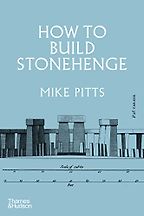
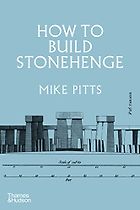
Well, this brings us very nicely to your next choice, which tackles earlier architectural problems: How to Build Stonehenge, by Mike Pitts. Could you tell us about this one?
Mike Pitts is an archaeologist, and he has spent pretty much his whole lifetime researching Stonehenge. He’s one of the few people who has excavated at Stonehenge a couple of times. The first was in the 1970s when he happened serendipitously across a trench being dug along the road, right next to Stonehenge – and he said, ‘Stop, you need an archaeologist here!’ So he did a small excavation there, where he found the partner to the Heel Stone, which is one of the outlying stones. Then he was involved in the Stonehenge Riverside Project, which had some excavations at Stonehenge in 2008, which is a project that we might talk about later. So he’s very knowledgeable, and he’s a very good writer.
How to Build Stonehenge does what it says: it takes you through the actual process of how people built Stonehenge. He looks at all the evidence for where the stones came from, how they were brought to the site, how they were shaped and worked, how they were set up… all the architectural detail of the monument. It’s based on the latest research, because these stories are always changing, particularly about where the stones are from and how they were moved and worked. Mike draws particularly on ethnographic sources of information about how people in more recent historical societies, or current societies around the world who still build megaliths, do the moving and building of stone monuments – for example in Easter Island or Indonesia.
It’s a really interesting book. There’s never been a book before about the process of building Stonehenge in such a lot of detail.
Can we talk about where the stones are from? I found that astonishing…
The large stones on the site, the really big ones with the horizontal lintels, are called sarsens: those are from the Marlborough Downs, which is about fifteen miles to the north of Stonehenge. Specifically, most of them are from an area called West Woods. A paper back in 2020, a research project that I was involved in, pinpointed the origins of the sarsens to a particular set of outcropping stones in what are now some lovely woods, about fifteen miles away. They’re the closest to Stonehenge, but they’re the biggest, and it’s still a really big feat to bring them that far.
Then the smaller stones on the site – we call them smaller stones, but most of them are higher than me – they are the bluestones, and they come from southwest Wales, from the Preseli Hills in Pembrokeshire. They didn’t all come at once. Some of them arrived and were set up by a monument by the riverside; some of them were set up in that first early phase of Stonehenge, probably, and then moved to within the sarsen stones.
And then finally – and I think this probably isn’t in Mike’s book, because it’s research that came out after it was published – most recently geologists have looked at the Altar Stone, which is a flat stone that sits right in the middle of the site. That is a type of Old Red Sandstone that only outcrops in northeast Scotland, which suggests that the stone at the middle of the site has come all the way from up there – which is a bit of a revelation. I mean, Wales is far enough. Northeast Scotland is a really long way – presumably by boat, although we don’t know for certain. Some archaeologists have argued for overland routes, but I’m a bit sceptical of that; I think a boat would be much easier. But it shows that there are materials being brought to the site from all over Britain.
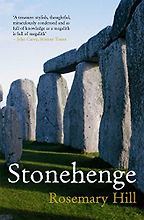
Incredible. Let’s talk about your third choice: Rosemary Hill’s Stonehenge.
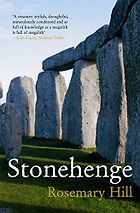
I was fortunate to meet Rosemary a couple of years ago when we both did a BBC Radio Four recording, and she was lovely. She’s a historian rather than an archaeologist, and so she focuses on the more recent history of the site. She’s quite funny, there’s a dry sense of humour in the book. She takes you through what different people have thought about Stonehenge: is it Roman, is it Mycenaean, is it built by the Danes, was it the Druids… She charts the changing meaning of Stonehenge, and how people have interpreted it.
She is particularly an architectural historian. She covers Inigo Jones really well, the architect who wrote about Stonehenge and thought it was Roman. She talks about how Stonehenge has also then been influential in architecture and town planning, and things like the Bath Circus, which is supposed to be laid out by John Wood according to the dimensions of Stonehenge. She talks a lot about art, too – about painters like Constable and Turner, who were inspired to paint Stonehenge in lots of dramatic ways. She sets those artistic responses to Stonehenge in their historical context, and she brings it up to date, talking about some of the more recent free festivals.
She’s a very good historian, and she writes really well. It’s very readable, with lots of asides and facts, and it’s the sort of book you want to sit down and read in a couple of sittings – it’s a fun thing to read.
This sounds fascinating, because those modern stories have been so influential. The idea that it was built by Druids really shaped modern druidry, right?
Yes. We have William Stukeley to blame, but it was the accepted explanation for about two hundred years, so it’s no wonder that it stays in our minds. He wrote his book in 1740, suggesting it was the Druids who built Stonehenge, and it was a perfectly sensible idea at the time. They were the only prehistoric people that were named by the classical sources, so he was basically saying Stonehenge was prehistoric, pre-Roman. So it sounds a bit silly to us now, but it was a good explanation for its time.
But then it really stayed, right until the early 20th century; and it entered popular imagination. Stukeley’s book was hugely popular and influential. Archaeologists from about 1901 had decided that Stonehenge was probably Neolithic or Stone Age, but the druid idea stayed… Ronald Hutton has written a book called Blood and Mistletoe, about the history of Druidry in Britain, and it’s absolutely fascinating. He’s an amazing historian. They had these friendly societies, which were like the Rotary Club of the Victorian period;and they named themselves after the Druids, because the Druids were judges and forthright leaders of the community. They were Christian friendly societies that just adopted the name Druids. And then in 1905 the local group decided to have a ceremony at Stonehenge, with cotton wool beards and fake sickles… And then over the 20th century it basically developed into a modern-day religion. It’s a rather extraordinary story.
The photos of that Victorian gathering. There’s one in your book, and it’s amazing.
Really good, yes!
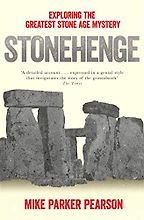
Ok, we’ve come to your fourth choice. This is Mike Parker Pearson’s Stonehenge:
Exploring the Greatest Stone Age Mystery. Tell us about this one.
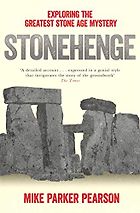
Mike Parker Pearson was my personal tutor at the University of Sheffield when I was a student. I was taken to Stonehenge and learned about prehistory from him and from others there. He directed a really large project called the Stonehenge Riverside Project, which was a large series of excavations in the Stonehenge landscape that took place from 2005 to 2009.
These excavations were not all at Stonehenge itself. There was a small excavation there, and there were some in the immediate surroundings, but mostly they focused on a site called Durrington Walls, which is a couple of miles away to the northeast. There’s a great big henge monument there that was already known about, but Mike came back because he had a theory about how these sites might be linked together. He’d been out to Madagascar, doing some work relating to megalithic monuments there, and he brought a Malagasy academic called Ramilisonina back to visit Stonehenge. He basically said, ‘It’s obvious. Stonehenge is stone for the ancestors, where the dead are buried. At Durrington Walls, the monument is in timber, and that’s clearly the monument for the living.’ So he’s got this idea that there are two parts of the landscape, an area for the ancestors built of stone, and an area for the living built of timber.
Mike’s a very good storyteller, so he’s quite convincing about this binary opposition. We do know that Stonehenge was used as a cremation cemetery for up to about 150 people in the first phase of the monument, before the stones got put up.
The theory then led him to excavate at Durrington Walls and other sites, and he found a settlement at Durrington Walls. There are some houses, which are really, really rare from this period of prehistory. He found an avenue linking Durrington Walls to the river. He found another stone circle at the end of the avenue, and they did excavations on the cursus, which is an early Neolithic monument, and loads and loads of other sites nearby. So, lots and lots of new information.
Fascinating. Is it a dense read, then?
It’s a popular publication. It’s not academic — it’s his personal story, telling the story of the discoveries of that project. The project is so influential, and there’s a lot in there that tells you about how we understand Stonehenge in its local landscape, and the other monuments and settlements around. Even over ten years on, some of that material isn’t yet fully published in an academic monograph, so we’re still relying on what Mike wrote in that book somewhat. It’s a really important book for understanding the archaeology and the surrounding landscape.
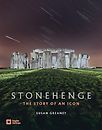
It’s revelatory to realise how many things besides Stonehenge are in the area. Not just these contemporaneous sites, but earlier and later… Your own book, Stonehenge: Story of an Icon, takes us from the Mesolithic period to the present day. Could you tell us a little about the pre-Stonehenge sites?
Yes. So as I said, Stonehenge has got some phases itself, but it’s generally a middle to late Neolithic monument. In that same landscape, there was already what we call a ‘monument complex’ – a cluster of important monuments – by the early Neolithic period, around 1000 years before Stonehenge was built. In that period we see long barrows for burial of the dead, and enclosures that look like temporary gathering places or settlements. And there are monuments called cursus monuments, which are great big rectangular enclosures. There are two of them in the Stonehenge landscape. We don’t really understand what they are. Lots of people say that Stonehenge is a complete mystery. It’s not; it’s really well studied. Cursus monuments, on the other hand, are a mystery. We don’t know what they’re for at all.
So there was already this cluster of monuments in that landscape, and Stonehenge was built where it was because of that. People were obviously visiting and traveling to that area and building monuments there for a really long period beforehand.
And your book covers archaeological finds that are more recent than Stonehenge, too…?
Yes. Stonehenge is still important in the early Bronze Age, when lots of round barrows were built in the local area, particularly along some ridges overlooking Stonehenge. It seems to have been important to bury your dead near Stonehenge, and some of those burials were accompanied with very rich grave goods – gold items and amber and jet. So these were presumably high-status people, who were in control of some of the metal trades that were happening at that time. We still don’t really know where they were living. A lot of the barrows were excavated by antiquarians, so they rescued the artifacts, but they didn’t keep the human remains, unfortunately.
In the Iron Age, it goes quite quiet. There’s a hillfort built not far away from Stonehenge. But then we know from the medieval period there’s a Saxon burial in the centre of the site, probably a criminal execution. So this suggests it’s an out-of-the-way site that isn’t close to anybody’s settlement… Then we get the first depictions of Stonehenge in medieval manuscripts from the 13th century onwards, and we can see that it pretty much looks the same as today.
The Romans visited as well. There are a lot of Roman finds from the site, and from an excavation that took place in 2008 we know that Romans were actually digging holes and doing weird things on the site. So they probably thought of it as something like a shrine. We used to think it was just lots of careless Roman tourists dropping things, but the indication now is that people were deliberately leaving offerings at the site.
It’s amazing to think of all these different groups re-interpreting it…
It never gets forgotten. It’s not a site that has to be rediscovered – it’s there all the way through. Most other prehistoric monuments had to be rediscovered, even Avebury, so the continuity of references to Stonehenge is unusual.
Amazing. Story of an Icon is a beautiful book.
The book was a team effort. It has beautiful new photography by James O Davies, who’s a Historic England photographer. It has a new reconstruction by Bob Marshall, who’s a really talented reconstruction artist, which folds out from the middle. My editor Jen Cryer did an amazing job, especially pulling together all the imagery and working with the designers… So it’s got my name on the front, but there are some really key people that made it look so good. It’s a very picture-heavy, glossy souvenir guidebook.
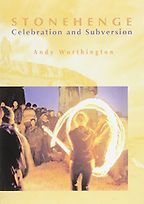
Let’s talk about your final choice. This is Stonehenge: Celebration and Subversion, by Andy Worthington. What’s this one about?
Andy Worthington is a campaigner for social justice – he’s done a huge amount of work on Guantanamo Bay, for example. This book is really a social history of maybe the last hundred years of Stonehenge.
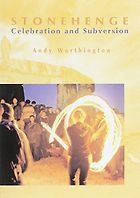
It focuses particularly on the solstice celebrations. He starts with the Druids, and talks about how people have been attending solstice for probably 100 to 150 years or so, but the main focus is the free festival, which happened in the fields around Stonehenge between 1974 and 1984. It’s fairly famous as one of the free festivals that happened around the country at that time, when there was a huge counterculture movement, and it was tied to music and free love and drugs – a precursor to Glastonbury, in effect. The Pyramid Stage was at Stonehenge Free Festival before it was at Glastonbury. It was part of the circuit of festivals that people used to do over the summer.
The big story is the Battle of the Beanfield. In 1985, it was decided that this festival was so huge and so damaging to these prehistoric monuments that it would be banned. A huge police cordon was set up. There had been a lot of damage – cars were set on fire, people used to dig toilet pits into barrows, it was pretty terrible for a really important archaeological site – but then what happened next fits in with Orgreave and Hillsborough in terms of police brutality. A convoy of vehicles was attacked and forced off a road. It’s called the Battle of the Beanfield because they were forced off into a field of beans about six or seven miles away from Stonehenge. It’s a really interesting story of the 1980s and what the police were doing, and of the government trying to crack down on this counterculture movement. Looking back at it, they were experimenting with ideas about how society could be different, which feel quite relevant again now.
Sounds like a really important addition to the record.
His book is so detailed: there are personal testimonies and loads of photographs. I think he was involved a bit, so he knows the key people, and it had a real impact. Nobody died, but there were some really violent attacks on both property and people, and people have lived suffering from the impact of it ever since. It’s a really interesting book for covering that social history, and he does it very well, in a very even-handed, fair way. He doesn’t privilege one group’s views over another.
If you see the photographs of people there for solstice now, it’s hard to understand why people gather and what that’s all about, without understanding the more recent history.
Interview by Sylvia Bishop
July 12, 2026. Updated: August 24, 2026
Five Books aims to keep its book recommendations and interviews up to date. If you are the interviewee and would like to update your choice of books (or even just what you say about them) please email us at [email protected]
Five Books interviews are expensive to produce. If you've enjoyed this interview, please support us by donating a small amount.