Before we get to your teen and young adult book recommendations, can you talk a bit about what the publishing landscape looks like these days?
I’m a children’s literature and literacy professor, and I’m also active in the children’s book world, working with publishers, authors and agents. It is really interesting to look at the current youth publishing world. Young Adult (YA) is a huge market here in the United States, with over 7500 books published every year for kids and young adults. A large percentage is picture books, but a very strong portion is books that young people will read on their own. There are trends that happen, like a focus on fantasy books or historical fiction. We’re seeing a huge number of graphic novels — historical graphic novels, biographical graphic novels, fantasy graphic novels. If I had to use one phrase to describe this year’s YA books, it would be that they are binge-reading-worthy — so many of the books you start and you do not want to put them down.
I was the 2025 Chair of the Boston Globe-Horn Book Awards, so I read at least a couple of hundred YA books. What I noticed is there was quite a bit of fantasy, many retellings of classic fairy tales, many books that mirrored themes we’ve seen before — identity struggles, struggles between adults and young people, people finding their way in different communities, trying to figure out how to navigate relationships, life goals, and new experiences. We’ve seen an increase in dystopia, again, and we also saw a huge pile of romance, bromance and LGBTQIA romance, with all kinds of platonic and romantic love in different ways. I think that the YA market really has got a little bit of everything this year.
With all these books being published for teens, are you suggesting that we don’t need to be too concerned about young people scrolling on their phones all the time and not reading books?
I wish! The truth of the matter is that technology today is really pulling young people in. It’s pulling a lot of adults in. But if the question is: is there enough to ignite, delight and cultivate young adults to read, I would absolutely positively argue that there is, and that our job is to curate the large amount that is published to put titles on people’s radar. When we do that, we find that we can motivate a young person to read. Going into an independent bookstore or a library can be quite overwhelming for anyone, so I think one of the best things is to have a conversation to identify potential books to add to their to be read (TBR) pile. What do you like? What interests you? What’s a book that you haven’t read yet that’s on your TBR pile? It is important to remember that the right to reject a book or to not finish a book is equally as important as the right to finish it.
What do you look for in a book for young people? How does something end up on your best of the year list, or as a winner when you are on the judging panel for a book award?
I look for books with possibility and the potential. I have a phrase that I love to use: “The book is not the destination, it’s the vehicle to the destination unknown”. I’m less worried about the book as object, even though this year was a phenomenal year for books as objects. I have piles of books with absolutely beautiful sprayed edges and end pages and glitter and foil and other things like that. What I’m looking for in YA is the book that I think might find an audience in a single person or a group of kids. Basically, is it worth talking about?
One of the things that I love about the five books that I picked to share today is that they build context, you want to turn the page, and maybe you want to leave the book to find something else out, or to talk to somebody about it, or mark something in it. As I say to lots of my student teachers: “If it’s something that stays with you, maybe there’s a reason that it’s worth it”. I am a realist, and I like relationships and action. I care about people, places, and events (past, present, and future), so those are things that I love to look for in books for young adults today.
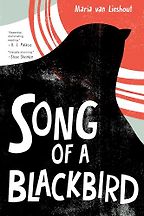
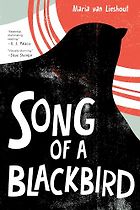
Let’s talk about your first book pick, Song of a Blackbird, a graphic novel by Maria van Lieshout.
I love this book for so many different reasons. It’s a graphic novel that is based on discovery. It’s got teenage angst in it. It’s set both in 2011 and during World War Two. It’s about the Dutch resistance. Also, I’m a big fan of dual-narrated titles. Sometimes it works and sometimes it doesn’t. I would argue that it works incredibly well in this novel. It builds context. It builds relationships. There’s a grandmother with cancer who has a past that her granddaughter doesn’t know about, and through a series of artistic finds and memorabilia and paintings, she discovers her grandmother’s role in the Dutch resistance.
Song of a Blackbird is captivating in every way. I’m in love with the block print graphic novel part of it, and I phenomenally love the back matter, with real photographs and text. This is a rare case where I might recommend that some read the back matter first, and others read the novel first, and then there are those of us who flip back and forth. I’m also very happy with the perfect binding with the French flaps. It is published by one of my favourite graphic novel publishers, First Second — if they publish it, I will read it.
Would you say this book is strictly for teens? It seems to me that younger kids could also enjoy it.
I think it’s ideal for a thoughtful or interested 12 year old, or a younger child who has some background about World War Two. It is what I call an “everybody book”, for everybody from age 12 to a hundred.
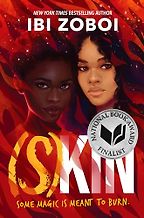
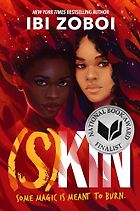
Your next pick is (S)kin by Ibi Zoboi, who writes for adults and kids as well as young adults. Would it be correct to say that this is a fantasy novel in verse?
Yes, it’s a fabulous fantasy novel in verse. It is also a Caribbean folk tale with a contemporary twist. It has two protagonists, Marisol and Genevieve. It is about friendship and identity and finding your place, and there are all kinds of feelings. It’s quick, it’s compelling, and it’s beautifully written. It is bold, there are secrets in it, there’s a little of the supernatural, and there’s a little bit of satisfying horror in it. I’ve read it a couple of times, and I’m thinking that I might read it for a third time because there are so many layers, and I’m sure I missed some. I don’t think everybody has to get the same thing out of a book, but I do think there are a lot of layers in this, and I think it is a treasure. I’m also really interested in listening to the audio version, which I’ve heard good things about.
Yes, it’s an AudioFile best Young Adult book of 2025. What age would you say it is for?
I would say 13 through to 25. But then I’m 61, and I clearly liked it. I want to remind people that the evidence on kids who read a book they might not be prepared for says that no kid has died or suffered from a reading-related disease, unless it’s related to mould. They’ll either put the book down, talk to an adult about it, or skip the part that bothers them. In other words, there is no reason that an adult needs to stop a young person from reading a book.
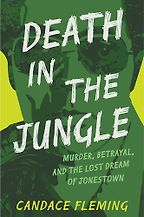
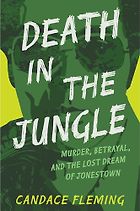
Next up is Death in the Jungle: Murder, Betrayal and the Lost Dream of Jonestown by Candace Fleming, a multi-award winning writer of nonfiction for children. This is the nonfiction winner of the 2025 Boston Globe-Horn Book Award, which celebrates excellence in children’s and young adult literature. That must be partly thanks to you, as you chaired the judging panel.
Yes. This is the story of Jim Jones and the community that he brought together that originally started in the United States and eventually moved to Guyana. Most of the news focused on the tragic ending in 1978, which was basically a mass suicide that Jim Jones executed. What’s brilliant about what Candace Fleming does here is, she talks about all the eclectic types of people from different backgrounds that came together because they wanted to be part of a community. She does an exceptional job highlighting and providing perspectives, having interviewed some of the very few survivors or people who had first-hand knowledge of the situation. She builds context through narrative, and we get to know some of the people.
In describing the attraction and danger of a cult, do you feel that the book is written with an eye on the present, highlighting the importance of critical thinking, of looking at facts as well as emotions, and trying to see the world in a less polarised way?
No question about it, it seems like a metaphor for some of what’s going on in the United States and around the world, for why people develop and then become grounded in these beliefs and stances as to what is true and what they need, and also how so many people are looking for the antidote to a problem. This book is taking a different lens. I think that’s really important, and she does it in such a captivating way. I’m a huge fan — if Candace Fleming writes it, I will read it.
Is it illustrated? What age of reader would you say it’s for?
There are some original photographs. It’s YA in terms of the target audience, and you can tell by the tone and the pacing. But from a research point of view, it’s very much like an adult nonfiction book, and that’s one of the things I really appreciate about it. I think it’s for readers age 13 or 14 and up, depending on how comfortable they are with reality. There are some chapters that need a bit of context.
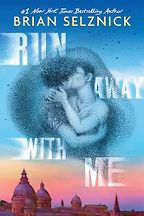
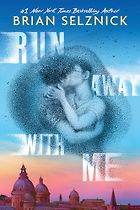
Let’s move on to Run Away With Me by Brian Selznick, who won the Caldecott Medal for The Invention of Hugo Cabret.
This is Brian Selznick’s first YA novel, and it is beautifully illustrated. It is a book that he was inspired to write from time that he and his partner David spent in Rome during Covid, where they pretty much had Rome all to themselves. It is a classic love story with a contemporary twist. It’s got amazing architecture and Roman history in it, but at its heart it’s a love story. I love it for a lot of reasons; one is the evolution of the two characters — how they get to know not only each other, but themselves.
It sounds like a good novel for armchair travel, or to take on a trip to Rome. Is it an LGBT romance?
Yes. An American boy meets an Italian boy in Italy in the 1980s. They’re in their late teens. It’s beautifully done. It’s not explicit or graphic in a sexual way. It’s very romantic. It’s just perfect.
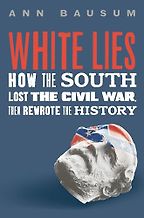
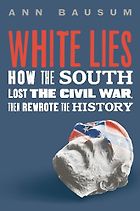
We have come to your final book for teens of 2025, White Lies: How the South Lost the Civil War and Then Rewrote the History by Ann Bausum. She is known for writing nonfiction books for young people, often about history and social justice. Can you introduce it, please?
I grew up in New York State, primarily, and I live in New England, specifically Connecticut, where we have our particular perspective on the Civil War, from the Union perspective. I’ve always known that there were other perspectives, but I hadn’t really understood how the South shaped different perspectives on the Civil War.
Ann Bausum does a phenomenal job of highlighting each of what she presents as the lies. “Slavery was a compassionate institution” is one of them, or “reconstruction was a failure”. Lie 10, “The American Civil War was a war between the states”, is even a question on standardised tests. She has taken and documented each of these lies and provided the context.
This is a book that I think benefits from being read chronologically, but it also could be very helpful to have young people dip in and out to elaborate on what they might be studying in school. It’s absolutely phenomenal for anybody who wants to understand the history of the United States and how the United States came to where it is today. I think it is positively essential reading. But even though this book is very much a United States book, it clearly has lessons to be learned for how we frame any conflict between two groups.
Famously, history is written by the victor. What is the author suggesting is different in this case?
Well, I think the truth of the matter is that so often, once people develop an opinion they aren’t willing to change it. What’s so different for me with this is, if I had been brought up in Florida, Texas, Mississippi or Alabama, the history text would have presented a very different version of the Civil War. In fact, the major publishers have admitted for decades that there are different versions of the same textbooks that are used in the South and the North. What is so fascinating about this is Ann Bausum, as a Southerner, did her due diligence to look at how things had been presented, and what the data really said. It is a perfect example of how the narrative is impacted by what you pick and choose. I think that she moves towards balance, and she leaves a lot of room for the reader to interpret.
Is it very accessible or quite a serious history book that adults might like to read as well?
There are some photographs or drawings, but for the most part it is pretty dense. The chapter headings and information are just phenomenal, and the sourcing is meticulous. It is one of the most adult-like bibliographies I’ve seen in a YA book in years. A highly able 12 year old could read it, or the kid who’s gone around to some Civil War sites or has a foundational understanding of the Civil War or some of the facts of the timeline. Speaking of the timeline, what’s interesting is the timeline in this book goes all the way up to the present day.
Is there anything you would like to say to conclude?
I have a confession that I hadn’t thought about before, which is that I’ve read previous works by all five of these book creators, and had positive experiences with all of them. This is often how I develop trust for an author or interest in a topic. And with all of these books, I think a conversation with another reader would really be fascinating.
Interview by Tuva Kahrs
January 7, 2026. Updated: January 18, 2026
Five Books aims to keep its book recommendations and interviews up to date. If you are the interviewee and would like to update your choice of books (or even just what you say about them) please email us at [email protected]
Five Books interviews are expensive to produce. If you've enjoyed this interview, please support us by donating a small amount.