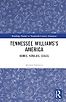
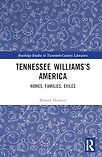
You recently published an academic monograph, Tennessee Williams’ America: Homes, Families, Exiles. What drew you to Tennessee Williams—would you begin by introducing our readers to Williams and his work?
I think his significance as a playwright speaks for itself: he’s a monumentally revered, two-time Pulitzer Prize-winning author, and a major figure in 20th-century American drama—not least because his career spans from the early 1930s right through until the early 1980s. He was writing at the same time as people like Eugene O’Neill and Arthur Miller and Lorraine Hansberry and Edward Albee. So his work emerges from a ferment of unparalleled talent in American theatre.
Several of his plays have been made into landmark films in their own right, most famously A Streetcar Named Desire (1951) with Vivien Leigh and Marlon Brando, or Cat on a Hot Tin Roof (1958) with Elizabeth Taylor and Paul Newman. Williams was a monumental talent who attracted major performers, the icons of his day. Brando’s powerhouse performance in A Streetcar Named Desire, in particular, has reached a level of immortality, which has fed interest in Williams’ work, and fed into William’s own mystique and celebrity.
He’s also a major figure in queer literary history. He highlights the corrosive and intense homophobia that was present throughout American society in the 20th century. In A Streetcar Named Desire, there’s this tragic figure of Allan, Blanche DuBois’s late husband. In Cat on a Hot Tin Roof, there’s Skipper, the recently dead friend of the protagonist Brick. Williams shines a light on the downtrodden, put-upon queer men who had to negotiate the difficulties of American society.
Williams was a keen, if skeptical at times, observer of the gay liberation movement. He didn’t claim to fully support it—we will get to this later on—but he was more supportive and sympathetic than he initially led on.
So, his significance is a combination of his own talent, his ability to or luck in collaborating with others, and also his political prescience. These three major components keep him relevant to this day.
That’s a great overview, thank you. How did you come to this selection of five books?
It might surprise some of your readers that I haven’t chosen Cat on a Hot Tin Roof (1955) or A Streetcar Named Desire(1947). My rationale is that those plays are almost legends in their own right. They’ve taken on a life of their own, independent of Williams, their creator. They’ve been parodied in The Simpsons. There’s a yearly competition at the Tennessee Williams & New Orleans Literary Festival for who can yell “Stella!” the loudest. Nobody needs to say more about them than has already been said. Those plays can speak for themselves.
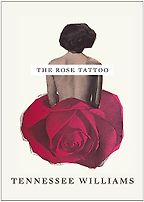
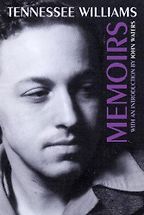
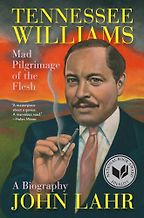
I wanted to pick plays that were important to Williams. Important in the trajectory of his career, and which perhaps been given the care and attention and respect they deserve. I also wanted to pick my favourite play of his, which is The Rose Tattoo. I wanted to touch on his Memoirs—the raw, unfiltered, uncensored version of Tennessee Williams, who spoke his mind about his personal life, his family, his relationships and his sexuality. And, lastly, the Lahr biography, Mad Pilgrimage of the Flesh, is a beautifully evocative overview by a tremendously talented, well-read and learned biographer.
I think, on balance, drawing attention to these five texts is more weighty than the same old plays. I’d like to balance Williams’ record, forty-plus years after his death.
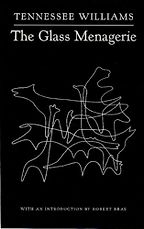
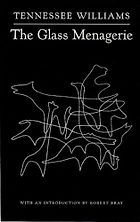
The first book on your reading list is Tennessee Williams’ The Glass Menagerie (1944).
This is the play that catapulted him to fame. It was the play that brought, what he called in an essay a few years after it premiered, ‘the catastrophe of success.’ The Glass Menagerie wasn’t his debut; he’d written a few politically-charged agitprop plays for a low-key independent theatre group called the Mummers of St Louis—like Candles to the Sun and The Fugitive Kind—plays that dealt directly with the hardship and poverty of the Great Depression. But they weren’t particularly successful and weren’t really designed to be.
Before The Glass Menagerie, to try for mainstream Broadway success, he wrote a play called Battle of Angels, which had a disastrous premier in Boston in 1940; there were pyrotechnics in the final scene, and the theatre in which the play was staged nearly caught fire, so the production had to be curtailed. But Williams didn’t give up, remained persistent. Battle of Angels later formed the basis of his play Orpheus Descending.
Then he came to The Glass Menagerie, initially during a very brief and essentially unsuccessful period in Hollywood, where he wrote a treatment for a screenplay called The Gentleman Caller. It wasn’t produced, but the screenplay drew enough eyeballs that it got the attention of this actor-producer named Eddie Dowling, who would come to play Tom in the original Broadway production. Dowling’s attention led to the casting of Laurette Taylor as Amanda and Julie Haydon as Laura. The rest is Broadway history.
The reason I’ve chosen to highlight it is because it sets up so many o fthe perennial themes that we’ve come to identify with Williams’ work. Namely, right at the top of the list is the importance of, and tensions within, families. The Glass Menagerie is a quintessential family play, and Williams comes back, repeatedly, to the centrality of the family in American life. He stages—with this triptych of Amanda, Laura and Tom—the loneliness and the alienation and the yearning that emerges from three disconnected, withdrawn, uncertain, fragile, but also beautiful characters.
There’s also this blurring of fact and fiction, realism and magic, and that establishes Williams’ talent for—as Tom says in the beginning of the play—truth “in the pleasant disguise of illusion.” He wants to tell hard truths about life, but also to put them through some kind of rose-coloured filter. Not to be overly brutal, but also not to shy away from the fact it was an especially difficult time in the 1930s and early 1940s.
The play shows his penchant for creating undeniably human yet profoundly flawed characters, and though we are separated now from The Glass Menagerie by a good 80 years, everybody feels that pain felt by Amanda, or the loneliness of Tom, or the alienation of Laura, because these are the bedrock of what it means to be human. I think that for anybody who wants to understand these themes—both in terms of their own humanity, and also as a way of understanding Williams’ dramaturgy—The Glass Menagerie is a perfect place to start.
In the staging notes, Williams describes The Glass Menagerie as “a memory play.” This is a phrase that often pops up in books about Tennessee Williams. What does it mean?
The memory play is, essentially, a character—in this case, Tom Wingfield—looking back on a very important moment in his life and theatricalising it. He draws the audience’s attention to this, making very clear that this is artificial, remembered, and may not be accurate or even reliable. Williams is drawing attention both to the fallibility of Tom’s memory, and also inviting us to draw our own conclusions about Tom’s relationship with his family.
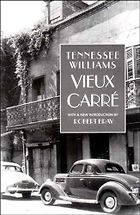
Vieux Carré, the next play I’ve picked, is also a memory play. I’ve always read it as a sort of sequel to The Glass Menagerie. The memory play form functions primarily as a way in which Williams’ characters can process traumatic memories. For example: Tom’s relationship with his mother is extremely strained and awkward; she calls him her “right hand bower” and says she will only allow him freedom to go “whichever way the wind blows you” after Laura gets married. That’s a tremendous amount of pressure to place on one person’s shoulders, not least because Mr Wingfield, the family patriarch, is gone. Tom, for all intents and purposes, is the man of the house. He has to do the job that his father has abandoned, and Tom doesn’t want to fill that role, frankly.
The memory play functions as a way to unleash these traumas and tensions, and through that being able to reconcile the guilt of walking away from the family and the responsibilities. Whether fully relinquishing that guilt is possible for Tom, though, Williams doesn’t make clear.
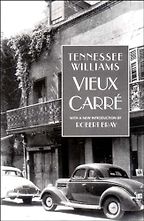
Yes, let’s talk about Vieux Carré (1977) next. Williams wrote Vieux Carré three decades later, but feels like a continuation of, or return to, the themes of The Glass Menagerie.
If The Glass Menagerie depicts Williams’ life with his family in St Louis, Vieux Carré depicts Williams’ life once he had left home and gone to New Orleans. It roughly maps onto Williams’ actual biography. The fundamental difference is that Williams did not just leave St Louis and never return; he returned several times, even after his so-called moment of liberation. In Vieux Carré, there’s a sense of romanticism and finality—the character based on Williams can never return.
When Williams came to New Orleans, he stayed at a boarding house—722 Toulouse Street—and had several run-ins with his landlady, many of which he stages in the play. This landlady was very cantankerous, very intrusive. In the play, she coerces free labour from him because she knows he doesn’t have money, so she makes him drum up an advertising campaign for her: Meals for a quarter, in the Quarter. So people are coming to the boarding house, picking up cheap meals, and going on their way.
Now, the main crux of Vieux Carré is the writer’s relationship with his first lover, Nightingale. Where The Glass Menagerie has no queer sexuality to speak of, Vieux Carré is notable because there is a love scene at the heart of it. Williams, or the character based on Williams, is initiated into queer life and allowed a fleeting glimpse into queer love through this relationship with a fellow tenant.
This relationship is short lived. The writer is still trying to negotiate the sense of shame and guilt associated with homosexuality in American culture in the early 1930s. There is a lot to work through in these negative emotions. But there is also the sense, at the end of the play when he leaves the boarding house, that he will be able to come to grips with his sexuality—if not now, in New Orleans, then at a point in the future.
What leads to the writer, who is not named, having to leave the boarding house is the landlady, Mrs Wire, pouring boiling water through holes into the studio of a queer photographer named Biggs, because she thinks he is throwing orgies. She is completely homophobic and decides she is not going to have it, and unleashes a wave of violence onto her tenants. She’s taken to court by Biggs, found guilty of criminal negligence, is fined, and at that point the writer decides he cannot ever come to terms with his homosexuality while living in this boarding house and decides to leave.
Vieux Carré was written seven years into the height of the gay liberation movement. Williams had an awkward relationship with the movement; on one hand, he made public statements to the effect of, ‘I’m not a political writer,’ or ‘I’m not going to limit my audience by just writing about queer people.’ But the fact is, the gay liberation movement gave Williams the wherewithal to come out publicly, during an appearance on the David Frost show, where Frost broached the question of Williams’ sexuality very directly.
Williams said, and I’ll quote him directly: “I don’t want to cause a scandal, but I’ve covered the waterfront.” So he was outspoken about his sexuality and well-versed in queer sexual subcultures.
It seems to me—and I make this case in the book I wrote about Williams—that for Williams to say that he didn’t owe at least some debt to the gay liberation movement, both personally and in terms of his career, it is a bit disingenuous. I think it’s no accident that he makes these explicit pronouncements on television during the 1970s, or that he just so happens to be staging a love scene in the middle of a late autobiographical play, after being so reticent initially.
Vieux Carré is both a continuation of The Glass Menagerie but also, in several ways, much more radical than The Glass Menagerie could have ever been, because the sociopolitical climate had changed, allowed him more freedom.
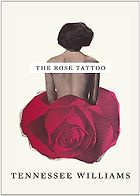
Thank you, I think that gives us a great sense both of the play itself and the wider forces that carried it. Could we talk next about The Rose Tattoo (1950)? You said earlier that it’s your favourite play of his.
Yes. It’s my favourite because it is a play front-loaded with tragedy; it doesn’t at first seem to be a life-affirming play. But it is. It’s a beautiful, tender and incredibly loving play. Williams dedicated the play to his lover Frank Merlo, “in return for Sicily.”
To sum up the play very briefly, our main character Serafina Delle Rose begins happily married to her husband, Rosario, has a child, Rosa, and is pregnant with her second child. Rosario is outwardly a banana truck driver, and also a drug runner. There is a car accident, Rosario dies, Serafina suffers a miscarriage as a result and she spends the next period—maybe four years—in mourning.
She’s a dressmaker, so people rely on her. At the beginning of the second act, several women in her community are up in arms because she has promised them gowns for their daughters’ high school graduations and she has kept delaying them because she doesn’t want to leave the house. She’s been in seclusion, essentially.
Eventually, Serafina comes to find out that her beloved Rosario had been having an affair. Right at that point, when she makes this discovery, she meets a man, Alvaro, another truck driver, who has the “face of a clown and the body of her husband.” There’s a sense that Rosario is haunting her. But he’s also come back to her in a new, improved and more tender-hearted way. Alvaro is much less stereotypically masculine. He cries. He’s put upon by family members. He doesn’t have his own independence. He wants to settle down and have a family of his own, but the circumstances aren’t ideal. Serafina and Alvaro are drawn together. They make love, and after the night of passion Serafina gets pregnant and decides to give love another chance.
The reason why it’s my favourite play is because it is Williams completely undoing what he had been known for up until this point, which—by his own admission—was violent, tragic plays. He gives you that sense that Serafina’s fate was going to be very similar to Blanche DuBois, or even Laura’s. Laura doesn’t die, but she does lose her gentleman caller, and her future isn’t particularly bright.
Serafina’s fate initially seems to be that she will fall victim to those same forces. Her sense of her dead husband has been shattered, she’s exiled in her own community, she’s an Italian immigrant so her relationship with the rest of America is strained and contingent. It seems she will be another of Williams’ tragic heroines. And yet, over the course of the play, you see a woman who has lost everything, very close to a Blanche DuBois figure, throw caution to the wind and embrace life. I think that’s the most beautiful thing about The Rose Tattoo. It’s a richly affirming play. Even Williams thinks that life cannot just be a series of tragedies. There has to be some kind of sweetness or succour at the end.
It stands out, because Williams plays it as a kind of comedy. He plays a trick on his audience, making you think it will be a tragedy, then pulls the rug out from under you. It’s a beautiful surprise of a play.
That’s why I think some critics don’t think it works. This 180º turn doesn’t convince everybody. But I love it because Williams subverts the results he has established in the middle of his own career. On top of that, it won Anna Magnani, a brilliant Italian actress known for realist cinema, an Academy Award. Again, Williams creates these masterpieces that draw equally immense talent.
Right. The career of a playwright or screenwriter depends at least partly on luck: on who gets attached to your projects and what they do with your text. But there is also an art to that collaboration. Maybe Tennessee Williams addresses this directly in his autobiographical book Memoirs, your fourth recommendation?
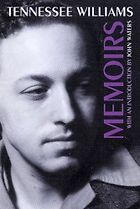
The Memoirs are unique in the sense that they need to be considered in context. From the 1960s onward, Williams entered what he called his ‘Stone Age.’ He was having one monumental failure after another in the theatre. His cultural stock was at an all time low. He needed a hit. So he thought, well, I’ve tried the theatre, I suppose the next logical step is to mine my own life and career for the goods, for material. So he spent a significant amount of time writing this book, out of chronological order.
The Memoirs are structured so they flit back and forth, kind of like a Williams play, and the periods that he does decide to focus on are so salacious, so gossipy—he just lets it all hang out. He tells us about this lover and that lover, what he thought about this or that figure. You get the sense of a man unleashed. The American filmmaker John Waters described it as being like sitting down for drinks with an already-inebriated Williams, telling you stories.
It’s incredibly brave for anybody to go so far and to be that candid about themselves. Yes, Williams was incredibly forthright in his plays, very articulate and outspoken about sexual relationships. But there is a distinct difference, I think, in what he could get away with on Broadway, which was dominated by its own very conservative rules and regulations, and what he could get away with on the printed page. This is an unparalleled frankness in a public figure.
In the 21st-century, we have reality television. But if you look at the Kardashians, for example, it’s curated. Any outrage is managed outrage. Whereas with Williams, it really was a man with a talent for writing who had reached a point in his life where he had nothing left to lose. He decided to bare it all on the page.
That’s what attracts me to that book. It’s just so naughty. It’s a great, page-turning read. If you know Williams for the austerity of A Streetcar Named Desire or The Glass Menagerie, then you also need to get to grips with his outrageousness and his very blunt and frank nature. That is also an undeniable facet of his talent as a playwright and also his personality as a man.
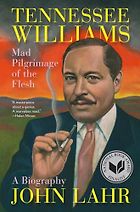
Fantastic. I think we also get a sense of that freewheeling spirit in the subtitle of the fifth book you’ve selected, John Lahr’s biography Tennessee Williams: Mad Pilgrimage of the Flesh. That’s rather wonderful, isn’t it?
Yes, yes, yes. Lahr makes the case, and I don’t think it’s a far-fetched claim, that sexuality and human relationships were at the heart of his theatrical output. Lahr goes through Williams’s relationships with his family: his parents, his sister Rose—who we haven’t talked much about, but who was a central figure in his life and whom Blanche and Laura were directly based on.
Lahr is a consummate biographer. Before this book, he had already tackled Joe Orton’s life in Prick Up Your Ears.
And that of his own father, the comedian Bert Lahr, in Notes on a Cowardly Lion.
So this book is the product of a man who is deeply ingrained in transatlantic theatrical culture. He doesn’t deliver a milquetoast, paint-by-numbers portrait, he gives a very deep, rich, well-resourced and authoritative outlook on Williams’ biography. From a purely technical level, it’s a brilliant book. You can see the mechanics of how a good biographer works, how he ties all these threads together into a grand and tightly controlled tapestry.
It’s just exhaustive in the best possible sense, everything that you would want to know about Williams, his relationships, his standing in American drama and culture. The beauty of Lahr’s biography is that it doesn’t give you the sense of Williams as this perennial, untouchable, canonical playwright. It shows you Williams the man, a man who was struggling with what he termed the ‘catastrophe of success.’ He was well-travelled, a global icon, and then in the 1970s and 1980s, it just fizzled out into nothing. He died in a very indecorous, even tragic manner which mirrors his tragic characters.
It’s an incredibly poignant and informative documentary. For anybody who wants to go beyond the Williams of the stage, and towards Williams as a human, you will find that in Lahr’s biography.
Interview by Cal Flyn, Deputy Editor
May 5, 2026
Five Books aims to keep its book recommendations and interviews up to date. If you are the interviewee and would like to update your choice of books (or even just what you say about them) please email us at [email protected]
Five Books interviews are expensive to produce. If you've enjoyed this interview, please support us by donating a small amount.