From books exploring questions of identity and belonging in contemporary China to a charming memoir by a delivery driver, it's been an extraordinary year for books about China in English argues Jeffrey Wasserstrom, a professor at UC Irvine and specialist in modern Chinese history. Here, he talks us through some of his favourite China books published in 2025.
Before we get to your book recommendations can you talk a bit about your perspective, as a historian, on China today?
There’s a lot of continuity in what’s been going on in China, but I would flag two shifts as particularly notable. One of them is internal and the other external.
Internally, there has been a trend under Xi Jinping toward less openness to varied ways of thinking about Chineseness, and a narrowing of the official interpretation of how one can be seen as thinking and behaving in an authentically Chinese way. There is still enormous variation within the People’s Republic of China linked to locale, language, lifestyles, you name it, but top-down tolerance for this variation has been lessening since a bit before Xi took power in 2012, but even more so in the last decade.
Externally, there has long has been a sort of ebb and flow between romanticising China and demonising it. This continues, but it used to be linked to visions of China as somehow backward, in touch with ancient values or trapped in the past. What is different is that in this century, for the first time, both the romanticisation and demonisation are about a China that’s seen as futuristic. This has all kinds of curious manifestations, including the fact that in the middle of the 20th century if you were an Anglophone reader and had read one novel set in China, it would probably have been Lao She’s Rickshaw Boy or Pearl Buck’s The Good Earth, both of which have images of a slow-moving place, not one surging into the future. If you’ve read one novel by a Chinese author now it’s probably The Three-Body Problem, which is science fiction, and that’s a real shift, I think.
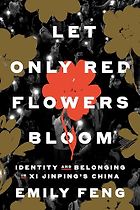
Let’s turn to the first book you’ve chosen, Let Only Red Flowers Bloom: Identity and Belonging in Xi Jinping’s China by Emily Feng, an American journalist. Can you introduce it?
There are a lot of things I like about this book. It makes broad points through profiles of individuals, which is very compelling. It’s Emily Feng’s first book, but I was familiar with her reporting for National Public Radio. Let Only Red Flowers Bloom is about how this period of rule by the Chinese Communist Party is one that is increasingly intolerant of diversity of cultural forms and of language uses. Xi is trying to get everybody onto the same page in a way that you could argue we haven’t seen since the final decades of Mao’s rule.
She talks about Hui Muslims in China, and how it was possible not that long ago for them to feel fully Chinese but also Muslim, and now it becomes problematic for them to combine these identities. She uses stories about Hong Kong and Mongolia as well, the efforts to push the former to be more in step with the mainland, and about use of the Mongolian language being suddenly seen by the state as a challenging thing. People casually following the news about China might think of what’s been happening with Tibet and with Xinjiang, the effort in those two places to crush difference, and in some ways they remain extreme cases of the push to homogenisation. But Feng charts the way in which, even just in the time that she was reporting in China from the mid-2010s onward, spaces for easy expression of difference shrank. She notes the tighter control of artistic expression. She also weaves in her changing sense of her own identity as somebody of Chinese descent, and her excitement about being in China initially and a dulling of that excitement as she saw some of the things that were still possible when she arrived becoming less and less possible.
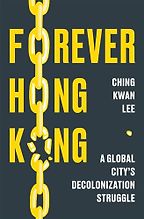
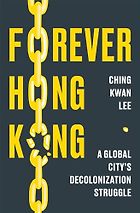
Please tell me about your next book recommendation, Forever Hong Kong: A Global City’s Decolonization Struggle by Ching Kwan Lee, a sociologist.
Forever Hong Kong is a deep dive into one particular place where this intolerance for variation has been strikingly clear. The focus is on 2019 and protests Ching Kwan Lee presents as a last-ditch effort to defend a Hong Kong that could operate very differently from mainland cities — a test of the idea of ‘One Country, Two Systems’. Lee is one of the most talented sociologists working on China, and a gifted and bold ethnographer. She had done impressive books before on labour in China, and on Chinese mines in Africa, all written with a theoretical sophistication and rooted in a lot of time hanging out with people, trying to figure out what mattered to them. This new book turned that ethnographic eye on her own city. Events like the 2014 Umbrella Movement reinforced her sense of caring about Hong Kong deeply, and she spent a lot of time with very young activists who were on the front lines there five years later. A more clearly scholarly work than many I recommend to Five Books, it’s written with passion and is accessible, so that even when she’s making sophisticated points she’s enlivening them with a lot of detail from her interviews.
Her argument has to do with Hong Kong never having had a period free from having to deal with problems of colonial control. She sees a continuity of sorts between the period of British colonial rule and what followed, which has had many of the characteristics of colonial control, with Beijing, in this case, being the metropole. She has a special way of thinking about colonialism and decolonisation. It’s a book that could be very valuable for people who are interested in other colonial and post-colonial and decolonised settings to read.
What is different about her analysis of decolonisation?
She’s very attentive to the way that global capitalism operates via different strategies and alliances between businesses and governments, moving from one form of colonialism to another. She emphasises that Hong Kongers as a group were left out of the discussion of the future of Hong Kong when there was a transition. That is quite different from the classic image we have of what happens when a territory stops being part of an empire and the voices of the people of the territory that was controlled, though they may be competing with one another, are the main voices involved in figuring out what comes next. Given that the voices of Hong Kong’s people have never been at the centre of the official debates on its future, she argues that it became natural for the young people whose perspective she highlights to feel justified in calling for and fighting for a chance at self-determination, however long the odds of success were in 2019.
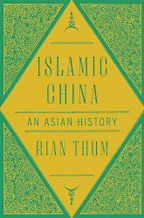
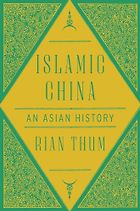
Your next pick is Islamic China: An Asian History by Rian Thum, a historian. It looks like we’re still on the question of identity.
Yes, this book is also about how there can sometimes be more and sometimes much less space for different forms of cultural expression in the physical territory that we now think of as China. Rian Thum is a beautiful writer, as he showed in his first book, The Sacred Routes of Uyghur History, a wonderful work on Xinjiang. He’s at heart a historian who was tempted by archaeology, and he really likes to go deep. In this book, what he claims is that there’s a very long history of both China being part of the story of global Islam, and Islam being part of the story of China. He finds it curious that both Buddhism and Islam started having a presence within China around the same time, in each case due to people moving, texts moving and ideas moving across borders. And yet, now many think about Buddhism, which began in India, as a part of Chinese culture, whereas Islam keeps being seen, at least at times, as alien. If we think of the Hui who are both Chinese and Muslim, whether or not that becomes something that people think of as a problem is partly political and, like so many things about China, including where exactly its borders are, subject to change.
This is not just a book for scholars; Thum enlivens it with storytelling about individuals and also about objects, about the circulation of books from different places and different sets of maps. He tracks the way that books flowed in and out of China, and how different languages could be used by the people involved in this. There are Persian texts that become important within China and are created by people who are also creating texts in Chinese.
We often think in terms of assimilation or resistance to assimilation, rather than about fusions or hybrid elements from Islam that become so much a part of life within China that people don’t think of it as a problem. There are many examples in earlier periods in Chinese history when there was less of a sense of Islam being thought of as something that has not fully integrated into the life of China proper, when there was more of a sense that there could be people who follow different faiths or had ties to different parts of the world. He uses stories of some quite memorable figures, including some who write using different names at different times, so you might have a whole set of interactions with them but you don’t think about their Islamic-ness.
Presumably Admiral Zheng He is one of the people he highlights?
Yes, he would be probably the one who people know about, this pivotal figure from Chinese history who is talked about as Chinese. I think what Thum’s book is partly about is, imagine not thinking of it as a curiosity that stands out when you learn that Zheng He was a Muslim. What has not penetrated our image of Asian history is the fact that land-based connections between the Indian subcontinent and East Asia were often via Muslims. I think other national histories have those blind spots, too.
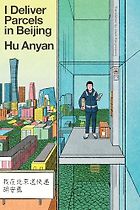
Let’s move on to your next book pick, I Deliver Parcels in Beijing by Hu Anyan. I’ve read this one, it’s a memoir based on the author’s blog post about his experiences as a delivery driver. I really like the authenticity and naturalness of his voice, but tell me why you picked it.
Yes, it’s very much the voice of the kind of person who often gets written about, but we rarely hear their voice. It explodes any notion that there isn’t a life of the mind and a questing and asking questions about things in the mind of somebody who’s reduced to the kind of labour that one imagines making them almost an automaton. This is somebody who was always determined to carve out space for thinking and writing, no matter what. It’s fascinating to get his perspective. He spends time doing all sorts of different kinds of occupations that probably some of his readers will be able to relate to, having done something like one of them for a time. It has a lot of the pleasures of works of fiction, but is nonfiction. It’s like a work of ethnography, only with the ethnographic subject being the central narrator. It’s a charming, surprising book. Maybe if I was an editor, I would have wanted to change something about it, but on the other hand the roughness of it can be part of the value. The takeaway isn’t about victimisation, even though he’s somebody in economic precarity. I’m glad it exists, and I’m glad it’s getting a bit of attention.
The author is very open about his struggles with interacting with others, and how poor working conditions were detrimental to his mental health. Essentially, he seems to use writing as therapy.
Yes, sometimes you feel you’re eavesdropping on somebody or reading some of their diary. A book from early in this century that I love is Leslie Chang’s Factory Girls, in which there are long enough interviews that you get a good feel for individuals you don’t often hear from directly. Here the whole book is one person in this kind of forgotten group taking charge completely of the narrative.
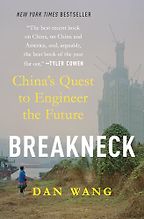
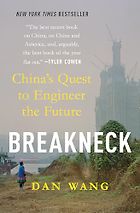
We have come to your final pick of the best books on China of 2025, Breakneck: China’s Quest to Engineer the Future by Dan Wang, a research fellow at a US think tank who was previously a tech analyst in China. Please tell me why you have chosen it.
Dan Wang, starting in the in the 2010s, would write an annual letter from China, a fascinating, long-form reflection on the year where he would talk about stories that he had covered, experiences he had moving in the world of tech and economics, and books he had read and liked on all sorts of places and topics. It was like an erudite holiday letter where someone fills you in on their last year, and it really conveyed an interesting personality. I thought this book was going to be in that vein, and parts of it are — it’s very much driven by stories and reflections.
It’s too bad that one of the less interesting parts of it has become the takeaway that gets talked about the most, which is the idea that China is a country of engineers and America a country of lawyers. The idea is that an engineering state can do things on a big scale without worrying about regulation and can accomplish amazing things, but can go in terrible directions via social engineering. Wang uses the one child policy and the zero covid policy as examples of the engineering state gone wrong. The achilles heel of the lawyerly society, by contrast, is an obsession with legality that can get in the way of getting things done. The benefit is it can potentially protect people. A couple of reviewers within China studies have pointed out that, actually, some of the same things he is saying about today’s China as an engineering state were said about Japan late in the last century.
It’s also supposedly something Bill Clinton said to Jiang Zemin when he visited China in 1998: “You have too many engineers and we have too many lawyers, let’s trade!”
As a historian, I go back even further. I was reading Jules Verne‘s From the Earth to the Moon. In it, he says America is going to launch a rocket to the moon first because America is a country of engineers. America used to be able to build things, but was thought of as a pretty lawyerly place as well, so it wasn’t as though you had to choose between the engineering and lawyerly sides. Anyway, it’s not that the idea of a contrast is wrong but it oversimplifies things. One good thing is that, to counteract drawing too stark a divide, Wang makes the point that he’s often struck that the people he knows who are Americans and those who are Chinese seem to have more in common with each other than they think.
When I saw the title of this book, I thought that the focus would be on the technologies of tomorrow and efforts to secure leverage in those areas. Is that not what it’s about at all?
No. One of the real values of it is trying to think about not having to choose between either being impressed by some of the things that are going on technologically in China, or being horrified by the political repression — he walks this line between. It’s important that he has the chapters on the one child policy and zero covid, about things that go terribly wrong when the human impact of big projects is not taken seriously enough. What I like about the book the most is being in the company of an incredibly thoughtful person who spent time in many different parts of China thinking about what’s going on.
Can I ask you a question unrelated to the books?
Sure.
As a foreign historian writing about China, how restricted are you in terms of using sources in China? There was a period in the 1990s and 2000s when I think it was quite open. How much has that changed?
I haven’t done research in China for about a decade but, certainly, it’s more restrictive now. A big shift in terms of access to scholarship on the Mao era is what’s happened to Hong Kong, which used to hold an easily accessible and amazing archive of documents about China under communism. Another shift is an expansion of the topics that are seen as sensitive. For example, you can be criticised for your interpretation of the Qing era if you say that the Qing were as much influenced by Manchu as by Chinese traditions. I think it’s challenging to be a foreign historian writing on China in terms of getting access and getting visas, and it’s more difficult to figure out what an unproblematic topic to be researching is. Some things are night and day; in the early 2010s people could do research in Xinjiang, and that’s off the table. It used to be I felt I could give a talk on anything related to protests in Hong Kong, whereas on the mainland I’d have to be careful, especially about anything that happened in the recent past. Now I can’t give talks at Hong Kong universities on the protests there in the 2010s. So, yes, there are lots of changes.
Is there anything you would like to add about the current landscape of books in English about China?
This was an extraordinary year for books about China, so I imposed some rules on myself to make it easier to pick a group of five. I didn’t include any books about Taiwan, although I could easily have included one of several very good 2025 titles, such as Chris Horton’s Ghost Nation, in my set of five. I didn’t include The Chinese Tragedy of King Lear, although I liked it very much, because I thought of it more as a work of literary criticism than a work on China per se, though it has memoir elements. I tried to err on the side of books that I felt were getting too little attention. I also tried to steer clear of books that were as much about the United States as about China (I partly violated the two last rules with Breakneck, but it is really about Chinese phenomena much more than American ones). There are probably two good books on China a month that come out, so any list of “the five best” is bound to be incredibly subjective, partly in my case driven by a sense of some works that I would like to see more people read and would pick for my selections if I were in a book club.
Five Books aims to keep its book recommendations and interviews up to date. If you are the interviewee and would like to update your choice of books (or even just what you say about them) please email us at [email protected]
Jeffrey Wasserstrom is a Distinguished Professor of History at the University of California, Irvine. He specialises in modern Chinese history and has also written about Hong Kong, Thailand, and Myanmar (formerly Burma). His very short primer Everything You Wanted to Know About China* (*But Were Afraid to Ask) is coming out in 2026 and he is now working on a book about Orwell and Asia. Much of his writing is aimed at general readers rather than just specialists. You can follow him on Bluesky at @jwassers.bsky.social
Jeffrey Wasserstrom is a Distinguished Professor of History at the University of California, Irvine. He specialises in modern Chinese history and has also written about Hong Kong, Thailand, and Myanmar (formerly Burma). His very short primer Everything You Wanted to Know About China* (*But Were Afraid to Ask) is coming out in 2026 and he is now working on a book about Orwell and Asia. Much of his writing is aimed at general readers rather than just specialists. You can follow him on Bluesky at @jwassers.bsky.social