What an exciting selection of novels. What were you looking for, when you were looking for the best historical fiction of the year?
Our 2026 shortlist is exciting, isn’t it! When the prize opens for submissions we always remember the criteria established back in 2010 right at the start of the Walter Scott Prize: originality, innovation, durability, ambition, and quality of writing.
This year, as every year, the novels on our longlist and shortlist don’t have to be successful in all criteria—though obviously that helps—and whilst our criteria mean different things to different people, they’re a very useful guide.
Yes. For the benefit of international readers, let me note that the Walter Scott Prize is open to novels published in the English language in the UK, Ireland and the Commonwealth. How does the judging process work?
We’re a small panel, a well-honed team, and I think our mix of old hands and new blood works very well, bringing experiences, fresh thinking, different perspectives, different views and different readings of the books to the judging meetings. The meetings aren’t rushed: each book is has a long moment in the sun.
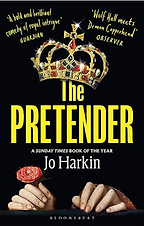
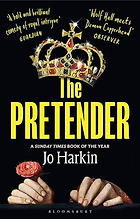
Your first book, Jo Harkin’s The Pretender, recently appeared on our site when Emily Howes recommended it as one of the best historical novels based on true stories; she called it “witty and immersive… full of character.” Would you introduce it to our readers, and explain what you admired about it?
This is a novel about identity. In 1484, a boy called John Collan is hoiked from an Oxfordshire farm, becomes—perhaps has always been, or perhaps is not—’Edward Earl of Warwick,’ a claimant to the English throne, and until this real or not real identity can be revealed he is Lambert Simnel.
Like John/Edward/Lambert himself, readers must keep their wits about them. The story is gloriously told, wild with the intrigues, plots and counter-plots of the War of the Roses as experienced by a boy who might be everything and nothing.
There is so much to admire: the wit, the use of language, the imagination, the tone and the most difficult skill of all, the sifting of history into a page-turner.
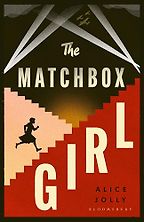
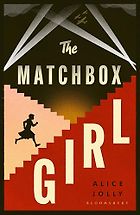
Let’s talk about the second book on the 2026 shortlist for the Walter Scott Prize for Historical Fiction, which is Alice Jolly’s The Matchbox Girl, a novel set in 1930s Vienna. Would you tell us more?
In The Matchbox Girl, Alice Jolly offers us an entirely original heroine in Adelheid Brunner, a girl who does not speak but through whose distinctive voice we hear how care for ‘different’ children in the Vienna Children’s Hospital gradually turned into something else. The story is not straightforward. The dilemmas, confusions, twisting of language and pretences necessary to remain human and actually survive in the hell of those times grip the reader, and once you’ve met Adelheid you won’t want to leave her.
Dr Hans Asperger, who appears in the book, is a real person with a very real history. Do you think historical fiction featuring real people has a special responsibility for accuracy?
Always a debatable question. Historical fiction is just that—fiction. It is not, nor should it pretend to be, an accurate recounting of events or an accurate portrait of people now dead. Hard enough to be accurate when people are alive! The historical novelist does have a responsibility, though, and that is to make sure readers know the difference between fact and fiction, and that however many facts are laced into a story, the novelist is essentially making things up.
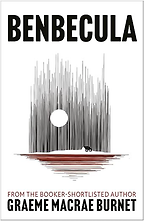
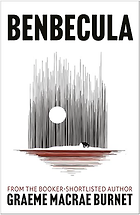
I was excited to see fellow Scot Graeme Macrae Burnet’s Benbecula on the list. It’s inspired by a real-life triple murder in the Outer Hebrides. What did the judges admire about it?
Its bloodymindedness! No tourist-board Scotland here. Graeme Macrae Burnet brings iron discipline to his writing of this haunting and haunted story. He never falters. I read it in one sitting.
Setting and atmosphere are so important in historical fiction. Do you have a favourite period to read about?
I love reading about periods unfamiliar to me. Although I’ve written books in settings from the twelfth to the nineteenth centuries, there are still great gaps in my historical knowledge, not so much of Britain perhaps, but certainly of almost everywhere else. First class historical novels help close these gaps.
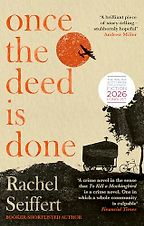
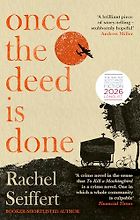
Rachel Seiffert’s Once the Deed is Done is the next book on the 2026 shortlist for the Walter Scott Prize for Historical Fiction. It follows the collapse of the Third Reich in Germany. Could you talk us through it?
Rachel Seiffert’s novel explores a time in Germany which we often forget. In Once the Deed is Done readers are faced with the dilemmas of ordinary Germans, not all of whom by any means were Nazis or supported Hitler, in the face of German defeat, plus the plight of the millions of workers forcibly displaced to prop up Hitler’s war machine. Readers will be asked: What is complicity? What is survival? What does ‘returning home’ mean when your homeland has been traded as part of the war’s ‘hazardous, dirty backwash’, in the Guardian’s memorable phrase? Like all first-class novelists, Rachel Seiffert embraces the difficult questions through the characters she creates and the scenes she sets.
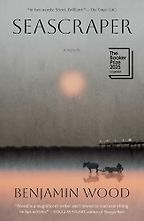
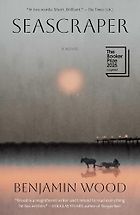
That brings us to Seascraper, by Benjamin Wood, which was longlisted for the Booker last year. Why did this book make the 2026 shortlist for the Walter Scott Prize for Historical Fiction?
Before reading this novel, I wonder how many had heard of shanking—scraping the sea bottom at low-tide for shrimp—let alone thought about the life of a shanker. Yet readers won’t easily forget Thomas Flett, aged 20, a boy who dreams of singing a song yet is in thrall to both the scraping of the sea and the scraping around for money to keep himself, his old seascraper horse and his coquettish mother in good heart. But you need more than unfulfilled dreams and an unusual setting, even with a strange visitor thrown in, to make our shortlist. What caught us was the understated richness of Benjamin Wood’s writing. You can smell the life of a seascraper; you can see the horse and rig rolling out of the yard; you can feel those sinking sands in all their spongy treachery. If you haven’t yet read this little book, you’re in for a treat.
What will you be thinking about as you make your final selection of the winner? When will it be announced?
We arrive at our final choice after lengthy re-readings and discussion about each book in turn. As I said at the start, we’ll have our criteria in front of us, and then we’ll be looking for that extra something which helps us to agree on a winner. Most years, including this one, it’s very difficult to choose a first amongst equals and in one way all our shortlisters are winners. But since choosing one to take the prize is our job, we’ll find the extra something that lifts one of our five shortlisters into the winning slot.
The winner will be announced on Friday 12 June, after the event at the Borders Book Festival in Melrose at 5pm on Thursday 11 June, for which tickets are available!
Interview by Cal Flyn, Deputy Editor
May 14, 2026. Updated: September 22, 2026
Five Books aims to keep its book recommendations and interviews up to date. If you are the interviewee and would like to update your choice of books (or even just what you say about them) please email us at [email protected]
Five Books interviews are expensive to produce. If you've enjoyed this interview, please support us by donating a small amount.