There is a big gap between the books adults think kids should read and the books children actually enjoy, says Georgina Atwell, founder of Toppsta, the book website centred on children’s opinions. She recommends the best new books for kids of 2025 based on feedback from young readers, from a universally loved picture book to immersive novels for confident readers.
Before we get to the books themselves, can you tell me a bit about what you look for in a children’s book?
It’s interesting, because this is one of those questions where I assume the answer is obvious, but as soon as I start thinking about it, it really isn’t. I’m not looking for one single type of book and I’m not just looking for a book that I’ve particularly enjoyed because what I care about most is whether a book genuinely connects with its intended readers and, obviously, for children’s books, that’s connecting with children. So, does the book hold a child’s attention? Do they want to return to it? Do they talk about it, recommend it, or pass it on to a friend? I’m also looking for books that understand children as readers. Does the pacing work? Are the characters emotionally believable? Is the format enjoyed by the age and stage of the child? And then, of course, you’ve got the craft; that includes illustrations, structure, voice. Books that are memorable tend to be very confident in what they’re trying to do. They don’t overreach, but they don’t talk down to children, either.
When it came to putting together this list, I realised that a great picture book, a fabulous graphic novel, and a rich middle grade fantasy can all sit side by side if they each do their job brilliantly.
So for me, it’s all about what the children enjoy. There are plenty of book recommendations out there from adults, but today I’ve very much thought about those books that our readers have been enjoying, which may not necessarily appear on other ‘Best of the Year’ children’s lists.
I agree that having children involved in book reviews and awards is important. Here at Five Books we do interviews where kids recommend books for other kids. Can you tell me a bit more about Toppsta and the children’s book reviews?
I set up Toppsta ten years ago because I wanted to understand children’s reading from the inside out. I’d been working in publishing for many years, but once I became a parent, I realised there was a real gap between how adults talk about children’s books and how children actually experience them. Much of the conversation I was reading was adult-led: what children should be reading, what’s good for them, what they ought to ‘move on’ to next, and when they should leave behind what many adults might consider juvenile books.
I launched Toppsta, which is a website where children read and review books, because I wanted to flip that perspective. It gives children a voice; children review books in their own words and recommend them to each other. In doing so, they reveal patterns about what genuinely captures their attention at different ages. Over time, that’s given me an incredibly rich insight into how reading habits form, how confidence builds, why some books are deeply loved, whilst other books are never finished. That understanding sits behind all of my book choices. There are a lot of great books out there, but there are certain books which are genuinely enjoyed by children rather than just recommended by adults, and those are the books that I prefer to focus on.
That brings us to your book recommendations. I can see that you’ve been thoughtful in picking books for different age groups. Let’s start with Our Tree by Jessica Meserve, which is a picture book.
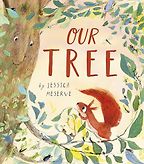
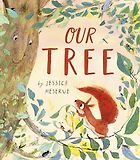
This book is just delightful. It’s got the most beautiful cover, which gives you an insight into the illustrations inside but it has a really poignant message in the story too. It explores what it means to share space with others, and to find your place alongside different characters, in a way that feels very true to how young children experience the world. It takes a small, familiar situation and uses it to explore much bigger feelings without ever feeling heavy handed. It follows this very sweet little character, Little Red, who is delighted when he finds a beautiful tree, which he wants for himself. It taps into that feeling that lots of young children have: “Mummy, it’s mine!”
But all the other animals start arriving in the tree, and that sense of ownership is challenged. Little Red’s discomfort is palpable, but handled with real empathy. His feelings aren’t corrected or dismissed; they’re simply allowed to exist. When he’s had enough of all these other animals infringing on his space, he goes off on his own, and that’s a feeling that many little children will identify with too. Then there’s a slight shift in the story because he finds himself in a mildly perilous encounter with an animal — that’s a familiar moment for little kids, too, as they do find themselves in slightly scary situations — and it’s the other animals he had pushed away who come to his aid. So the children get to see how safety and belonging are created through shared support rather than isolation and that actually doing things on your own and all by yourself isn’t necessarily the best approach.
From a reading point of view, as an adult reading it with a child, the book is beautifully constructed. The repeated arrivals of the animals in the tree help the children anticipate what’s going to happen next, and the illustrations carry a huge amount of emotional information. Jessica Meserve’s artwork invites very slow, careful reading, and encourages children to notice expressions, body language and small details. You can pore over these pictures together if you’re reading with the child. As a parent, I value books like this because they open up thoughtful conversations naturally.
I also like the dynamic illustrations and the way the discussion about maybe being better together isn’t didactic. Clearly, it’s a fun book for kids, but if you do want to use it to teach vocabulary and science then it’s good for that as well.
Yes. And it shows children that living alongside others can sometimes feel complicated, but that shared spaces can become richer when we make room for each other. So it’s a very calm, reassuring story that children return to, because it reflects situations they recognise in their own lives. As an adult reading it with them, you’ll appreciate the message and the beautiful illustrations. It’s a very sweet story to share together. Our reviewers loved it, the kids and the adults too — it is universally loved. We get a lot of picture books being reviewed on the site, but for me, this one really stood out.
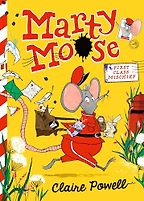
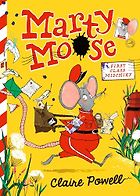
Claire Powell is a fantastic author and illustrator. I enjoyed Marty Moose, and our readers enjoyed it too, because it captures the excitement and nerves of trying something new in a way that feels warm, funny and very reassuring. It’s the story of Marty, who’s a mouse, not a moose.
I thought Marty would be a Scottish mouse, since mouse is moose in Scottish.
It’s a typo on his birth certificate. He has just landed his first job as a postmouse and everything unfolds over the course of his very first day in this job. The story begins with him at home with lovely glimpses of his chaotic family life, which immediately grounds the story. Marty is nervous about his first day and he wants to do well. It’s not anxiety, he’s genuinely excited, which I think is quite sweet. So he sets off on his delivery route, and the story becomes a gentle and rather wacky adventure. He encounters a cast of memorable characters, including two warring toads and a number of other tricky animals, each bringing their own small complications. Along the way, Marty starts to piece together a mystery, spotting clues that help him work out who’s causing all the trouble. He’s been very focused on himself and what he’s doing and how well he’s doing, but then he has a gradual realisation that he is not the problem; he realises there is something else going on, and with a little help from his new friends he can turn things around.
Structurally, the book is beautifully pitched. Short chapters make it ideal for bedtime, and natural stopping points within the book encourage you to look at the illustrations and talk about what has happened and how Marty is feeling. The format is incredibly supportive for developing readers and for shared reading at the end of a busy day. I would say it’s for ages 5 to 7, which is quite a tricky age range. It’s often a stage where parents assume children are just learning to read and they don’t need to include other reading, but actually this is a brilliant time to read books that are a little bit longer than picture books, but still have illustrations and aren’t too text heavy. A book like this perfectly bridges that gap.
The illustrations play a huge role here. Claire brings the story and its inhabitants to life with real warmth and humour, and Marty himself is brilliantly expressive. He’s determined, and very courageous. He starts off quite uncertain and he becomes quite bold by the end, so you see him develop through the hundred or so pages. There’s a line in the book which is something like “Just because you’re small doesn’t mean you can’t be brave”, which sums up the whole book beautifully. It’s about doing your best, navigating the unexpected, and realising that bravery sometimes is just showing up and dealing with whatever life throws at you. It’s a very comforting read and it’s exactly the kind of story children love returning to.
It looks really cheerful and engaging, with lots of laughs to be had. Is it part of a series?
Yes, I think it’s book one in a new series. Claire Powell has illustrated other books as well. I really love her illustrations, they’re so quirky.
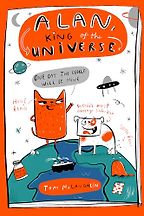
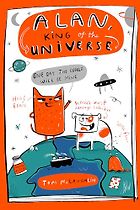
Tom McLaughlin is a relatively well-known author, among others he has written The Accidentalseries, but until recently I hadn’t realised that he also does illustrations. It’s a graphic novel, and it’s a book that kids find irresistibly funny. That sense of joy is why it matters so much.
I’m not surprised, he really seems to understand children and what they find humorous. Alan, King of the Universe is made up of five short stories. I would say it’s for ages 7+. Each story follows Alan, who is a very confident cat, determined to take over the universe alongside his loyal friend Fido, a dog who helps carry out the plans. The humour comes from the fact that Alan is brimming with big ideas and absolute self-belief, but not much practical sense. Fido, on the other hand, is thoughtful, creative and quietly competent. That classic dynamic of the overconfident leader and the smart sidekick is something I think that children enjoy immensely, and it’s played to brilliant effect here. Their attempts at world domination are imaginative, enthusiastic and completely doomed, which makes the stories all the more satisfying.
From a child’s reading perspective, the short story structure is spot on and it makes the book very approachable. Children can dip in and out, they can read one story at a time or fly through the whole book. That flexibility is incredibly helpful for developing readers and for children who might struggle with longer, more continuous narratives. Most of our readers flew through the whole book and loved it, and many parents said they heard their children giggling while reading, which I think is the best possible recommendation.
The graphic novel format does a huge amount of work, so reading it doesn’t feel like hard work. The visual storytelling carries the jokes, the timing, the emotional beats, while the text remains punchy and accessible. Decoding images and words together strengthens comprehension, sequencing, and inference, which is why graphic novels should never be underestimated.
And I love how creative Alan and Fido’s partnership is. It’s wildly imaginative, even if the two of them are not very good at executing their plans. I think that celebration of creativity, failure, and trying again is a quiet but really important theme. So this book is very re-readable and a perfect example of how graphic novels can hook children into reading through humour and imagination.
It does look like a perfect book for newly independent readers to enjoy.
I’m a huge fan of graphic novels. My daughter devours them, and so do many of her friends, and I think it’s one of those things that adults are coming round to. There used to be this idea that graphic novels were a stage that you would grow out of, a stepping stone to long-form fiction, but I think the more we encourage children to read books that they genuinely enjoy — and they clearly love graphic novels — the more likely they are to keep reading. There are fantastic graphic novels for ages 7 to 70 now, so there’s no need to force them to move on to long-form fiction if it risks damaging their enjoyment of reading in the long term.
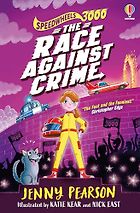
Jenny is someone I admire hugely. She writes brilliantly but she started as a primary school teacher and you can feel that in the books that she writes — the humour, the heart, her instinctive understanding of what makes children keep turning the pages. At a time when so much attention is directed towards celebrity-penned books, I think it’s refreshing to champion an author who is completely dedicated to children’s reading. She’s an author who supports other writers, is endlessly generous at bookshop events and festivals, and consistently writes books that children genuinely enjoy.
I enjoy her books, too. I included The Incredible Record Smashers on our list of the Best Kids’ Books a few years back. It is very funny, but also tackles some serious issues.
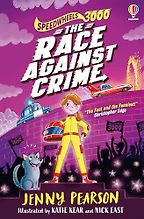
You’ve hit the nail on the head. On the surface, Speedwheels is a fast-paced adventure aimed at ages 8+ about a father-daughter team who get caught up in a mission far bigger than they had expected. Evie has secretly stowed away in her dad’s car for a chaotic race across Europe, and then discovers that their car has been framed for a major gold robbery. As the challenge escalates, she has to unravel the mystery all whilst navigating spending time with her dad who is a slightly tricky character. But, as with all of Jenny’s books, there’s a quiet emotional thread running underneath. She writes beautifully about family, the bonds that hold us together and the moments when things fray, and humour often bridges those gaps. There’s a story of loss here. Evie’s brother died before she was born, and her parents are still grieving but there’s also a story of hope, about reconnecting, and it’s all handled with such lightness that I think children feel it rather than being told it. It doesn’t feel didactic in the way that some other books might.
And this is Jenny’s real talent and why I think she’s one of the most important children’s authors around today. Her characters are really well drawn, she has a gift for dialogue that sounds exactly like how children speak, and she knows how to land a joke. I read another book of hers, The Super Miraculous Journey of Freddie Yates, with my son, and both of us were rolling around laughing, we thought it was the best thing ever, but that had quite a sad story running through it as well.
Of all the authors that are recommended on Toppsta, Jenny Pearson’s name comes up again and again. Her books are enjoyed by both adults and children, and that’s quite unusual, often it’s more one or the other. For me, this book is what Jenny does best: creating a story that is huge fun to read, full of heart, rooted in the real emotional world of children and families. It’s the kind of book that reminds you why stories matter and why children’s authors do too.
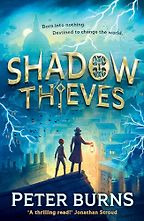
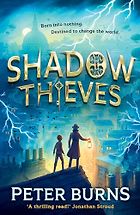
Shadow Thieves is very, very different. It’s a brilliant adventure that immediately pulls you into its world, both in terms of setting and character. The story centres on Tom, who is a boy scraping by on the streets of London, surviving through quick thinking, sharp instincts and a talent for pickpocketing, so it’s a tough start. The book doesn’t shy away from the reality of his situation, and that gives the story real weight from the outset. Then everything shifts because his friends are caught and sent to a brutal workhouse, and Tom is approached by an enigmatic character called the Corsair, who offers him the chance to train at an elite boarding school for thieves. It’s an impossible decision for Tom, and a huge responsibility. It’s an escape, but it comes at a cost and he has to decide who he can trust and what kind of person he wants to become.
It works because it’s a really nice mix of historical atmosphere with fantasy and adventure, and the London setting is gritty and alive. The boarding school element is a whole new world with its own rules and hierarchies and dangers. The world building is carefully layered, and the reader is drawn in without feeling overwhelmed. It’s still very much middle grade (ages 8-12) rather than Young Adult but I would position it at the older end. You will find some confident readers age 8 or 9 who would gravitate towards it, but I would say it is best suited to ages 11-14.
One reviewer described it as Harry Potter crossed with The Hunger Games, while others compared it more to Oliver Twist. The setting is a kind of alternate Dickensian London, right?
Exactly, that’s the setting, and I think Harry Potter crossed with the Hunger Games is a great comparison, with both series aimed at readers around 11-14. While Harry Potter begins younger — the first book is often enjoyed by 7 or 8 year olds — it matures quickly and the final book is really quite dark. That 11+ space is a tricky area; the start of secondary school, questions around identity and fitting in, trying something new and feeling out of your depth. I think Shadow Thieves is brilliantly placed to help readers see themselves and help them navigate the challenges they’re experiencing.
Middle grade fantasy books like this have become hugely popular with adult readers, something that began with Harry Potter, and has only grown since. These books offer immersive storytelling, gripping plot lines and richly-drawn characters. I can see on Toppsta that this book was really enjoyed by children as well as adults and it’s perfectly pitched for this age group. It’s beautifully written and thoroughly enjoyable.
Thank you for those great recommendations for kids of all ages. In terms of children’s reading in general, the benefits are obvious for those who enjoy it, but can you talk a bit about why it is important that children not only learn to read, but get into the habit of reading for pleasure?
Reading does so many things. Obviously, there’s the learning to read and educational aspect, but for me that is such a tiny part of why we should read. Reading builds language, it builds empathy, it builds imagination. And aside from all of that, there are significant improvements for physical and mental health as well. It can lower your blood pressure, it’s good for cognitive development, and it gives you perspective. I don’t think it’s coincidence that so many books start off with children who are orphaned. You suddenly look around and go “I’m not an orphan. I’ve got parents, my life isn’t this hard”. That kind of perspective encourages you to put yourself in somebody else’s shoes and to think about what might be their motivation.
Reading really does help with mental health, and I worry that as reading has declined both at home and in the classroom, that it’s linked to the decline in mental wellbeing. Those few minutes at the end of the day when the teacher would sit down and read and the kids would sit back and relax — when they weren’t being tested, when they could step away from any issues with friends and just listen to a story — that was really positive for mental health. Reading is in many ways meditation, which we’re all encouraged to do. What I’d like to see is a shift in how we see reading, in the same way that we’ve changed our perception of sport. Sport has now become something for health, not just a competitive activity. You might go running to clear your head, to feel better, and we need to make the same shift with reading. Reading can make you feel better in so many different ways, and we need to incorporate it back into the day, both at school and at home.
How do we do that? I see a lot of discussion about access to books and initiatives to address that, but I think many kids stop reading around the age that they get a smartphone, even if they have easy access to books.
I totally agree. The focus has been, quite rightly, on access to books, and that still matters. There are many children for whom access is a genuine barrier, and we should never lose sight of that. But layered on top of that is a very different challenge, and it’s one I think we don’t always talk about enough. Even when children do have access to books at home, at school or through libraries, even when their parents have read to them since they were born, even if they see their parents reading in front of them, all the things that we are meant to do to encourage reading, many children are still choosing not to read. So the issue shifts from access to engagement. And what we see very clearly is that children don’t stop reading because they can’t read. They stop because reading doesn’t feel compelling enough to compete with everything else in their lives, whether it’s screens or gaming or constant digital stimulation. So books have to work even harder to earn a child’s attention.
That’s why initiatives like the UK government’s year of reading next year are so important, because its aim is not just to increase access, but to try and rebuild a culture of reading for pleasure, by encouraging families, schools and communities to make reading visible, shared, and enjoyable again. It recognises that reading habits are formed through motivation and enjoyment and not obligation. So, while access remains essential, I don’t think it’s sufficient on its own. The next challenge is ensuring that children enjoy reading and feel the benefits beyond the educational benefits, and that’s where choice, format and relevance become crucial, and where publishers, educators and parents all have a role to play.
Have you noticed any particular trends in children’s publishing this year?
Prior to 2025, there was a boom in middle grade adventure and fantasy, with brilliant world building and ambitious, big moral questions. Many adults are reading those books, too, drawn to those immersive stories that feel hopeful rather than cynical. For the last 12 to 18 months, illustrated fiction and graphic novels have continued to be strong, and children are no longer expected to grow out of these formats, which play a vital role in keeping children reading for pleasure, particularly at key transition points. For the older age groups, there’s romantasy. Beyond that, much of the focus now is on just getting kids reading.
Is there anything you look forward to or would like to see next year?
I’m excited to see how formats continue to evolve, particularly in illustrated and audiobooks. Children enjoy storytelling and content in many different ways. As adults, I think we need to stop putting books into some kind of imaginary hierarchy with text-heavy books at the top and illustrated at the bottom. So I’d like to see more formats coming through and becoming mainstream. Sadly, I think the industry has taken some steps backwards when it comes to diversity. Economic pressure has led to more risk-averse publishing, which has narrowed the range of voices being shared. From a children’s reading perspective, that’s disappointing because we know that young children are open and responsive to a wide range of stories.
Is there anything else you would like to say before we conclude?
For me, kids’ opinions are the voices that I listen to most, so in a way it feels like I’m going against my own ethos by making recommendations. That said, these really are five exceptional books and of all the hundreds of children’s books I’ve read this year, they stand out. One of the joys of being in kids’ books is getting to read so widely, and there are many fantastic books out there. But for me, children are always the best judges and they rarely disappoint so next year, as always, I’ll be looking to them for my recommendations.
Five Books aims to keep its book recommendations and interviews up to date. If you are the interviewee and would like to update your choice of books (or even just what you say about them) please email us at [email protected]
Five Books interviews are expensive to produce. If you've enjoyed this interview, please support us by donating a small amount.
Georgina Atwell
Georgina Atwell is the founder of Toppsta.com, the UK’s largest children’s book review community, which helps parents, teachers and librarians discover great books through child-led reviews and recommendations. She has over 25 years’ experience in publishing, having worked at Penguin Books, Dorling Kindersley and Apple iTunes, and is a passionate advocate for children’s reading and reading for pleasure.
Georgina Atwell is the founder of Toppsta.com, the UK’s largest children’s book review community, which helps parents, teachers and librarians discover great books through child-led reviews and recommendations. She has over 25 years’ experience in publishing, having worked at Penguin Books, Dorling Kindersley and Apple iTunes, and is a passionate advocate for children’s reading and reading for pleasure.