The Royal Society celebrates the best new popular science writing every year through the prestigious Trivedi Science Book Prize. We asked Professor Michael Benton, the eminent palaeontologist and chair of the 2026 judging panel, to talk us through their six-book shortlist: from a globe-trotting history of alchemy to a fast-paced account of memory manipulation by optogenetics researchers at the cutting edge of science.
You chaired the judges of the Royal Society’s Trivedi Science Book Prize. What were you looking for when you were looking for the best popular science books of the last twelve months?
We’re looking for books that convey the excitement and the fun of modern science. They have to be accessible to the general reader, of course, so we look at the assumptions being made by the authors and the language they use to explain things. We exclude books aimed at the specialist scientist or people working in the field.
We’re looking for accuracy, of course. The books need to give a correct presentation of the subject matter, and be therefore written by people in the field or journalists who do good research. They have to be original. If there are dozens of titles on the same subject already available – as there are, for example, on understanding evolution, or the great unsolved mathematical mysteries, or how modern medicine is helping people live longer – that raises the question of novelty.
Our definition of ‘science’ is quite broad. The competition has always been open to core science like physics, chemistry, biology, mathematics. But it is also open to medicine and engineering and the history of science. So there is a wide scope. That does mean we get a very large number of books being submitted for consideration.
I think that’s it: accessibility, novelty, plausibility, and accuracy.
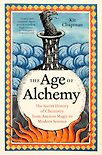
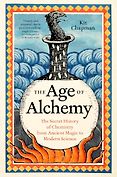
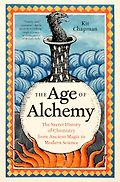
You mentioned history of science. That leads us to our discussion of this year’s winner of the Royal Society’s Trivedi Science Book Prize, which is The Age of Alchemy: How Early Innovators Shaped Modern Chemistry. I’d love to hear what the judges enjoyed and admired about this book.
I think everybody on the committee was pleasantly surprised by this book. At first, we thought this was a topic about which many books have been written before. Look up any bookseller’s website and you will find a number of books with the words ‘alchemy’ and ‘chemistry’ in the title. But what we all found exciting about this book was that the storytelling is superb. It moves along at a good pace, you’re engaged and drawn in.
Each chapter tells a story of particular historical figures. Many of them are untold stories. That was the second thing we liked – it doesn’t tread the normal ground. There have been many histories of chemistry, with a focus either on the history itself or by explaining chemistry through the history of its development. But many of them start only 300 or 400 years ago, with the discovery of oxygen, or something like it – Lavoisier in France and Priestley in England.
Kit Chapman starts long, long before, in the days of ancient Egypt and biblical times in the Middle East and in ancient China. So he’s delving deep. You go through half the book before you come across a modern European scientist. This point is a strong one – we felt he was doing the difficult stuff, going deeper into time, to where people were not documenting their work, not writing scientific papers.
We liked the democratic aspect of the book. In those ancient times, people trying to do or understand chemistry were practical people doing it for practical reasons. For them, it was all about understanding how to cook things, how to make food, how to modify food, how to tan leather, or how to make metals of different kinds. People discovered the practical properties of iron and brass and bronze and other useful things. So much of it was utilitarian and the people are not named individuals, but we know of them from ancient documents. That’s wonderfully well told.
The Royal Society is always very keen to internationalise as well – this is not the European white man history that we are used to hearing about. This is women, slaves, people without a voice. They were the ones who were discovering stuff in those early days.
And the alchemy element is the fun stuff. In his acceptance speech, Kit Chapman talked about one of the common features of many chapters in the book, which is what you can make of urine. You can tan leather with it, do all kinds of stuff. They also though they could make gold or other valuable metals out of urine, so they spent a lot of time collecting human and sheep and cow and horse urine, distilling it, trying to get something out of it, and of course they largely failed. Nonetheless, that’s all part of the quest.
So it’s good fun, it’s novel, it’s credible – Kit Chapman is a chemist who knows his stuff. But most readers will simply enjoy it as a rattling good read, and at the end of that they will think: Wow, I enjoyed that and I’ve learned something.
I see Chapman described on the blurb as “a science adventurer”. Where does that come from?
He could have sat in his study in England writing a book, painting a picture from the existing literature. But he actually goes to many of the places he talks about. We see him in the marketplace in Cairo imagining what it was like 2000 years before, with all the noise and the hustle of the crowds. He went off to Indonesia the day after he won the prize. I think the travel is part of what he’s doing – he speaks to people, tries to get that global aspect of his subject matter, to avoid the risk of retreading old ground.
You know, there must be a thousand books about Darwin, a thousand books about Newton, so there’s always the question: is there anything new in here, or are you recycling the same old stuff? You may be a great stylist, you may be writing it in a bright and sparkling way, but you can still be recycling. Whereas Kit Chapman is forcing himself into these other cultures, speaking to people and gathering information. A lot of what you read here will not be found in other books about chemistry or history.
Let me say first, in general terms, that all of the shortlisted six were unanimously found by the whole committee to be fantastic. When we turned up for the final discussion and decision, there was no way to tell in advance which would be the winner. Each of us had read them all and had our own opinions, but we deliberately didn’t compare notes before the meeting.
I invited each of the members of the committee to speak freely and to tell us what they thought without yet voting, to say what they each thought about each of the six books.
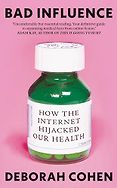
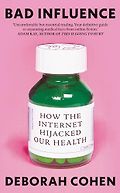
Now, Bad Influence is a book on an important topic: it’s about misinformation, conspiracy theories, all things in constant consideration by thinking people. We have the wonderful example in the United States at the moment, where the Secretary of Health encourages this kind of nonsense.
Deborah Cohen is a very skilled journalist, this is very deeply researched, and every chapter covers a different topic, a different disease, or a different therapy. It includes things like plastic surgery and other medically related themes. There’s also a bit of history of the opioid crisis, although that’s been written about before.
So it is hugely timely. It’s well researched, and has huge importance for the current understanding of and thinking about the future. How do we, in a world of infinite knowledge and exchange of information by way of the internet, communicate and help people to recognise good information from bad? That’s what Deborah Cohen achieves and it’s a great contribution to the field of social medicine and ways for medical researchers to communicate and understand responses.
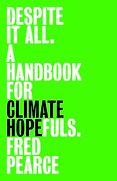
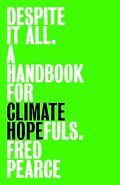
Fred Pearce is a journalist of great renown. He’s written many books and many articles for New Scientist and other places. He has spent his life writing about the climate crisis, which is another of these enormous topics equally full of misunderstanding and misapprehension. He doesn’t talk about conspiracy theories the way Deborah Cohen does, but the world does need sober and sensible information on this topic; otherwise, people do get misled by incredible nonsense online.
Fred Pearce has written all about climate change from inside different branches of science. He has seen the worst of it. He’s seen the appalling damage of stripping away tropical rainforests, excessive agriculture, excessive carbon dioxide from polluting factories and cars and aircraft. But here he is actually looking for hope and he sees that some things are good.
Renewable energies – solar and wind – might not be coming in fast enough, but they are really happening. This has come in in our lifetimes. He looks at the biodiversity crisis and finds bright lights of hope here and there. People are paying attention, and in some places they are no longer cutting down forests. They are reversing it.
Some books about the climate crisis are overly gung-ho, sometimes for political reasons – they argue that there is no crisis, that everything is fine. Fred Pearce is not like that. He’s writing from a position of full understanding of the chemistry, the biology, and other aspects of science that are part of the debate. And I think it is really helpful.
Simply being a doom-monger doesn’t always get people’s attention. Saying: there are some bright lights, and if we follow these examples we can dig ourselves out of a hole might.
Again, it’s brilliantly written. It’s a nice, short book. Both Fred Pearce and Deborah Cohen are wonderful science journalists who produced great books that were very strong contenders.
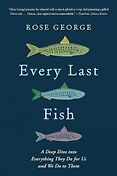
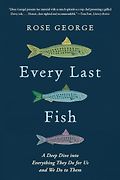
Here’s a book with a very strong human dimension – how we exploit nature, in this case fish. Rose George has written books before about aspects of the ocean.
Yes, and other people have written on fisheries and fishing before. But I think Rose George makes each chapter a personal story. She’s been out on fishing boats from European, North American, African ports. She’s been out to sea with marine conservationists. She’s talked to people in navies and regulatory bodies. There are bits of history here and there about how the fishing industry has changed. She even spends a shift in a fish and chip shop talking to the people there about what they are selling as cod and haddock – and what these fish portions really are.
So, a personal book written from her own experiences. I don’t think she had a long-time involvement in the field, but it was something she decided to investigate. And it’s beautifully written and makes you think.
I don’t think she eats fish herself.
Yes, she says at the start that she’s a vegan. That made me wonder, at first, that she might not be the right person to write on this topic. But it doesn’t intrude, other than the personal remark that she’s looking at this subject in a dispassionate way, on the understanding that other people do want to eat fish – and what does that mean?
Many fish-eaters don’t think much about the detail of where it comes from and what damage is being done. We might read about these things, but it’s usually in a European context. Rose George ventures much further afield and she looks sympathetically at the people who have to catch fish for a living. It’s not all about the big industry end of things, but also the processing and how the fish goes from the sea eventually into the supermarket. This diversity of topics is probably greater than most readers would have expected and the depth of presentation of each is very engaging. It’s thoroughly referenced throughout, and it’s a novel, storytelling book that holds the attention.
There is a shift in science writing more generally, I think – towards first-person storytelling, bringing in that personal strand. Did you notice that too?
I think you’re right. At one time, people would have thought it improper. That they are here to deliver facts. It’s true that we exclude textbooks and field guides from this prize, so we don’t include certain kinds of work that also deserve attention and admiration, because no less effort goes into those. But I think you are right, it’s a common thread in the books that we were looking at.
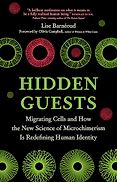
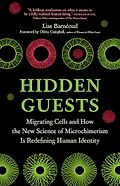
You’re right. This book is talking about an area of biology that will change our understanding of medicine and ourselves. I knew nothing about microchimerism before reading this book. And we also had another interesting question with this, which is that it is a translation so how far should we go in being swayed by the styling. In the end, we decided just to treat it as any other book, without inquiring too much about what belongs to the author and what to the translator. And it’s great.
Lise Barnéoud also involves herself in the story. She is a journalist but has spoken to many of the key scientists in the field, visiting them in their labs, Zooming them, and giving personal reflections from those scientists – how excited they were when they made discoveries.
This is very much at the frontline of science, the latest news. She’s talking about work published early in 2026, so this is a fast-moving field.
It’s also a topic that could seem very abstruse, but she gets the message across clearly: Do you realise your genome is not just yours as an individual? You have samples of the genomes of a lot of other people residing permanently within you, and, good grief, that’s a scary thing. What does that mean? I’ve got no idea, but it’s a fact, and she describes very clearly how the maternal genome is inserted into the offspring, not only in the obvious way through the egg, but in other ways, and equally there is back-influencing from the embryo to the mother which was entirely unexpected. There’s also sampling of genomes between siblings. So there’s a shock aspect, and she tells the science in an accessible way that makes it really clear.
Four of our shortlisted books were written by science journalists, and two of them by scientists. They are all reading original papers, speaking to involved scientists, and sometimes – as with Rose George – even going out on trawlers, getting seasick, and all sorts of stuff.
With microchimerism, it’s an ongoing story and I imagine that Lise will write another version in ten years with many more chapters and more understanding of what it all means, if anything, to the way that we function. It’s a wonderful book.
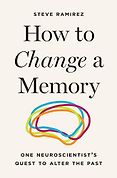
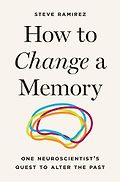
Really fascinating. And it brings us to our final book on the shortlist for the Royal Society Trivedi Science Book Prize, which is How to Change a Memory: A Quest to Alter the Past by Steve Ramirez, a MIT neuroscientist who specialises in a field called optogenetics. What an intriguing title.
There’s real timeliness here, because the Nobel Prize in Chemistry has just been awarded to the three people who originally discovered this effect – that you can study the cells of the brain by illuminating them brightly with lights. When we met him last week, Ramirez had no inkling that would happen.
So, it is a scientist writing about his own quest. He’s quite a young man, barely over 40, and he’s able to take you right to the lab bench and to talk you through the mechanics of the process of being a scientist in a forefront area like this. The practicalities: How do you get permission to do experiments on animals? How do you make sure those experiments are not distressing for the animals? How do you fund your work? How do you publish your papers? How do you get grants? This is the only book in the collection that has that component.
Like the microchimerism book, How to Change a Memory is science on the hoof. It’s really moving fast, and I imagine Steve already wants to write another three chapters to bring us up to date. It’s very much a personal story, and it’s written in a very lively style, presenting the helter-skelter of fast-moving science.
He had a very strong relationship with another scientist, who sadly died, and he documents that – the devastation of the death of his collaborator – and how he went on to continue the work, and get to the point he has got to.
It is a remarkable thing, to be able to say that you can take a brain and alter its memory. That you can go in and remove a sad memory, or remove the feeling of unhappiness, and make a person happy. Or, a rat, at least. But how far you go with that, I just don’t know. I’d love to hear what the philosophers have to say.
It’s a remarkable quest in science, part of which – the work of Karl Deisseroth, Peter Hegemann, and Georg Nagel – has been validated by the Nobel Prize. It’s lively, fascinating, engaging – and I’m sure it will sell well and deservedly so.
Thank you. Listen, that brings us to the end of the list. I wondered if I could finish by asking if the process of judging has left you feeling optimistic about the state of science writing today?
I think it has. There was a measure of pessimism in the fact that, at an early stage, we had to weed out a number of AI-produced books. I do think that the influence of AI and automated book production will get more substantial. If you look at Amazon, you can buy any number of cheap books cobbled together from Wikipedia. Initially this was done by hand, from online stuff. Now you don’t even need to write them yourself. So that’s a pity.
But once we got down from the initial 200 to a longlist of 40, it became very heartening. These were all really, really good books. All excellent in their field. That there were so many in the English language and available – well, it was good.
We were looking at them quite seriously because the panel involved a number of people who make their living from writing and selling books, very much in the field, and they all expressed themselves happy. The difficulty we had in deciding the winner also illustrated that fact.
In some ways it would be wonderful if there were more science book prizes. There aren’t many in the world, and although we think of the Royal Society’s as a British competition, many outside the country see it as a somewhat international one, because of the scale of the prize and the publicity and the impact on sales. So, it’s a great thing. Long live the Royal Society Trivedi Science Book Prize.
Five Books aims to keep its book recommendations and interviews up to date. If you are the interviewee and would like to update your choice of books (or even just what you say about them) please email us at [email protected]
Five Books interviews are expensive to produce. If you've enjoyed this interview, please support us by donating a small amount.
Michael Benton
Michael Benton is a palaeontologist who has made fundamental contributions to understanding the history of life, particularly concerning how biodiversity changes through time. Michael has written engaging books for children on the theme of dinosaurs, as well as a significant number of palaeontology text books for university students. He founded the MSc in Palaeobiology at Bristol in 1996, from which more than 450 students have graduated. He has supervised more than 75 PhD students.
Michael Benton is a palaeontologist who has made fundamental contributions to understanding the history of life, particularly concerning how biodiversity changes through time. Michael has written engaging books for children on the theme of dinosaurs, as well as a significant number of palaeontology text books for university students. He founded the MSc in Palaeobiology at Bristol in 1996, from which more than 450 students have graduated. He has supervised more than 75 PhD students.